Baseline Assessment: What It Is and How It Works

Jump to section
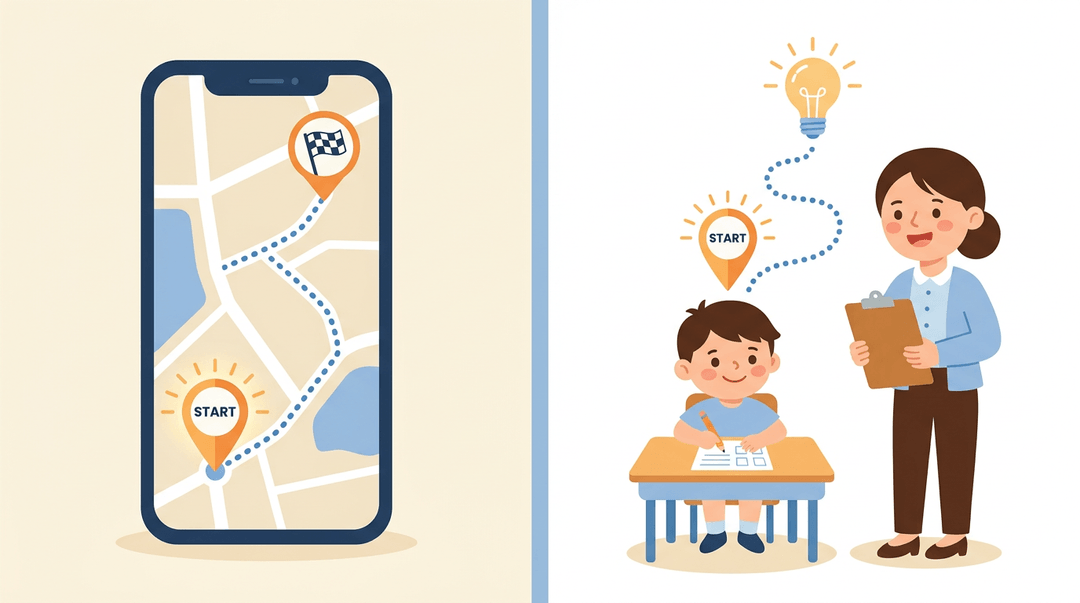
Before a GPS can map your route, it needs to know where you're starting from. Without that starting point, even the best directions lead nowhere useful.
Teaching works the same way. A baseline assessment is simply a snapshot of what students already know and can do before instruction begins, and it's the starting point every good lesson plan depends on.
In this post, we'll walk through what baseline assessments actually look like, how to use the results, and what to do before you run one.
What Is a Baseline Assessment
Think of a teacher meeting a brand-new class on day one: no report cards, no test scores, just a room full of unknowns. A baseline assessment is how you fill that gap.
It's not the same as a diagnostic test, which digs into why a student struggles with a specific skill, or a pretest, which checks readiness for one upcoming unit. A baseline is broader: a starting line for the whole year.
A Snapshot of Current Ability
A baseline assessment gives you a snapshot of entry-level ability the moment a student walks through the door. It's short and focused by design, built to collect data on attainment without eating into a week of instruction.
For example, a fourth-grade teacher might run a 20-minute reading and math check in the first week, just enough to measure current knowledge across a few core skills.
That data then informs teaching needs for the term ahead: what to reteach, what to skip, and where the real gaps sit.

Why Schools Use Baseline Assessments
Schools lean on baseline data for a few practical reasons. It helps teachers identify strengths and weaknesses early, which in turn can inform targeted support:
- small groups
- extra practice
- an enrichment task for the student who's already ahead
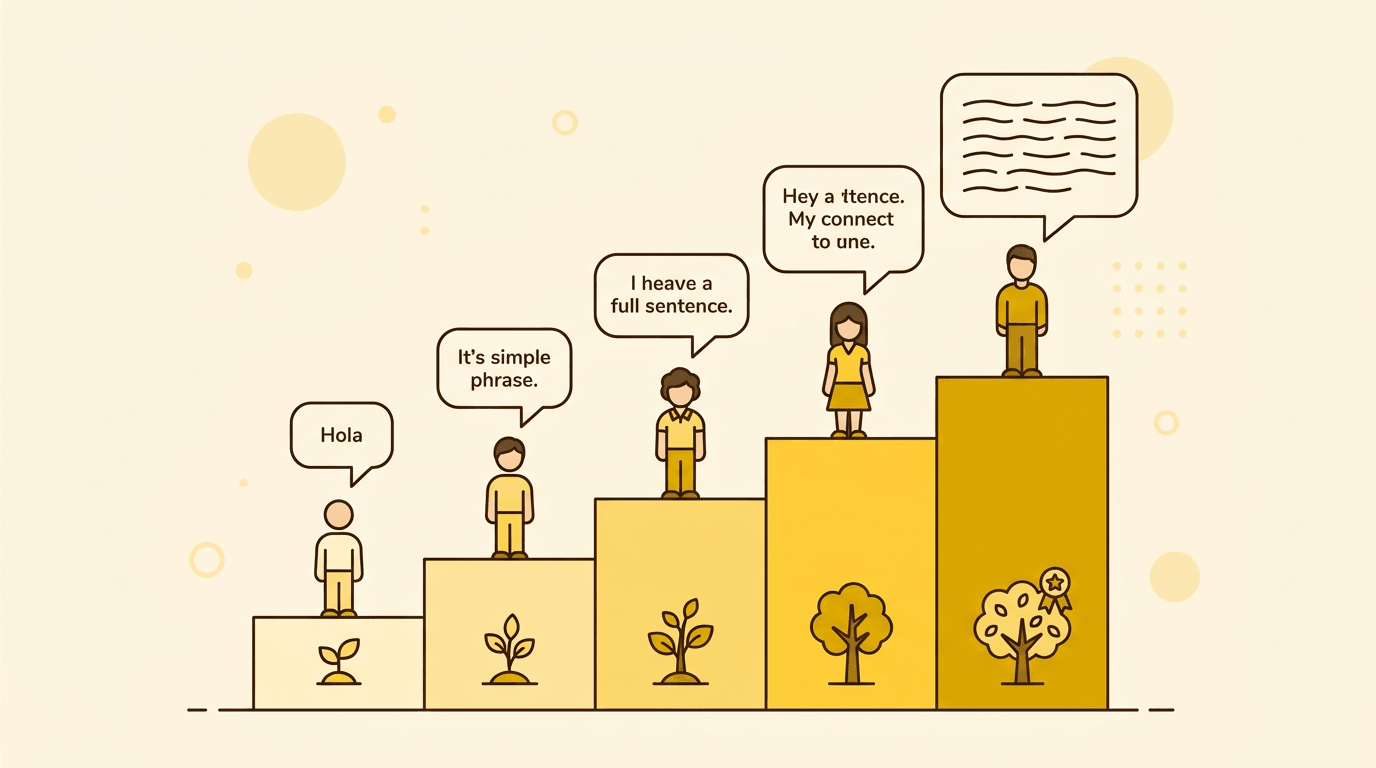
Run again later in the year, that same baseline lets you measure progress over time, turning a single snapshot into a growth story.
At the school level, aggregated baseline results support performance tracking across classes and cohorts.
Some schools also use them to decide suitability for a selective path, like a gifted program or an advanced track, before a single grade has been entered in the book.
The Main Types of Baseline Assessment
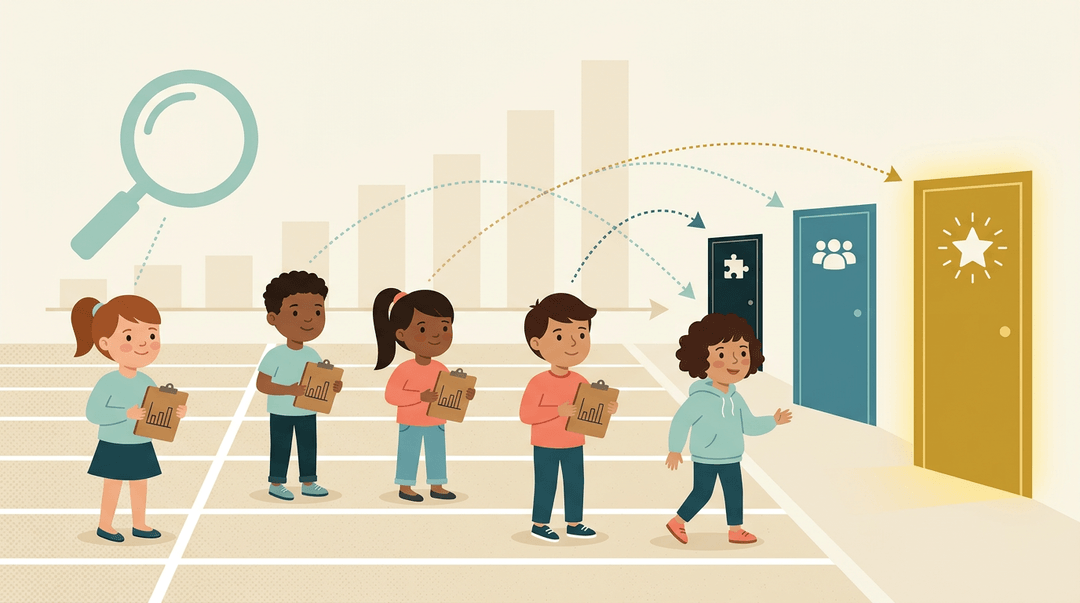
So where does a baseline assessment actually fit among the assessments you already run? Think of the four main assessment types:
- Diagnostic (finds gaps before teaching starts)
- Formative (checks understanding along the way)
- Summative (measures what stuck at the end)
- Benchmark (compares progress against a set standard)
A baseline is essentially a diagnostic snapshot, taken at the very start, that gives you something to measure growth against later.
What does a reception baseline look like?
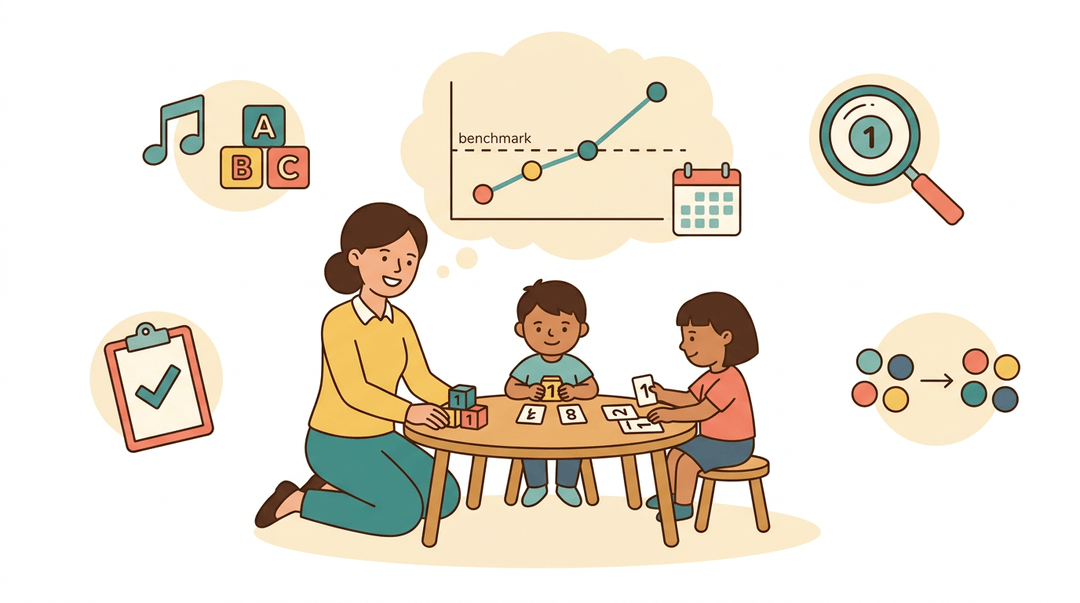
In reception, a baseline isn't a sit-down test. It's built from on-entry observations: watching how a child counts blocks, follows a two-step instruction, or shares a toy during an informal play-based task.
These observations are EYFS-aligned, meaning they map directly to the Early Years Foundation Stage framework's learning goals.
According to Bracknell Forest's guidance on the Reception Baseline Assessment, "Assessments should be completed within the first 6 weeks of a child starting in Reception," so teachers capture a true starting point before settling-in routines blur the picture.

The 11+ baseline test for exam subjects
For older students, a baseline looks more familiar: a short focused test covering core exam subjects like English and maths, often used before mock exams to flag who needs extra support early. The key difference is scope.
A full mock exam simulates the real thing end to end; a baseline test samples just enough to show where a student stands right now.
For example, a Year 6 teacher might run a 20-minute maths baseline in September, then compare it to the December mock to see real movement.
What a Baseline Assessment Actually Covers
Ask five teachers what a baseline assessment measures, and you'll get five different answers, because what it covers depends entirely on the stage.
It's not just a UK early-years checklist or an 11+ exam: a ninth-grade teacher's first algebra quiz and a college instructor's opening essay prompt do the same job in a different subject.
The tasks shift, but the goal stays constant: a clear picture of where each student starts. Here's what that looks like at a few key stages we'll break down below:
The early years areas it checks
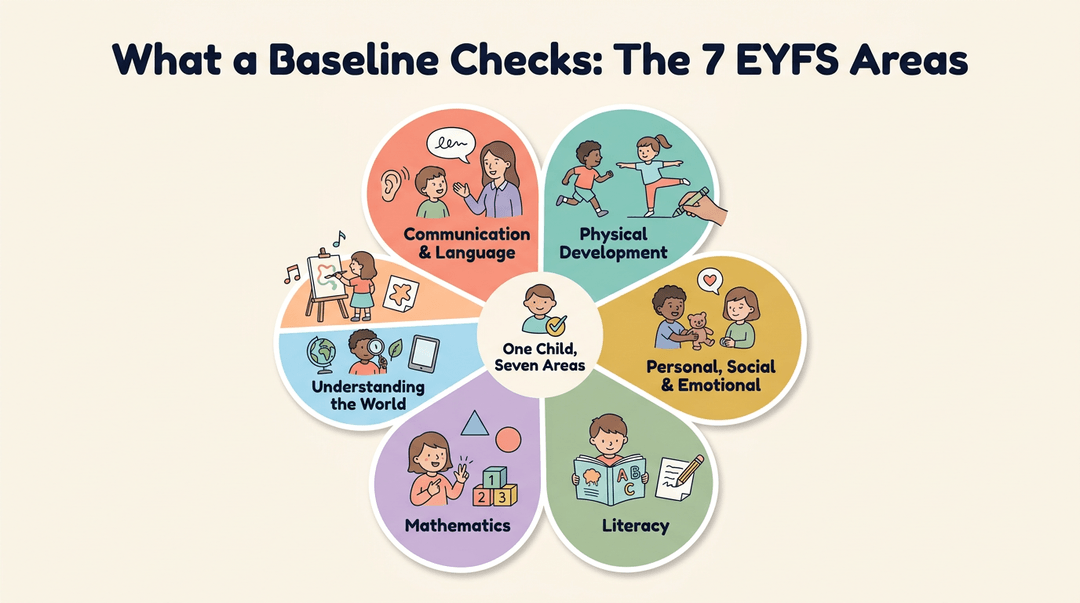
In early years settings, a baseline maps onto the seven areas of the Early Years Foundation Stage (EYFS):
- Communication and language
- Physical development
- Personal, social and emotional development
- Literacy
- Mathematics
- Understanding the world
- Expressive arts and design
Subjects covered in the 11+ baseline
For older students sitting the 11+, the baseline narrows to four academic strands:
- English comprehension and grammar. How well a student reads and constructs sentences.
- Maths arithmetic and reasoning. Number work alongside problem-solving.
- Verbal reasoning. Working with words and language patterns under pressure.
- Non-verbal reasoning. Spotting patterns in shapes and sequences, no words required.
Specific tasks used in reception baselines
In reception classrooms, those broad areas turn into concrete tasks:
- Early calculation tasks
- Mathematical language
- Early vocabulary checks
- Phonological awareness games
- Early reading and comprehension activities
Each one gives a teacher a quick, specific data point to build on.
Using Baseline Results in Your Classroom
A baseline score only earns its keep when it changes what you do next. Here's the full cycle: give the assessment early, turn the results into groups, then set targets you can measure against later.
Run it in the first two weeks
Before you hand anything out, confirm the setup:
- It happens within the first two weeks. Any later and new teaching muddies the data.
- It's short. 15 to 20 minutes is plenty; you're sampling skills, not examining.
- It's low-stakes. Tell students: "This doesn't count toward your grade. It just shows me where to start."
- The format is identical for every student. Same questions, same time, same conditions, or you can't compare results.
Sort the results into action
Don't file the scores; read them for three things, and respond to each differently:
| When the results show... | Do this... |
|---|---|
| One student missing one specific skill | Note the gap for a quick small-group or 1:1 reteach |
| Clusters scoring at similar levels | Form flexible readiness groups for differentiated tasks |
| A student well below the rest | Flag them now for extra support or a specialist referral |
⚠️ Watch out: readiness groups are temporary, not labels. Plan to reshuffle them after your next assessment, and say so to students.
Set targets and measure growth
- Write one individual target per student. Base it on their biggest gap, not the class average.
- On paper it looks like: "Maya: multiply two-digit numbers with regrouping by week 8."
- Retest at mid-term and end of term. Keep the format consistent with the baseline so the comparison is fair.
- Share a growth snapshot with parents. Baseline score, current score, target: three numbers tell the story.
- Try: "Maya started at 4/10 on multiplication, she's now at 7/10, and we're aiming for 9 by December."
Example: A sixth-grade teacher gives a 20-minute math baseline in week one. Results show eight students shaky on fractions, so they become a reteach group for two weeks. By the mid-term retest, six have closed the gap, and the groups reshuffle around the next skill.
At a glance:
| Phase | Key move | What you get |
|---|---|---|
| Weeks 1–2 | Short, low-stakes, consistent assessment | Clean starting data |
| Right after | Group by readiness, flag support needs | A teaching plan |
| Mid/end of term | Retest and compare | Visible growth to share |
The one habit that makes all of this work is keeping the numbers in one place: EMStudio's gradebook lets you log baseline scores and track growth against later assessments in one place.
How Baseline Assessments Are Delivered
Despite the variety of baseline tests out there, most follow a similar rhythm once you look past the branding: a short, low-pressure encounter between teacher and student, early in the year, built to capture a starting point rather than a verdict.
How the assessment is carried out
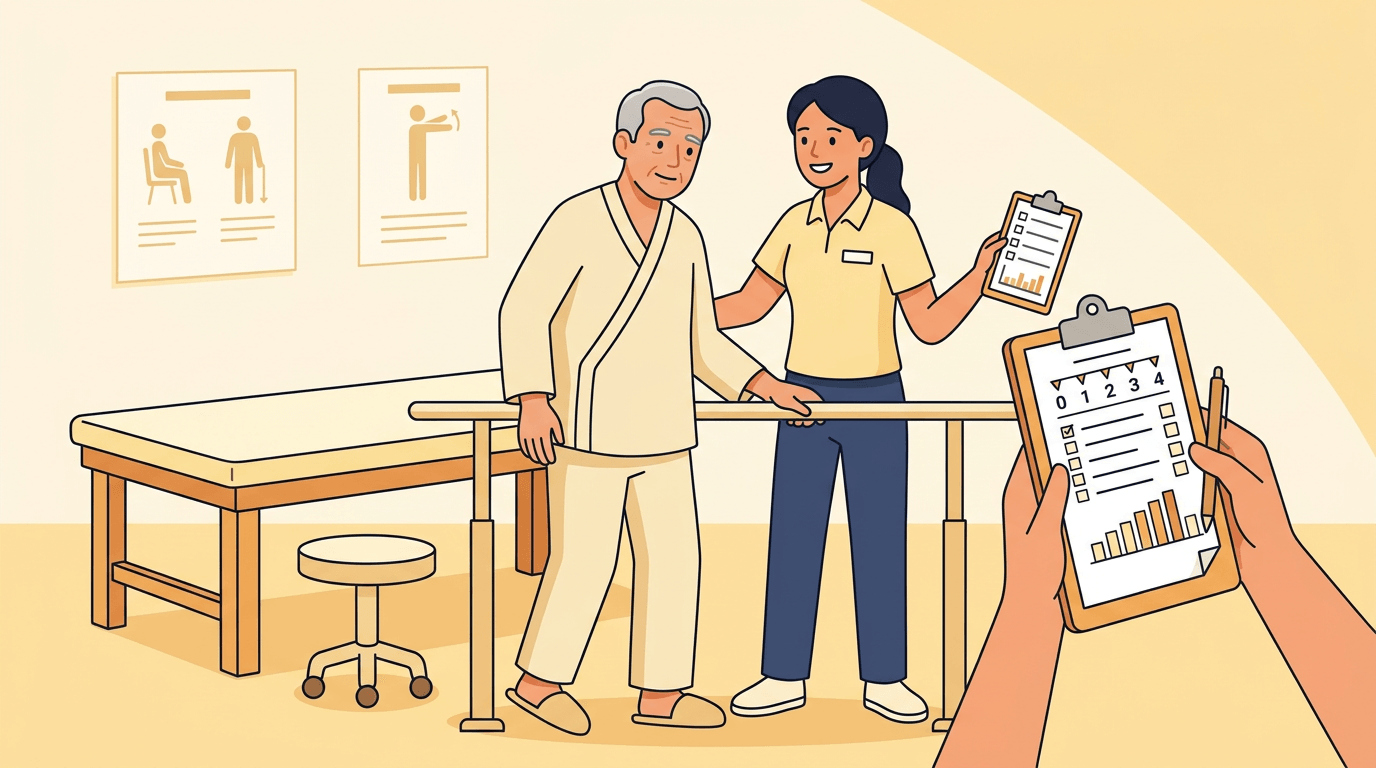
For younger learners especially, the assessment runs as a one-to-one session between a teacher and a single student, away from the rest of the class.
Think of a kindergarten teacher pulling one child over to a table of blocks and picture cards while the rest of the room works independently nearby.
Sessions move fast: according to the UK government's reception baseline assessment guidance, there's no strict time limit, but a full session "usually takes less than 20 minutes in total to complete."
The tasks lean on activity-based resources (counters, picture cards, simple games) rather than worksheets, and the teacher records responses directly on a device as the student works.
If a student gets anxious or loses focus, the teacher can pause or stop the session and pick it back up later.
Beyond these one-to-one sessions, many classrooms also use quick digital check-ins: short, app-based tasks a whole class can complete at once for a faster read on where everyone stands.

How results are shared and used
There's no pass or fail here. Results aren't tracked at the individual, student-by-student level for comparison; they're shared with teachers and parents as a simple snapshot of where a student is starting from.
Teachers use that snapshot to set early goals and group students by similar starting points, the foundation for measuring growth later on.
Pros and Cons of Baseline Assessments
Like any tool, a baseline assessment works best when you know both what it does well and where it can trip you up. Here's a balanced look at both sides.
The benefits of baseline assessment
Done well, a baseline gives you more than a starting score. It gives you a clearer picture of the student in front of you:
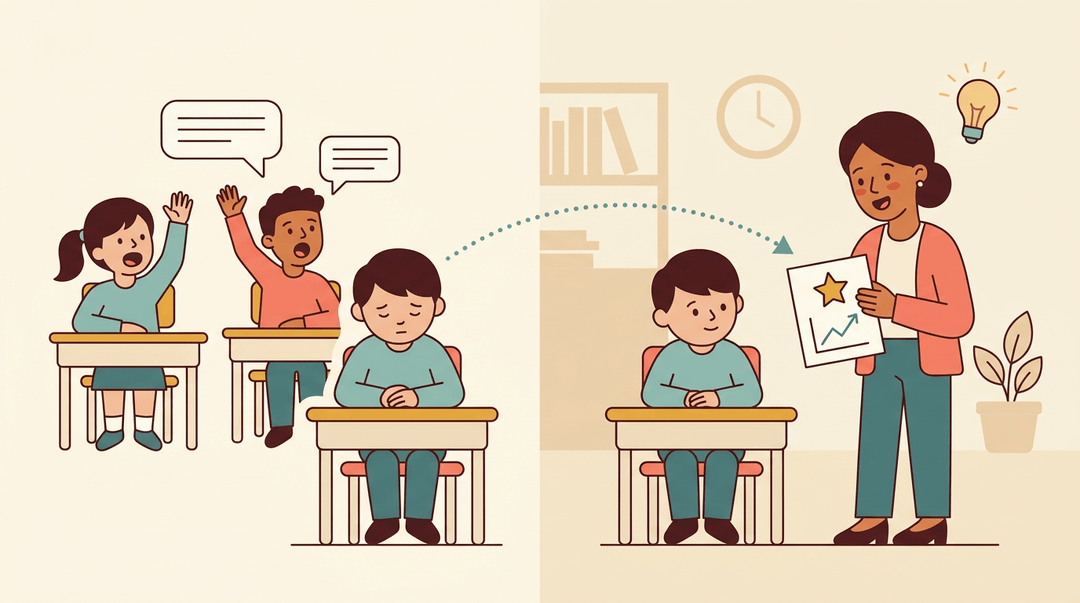
- Highlights strengths. A quiet student who struggles to speak up in class might reveal strong reading comprehension on a baseline, something you'd otherwise miss.
- Informs parents. Sharing baseline results early helps parents understand where their child is starting from, not just where they end up.
- Targets study focus. Instead of reteaching everything, you can zero in on the specific gaps the data points to.
- Builds confidence. When students see their own starting point, progress feels earned rather than invisible.
- Reduces exam anxiety. A low-stakes baseline, taken before anything counts toward a grade, takes the pressure off.
- Tracks improvement over time by giving you a fixed point to measure against.
- Enables pre/post comparison. Pair the baseline with a later assessment, and growth stops being a guess. It becomes a number you can show.
Drawbacks worth keeping in mind
Baseline data isn't flawless, and it helps to know where it can mislead you:
- Young age can skew results. A kindergartner's attention span doesn't always match their actual ability.
- Distraction affects accuracy. A noisy room or a rushed test session can pull scores down for reasons that have nothing to do with skill.
- Energy levels matter. A student tested right after recess or late in the day may simply perform differently than they would first thing in the morning.
None of this means baselines aren't worth running. It just means reading them with context, not as the final word.
Preparing for a Baseline Assessment
A little prep goes a long way toward keeping a baseline assessment feeling like just another part of the school day, not a big event. You don't need a special program to get there.
Ways to help children get ready
A few simple habits do most of the work:
- Mock assessment practice. A short, low-pressure practice run helps students get comfortable with the format before the real thing, so nothing about the questions or routine feels unfamiliar.
- Everyday classroom teaching. Regular instruction is still the best preparation there is. Students who are reading, counting, and problem-solving all week arrive ready, without any extra drilling.
- Engaging games and songs. For younger students especially, a counting song or a letter-sound game builds the exact skills a baseline checks, without it ever feeling like a test.
- Targeted revision based on gaps. If an earlier check flagged a weak spot, a few focused minutes on that specific skill beats a broad review of everything at once.
- Repeat testing to track growth. Running the same type of check again later shows whether a student has moved forward, which is the whole point of a baseline in the first place.
- Flexible groups from the results. Once scores are in, use them to form small groups built around current need, not a fixed label, and regroup again as skills shift throughout the year.
Consider a second-grade teacher who notices three students landing below benchmark on number sense. A short daily small-group session, built from that baseline data, closes the gap well before the next check confirms it.
A baseline assessment isn't just a test you give and file away. It's the starting point that makes grouping, pacing, and tracking growth possible, so every student gets taught from where they actually are, not where you assume they are.
Ready to turn that baseline data into something useful all year long? Check out our Grading & Assessment feature to record and track growth with less guesswork and fewer headaches.
References
- 2026 reception baseline assessment: administration guidance — gov.uk
- Reception Baseline Assessment – September 2025 | Can-Do — can-do.bracknell-forest.gov.uk
Frequently asked questions
What is a baseline assessment?
A baseline assessment is a short, focused snapshot of what students already know and can do before instruction begins. It establishes a starting point that helps teachers identify strengths and gaps, plan instruction, group students, and measure growth over time.
What is a baseline test?
A baseline test is a brief assessment given at the beginning of a course, school year, or learning period to measure a student's current knowledge and skills. It is typically low-stakes and samples key areas rather than reproducing a full exam.
What are the four types of assessments?
The four main types of assessments are diagnostic, formative, summative, and benchmark. Diagnostic assessments identify gaps before teaching, formative assessments check understanding during learning, summative assessments measure achievement at the end, and benchmark assessments compare progress with a defined standard.