PASS Scale: A Complete Guide to Scoring Balance After Stroke


Jump to section
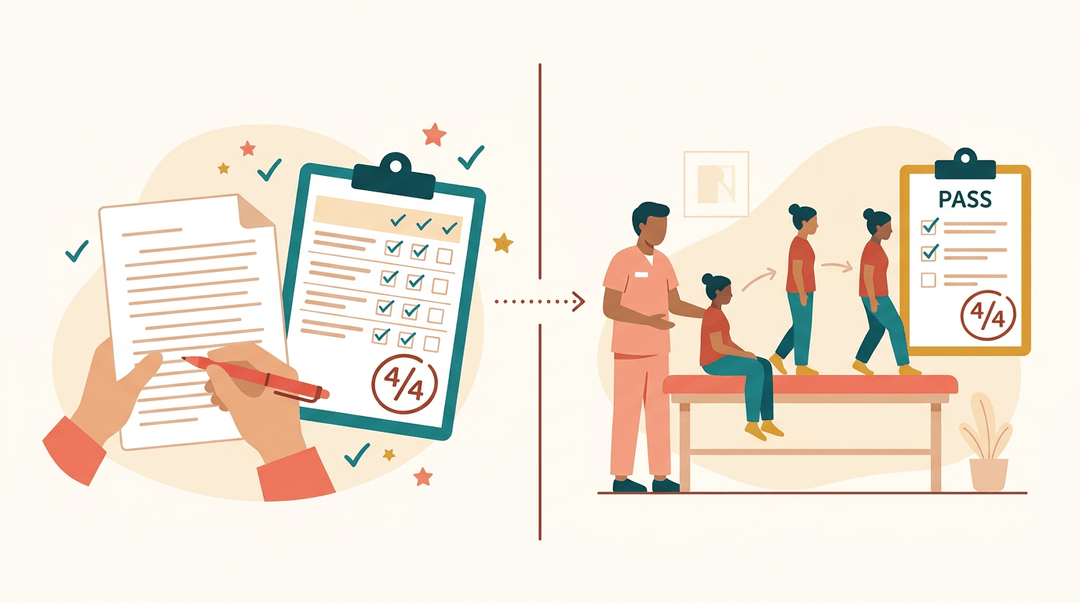
Think about a rubric you trust for grading student writing: clear criteria, consistent scoring, and a number that actually means something. Clinicians lean on the same idea when they need to measure balance after a stroke.
The Postural Assessment Scale for Stroke (PASS) does exactly that, scoring how well someone sits, stands, and shifts position. It matters because those scores shape real recovery decisions.
Here, we'll walk through how it's scored, how reliable it is, and what the numbers actually predict.
An Overview of the PASS Scale
Ever tried to score a patient's balance right after a stroke and wondered what the number actually tells you? The Postural Assessment Scale for Stroke, or PASS, exists to answer exactly that.
It gives clinicians a shared language for describing postural control across the whole arc of recovery.
What the Scale Measures
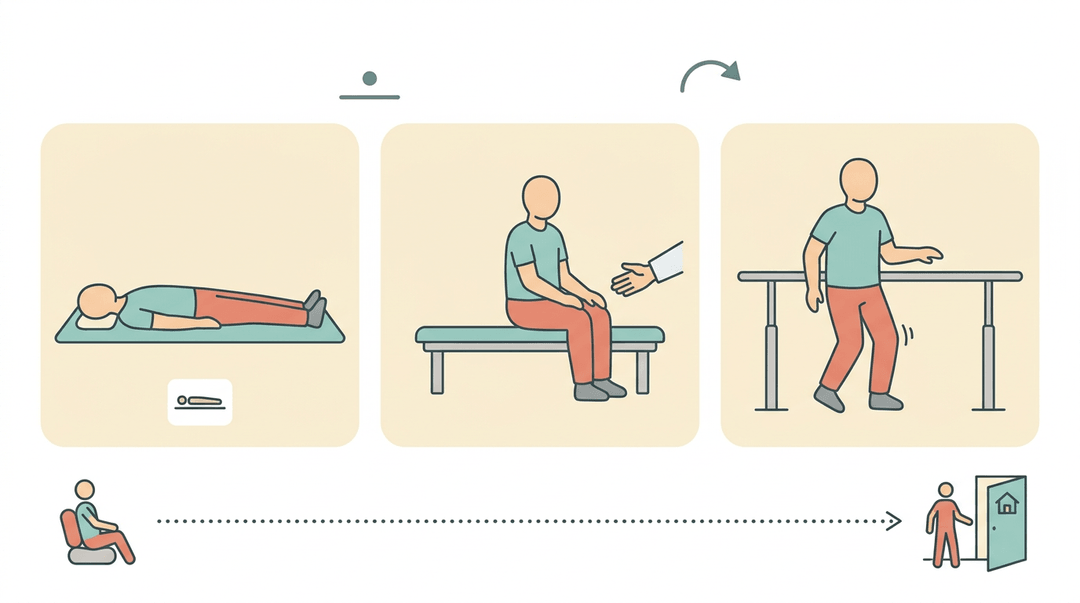
PASS is a 12-item, performance-based measure that assesses postural control after stroke. It looks at balance in three positions: lying, sitting, and standing, and captures both static balance (holding a position) and dynamic balance (changing position).
Because it spans such a wide range of tasks, it's built to work for patients across the full range of stroke severity, from someone who can barely sit unsupported to someone nearly ready for discharge.
How Do You Interpret the PASS Score?
Each of the 12 items is scored from 0 to 3, giving a total range of 0 to 36.
The items increase in difficulty as you move through the scale: early items cover lying-to-sit transfers, later ones move to sit-to-stand, single-leg stance, and picking an object off the floor.
Lower totals point to more severe postural impairment, higher totals to better control. A score of 21, for example, typically sits in a moderate range rather than the severe end, since true severe impairment usually shows up as a much lower total.
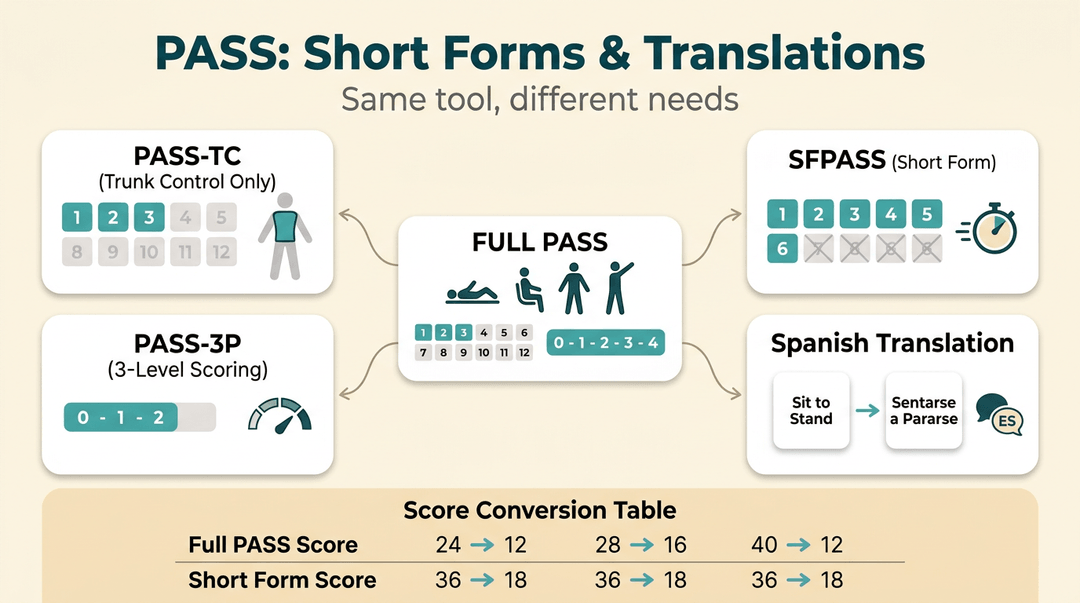
PASS Short Forms and Translations
A few adaptations make PASS easier to use in specific settings:
- PASS-TC: focuses only on the trunk control items.
- SFPASS (Short-Form PASS): a condensed version for faster administration.
- PASS-3P: a 3-level scoring version.
- A Spanish translated version for non-English-speaking patients.
Score conversion tables let clinicians move between the full PASS and these shorter forms without losing comparability.
How to Administer the PASS Scale
Good news for busy clinicians: the PASS doesn't ask for anything you don't already have on hand. Here's what the test requires, who can run it, and where it fits into a stroke patient's care journey.
What Equipment You Need for Testing
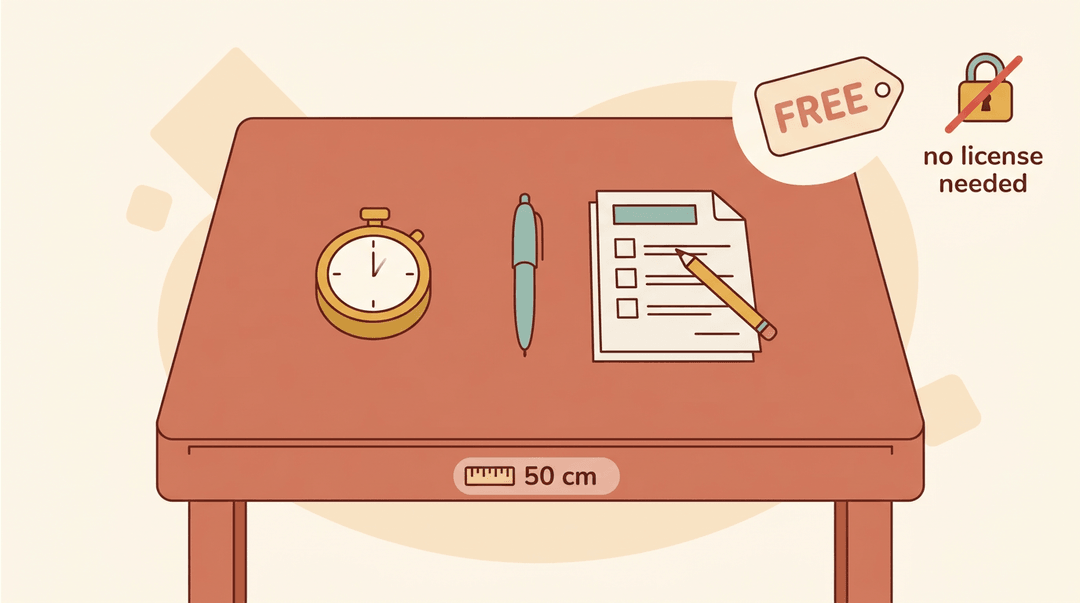
You won't need to order anything special to get started. The PASS calls for a standard 50-centimeter exam table, a stopwatch, and a pen.
It's a paper & pencil administration: you score each item by hand as the patient works through the tasks, no software, no tablet app. Best of all, the scale itself is free.
There's no licensing fee and no subscription, just a printable form and a few minutes of your time.
No Special Training Required
No certification course stands between you and using the PASS.
Any clinician with working knowledge of balance impairment after stroke, whether that's a physical therapist, occupational therapist, or nurse familiar with postural control, can pick it up and administer it correctly.
That's a big part of its appeal: rapid, easy scoring that slots into a normal evaluation without adding a training burden to your week.
Where It's Recommended for Use
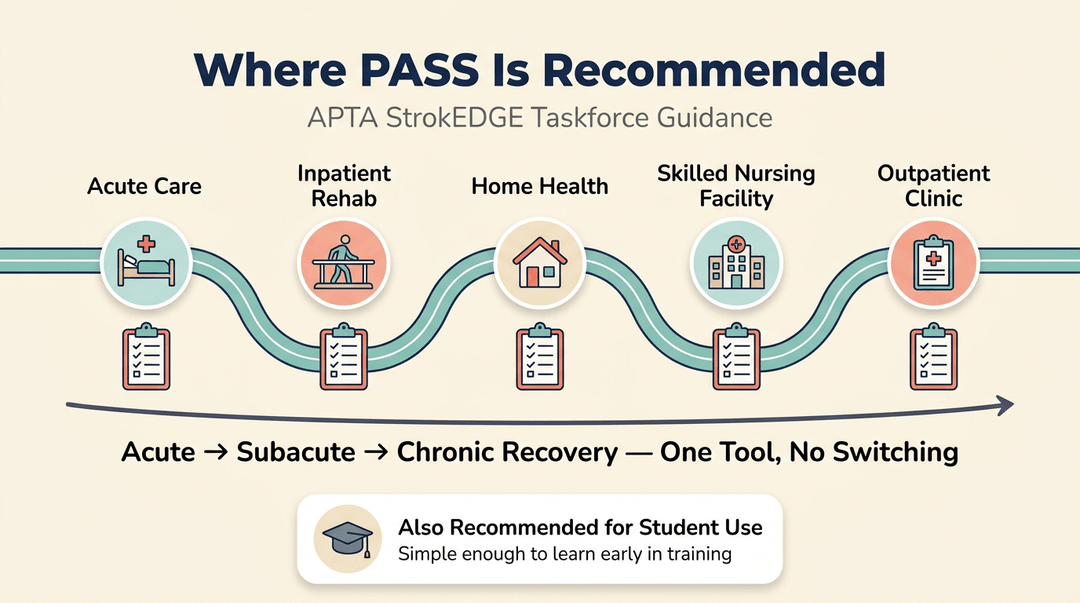
The APTA's StrokEDGE taskforce recommends the PASS across a wide range of settings:
- Acute care
- Inpatient rehab
- Home health
- Skilled nursing facilities
- Outpatient clinics
That breadth matters, because it means the same tool can follow a patient from the acute stage right through subacute and chronic recovery without switching instruments.
StrokEDGE also recommends student exposure to the PASS, a sign of just how approachable it is for clinicians early in their careers.
How Reliable and Valid Is It
Numbers alone won't tell you whether a scale is trustworthy, so let's look at what the research actually confirms about the PASS: how consistent it is, how it stacks up against other tools, and where it runs into trouble.
How Reliable the PASS Scores Are
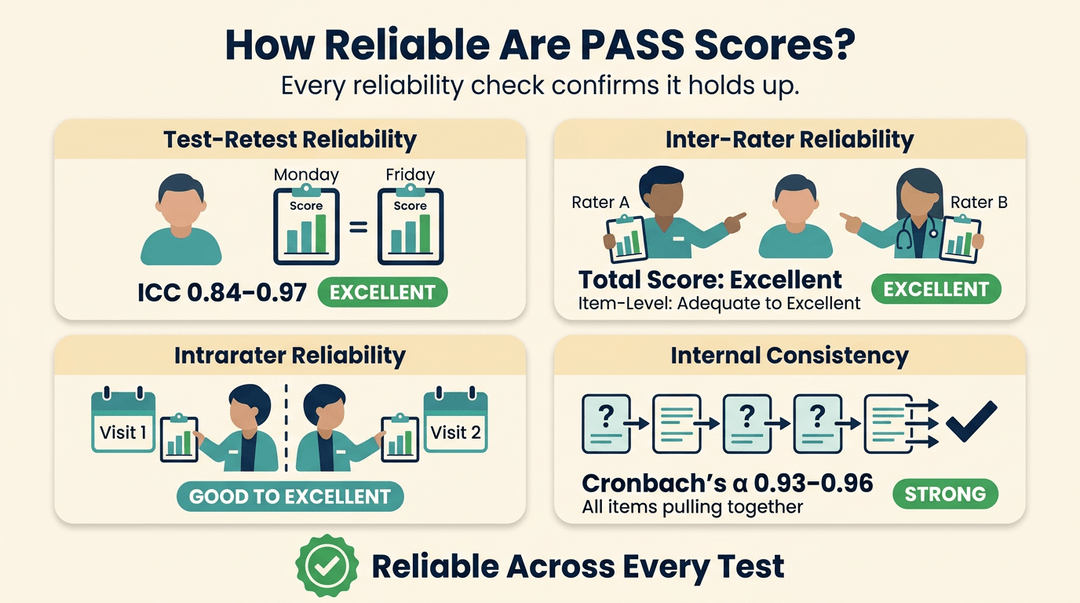
The PASS holds up well across every reliability check that matters:
- Test-retest reliability is excellent, with intraclass correlation coefficients (ICC) ranging from 0.84 to 0.97.
- Inter-rater reliability for the total score is excellent, and item-level agreement between raters ranges from adequate to excellent.
- Intrarater reliability, the same clinician scoring the same patient on separate occasions, is good to excellent.
- Internal consistency, measured by Cronbach's alpha, sits between 0.93 and 0.96: a strong sign the items are all pulling in the same direction.
How It Compares to Other Measures
The PASS doesn't exist in isolation, and its scores line up well with tools you probably already use.
It correlates with the Functional Independence Measure, the Berg Balance Scale, and the Fugl-Meyer balance subscale, plus the Barthel Index, which measures daily-living function.
It also tracks closely with the BESTest, the Dynamic Gait Index, and the Functional Gait Assessment.
On the flip side, PASS scores move in the opposite direction from measures of spatial inattention and sensory loss: as postural control improves, those deficits typically shrink.
When Scores Hit Floor or Ceiling
Like most balance measures, the PASS isn't equally sensitive at every level of function.
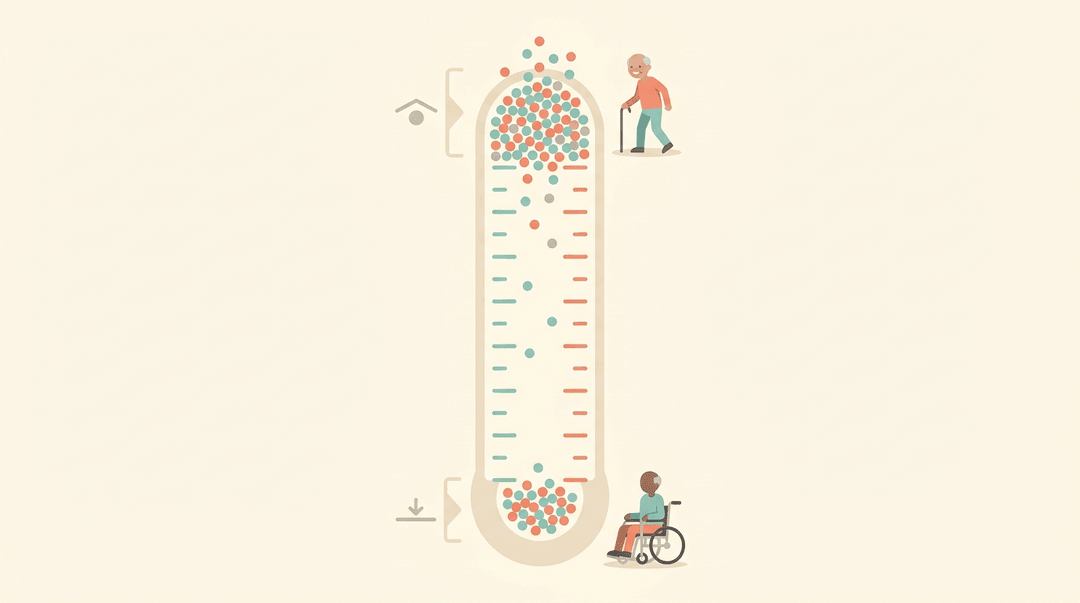
Ceiling effects (patients scoring at or near the maximum) are moderate to large, especially in the chronic stage, when many patients have already regained near-normal postural control.
Floor effects are generally smaller and show up mostly in patients with severe, low-level impairment.
One study comparing the PASS with other balance measures in chronic stroke found no floor or ceiling effects at all in its sample, a reminder that these effects depend heavily on who's being tested.
The short-form version, the SFPASS, shows a notably larger floor effect than the full PASS, which is worth watching in more severely impaired patients.
How Well It Tracks Recovery
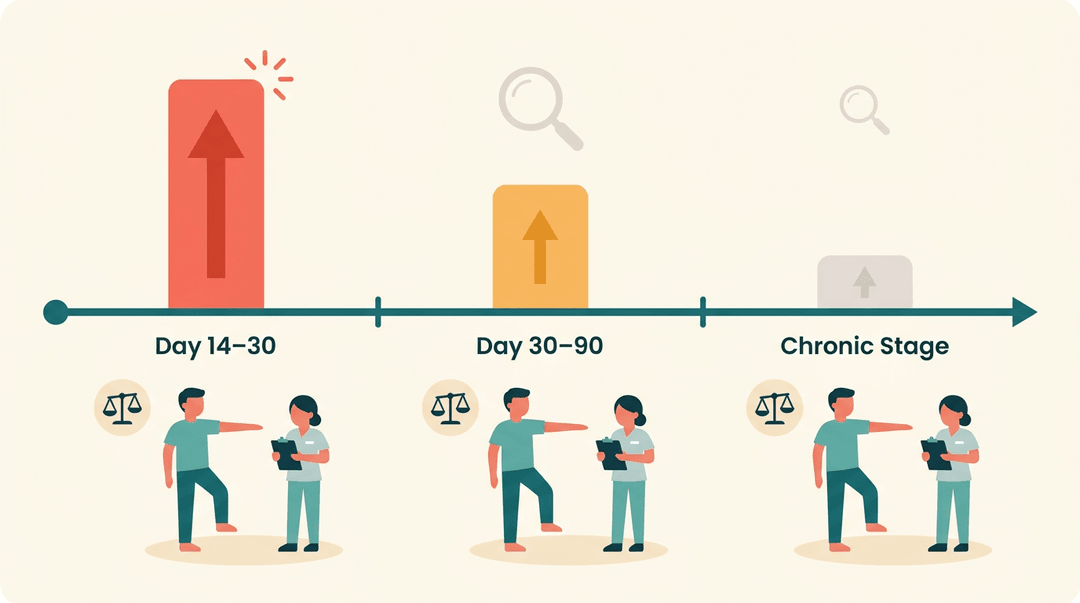
Responsiveness (how well a scale detects real change over time) depends heavily on timing. Research comparing the PASS and the Berg Balance Scale after stroke found large responsiveness between 14 and 30 days post-stroke, when recovery moves fastest.
That drops to moderate between 30 and 90 days, and to small or low in the chronic stage or over short reassessment intervals. At the individual level, the PASS also outperforms the SFPASS at detecting genuine change.
Responsiveness isn't uniform across patients, either: one analysis found the PASS was more responsive in patients with more severe strokes, particularly soon after onset.
That's the main limitation worth remembering: the PASS shines brightest early after stroke, but loses some of its edge for tracking long-term, chronic recovery.
Predicting Recovery and Care Decisions
A PASS score isn't just a snapshot of today's balance. It's also a fairly reliable window into where a patient is headed, which is exactly what makes it useful for planning care and setting realistic expectations with families.
Predicting Functional Independence After Stroke
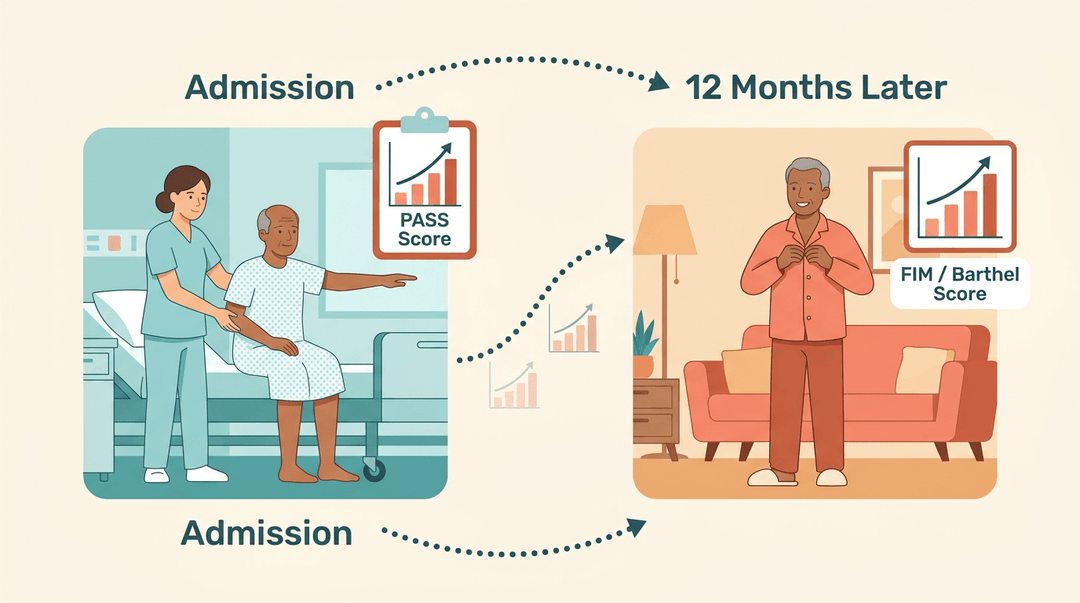
PASS scores correlate strongly with Functional Independence Measure (FIM) scores, a common measure of how much help someone needs with daily tasks, across multiple points in recovery, not just at one stage.
In the original validation work, researchers reported a high correlation between PASS and FIM scores, supporting the scale's construct validity.
That predictive strength tends to sharpen as recovery progresses: the relationship between PASS and functional outcomes is tighter in the chronic stage than in the acute stage.
Notably, the admission PASS score alone predicts a patient's functionality at 12 months, and separate work confirms that PASS scores taken at admission are linked to functional status at that later follow-up point.
PASS scores also carry forward to predict Barthel Index scores at discharge, another marker of independence in daily activities.
Predicting Walking Ability After Stroke
Balance and walking are closely tied, so it's no surprise PASS predicts ambulation status at discharge and correlates with the walking subscale of the Motor Assessment Scale.
More usefully, specific cut-off scores separate patients who will walk independently from those who won't, giving clinicians an early signal well before discharge day arrives.
Using Cut-Off Scores in Practice
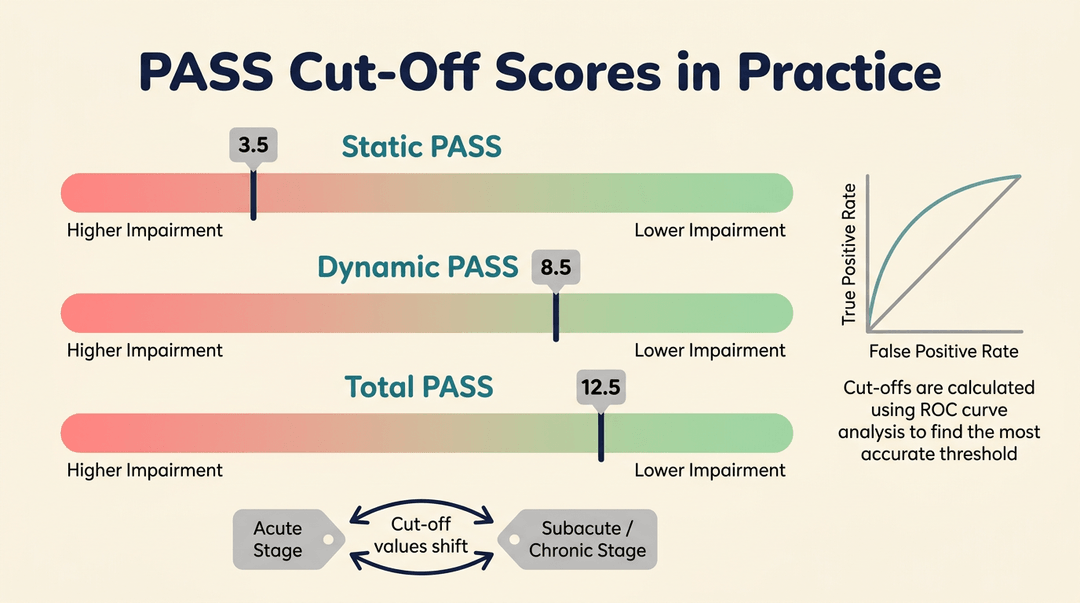
These cut-offs aren't fixed. They shift depending on whether a patient is in the acute or subacute/chronic stage, and they're established using ROC (receiver operating characteristic) curve analysis to measure accuracy.
That analysis produced distinct thresholds for static, dynamic, and total PASS: 3.5, 8.5, and 12.5 points respectively, each useful for distinguishing higher versus lower functional impairment.
Who It Works Best for and When
The PASS earns its keep at particular points in a patient's recovery, and knowing when to reach for it (and when to reach for something else) matters as much as knowing how to score it.
Sensitivity Across Different Stroke Stages
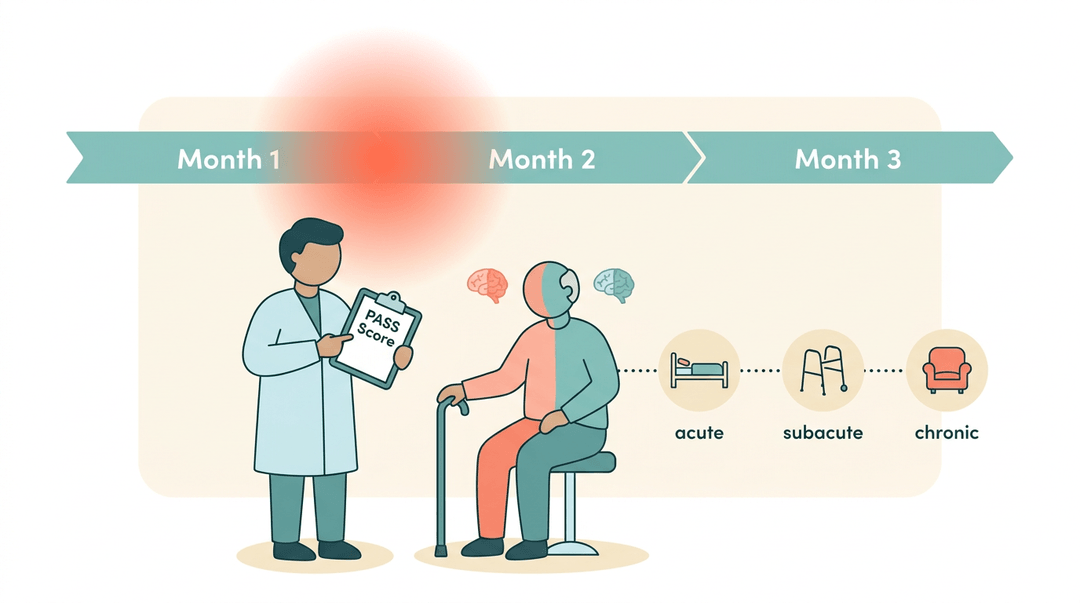
The scale is most sensitive in the first three months after a stroke, exactly when postural control is changing fastest and clinical decisions carry the most weight.
It can also discriminate between right and left hemisphere damage, a distinction that shapes rehab planning. Even patients with severe deficits, the ones who'd bottom out other balance measures, still produce meaningful PASS scores.
That range is what lets clinicians use it across acute, subacute, and chronic phases without swapping tools mid-recovery.
What Stroke Scale Do Neurologists Use?
There's no single scale every neurologist reaches for, but the PASS is a common answer when postural control specifically is the question.
It's more sensitive than the Berg Balance Scale (BBS) and the Fugl-Meyer balance subscale in patients with severe stroke, where those tools tend to floor out.
Compared with the Trunk Impairment Scale, it captures a broader picture of whole-body posture rather than trunk control alone.
Against gait-focused tools like the Dynamic Gait Index (DGI), the DGI-4, and the Functional Gait Assessment (FGA), the PASS fills in the earlier, pre-gait stages of recovery that those tools can't reach.
Clinicians often pair it with the Functional Independence Measure (FIM) to compare posture against real-world function, and set it alongside the National Institutes of Health Stroke Scale (NIHSS) when they need a broader neurological picture to go with posture-specific detail.
Choosing between them isn't about finding the best scale. It's about matching the tool to the stage of recovery and the deficit you're actually trying to measure.
However you look at it, the PASS Scale works because it turns something as slippery as balance into structured, comparable numbers, the same backbone behind any assessment worth trusting.
Used well, it guides real decisions about recovery and care, not just paperwork. Ready to bring that same clarity and structure to your own classroom scoring? Check out our Grading & Assessment feature to keep every score organized and easy to track.

References
- Comparing the Postural Assessment Scale for Stroke and Berg ... — pmc.ncbi.nlm.nih.gov (2025)
- JCM | Free Full-Text | Predictive Validity of the Postural Assessment Scale for Stroke (PASS) to Classify the Functionality in Stroke Patients: A Retrospective Study — mdpi.com
- Comparison of Psychometric Properties of the Postural Assessment Scale for Stroke Patients with Berg Balance Scale and Brunel Balance Assessment for Chronic Stroke — doi.org (2021)
- Postural Assessment Scale for Stroke Patients in Acute, Subacute and Chronic Stage: A Construct Validity Study — pmc.ncbi.nlm.nih.gov
- Reliability and validity of the Balance Evaluation Systems Test (BESTest) in people with subacute stroke — ncbi.nlm.nih.gov
- Analysis and comparison of the psychometric properties of three balance measures for stroke patients — ncbi.nlm.nih.gov
- Validation of a standardized assessment of postural control in stroke patients: the Postural Assessment Scale for Stroke Patients (PASS) — ncbi.nlm.nih.gov
- Postural Assessment Scale for Stroke Patients Scores as a predictor of stroke patient ambulation at discharge from the rehabilitation ward — pubmed.ncbi.nlm.nih.gov (2016)
- Postural Assessment Scale for Stroke — sralab.org
- Postural Assessment Scale for Stroke Patients (PASS) - Complete Explanation + PDF — clinicaltoolslibrary.com (2025)
- Berg Balance Scale (BBS) — sunnaas.no (2026)
Frequently asked questions
How do you interpret the PASS outcome measure score?
The PASS has 12 items, each scored from 0 to 3, for a total of 0 to 36. Lower scores indicate more severe postural impairment, while higher scores indicate better balance and postural control. Interpretation should also consider the patient’s recovery stage and change over time.
Is a stroke score of 21 considered severe?
Yes, a PASS score of 21 is generally in the moderate range rather than the severe range. Severe postural impairment typically produces a much lower total score, although the result should be interpreted alongside the individual’s abilities and clinical context.
What does pass score stand for?
PASS stands for Postural Assessment Scale for Stroke. It is a 12-item assessment of postural control, including sitting, standing, lying, and changing positions after stroke.
What stroke scale do neurologists use?
Neurologists may use several scales depending on the purpose of the assessment. The NIH Stroke Scale, or NIHSS, is commonly used to measure neurological impairment, while the PASS is used specifically to assess postural control and balance. Other tools include the Berg Balance Scale, Fugl-Meyer Assessment, and Functional Independence Measure.