What Is the Standards of Learning Test in Virginia?

Jump to section
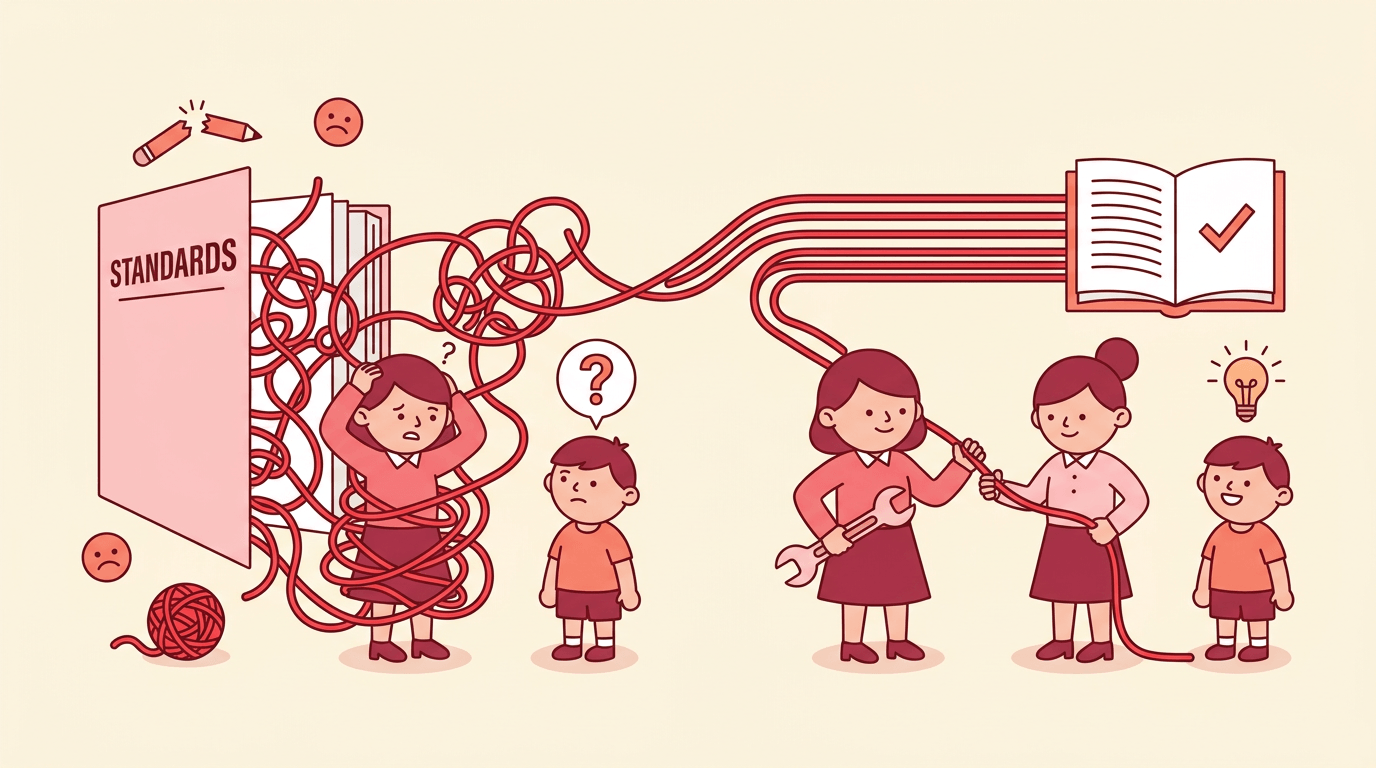
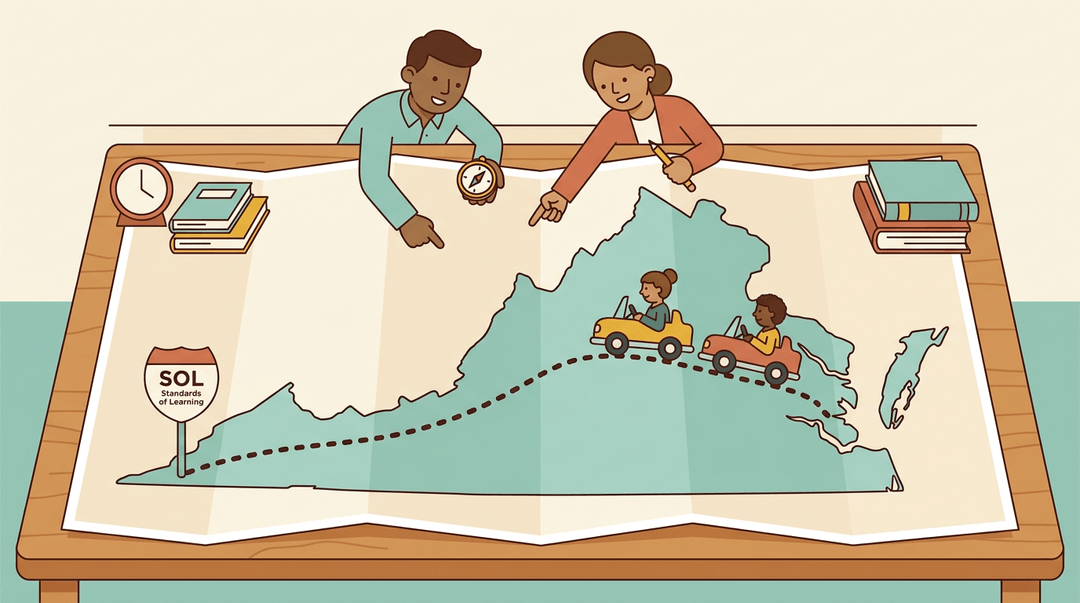
Think about a road trip where every driver agrees on the same map before anyone starts the engine. That shared map is what academic standards do for a classroom.
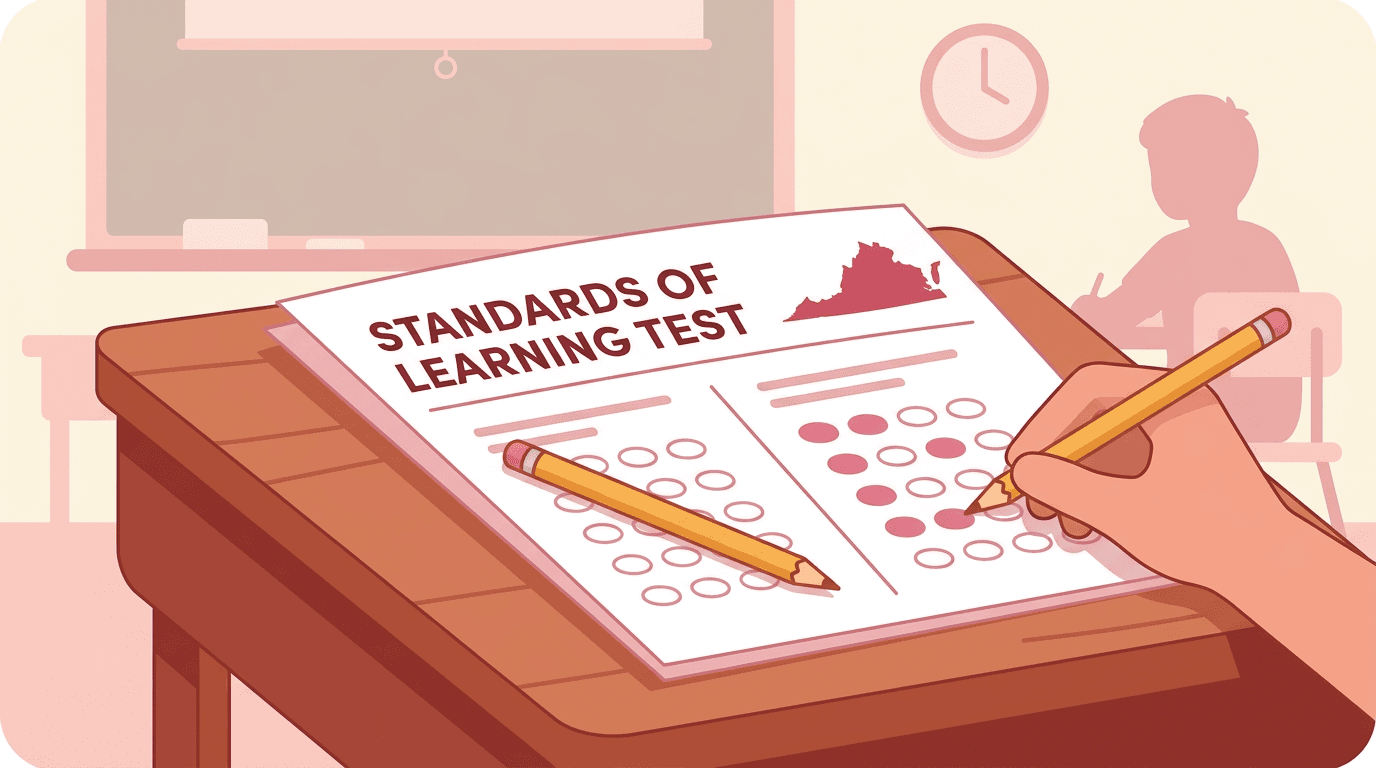
In Virginia, that map has a name: the Standards of Learning, or SOL, the state's benchmarks for what students should know at each grade.
This post breaks down what SOL testing covers, how it's scored, and how to get your classroom ready without the guesswork.
What Academic Standards Are and Why They Exist
Academic standards are the shared benchmarks that spell out what students should know and be able to do at each grade level.
They're the blueprint behind every lesson plan, textbook, and test, including the Standards of Learning (SOL) tests Virginia uses to measure progress.
Why academic standards exist
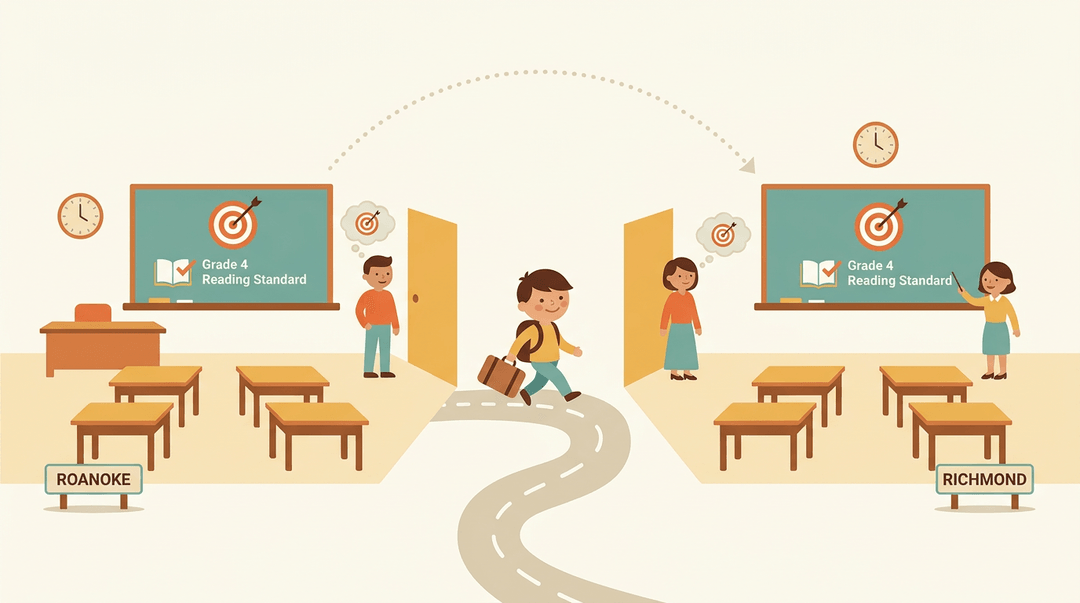
Standards exist to keep expectations steady, whether a student sits in a classroom in Roanoke or Richmond. That consistency matters for a few reasons:
- Consistent learning expectations. A fourth grader who moves across the state shouldn't land in a classroom teaching a completely different set of skills.
- College and career readiness. Standards map a path toward the reading, writing, and math skills students need after graduation, not just for the next test.
- Support for teachers and parents. A clear target makes it easier for teachers to plan lessons and for parents to know what their child should be learning at home.
- Real-world relevant skills. The strongest standards go beyond memorization and aim at skills students will actually use: reading closely, solving a problem, building an argument.
National frameworks states draw from
Virginia writes its own standards, but many states lean on shared national frameworks for guidance. You'll see common threads running through:
- Common Core State Standards for math and English language arts
- InTASC (Interstate Teacher Assessment and Support Consortium) standards for teaching practice
- ISTE (International Society for Technology in Education) standards for technology skills
- NCTM (National Council of Teachers of Mathematics) standards for math instruction
- NCSS (National Council for the Social Studies) standards for social studies
- NCTE (National Council of Teachers of English) standards for English instruction
State-Specific Standards of Learning
"Standards of Learning" isn't one national document. It's a patchwork that shifts depending on which state line you cross. A quick tour of three states shows just how differently "the standard" can look from Sacramento to Richmond to Indianapolis.
California's Common Core standards
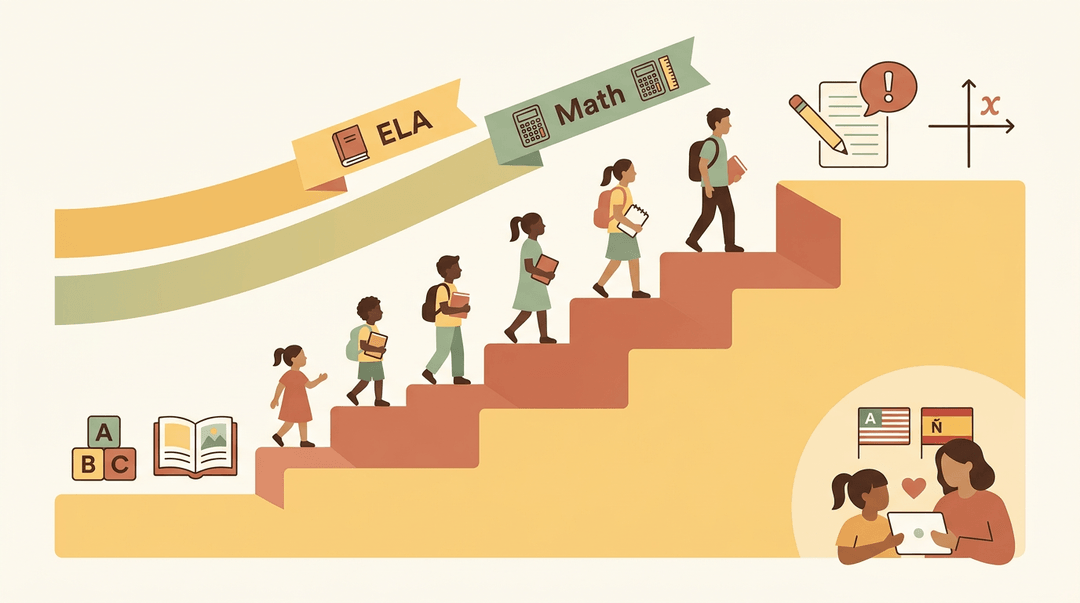
California's K-12 progression builds ELA and literacy standards and math standards side by side, moving from foundational reading skills in kindergarten toward argumentative writing and algebra readiness by high school.
The state also publishes Spanish translations of its standards, making them more accessible to bilingual families and dual-language classrooms.
Virginia's standards of learning test
Virginia's SOL test carries real weight.
Under the state's testing rules, "students may meet the ESSA testing requirements by taking a Standards of Learning (SOL) test, or in the case of students with significant cognitive disabilities, participating in the Virginia Alternate Assessment Program (VAAP)," according to a guidance document governing certain provisions of Virginia's assessment policy.
So yes, SOL tests are effectively mandatory, though the VAAP offers an alternate route.
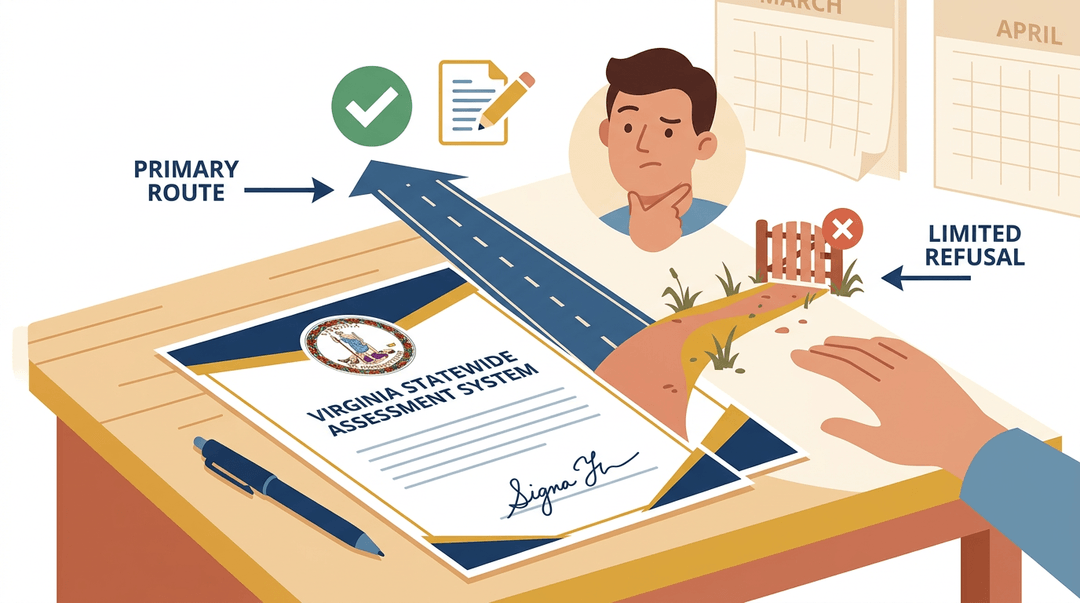
Parents aren't entirely without options, though.
As Arlington Public Schools explains, "Virginia does not have an assessment opt-out provision; however, parents/guardians may refuse to permit their student to participate in one, some, or all of Virginia's Standards of Learning (SOL) assessments or the Virginia Alternate Assessment Program (VAAP)."
That's a refusal, not a formal opt-out, and the distinction matters before conference season.
The content itself has shifted too.
According to LegalClarity, "the 2024 English Standards of Learning were approved by the Board on March 28, 2024, replacing the 2017 standards," sharpening grade-band instructional focus and giving reading and writing skills tighter curriculum framework alignment for teachers planning units.
Indiana academic standards
Indiana's academic standards cover ELA, math, science, and social studies, all housed on the Indiana Department of Education (IDOE) standards portal.
From there, teachers can follow links to national standards bodies for context on how Indiana's benchmarks stack up against the wider landscape.
Preparing Your Classroom for SOL Testing
SOL prep isn't a frantic review week in April: it's three phases that start the day you get your pacing guide. Here's what to do before, during, and after the test.
Before: align your map to the test
Confirm these three things before deep instruction begins:
- Blueprint reviewed. Pull the SOL test blueprint for your subject and grade.
- Note which reporting categories carry the most items; weight your time accordingly.
- Pacing guide aligned to the test date. Count backward from test day.
- Jot it like this: "Test May 12 ← review April 21 ← last new content April 18."
- Standard gaps spotted. An unpacked standard hides skills you haven't taught separately.
- Example: "compare fractions" hides three skills: common denominators, benchmarks, number lines.
⚠️ Watch out: a pacing guide that finishes new content the week before the test leaves zero review time. Build in a two-to-three-week buffer, then protect it.
During: build readiness as you teach
- Quiz formatively every week. Short and low-stakes, one standard at a time.
- Try a five-question exit ticket written in SOL-style multiple choice.
- Track mastery per standard, not per unit. Keep a simple roster grid.
- Rows are students, columns are standards, cells are "not yet / close / mastered."
- Differentiate the moment the grid shows a gap. Don't wait for review season.
When the grid flags a struggling student, match the response to what you see:
| When you see... | Try... |
|---|---|
| One student missing one standard | A five-minute reteach during independent work |
| A small group stuck on the same skill | A pulled group twice a week until the grid flips |
| Half the class below "close" | Reteach whole-class with a new approach, then requiz |
After: put results to work
- Read score reports by reporting category. The pass/fail number hides the story.
- A passing score can still show a weak category worth fixing next year.
- Form remediation groups by shared weakness. Group by category, not overall score.
- Pull the five students who missed measurement items, not the five lowest scorers.
- Update next year's pacing guide now. Do it while the data's fresh.
- Add days to the categories where scores dipped; trim where mastery was easy.
Example: a fifth-grade team sees strong reading scores but a dip in the nonfiction category across classes. Next year's pacing guide adds two weeks of nonfiction text structure in the fall, not a scramble in spring.
Map standards to your pacing guide and track mastery all year with EMStudio's curriculum planner.
Assessment and Testing Tied to Standards
Standards only matter if you can measure whether they're landing, and Virginia built its SOL testing program to do exactly that.
How state standardized tests work
Every state runs its own version of this check.
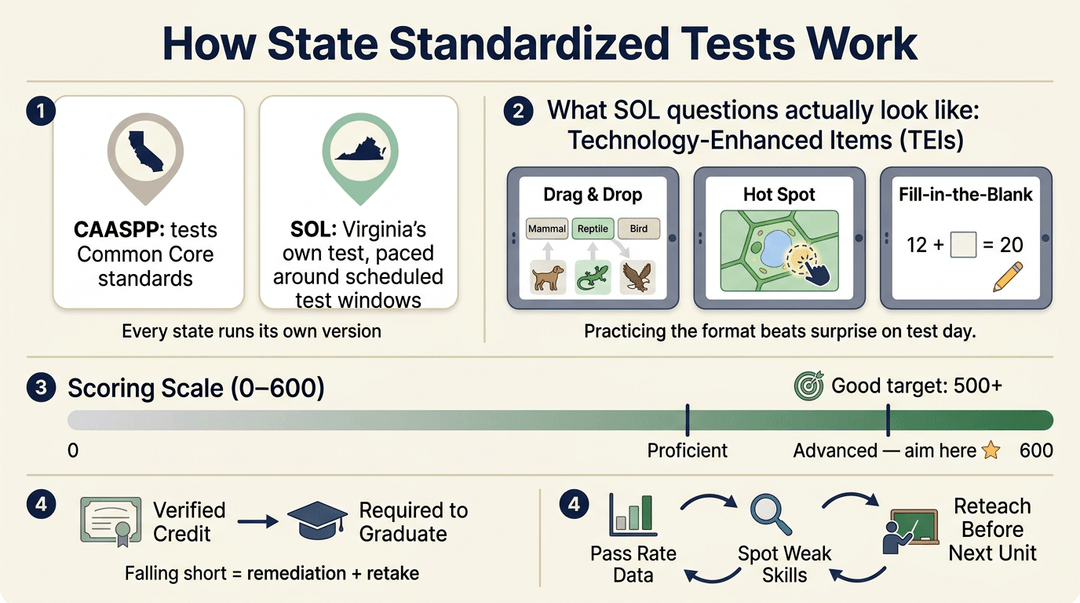
California's CAASPP measures Common Core, while Virginia's Office of Student Assessment runs the SOL program, offering instruction and assessment sessions that help teachers pace lessons around test windows instead of scrambling the week before.
SOL tests mix multiple-choice items with technology-enhanced items, or TEIs: drag-and-drop, hot spots, and fill-in-the-blank formats that ask students to show reasoning, not just pick an answer.
Practicing that format is one of the simplest ways to pass: familiarity beats surprise on test day.
Scoring runs 0 to 600, with 400 marking proficient and 500 marking advanced: a good target for any student is 500 or above.
Passing certain SOLs earns verified credits, which Virginia requires for graduation, and students who fall short get remediation and a retake.
Virginia also publishes pass rates and study tips for teachers, and smart teachers use that same data to spot which skills need a reteach before the next unit, not after.
How the SAT lines up with standards
The SAT went through its own alignment. The College Board's redesign sharpened evidence-based reading and writing, narrowed math to fewer, deeper topics, and made the essay optional, echoing the same Common Core priorities Virginia's standards reflect.
Professional Development and Educator Training
Standards don't teach themselves. Virginia backs its Standards of Learning (SOL) with an ongoing pipeline of training that keeps teachers current on what to teach and how to teach it well.
Training teachers to teach the standards
The Virginia Department of Education runs SOL conferences and institutes throughout the year, giving teachers a chance to dig into curriculum updates and swap strategies with colleagues across the state.
Many divisions lean on a train-the-trainer model: a handful of teachers attend the state sessions, then bring that material back and coach their own building. That one investment reaches a whole staff instead of just one classroom.
Grade-band workshops narrow the focus further. A third-grade team working through new math standards needs different support than a high school biology department, so sessions are split by grade band to keep the content relevant.
For teachers who can't make it in person, webinar recordings and presentations stay available online, so a new hire in October isn't left guessing what everyone else learned in August.

Certification and licensure for teachers
Before any of that training matters, a teacher has to clear Virginia's licensure bar. That means:
- A bachelor's degree from an accredited institution
- Completion of a state-approved teacher preparation program
- Passing scores on Virginia's required licensure tests
On top of the academic requirements, teachers also need current CPR and AED certification, a reminder that the job is about student safety as much as it is about content mastery.
Resources for Parents, Students, and Test Prep
Knowing the test format and the opt-out rules is one thing. Actually getting ready for test day is another, and thankfully, you don't have to build that prep from scratch.
Guides for parents and communities
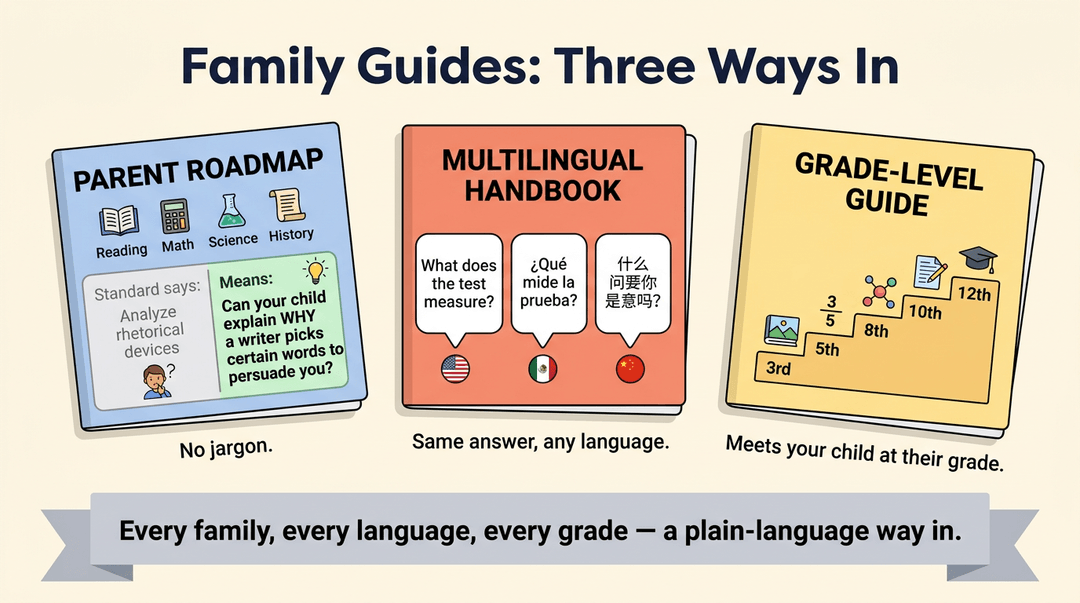
Families often want a plain-language way in, and subject-specific parent roadmaps do exactly that: they break down what a child is expected to know in reading, math, science, or history, without the jargon.
For families whose home language isn't English, multilingual handbooks cover the same ground so no parent is left guessing what the test actually measures.
Layer in grade-level guides to success, and you've got a set of resources that meets a family right where they are, whether their child is in third grade or heading into high school.
Practice tests for teacher licensure
Test prep isn't only for students. Teachers heading into the profession lean on tools like Praxis practice tests and the Indiana Core Academic Skills Assessment to get comfortable with licensure exams before it counts.
Add in free INSPIRE test prep, and new teachers have a low-stakes way to build confidence before they're the ones giving the test.
Free test prep partnerships
For students, one of the most useful partnerships out there pairs Khan Academy with the College Board.
As Khan Academy's own announcement put it, "In 2015, College Board and Khan Academy partnered to make world-class SAT practice resources free for all students for the first time ever."
That partnership brought free SAT prep software to any student with an internet connection, on a launch timeline that's kept expanding access ever since.
It's a solid model for what test prep should look like: free, practical, and built around the student.
SOL testing can feel like one more thing on an already full plate, but with the right prep, it doesn't have to be. Clear standards, steady practice, and a plan you can actually follow make the difference. Ready to build that plan?
Check out our Curriculum Planning feature to map your units and standards across the whole school year.

References
- Student Participation in Assessments - Information for Families — apsva.us (2026)
- SOL Test Scoring & Performance Reports — doe.virginia.gov
- guidance document governing certain provisions of — townhall.virginia.gov
- Test Blueprints — doe.virginia.gov
- Virginia Standards of Learning: Tests, Scores, and Graduation — legalclarity.org (2026)
- The College Board Announces Bold Plans to Expand Access to Opportunity; Redesign of the SAT — newsroom.collegeboard.org
- College Board & Khan Academy Mark 10 Million Milestone of Free Official SAT® Practice — blog.khanacademy.org
Frequently asked questions
What is a good sol score in Virginia?
A good SOL score in Virginia is 400 or higher, which is considered proficient. A score of 500 or above is considered advanced and is an especially strong result.
How to pass the SOL test?
To pass an SOL test, aim for at least 400, review the relevant standards and test blueprint, and practice both multiple-choice and technology-enhanced questions. Regular formative quizzes, targeted review of weak skills, and familiarity with the test format can improve readiness. Students who do not pass may receive remediation and a chance to retake the test.
Are sol tests mandatory in Virginia?
Yes. SOL testing is generally mandatory for Virginia public school students to meet state and federal assessment requirements. Students with significant cognitive disabilities may take the Virginia Alternate Assessment Program instead of the standard SOL test.
Can parents refuse SOL testing in Virginia?
Virginia has no formal assessment opt-out provision, but parents or guardians may refuse permission for their student to take one, several, or all SOL or VAAP assessments. This is treated as a refusal rather than an official opt-out, so families should contact their school or division for the required process and possible consequences.