What Is a Classical Education, and How Does It Work?

Jump to section
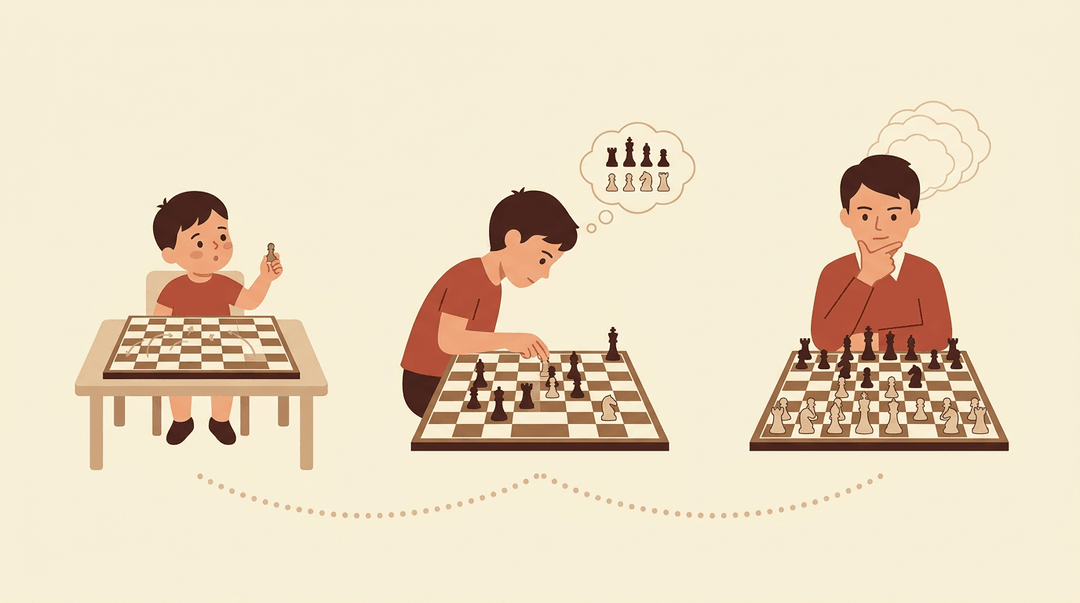
Think about learning to play chess. First you learn how each piece moves, then you study openings and tactics, and only later do you sit across the board and think several moves ahead. Classical education follows that same arc.
It's a centuries-old approach to teaching that moves students through stages, building from facts to reasoning to expression. In this post, we'll unpack what it looks like, where it came from, and how you can bring it into your own classroom.
What Is a Classical Education?
So what actually sets classical education apart from the school down the road? It comes down to a different goal: not just filling students with facts, but forming who they become.
Learning how to learn, not just facts
Classical education treats the skill of learning itself as the primary goal, not the memorization of facts. A student who can reason, question, and make connections keeps learning long after the test is graded.
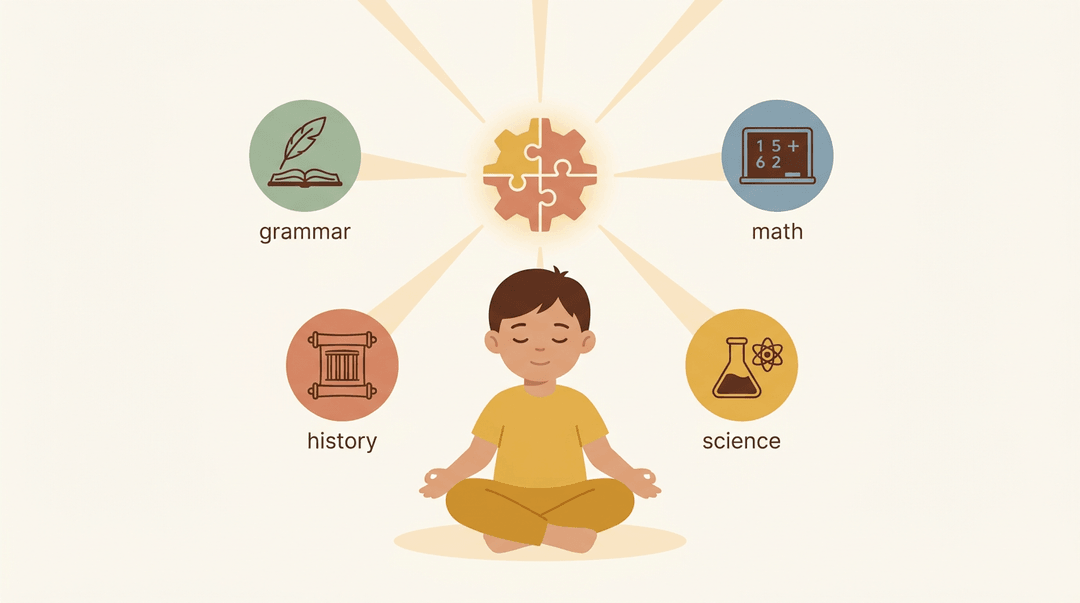
That skill-building happens most intensively in the primary education phase, but it doesn't stay locked in one subject: a student who learns to reason well in grammar carries that same habit into math, history, and science.
Seeking truth, goodness, and beauty
The classical tradition aims at three transcendentals: truth, goodness, and beauty. It's less about knowing and more about wisdom, the kind that shapes how a student lives, not just what they can recite.
That pursuit runs through the liberal arts, subjects historically meant to cultivate virtue and an eye for beauty, not just job skills.
The liberal arts foundation
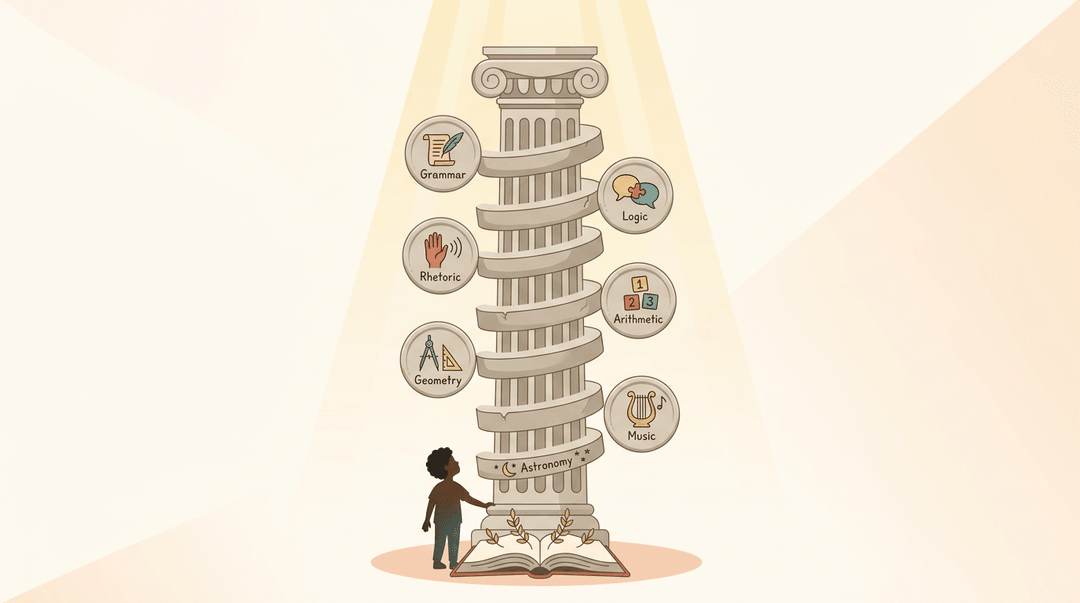
At its core, classical education is about human formation: shaping a whole person, not just a test-taker. It's built on the seven liberal arts:
- grammar
- logic
- rhetoric
- arithmetic
- geometry
- music
- astronomy
plus the natural sciences, all grounded in the Western canon, the great texts and ideas that built the tradition in the first place.
Inheriting and imitating great culture
Think of a student encountering Homer for the first time. Classical education treats books, music, and art as heirlooms, passed down rather than churned out.
Students imitate virtuous exemplars from those works and join a conversation that's been running for centuries. It takes real effort to appreciate a text that wasn't written for a modern attention span, and that effort is the point.
The Three Stages of the Trivium
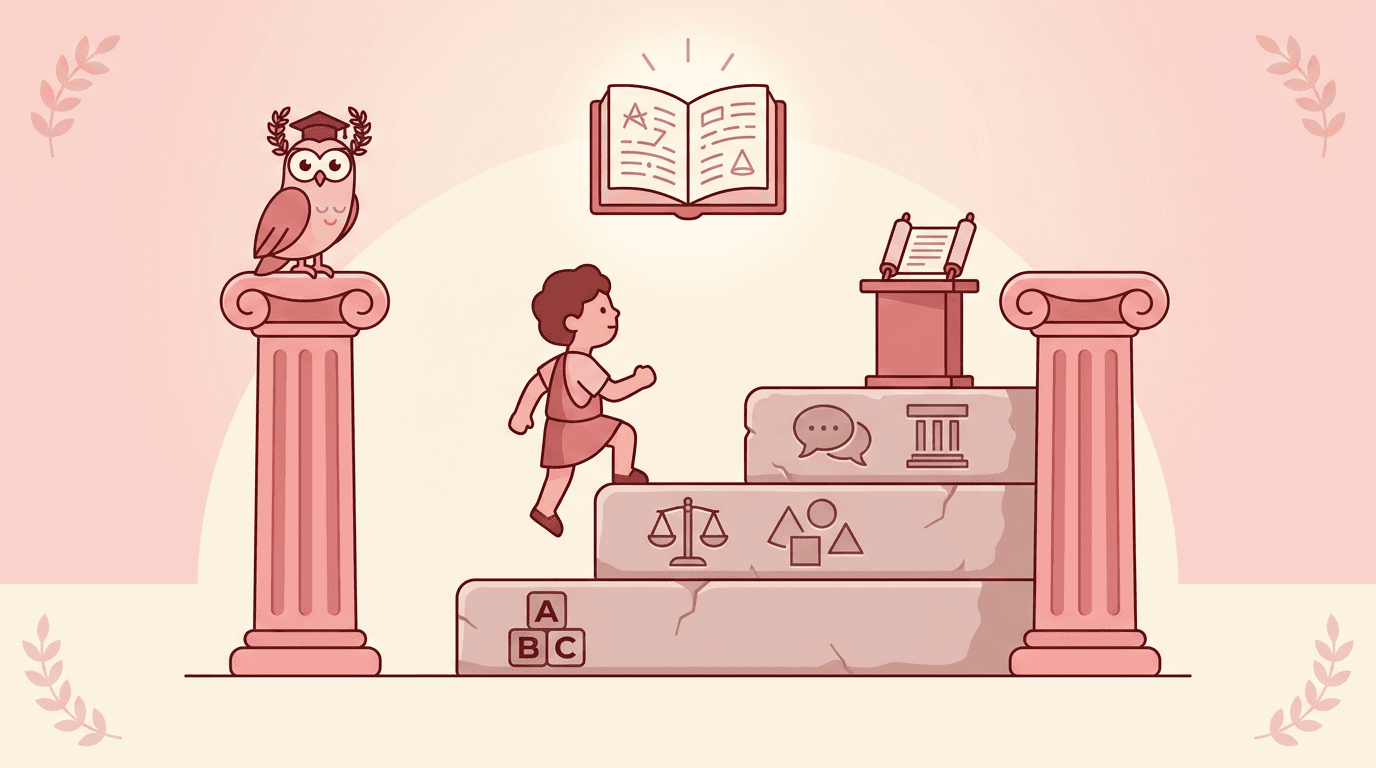
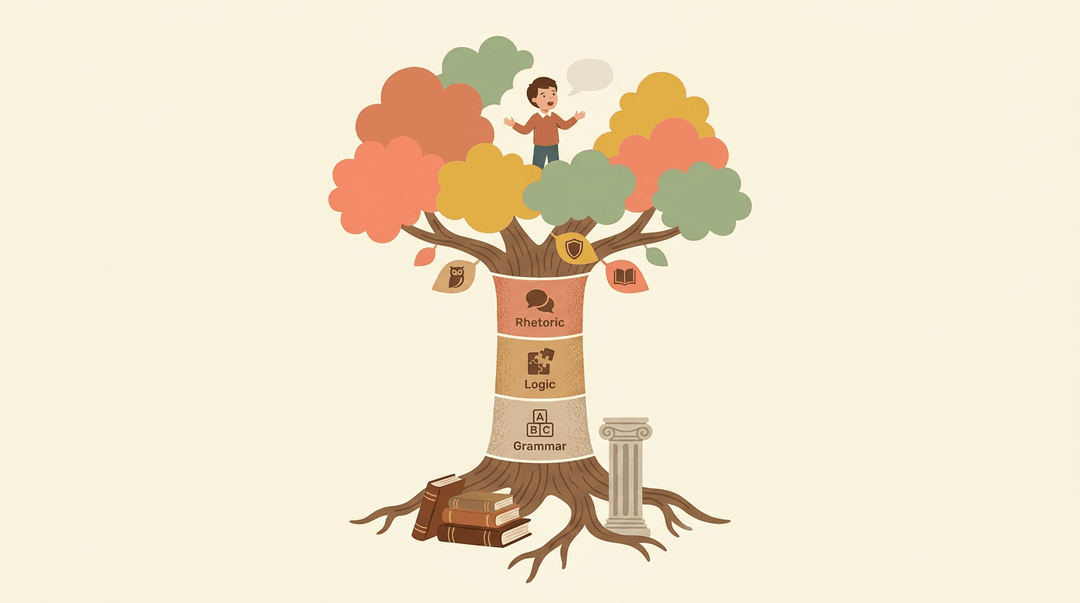
Classical education builds its entire structure on the trivium: three stages, one after another, that follow how a child's mind actually grows.
Each stage has its own tools and its own job, and skipping ahead doesn't work any better than skipping ahead in a language you haven't learned yet.
Memorizing facts in the grammar stage
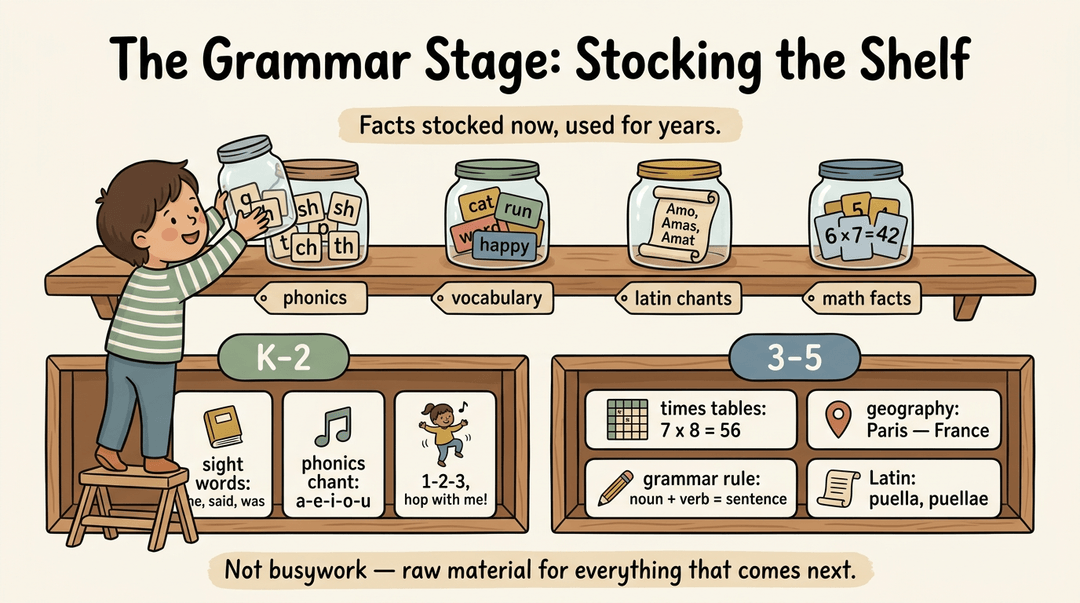
Young children are natural memorizers, and the grammar stage puts that gift to work. This is the season for facts and memorization, the raw material every later subject will need:
- phonics rules
- vocabulary
- Latin chants
- math facts
A first-grade teacher drilling skip-counting songs isn't wasting time on rote work. She's stocking a shelf her students will pull from for years.
A rough grade-band guide:
- K-2: phonics, sight words, simple chants and songs
- 3-5: grammar rules, times tables, geography facts, Latin vocabulary
Asking how and why in the logic stage
Somewhere around middle school, kids start asking why, not just what, and the logic stage meets them there.
Students learn formal and informal reasoning, practice spotting fallacies, and work through Socratic discussion: a teacher asks a question, listens, and pushes back with another question instead of handing over the answer.
Speaking and writing in the rhetoric stage
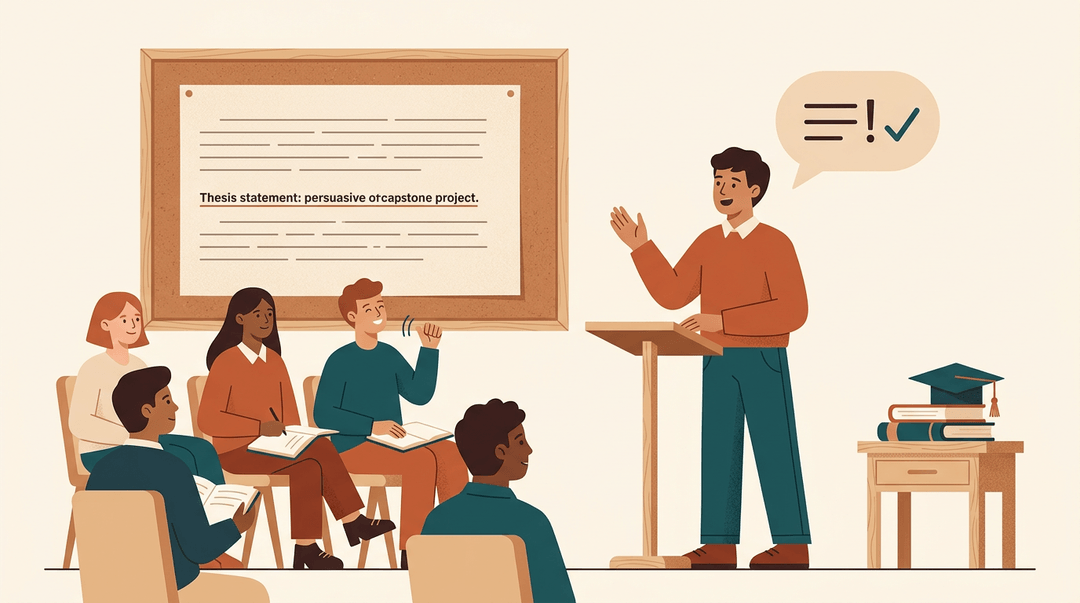
By high school, students have the facts and the reasoning skills. The rhetoric stage teaches them to speak and write persuasively, joining public discourse rather than just observing it.
Assessment shifts too: oral exams and long-form essays replace fill-in-the-blank quizzes, since the point now is application, not recall. A senior capstone project often ties it together.
The quadrivium and later schooling
After the trivium comes the quadrivium, the bridge from secondary study into university-level or apprenticeship work:
- arithmetic
- geometry
- music
- astronomy
History runs through all of it as the unifying thread that ties facts, reasoning, and expression to real events.
Bringing Classical Methods into Your Classroom
You don't need a classical school to use classical methods. Match the routine to the stage your students are in, then run it consistently: the trivium rewards rhythm more than novelty.
Grammar stage: fill the memory bank
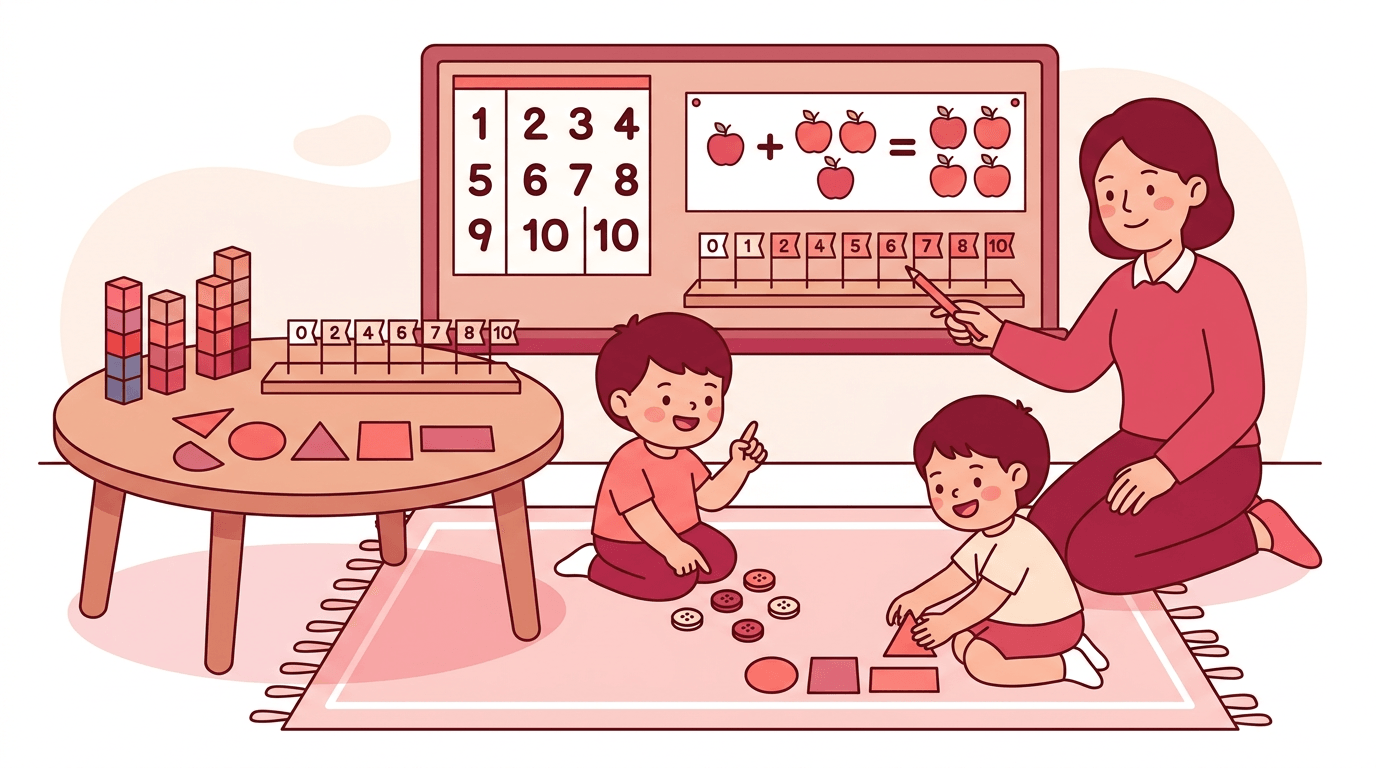
Young students learn through chant, song, and repetition, so build the day from short, predictable blocks in the same order every day. The loop itself does the teaching.
| Block | Time | What it looks like |
|---|---|---|
| Memory drill | 10 min | Chant a poem, dates, or definitions; same set all week |
| Phonics and math facts | 15 min | Flashcards with choral response; speed, not discussion |
| Read-aloud | 20 min | A great book above their level; you read, they retell |
💡 Tip: Introduce new material Monday, then repeat it Tuesday through Friday. Friday's drill should feel easy. That's the sign it stuck.
Logic stage: give the arguing structure
Middle schoolers argue anyway. Your job is to channel it into four routines:
- Answer questions with Socratic questions. Don't confirm; probe.
- Say: "What's your evidence for that?"
- Say: "What would someone who disagrees with you say?"
- Run short debates with fallacy-spotting. Name one fallacy per week; students hunt it in ads and each other's arguments.
- ❌ "Everyone knows this is true." ✅ "Here's the data behind it." The difference: bandwagon vs. evidence.
- Drill formal logic in ten-minute bursts. Simple syllogisms on the board.
- Write: "All planets orbit the sun. Mars is a planet. Therefore..."
- Assign one cross-subject reasoning task per unit. Force the logic to travel.
- Prompt: "Show how a geometry proof and a history essay both build a case from evidence."
Rhetoric stage: put it in front of a real audience
High schoolers have the facts and the logic; now they learn to persuade. Sequence the year so the stakes rise:
- Assign persuasive essay projects. One arguable claim, defended with evidence and counterargument.
- Assess public speaking on its own. Grade delivery separately from content, so both improve.
- Build toward a capstone thesis or oration. A semester-long project defending one big idea.
- End with a real-audience presentation. Parents, a panel, or a community night, not just you.
Example: One approach: seniors write a thesis in the fall, convert it to a 12-minute oration in the spring, and defend it before a panel of teachers and parents. Knowing the audience is real changes the revision effort in October.
At a glance:
| Stage | Core move | What you get |
|---|---|---|
| Grammar | Daily repetition blocks | Facts on automatic recall |
| Logic | Socratic questions and debate | Students who test claims |
| Rhetoric | Real-audience projects | Students who persuade |
Once you've picked your routines, map each trivium stage to your standards and pacing guide in EMStudio's curriculum planner.
Building Character and Lasting Outcomes
Classical education was never just about grades. It's about who your student becomes along the way, in character, in mind, and in how they spend their time.
Forming virtue and moral character
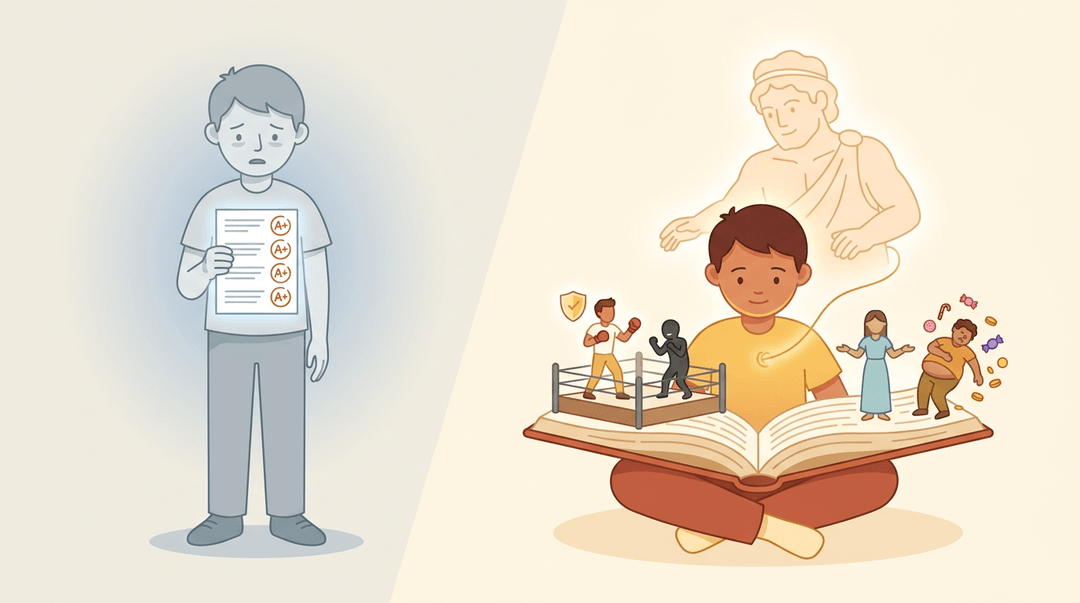
At its core, this model treats vices and virtues as opponents in the same fight: courage answers fear, temperance answers excess.
Students read biographies and epics not for trivia but to emulate admirable lives, seeing what patience or integrity actually looks like in action.
Proponents warn against "flunking life": acing a transcript while missing the point of an education entirely. The goal is whole-person formation, mind and character growing together.
How students perform academically and in life
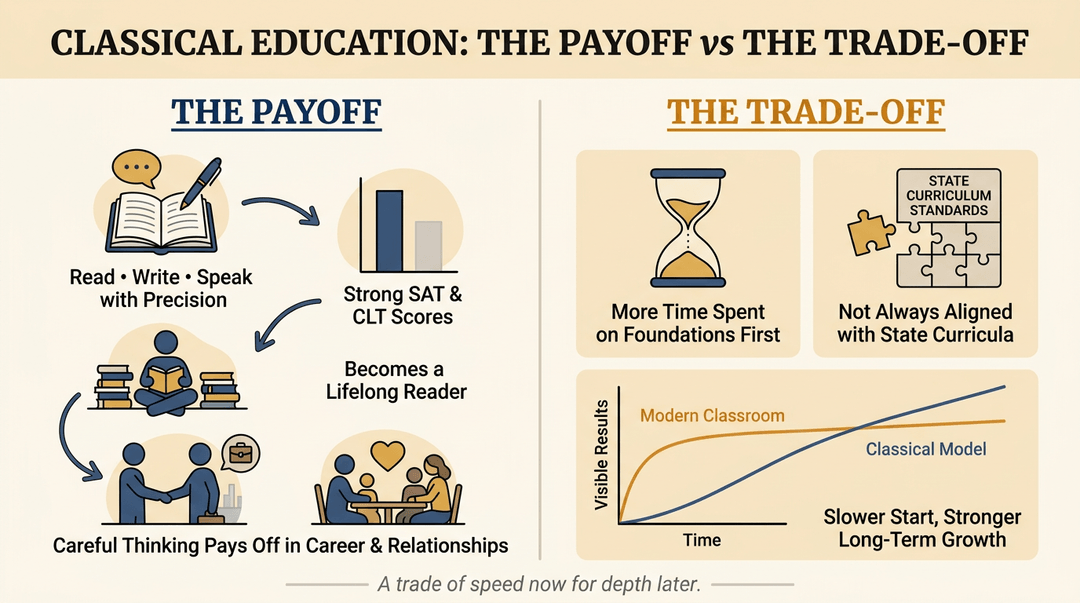
The academic record backs this up: classically educated students consistently post strong SAT and CLT (Classic Learning Test) scores. Part of the reason is transferable skill-building.
As Carden Memorial School notes, "classical education strongly emphasizes reading, writing, and speaking with precision," skills that carry into any career.
Many graduates become lifelong readers, and that habit of careful thinking tends to pay off in both careers and relationships. The trade-off worth naming:
- this model asks for more time on foundational skills
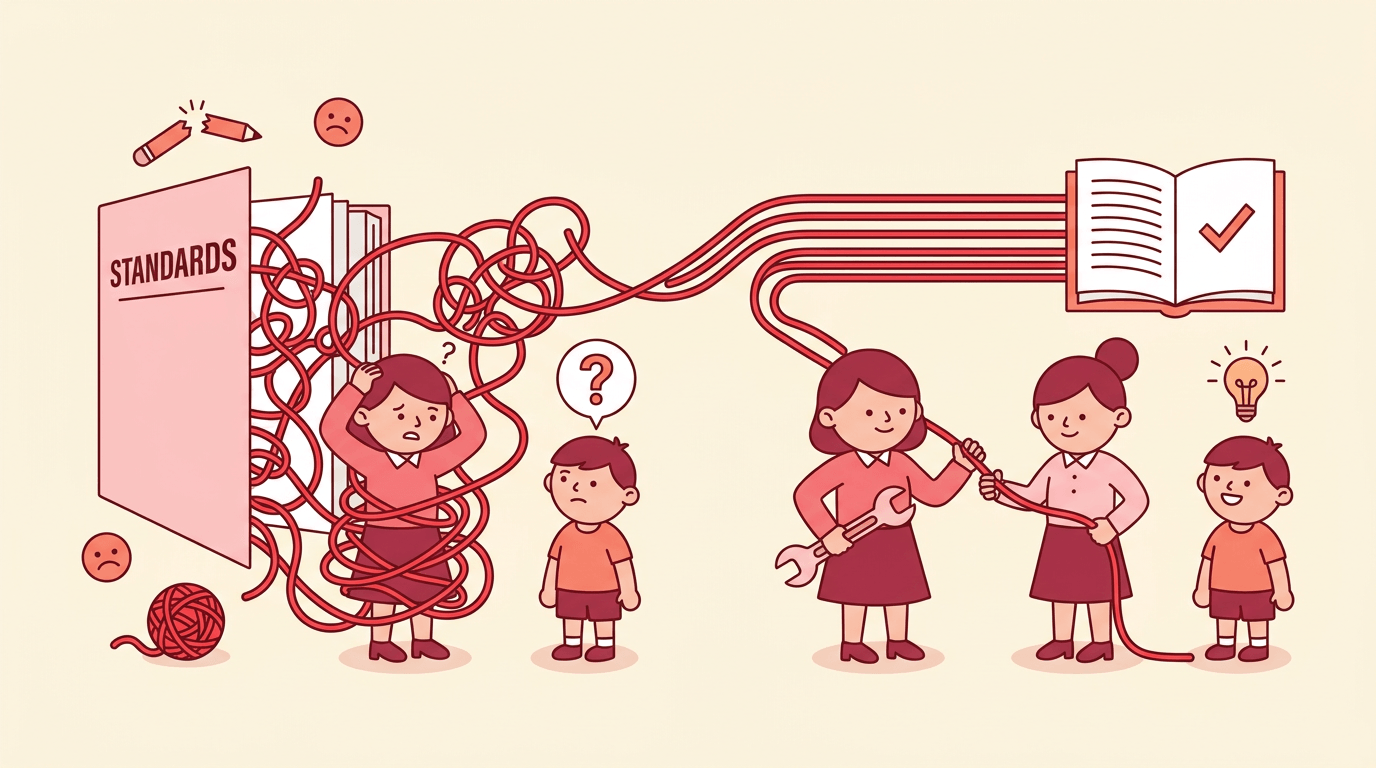
- isn't always aligned with standardized state curricula
- can feel slower to start than a modern classroom built for quick, measurable output
The joyful rest of scholé
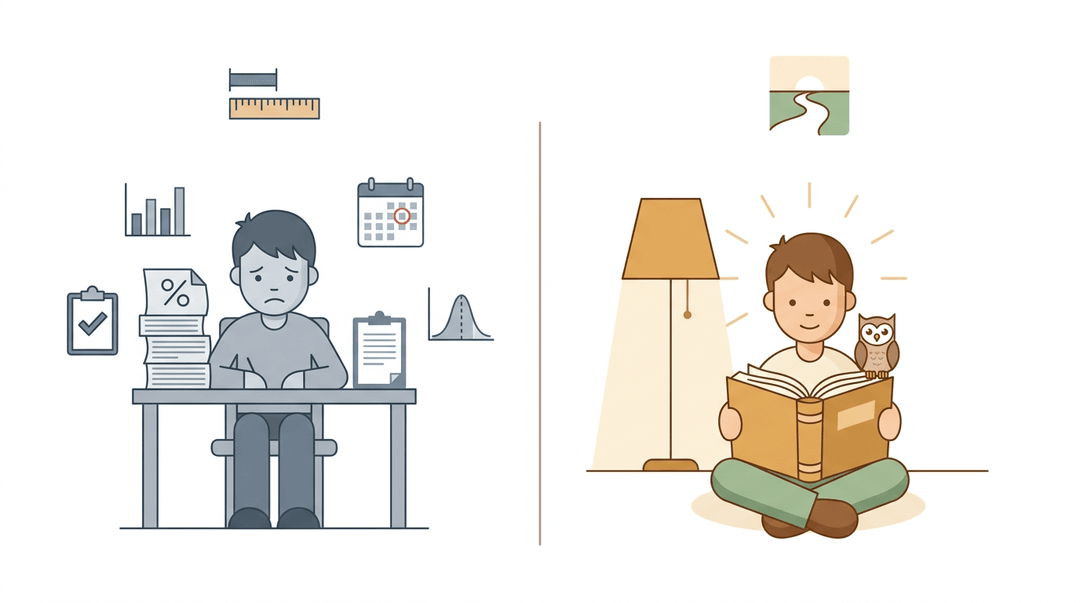
Classical educators borrow the Greek idea of scholé: restful, unhurried delight in learning, not exhaustion from covering ground. It favors depth over breadth, lingering on fewer ideas until they're truly understood.
Done well, it builds a genuine love of ideas and books, the kind that outlasts any test.
Classical Education vs Modern Schooling
Put a classical classroom next to a modern one, and the gap shows up fast: in what counts as success, how the school day is built, and what students walk away with.
Wisdom vs test scores as goals
Modern schooling often measures progress in benchmarks:
- Quarterly tests
- Grade-level standards
- Year-end scores
Classical education asks a different question: is the student becoming wiser, not just more informed? It prizes lifelong learning and virtue over job readiness alone, and it pushes back on standardized testing as a stand-in for real understanding.
That's one of the most common criticisms of the modern model: it pressures teachers to teach to the middle, aiming instruction at the average student instead of stretching the strong or supporting the struggling.
How the curriculum is structured differently
Classical schools weave subjects together instead of siloing them into disconnected blocks.
History, literature, and logic often share a theme, so a student studying ancient Rome might read primary texts (great books, not excerpts) while tracing the era's philosophy and art in the same week.
Lessons also follow the child's developmental stage rather than one standardized pedagogy for every grade, building cross-disciplinary connections that a modern class schedule rarely allows.
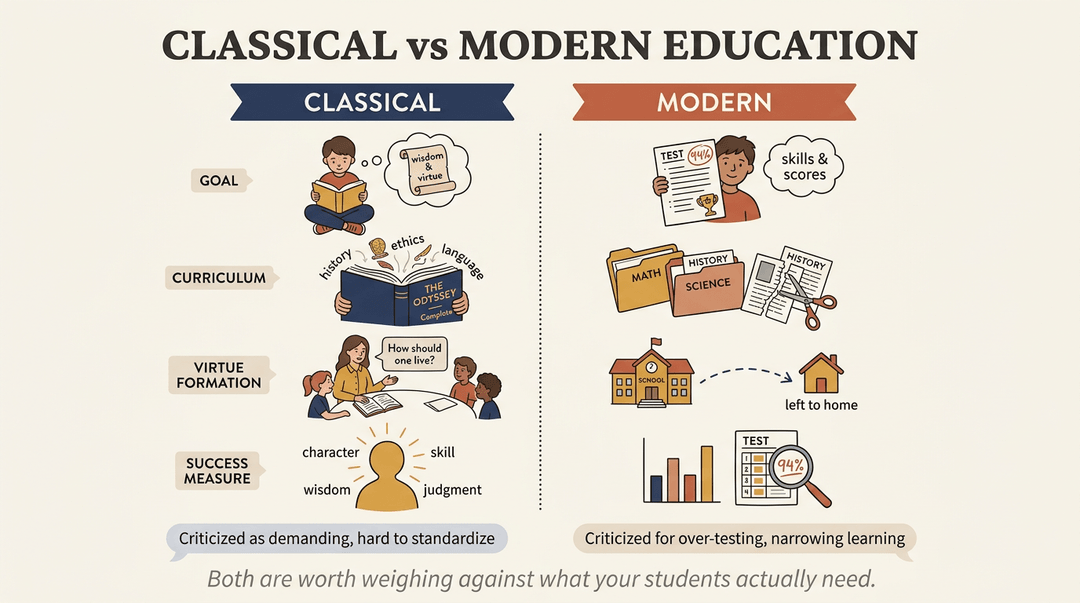
Comparing classical and modern education side by side
| Classical | Modern | |
|---|---|---|
| Goal | Wisdom and virtue | Skills and scores |
| Curriculum | Integrated, whole texts | Siloed, excerpted |
| Virtue formation | Built into daily lessons | Often left to home |
| Success measure | The whole person | Measurable outcomes |
Neither model escapes debate: classical education gets criticized for being demanding and hard to standardize across schools, while modern schooling gets flagged for over-testing and narrowing what counts as learning.
Both are worth weighing against what your own students actually need.
Where Classical Education Happens
Classical education doesn't live in one kind of building. You'll find it around kitchen tables, inside church-affiliated schools, on public charter campuses, and blended into homeschool co-ops that meet once a week.
The setting changes; the trivium stays the same.
Classical education at home
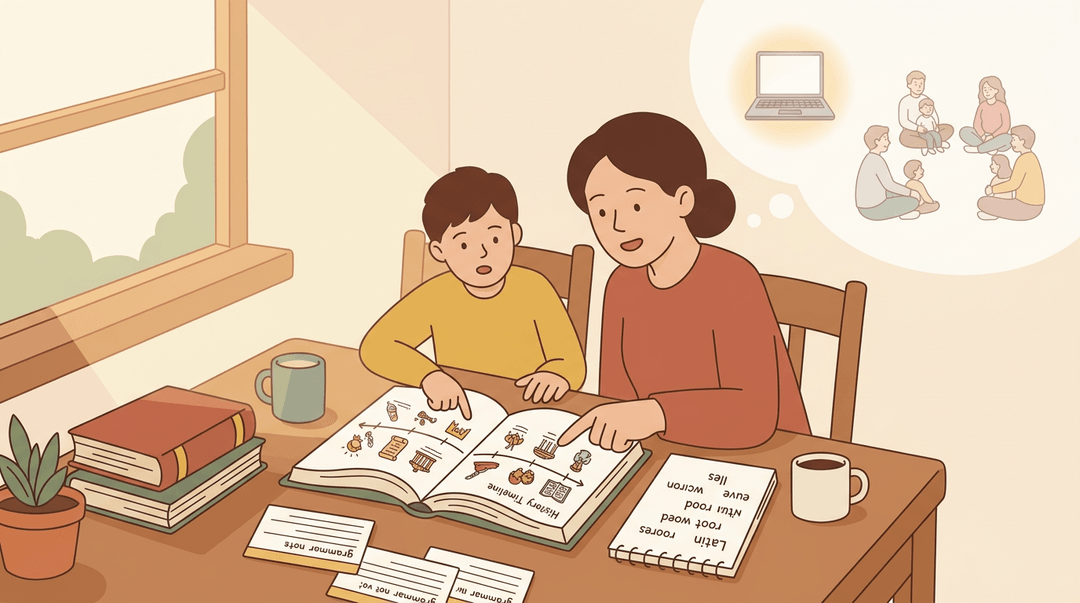
For many families, classical education starts as kitchen-table education: a parent and child working through Latin roots or a history timeline together, no classroom required. Parents often learn right alongside their kids, brushing up on grammar or logic they never studied themselves. Groups like Classical Conversations give these families a weekly community to recite, present, and practice together, and online supplement programs fill in subjects a parent doesn't feel confident teaching solo.
Learning in classical Christian schools
Classical Christian schools pair the trivium with catechism, weaving biblical integration into grammar, logic, and rhetoric lessons rather than treating faith as a separate subject. According to the Association of Classical Christian Schools (ACCS), "by the 2000s, hundreds of classical Christian schools were serving tens of thousands of students," a sign of how far this model has grown from its roots.
Classical charter and secular schools
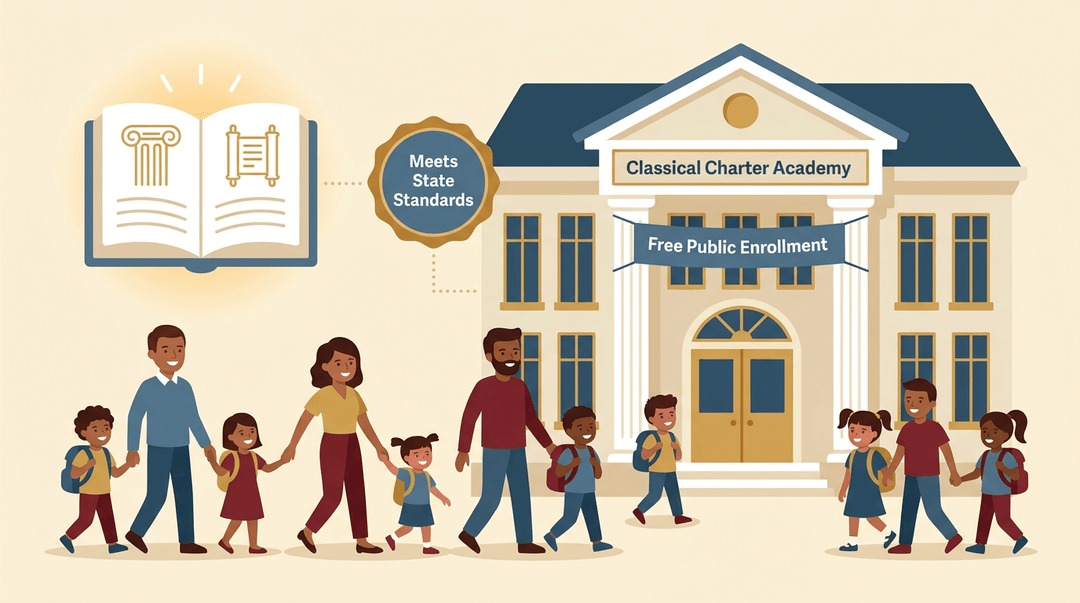
Public classical charters bring the same trivium structure into free, tax-funded schools, which solves a real cost and accessibility barrier for families who can't afford private tuition. Hillsdale-affiliated networks and Great Hearts Academies are two well-known examples, both leaning on a secular liberal arts focus rather than religious content. Because they're public, these schools still map their curriculum to state standards and Common Core benchmarks, even while teaching Socratic discussion and original texts.
How it compares to other philosophies
Classical education shares more with its cousins than it differs. Charlotte Mason classrooms lean on living books instead of textbooks; Montessori trusts self-direction and hands-on discovery. All three value formation over standardization: shaping how a student thinks, not just what they can recall for a test. It's common to see families blend approaches, pairing classical grammar work with a Montessori-style science shelf.
Is classical education only for gifted students?
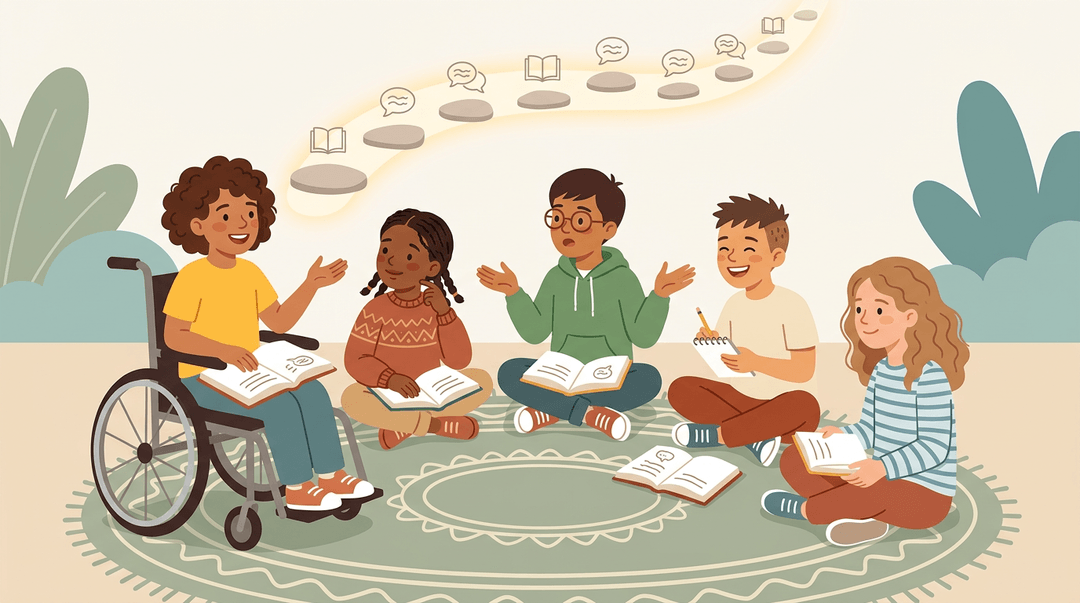
Not at all. Classical education isn't reserved for elite students or Latin prodigies. No Latin background is needed to start, and it's never too late to bring the trivium into a classroom or home, even mid-year. The model is rigorous, not harsh: it asks a lot of students, but through discussion, narration, and practice, not pressure. Any student willing to engage can grow inside it.
The History of Classical Education
Classical education isn't a new trend dressed up in old-fashioned language. It's one of the oldest teaching traditions in the Western world, and understanding where it came from helps you see why so many schools are returning to it now.
Ancient Greek and Roman roots
Classical education traces back roughly two thousand years to ancient Greece and Rome, part of what one philosophy journal calls a "two-thousand-year tradition" of Western schooling.
For most of that history, it simply was education: the standard model until the early 20th century, when newer approaches took over. One-on-one tutoring sat at the center of how it worked.
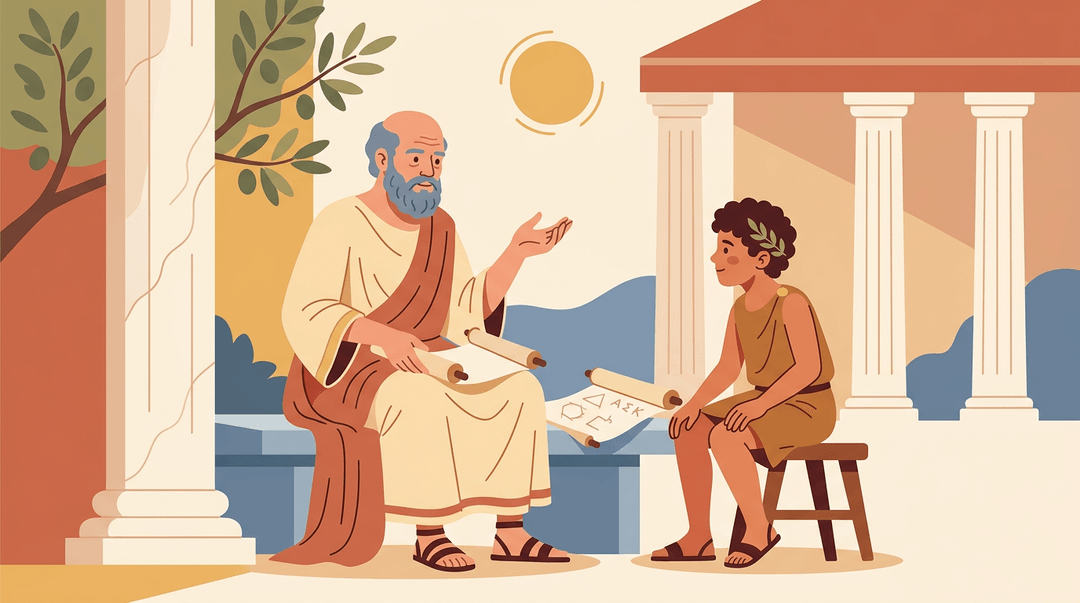
As one philosophical biography notes, Aristotle tutored a young Alexander the Great after Philip of Macedon invited him back from Assos and Mytilene, a real example of the mentorship the tradition was built on.
How it declined and made a comeback
Progressive schooling displaced classical methods through much of the 20th century, favoring standardized, one-size-fits-all instruction over the trivium's slower, mentor-driven approach. But the tradition never fully disappeared.
According to a study on Dorothy Sayers's influence, her concerns about "the failings of modern schooling" quietly catalyzed a revival that gathered momentum over the following decades, built around the medieval trivium.
The first wave of modern classical schools opened between 1979 and 1982, drawing directly on Sayers's landmark essay, The Lost Tools of Learning.
Its growing popularity today
That slow comeback has turned into real momentum. Forbes projects classical Christian education alone will grow into a "$10 Billion" industry, and the model now draws attention from politicians, journalists, and education advocates alike.
Summits and advocacy events bring school leaders together each year, and several states have started backing classical curricula through policy and funding support.

Key organizations behind the movement
A handful of organizations power this growth:
- Classical Academic Press and Memoria Press publish trivium-based curricula
- the Association of Classical Christian Schools supports member schools
- the Circe Institute trains teachers in classical pedagogy
The movement also owes a debt to the Great Books movement, championed by Mortimer Adler and Robert Hutchins, which kept the classical canon alive in universities long before it returned to the classrooms we teach in today.
Classical education isn't a relic of old schoolhouses. It's a structured path from knowledge to understanding to wise expression, and it still shapes confident, articulate learners today.
Whether you teach in a classical school, a homeschool, or a traditional classroom borrowing its methods, the trivium gives you a map worth following.
Ready to bring that structure into your own lesson plans? Check out our Curriculum & Standards feature to plan units, lessons, and standards across the whole school year.
References
- The Principles of Classical Education — doi.org (2024)
- “Neither Orthodox Nor Enlightened:” Dorothy Sayers and Classical Education in America — doi.org (2023)
- Aristotle (384–322BC) — doi.org (1999)
- The $10 Billion Rise Of Classical Christian Education — forbes.com (2025)
- 5 Ways Classical Education Prepares Students for Lifelong Success — cardenmemorialschool.com
- Our History — classicalchristian.org
Frequently asked questions
What is the difference between classical education and traditional education?
Classical education is a specific educational tradition organized around the trivium: grammar, logic, and rhetoric. Traditional education is a broader term that usually refers to teacher-led, structured schooling and may or may not use classical texts, the liberal arts, or the trivium.
What is the meaning of classical education?
Classical education is an approach that develops knowledge, reasoning, communication, and character in stages. It aims to form the whole person through the liberal arts and the pursuit of truth, goodness, and beauty, rather than focusing only on facts, job skills, or test scores.
What are the disadvantages of classical education?
Classical education can require substantial time for memorization, reading, writing, and discussion, and its slower pace may feel demanding. It can also be difficult to standardize, may not align neatly with state curricula or standardized testing, and its emphasis on the Western canon can raise concerns about cultural breadth and representation.
What are the three levels of classical education?
The three levels are the grammar stage, the logic stage, and the rhetoric stage. Grammar emphasizes facts and memorization, logic develops reasoning and questions, and rhetoric teaches students to express and defend ideas through speaking and writing.
What are some criticisms of classical education?
Critics argue that classical education can be demanding, slow to show measurable results, and difficult to implement consistently across schools. Others question its strong emphasis on the Western canon, concerns about limited cultural representation, or the way some programs connect classical education with particular religious or ideological traditions.
How is classical education different from public school?
Classical education differs from most public schooling in its goals, curriculum, and teaching sequence. It emphasizes wisdom, virtue, integrated subjects, whole texts, Socratic discussion, and the trivium, while public schools generally prioritize state standards, grade-level benchmarks, and measurable outcomes. Public classical charter schools combine classical methods with public-school requirements.
Is classical education only for gifted students?
No. Classical education is not limited to gifted students or students who already know Latin. It is rigorous but can support a wide range of learners through structured practice, discussion, narration, and gradual development of skills.
Is classical education like Montessori?
Classical education and Montessori education are different, though they share an interest in developing the whole person. Classical education follows the trivium and uses structured instruction, memorization, discussion, and great texts, while Montessori emphasizes self-direction, hands-on materials, independence, and learning at the child's pace. Families and schools sometimes combine elements of both approaches.