What Does a Truancy Officer Do? A Complete Guide to the Role


Jump to section
Picture a chair that's empty three mornings in a row. At first it's a shrug, then it's a pattern, then it's a real problem that needs more than a hall pass to fix.
That's where a truancy officer comes in: the person whose job is to track down why students vanish from class and get them back in it. Attendance laws, home visits, court referrals: it's a role with more moving parts than most explainers let on.
This post walks through all of them, plus what it means for you as a teacher.

What Does a Truancy Officer Do?
A truancy officer is the person tasked with figuring out why a student keeps missing school, and what to do about it.
Before going further, it helps to separate two terms that get mixed up: truancy is unexcused absence, while chronic absenteeism counts every missed day, excused or not. A truancy officer's job centers on the first.
Also known as an attendance officer
Many districts call this role an attendance officer instead, and the title varies by state.
Either way, the officer is employed by the school district or a local government agency, and their core mandate is enforcing compulsory attendance laws: the requirement that kids of a certain age show up to school.

Support, enforcement, or somewhere in between
Think of the truancy officer as a liaison, standing between the school, the family, and sometimes the juvenile justice system. That puts them in a genuine gray area: part support, part enforcement.
For instance, an attendance officer might spend one afternoon connecting a struggling family with a tutor and the next referring a case to court. How that balance plays out depends heavily on state and district policy.
Can a truancy officer take your child?
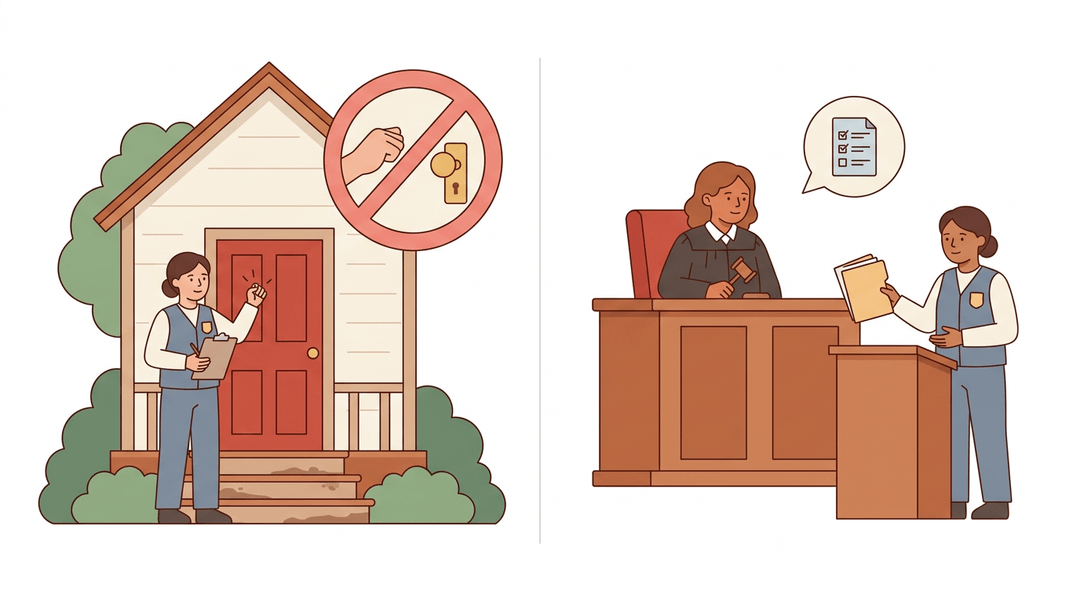
No. A truancy officer can't arrest a student or force their way into a home. Their role in court is advisory: they present the case, but a judge decides consequences.
Their day-to-day actions are shaped entirely by district policy, so the specifics of what they can and can't do will differ depending on where you teach.
What Truancy Officers Do Day to Day
A truancy officer's job isn't just paperwork. It's a mix of watching the numbers, knocking on doors, and knowing when a school problem has become a legal one.
Tracking attendance and spotting patterns
Most of the job starts with data. Truancy officers track absences daily or weekly, watching for the difference between a student who missed one flu week and one who's sliding into chronic absenteeism.
When unexcused absences form a pattern rather than a one-off, that record becomes the paper trail behind a referral, whether to a counselor, a social worker, or eventually a court.
Reaching out to families and students
Once a pattern shows up, the work moves from spreadsheets to doorsteps. That might mean a home visit, a phone call, or a letter home: whatever actually gets a response. The goal isn't to punish; it's to find out why a student isn't showing up.
Is it illness? A lack of transportation? A job helping pay rent? A home visit can also surface something no attendance record ever will: unsafe or unstable living conditions that need more than a stern note.

Connecting families to support services
Truancy officers act as a liaison between the school and whatever a struggling family actually needs:
- a referral to social services
- a connection to counseling
- a link to a community housing or food program
Do schools call CPS for truancy? Not by default. A CPS referral usually only follows when outreach uncovers real signs of neglect or danger, not simply because a student missed too many days.
When truancy turns into a legal case
When outreach and support don't turn things around, the case can escalate.
The officer may refer it to the State's Attorney and represent the district in truancy court, and per Texas court commentary on truancy-court procedures, "a school district must usually refer a child to a truancy court to face an allegation of truant conduct in certain circumstances."
So is truancy actually a crime? It can carry real legal weight under applicable state law, sometimes including charges against a parent.
The exact penalties, including whether jail time is on the table in a state like Ohio, depend entirely on that state's own truancy statutes.

When Should Teachers Call a Truancy Officer
You're usually the first adult to spot a truancy problem, which means the referral decision often starts with you. This guide walks you through the three phases: what to try first, how to know it's time, and what your job looks like after you refer.
Before you escalate: four moves
A referral lands better (for the student and the officer) when you've done the groundwork first.
- Track absence patterns early. Don't wait for the total to look alarming.
- Watch for shapes, not just counts: "6 of the last 20 days, mostly Mondays."
- Contact parents directly, by phone before letters.
- Say: "We've missed Jordan three days this week. Is everything okay at home?"
- Lead with concern, not accusation; you'll learn more.
- Document every intervention you try.
- One dated line each: "10/14: called home, left voicemail. 10/16: mailed attendance letter."
- Identify the root cause before assuming defiance.
- Common ones: transportation, health, anxiety, caregiving duties at home.
Key principle: A truancy officer's first question will be "what's already been tried?" Your log is the answer, and it's what turns a complaint into a case.
When it's time to refer
Escalation isn't a judgment call you make on gut feeling. Before you refer, confirm:
- Absences have hit your district's threshold. Most districts define chronic absence in policy; check the number.
- The family has repeatedly not responded. Multiple documented attempts, no callback, no conference.
- The pattern continues despite your interventions. Calls, letters, and root-cause fixes haven't moved attendance.
If all three are true, follow your district's referral policy exactly: use the official form, route it through the counselor or attendance office if required, and attach your documentation.
After the referral: you're still in the loop
Referring doesn't close your file; it opens a partnership.
- Keep monitoring attendance the same way you did before. The officer needs current data.
- Support the officer's requests quickly: records, seat-time reports, your intervention log.
- Continue positive contact with the student and family.
- When the student returns, try: "We're glad you're back. You were missed."
- Log outcomes for your records: meetings held, agreements made, attendance after each one.
Example: A middle school teacher noticed a seventh grader missing most Fridays, called home twice with no answer, and logged both attempts plus a mailed letter. When absences crossed the district threshold, she filed the referral with her log attached. The officer's home visit uncovered a transportation gap the school fixed within a week.
The hardest part is often just knowing when the line has been crossed. You can track patterns and flag chronic absences automatically with EMStudio's attendance tool, so you know exactly when a truancy referral is warranted.
How a Truancy Investigation Works
A truancy investigation rarely starts with a courtroom. It starts with a phone call or a letter, and it only escalates if the absences keep piling up.
Exact triggers and timelines vary by state, so what counts as truant in one district might look different a county over.
First contact and escalation steps
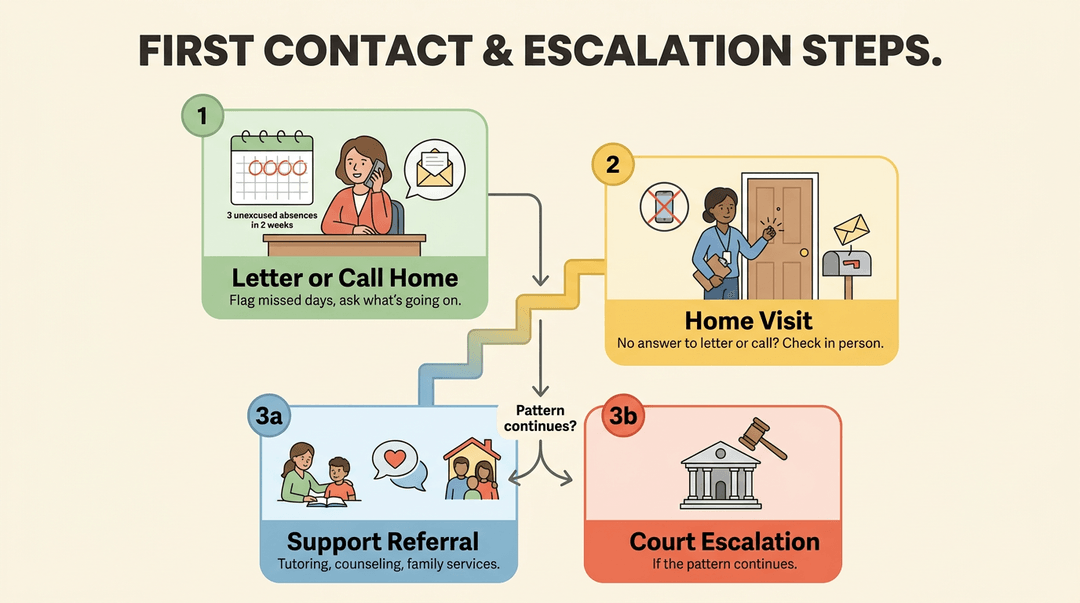
The first step is almost always low-key:
- A letter or phone call home, flagging the missed days and asking what's going on. Think of an attendance clerk noticing a student's third unexcused absence in two weeks and dialing the family before it becomes a pattern.
- If there's no response, the next move is a home visit. A truancy officer (or designated school staff) checks in person, since a disconnected phone or an unopened letter doesn't mean the problem's gone away.
- From there, the case either gets a support referral (tutoring, counseling, family services) or moves toward court escalation if the pattern continues.
When absences become chronic truancy
Every state sets its own threshold, but a common benchmark is missing 9 days within a 180-day school year. According to Illinois law, a student who is absent without valid cause for 5% or more of the previous 180 attendance days is a "chronic truant."
Once a student crosses that line, the case is typically referred to the Regional Office of Education.
That referral doesn't end the school's involvement: it triggers ongoing monitoring of attendance and formal communication with the family, keeping everyone accountable as the case moves forward.
Working with Families on Attendance
Attendance problems rarely start with the family. They start with a barrier nobody's named yet, and that's the mindset you want any truancy officer working with your students to bring.
Building trust with families
Trust starts with tone. A truancy officer who leads with empathy rather than accusation gets further, faster: consider a family juggling two jobs and an unreliable car, where curiosity opens more doors than a warning ever could.
- Offering documentation early, attendance records, letters, next steps, gives parents something concrete to respond to.
- Requesting a team meeting with the teacher, counselor, and family keeps everyone working from the same facts.
- Every conversation should end with a follow-up in writing: a short note documenting what was discussed protects everyone involved.

Mistakes families should avoid
Families can undercut their own case in a few common ways:
- Ignoring communication. Calls and letters go unanswered until a small issue becomes a legal one.
- Withholding mental health info. Leaving out details that would explain the absence removes context that could resolve things fast.
- Overreacting defensively. Getting defensive instead of asking questions shuts the conversation down early.
- Lacking preparedness. Walking into a meeting without records or a plan leaves a family reacting instead of steering the outcome.
Focusing on support, not punishment
The most effective truancy officers treat absence as a symptom, not the problem itself. That means identifying the real barrier, whether it's transportation, housing instability, or a health issue, before ever discussing consequences.
It takes real empathy and strong communication skills to get a family to open up, and reaching out proactively, before a case ever reaches a courtroom, is what turns a truancy officer into a support rather than a threat.

How Local Truancy Programs Are Structured
Truancy programs don't just appear inside a single school; they're built through a regional structure that links schools, families, and the courts.
Knowing how that structure works helps you understand who actually shows up when attendance becomes a real problem.
How regional offices appoint officers
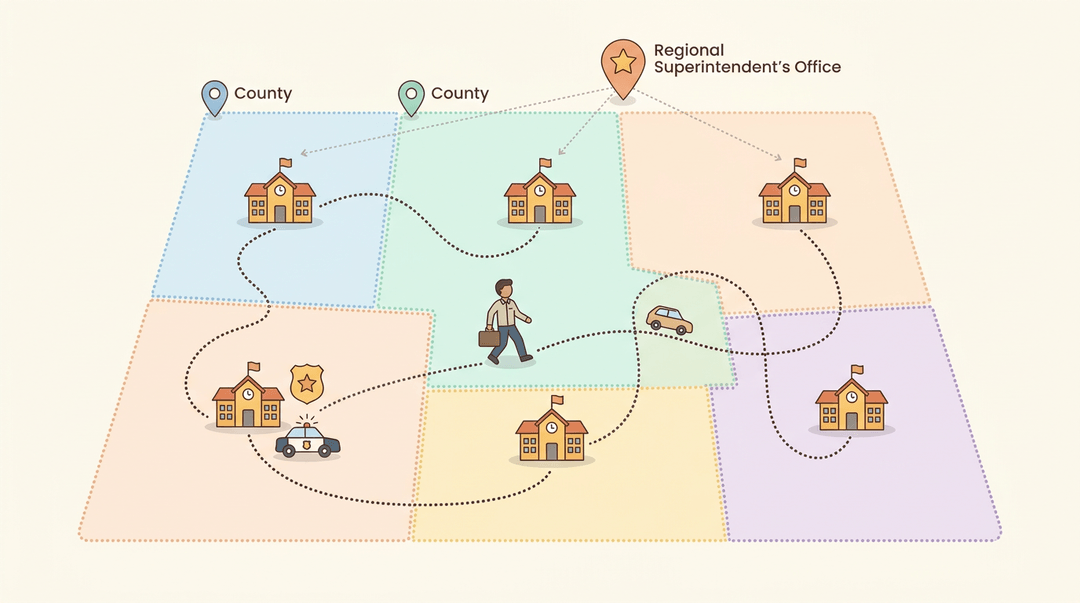
In many states, a truancy officer isn't hired by one district alone. Instead, a Regional Superintendent of Schools appoints them, often to cover several counties at once.
That regional reach means a single officer might split time across a dozen schools, coordinating cases that cross district lines.
Because their work can escalate into legal territory, they also work closely with local law enforcement, especially when a case moves from a conversation into a citation or a hearing.
Programs designed to boost attendance
Before anything reaches a courtroom, most regions run something like a Regular Attendance Program (RAP).
Think of a truancy officer paired with a ninth grader who's missed twelve days: instead of jumping straight to a citation, the officer meets with the student one-on-one, setting small, specific attendance goals, like showing up three days a week for a month, and tracking that progress together.
That relationship works because the officer acts as a liaison, not just an enforcer.
They translate what's happening at home for the school, explain what's happening in the classroom to the family, and keep everyone pointed at the same goal: getting that student back in their seat.

How to Become a Truancy Officer
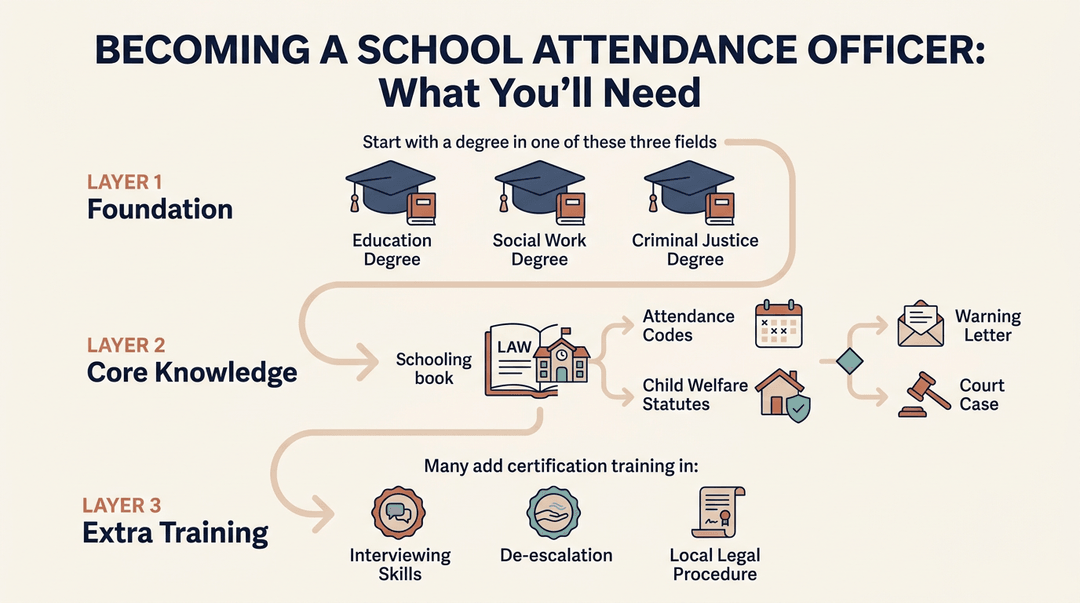
So what does it actually take to land this job? The path blends the right academic background, real knowledge of school and child welfare law, and some hands-on training before you're ready to knock on a family's door.
Education and training you'll need
Most districts look for a degree in education, social work, or criminal justice, since the job sits right at the intersection of schooling and the law.
You'll also need working knowledge of school attendance codes and child welfare statutes: the rules that decide when a family gets a warning and when a case heads to court.
Many officers round this out with certification or training programs covering interviewing skills, de-escalation, and local legal procedure.
Career paths and advancement options
There's real room to grow here. Officers who put in the years can move into senior truant officer roles with more complex caseloads, or step up into truancy coordinator positions overseeing an entire district's attendance strategy.
Extra certifications in crisis intervention or counseling make you a stronger candidate for advancement, and staying connected to social workers, school counselors, and probation officers keeps your referral network (and your job options) wide open.
How much truancy officers earn
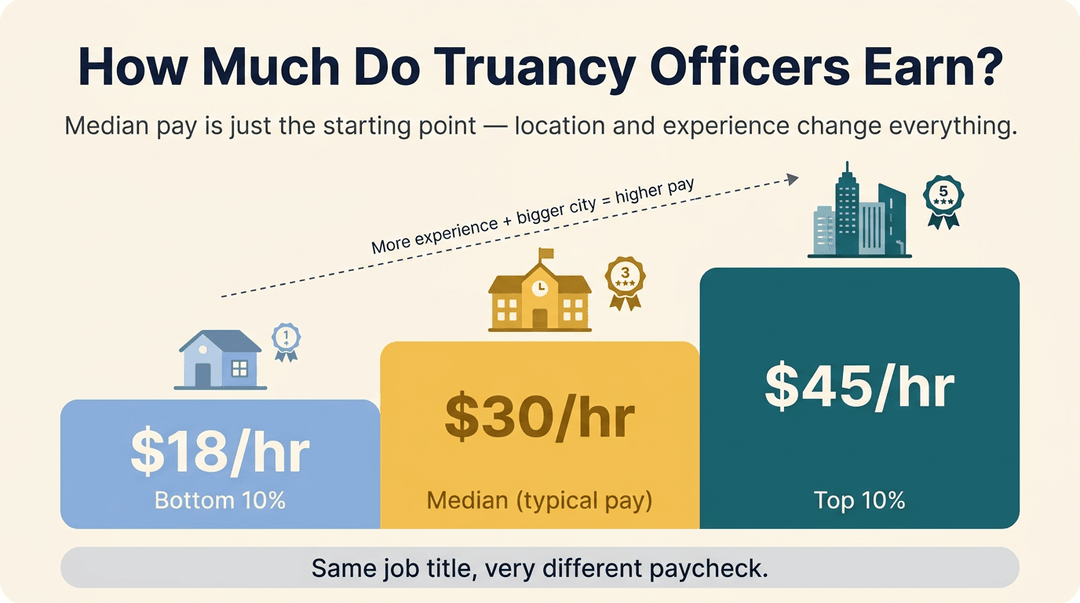
Pay varies by experience and location, but the numbers give you a reasonable benchmark. According to Franklin University's career guide, the median hourly pay for attendance officers in 2023 was $30.
Beyond the median, research on occupation-specific wage estimates shows the government tracks pay across percentiles, meaning the bottom 10 percent of earners in this field make considerably less than the top 10 percent, so location and seniority matter as much as the title itself.
The Future of Truancy Enforcement
Truancy enforcement is shifting away from citations and courtrooms and toward something closer to student support. That shift is reshaping what the role looks like day to day.
Proposed changes to the role
Several reforms are gaining traction across districts, and they share a common thread: treating absence as a signal, not a crime.
- Trauma-informed training teaches officers to recognize when chronic absence traces back to abuse, housing instability, or grief, so the first conversation with a family starts with empathy instead of accusation.
- Non-punitive protocols push court referrals and fines to the very last resort, replacing them with check-ins, mentoring, and referrals to counselors or social workers.
- Some districts now embed truancy officers in support teams alongside school counselors, social workers, and nurses, so a struggling student gets one coordinated response instead of a string of separate interventions.
- Parent education programs help families understand attendance laws, spot early warning signs of disengagement, and connect with resources like housing or mental health services before a case ever reaches a judge.
None of this erases an officer's legal authority. It just changes what they reach for first.
A truancy officer's job is part investigator, part advocate: someone working the gap between a missing student and the reasons behind it. For teachers, the real value is knowing when to loop them in and having the attendance record to back it up.
Ready to build that record without the guesswork? Check out our Attendance & Records feature to mark attendance quickly and spot patterns before they become a case file.

References
- Estimating Occupation and Location Specific Wages over the Life Cycle — doi.org (2022)
- Index | Project Stay In/Truancy — roe26.net
- How Much Do Attendance Officers Make? — franklin.edu
- commentary-accompanying-truancy-court-procedures. ... — txcourts.gov
Frequently asked questions
How much does a school truancy officer make?
Attendance officers made a median of about $30 per hour in 2023, according to one career guide. Actual pay varies significantly by location, experience, employer, and seniority.
What does it mean when a truancy officer comes to your house?
It usually means the school or attendance office is following up on a pattern of unexcused absences. The visit is generally intended to learn what barriers are affecting attendance, explain next steps, and connect the family with support.
Can a truancy officer take your child?
Generally, no. A truancy officer cannot arrest a student or force entry into a home; if the case reaches court, a judge decides any legal consequences.
Can a parent go to jail for truancy in Ohio?
Yes, Ohio law can allow criminal consequences for a parent who fails to ensure a child attends school, but jail is not automatic. The outcome depends on the facts, the applicable statute, prior proceedings, and the court.
What does a truancy officer do when they come to your house?
They typically identify themselves, discuss the student's attendance record, ask why the absences occurred, and explain available support or required next steps. They may document the visit and, if attendance problems continue, recommend services or refer the matter for court action.
Can truancy officers take you to school?
Usually, no. Truancy officers generally do not have authority to physically force or transport someone to school, although they may encourage attendance, coordinate transportation or services, and involve other agencies when legally appropriate.
Is truancy actually a crime?
Truancy is not treated the same way everywhere. Unexcused absences can trigger school and civil proceedings, and some states allow criminal charges or penalties involving parents, so the legal status depends on state law.
What happens when a truancy officer is called?
The school or attendance office generally reviews the attendance record and contacts the family by phone, letter, or home visit. The officer then investigates the cause, offers or coordinates support, and may refer the case to court if absences continue despite intervention.