Teacher Organization Skills Every Educator Should Master

Jump to section
Picture the last time you walked into a truly calm classroom: materials in their place, students who knew exactly where to find things, and a teacher who wasn't rifling through a stack of papers five minutes before the bell.
That calm didn't happen by accident. It came from systems.
An organized teacher isn't just someone with a tidy desk.
It's a teacher who builds reliable structures around their time, their space, and their students' routines so that less energy goes to logistics and more goes to actual teaching. That's the real payoff.
In this post, we'll cover what classroom organization really means, why it matters for you and your students, and the practical systems (physical and digital) you can start building today.
Why Every Organization Teacher Needs Real Systems
An organized teacher doesn't just keep a tidy desk. They build repeatable systems that shape how their classroom runs every single day.
Organization in teaching means having clear structures for materials, time, routines, and communication so that learning, not logistics, takes center stage. And those systems make a real difference for everyone in the room.
How classroom order helps students learn
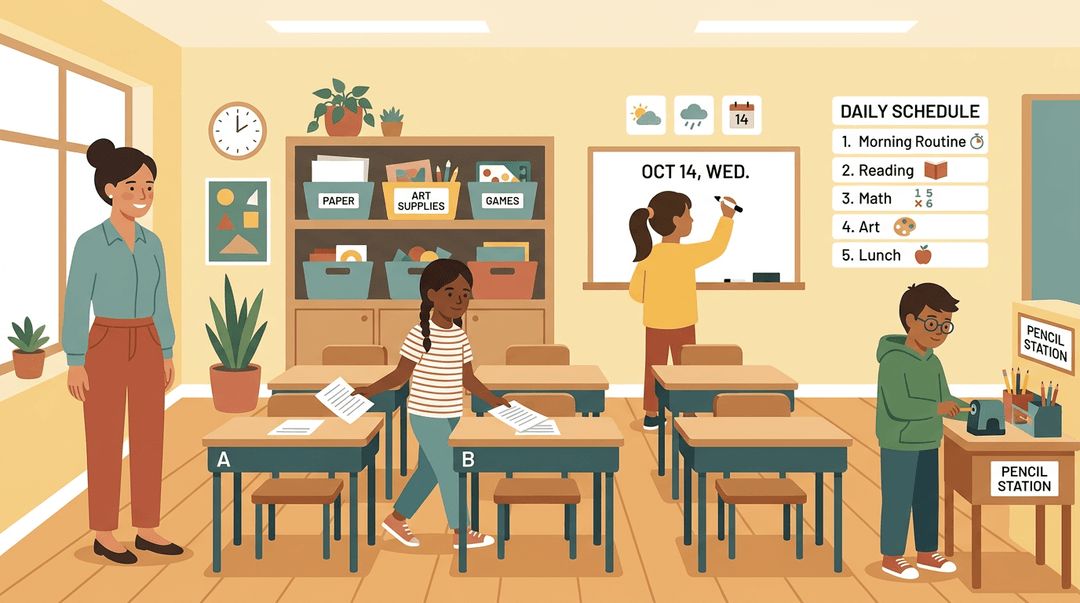
When your classroom runs on reliable routines, students know what to expect and what's expected of them. That predictability reduces transition time, cuts down on wasted minutes between activities, and keeps the focus on learning.
Students feel safe, which matters more than it might sound: a structured environment is a calm one, and calm students engage.
The evidence backs this up. A research synthesis published by IES found that teachers who provide structure and organization support students' academic outcomes by keeping them engaged, managing behavior, and avoiding classroom chaos.
The bonus: students who know the routines start to run them. That independence frees you to teach.
How staying organized saves teachers time
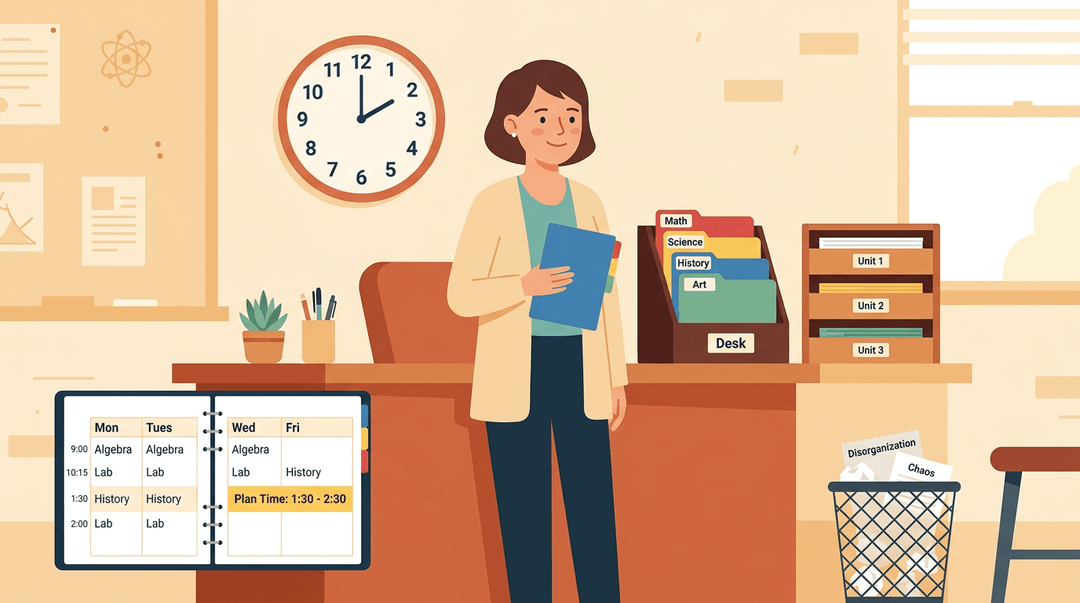
A disorganized classroom is a time leak. Hunting for handouts, rebuilding plans from scratch each week, fielding the same questions because procedures aren't clear: it all adds up. When you invest in systems upfront, planning gets faster and stress drops.
With the right structures in place, your materials are where you left them, your weekly prep follows a pattern, and more of your day goes toward direct instruction instead of damage control. The best systems are ones that largely maintain themselves.
Build them once, and they keep paying you back.
Classroom Layout and Student Involvement
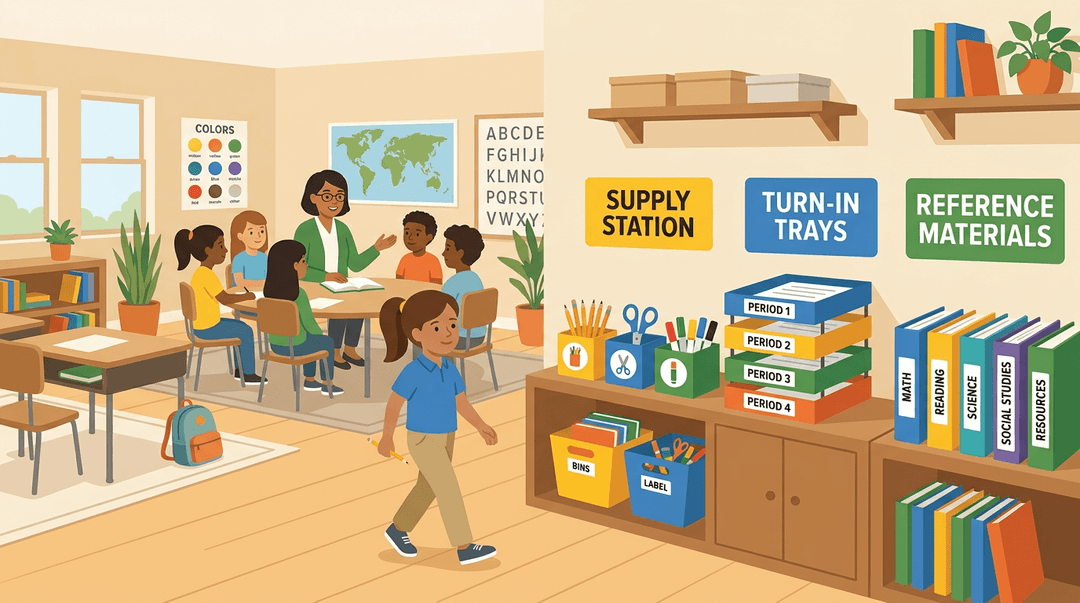
Your physical space is a system too. When students can find what they need without asking, transitions run faster and learning time expands.
Design a layout students can navigate alone
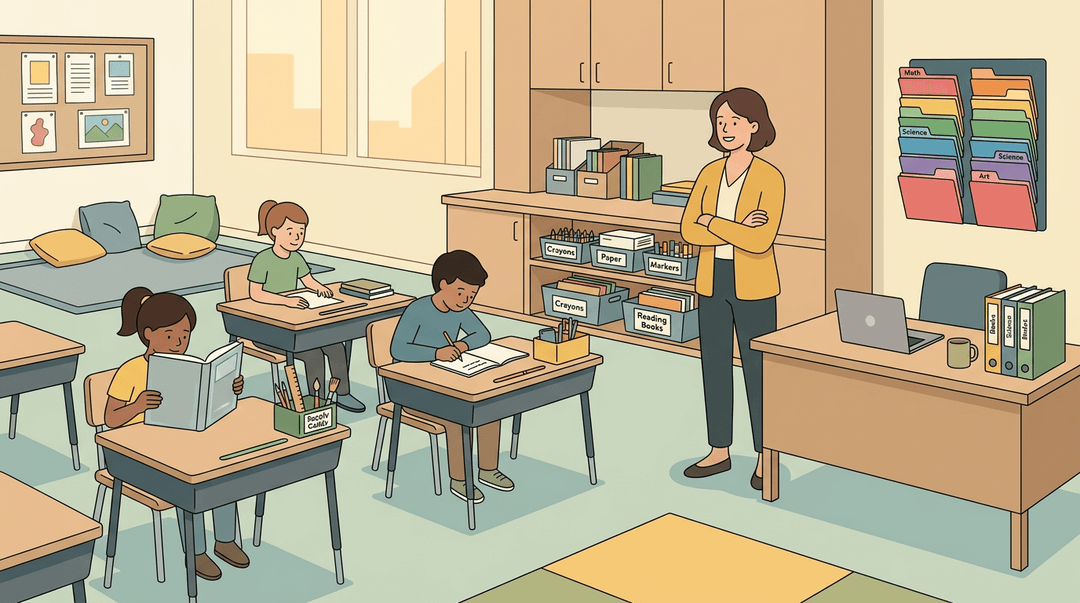
Think about where things live in your room: supply stations, turn-in trays, reference materials. When those spots are consistent and clearly labeled, students stop raising their hand to ask where the scissors are. They just go get them.
That independence keeps the lesson moving and reduces the low-level interruptions that chip away at instructional time. A structured environment tells students, quietly but clearly, that this is a space where things make sense.
Give students ownership through classroom jobs
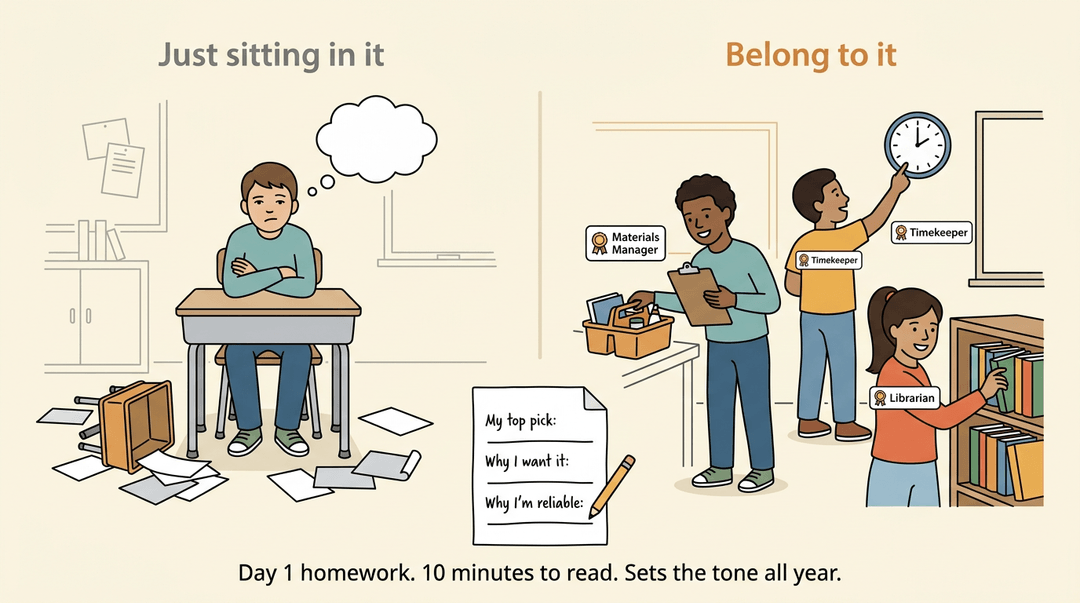
Here's a move that pays off all year: involve students in the space itself. Walk them through the layout on day one and ask for their input. Where should the supply caddy go? Does the reading corner make sense there?
When students help shape the room, they take care of it differently.
From there, assign classroom job roles tied to real daily routines:
- a materials manager who restocks supplies
- a timekeeper who flags transitions
- a librarian who keeps the book shelf sorted
For your first homework assignment, have students fill out a simple job application: their top pick, why they want it, and one reason they'd be reliable.
It takes ten minutes to read and sets a tone of shared responsibility before the second day of school. Students who feel like they belong to a classroom, rather than just sitting in one, bring a different kind of pride to keeping it running.
Physical Storage Systems for Teacher Materials
A cluttered classroom is a cluttered mind. When your materials have a home, you spend less time hunting and more time teaching. Here's how to build a physical system that holds up all year:
Organize handouts with binders and filing cabinets
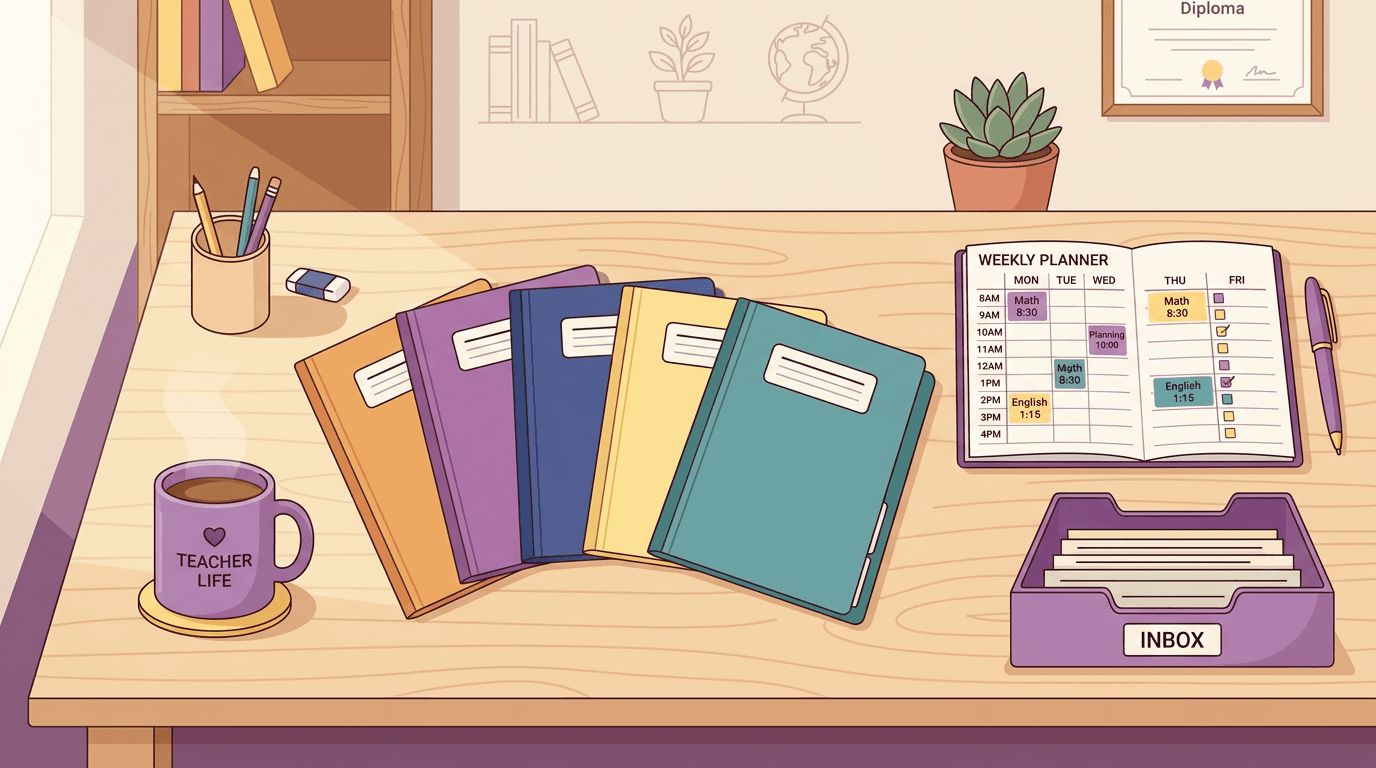
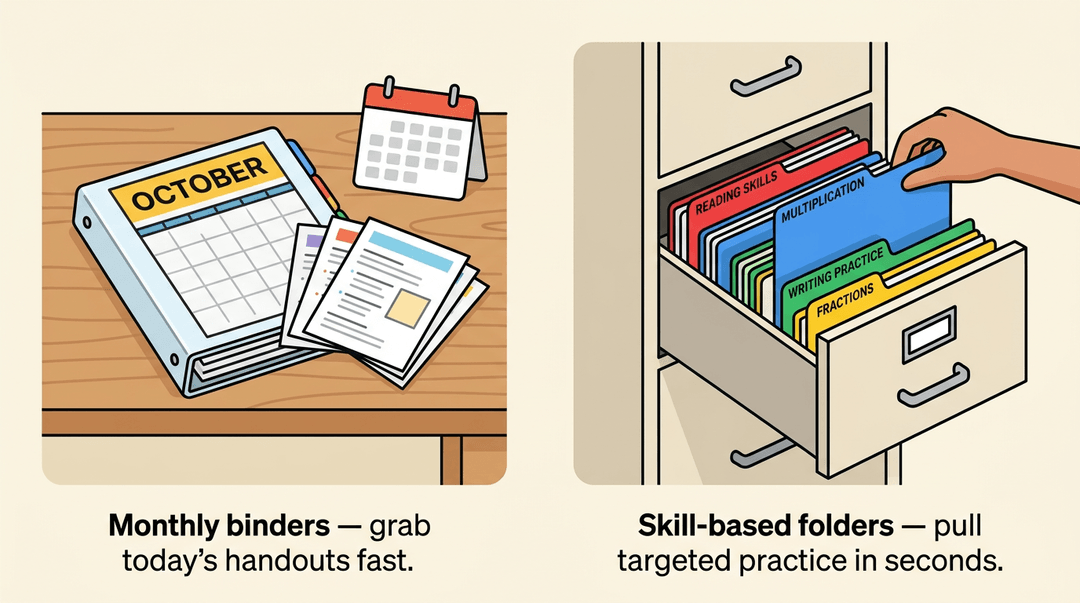
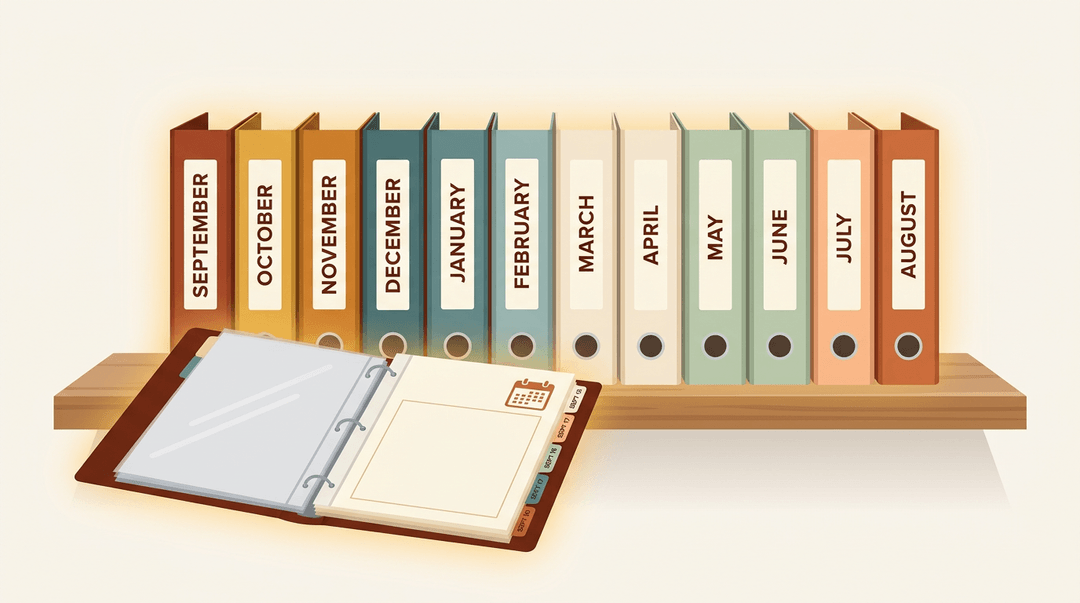
Monthly binders keep handouts grouped and easy to grab, while a filing cabinet sorted by subject gives you a permanent archive when a worksheet needs to reappear.
Inside the cabinet, create skill-based worksheet folders so you can pull targeted practice in seconds. Color-coded, labeled rainbow file folders make the right section visible from across the room.
Use bins, tubs, and crates for unit materials
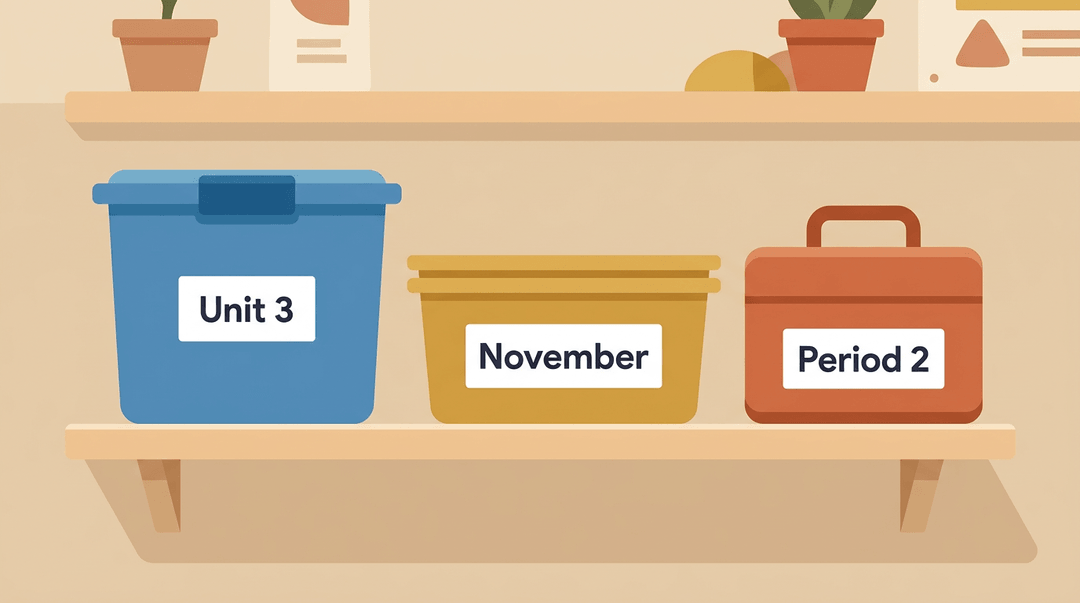
For bigger collections, Sterilite latch bins are a classroom staple: one bin per unit keeps everything contained and stackable. Monthly or seasonal bins mean holiday and thematic materials don't swamp your workspace when you're not using them.
If you teach multiple periods, a dedicated crate per class period keeps each group's materials separate and ready. IRIS project cases work well for storing smaller resource sets you reach for often.
Keep shelves and your desk clutter-free
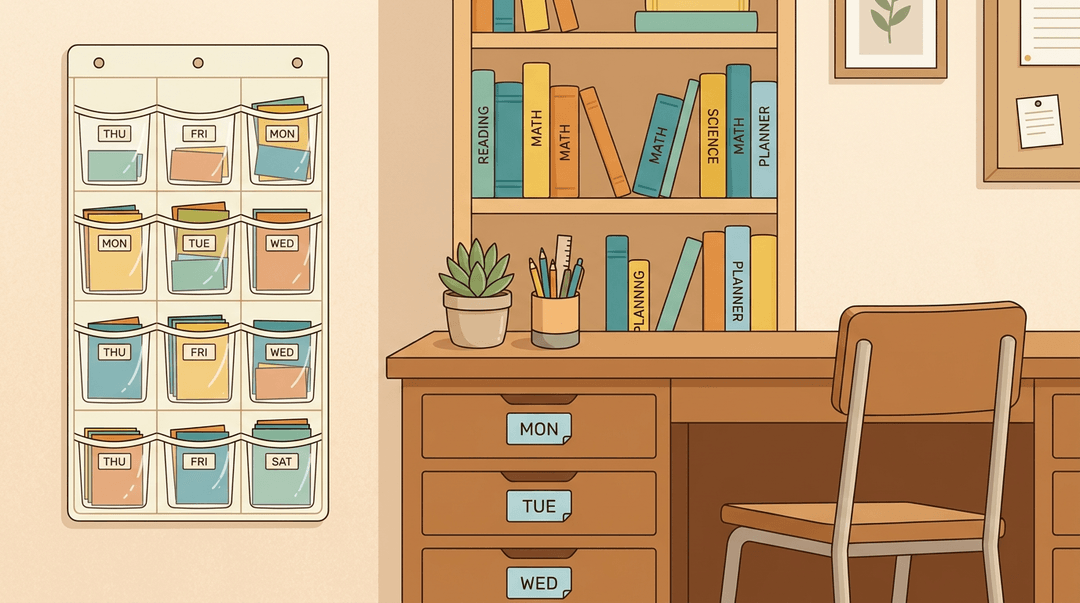
Reserve shelf space for daily-use materials only. A shoe organizer hung on a wall or door holds weekly copies sorted by day so you're never rifling through a stack on Monday morning. Label each desk drawer by day of the week, then load it Sunday night.
Bookcases and cubbies handle longer-term storage: textbooks, reference sets, and materials that rotate in on a schedule rather than sitting out permanently.
Rotate seasonal materials in and out monthly
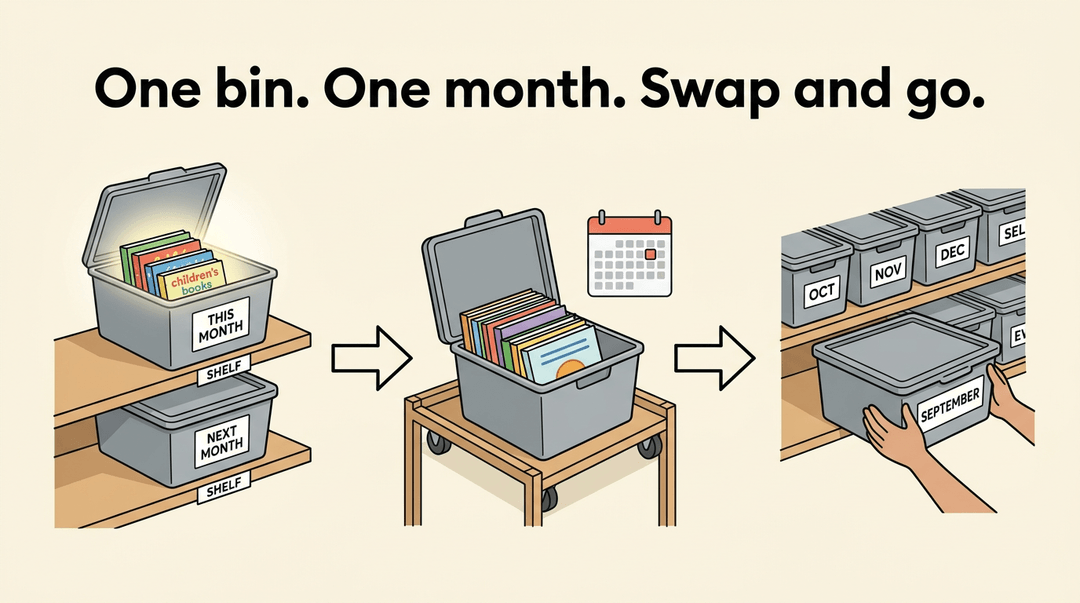
A one-bin-per-month rule is the cleanest way to manage seasonal resources. At the end of each month, swap out what's on display, pull the next bin, and put the old one back on the shelf.
Keep seasonal read-alouds visible and accessible during their month, then return them before they become clutter. The goal is simple: you only access what's current. Everything else stays boxed, labeled, and out of the way.
Keeping Student Supplies and Work in Order
A chaotic supply station or a pile of un-filed papers can eat up minutes you can't spare. The goal here is simple: set up systems your students can run themselves.
Simple systems for collecting student work
When students know exactly where to put their work, the "where do I hand this in?" question disappears. A few setups that work well:
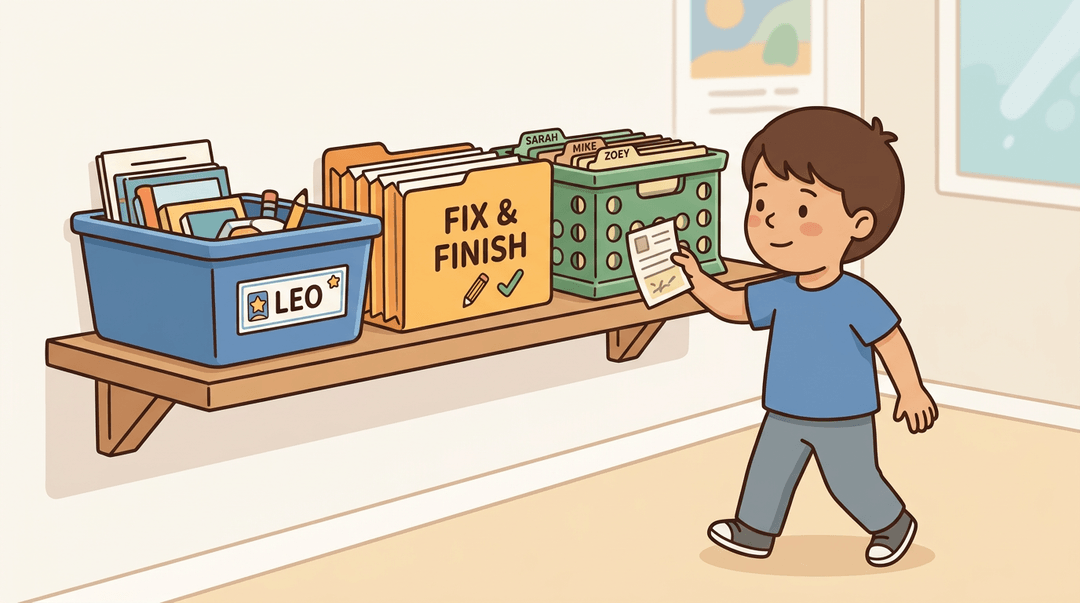
- Labeled turn-in tubs give each student a named spot, so you always know whose work is whose.
- Fix-and-finish folders kept in desks let students self-manage incomplete work without interrupting you.
- A crate with individual folders works for longer-term filing and cuts down on lost papers.
All three systems share one principle: students take responsibility for filing their own work, not you.
Set up supplies students can manage themselves
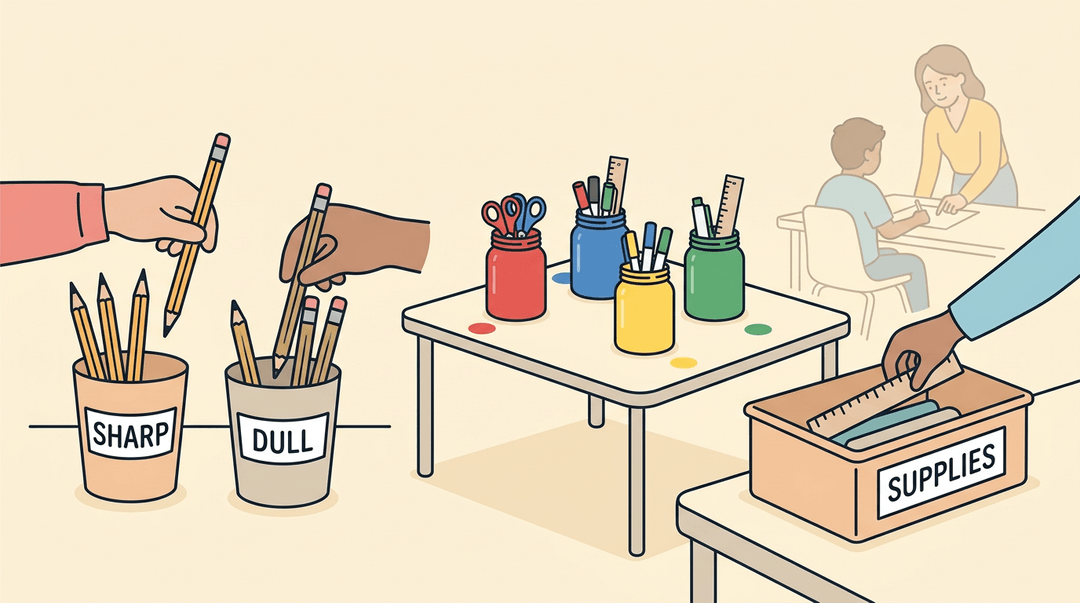
The fewer times a student interrupts you for a pencil, the better. Two containers, one for sharp pencils and one for dull, let students swap without asking.
Color-coded supply jars and tabletop supply plates for group pods make it obvious what belongs where. Self-serve bins positioned within reach mean students get what they need and get back to work.
Prep every student desk before day one
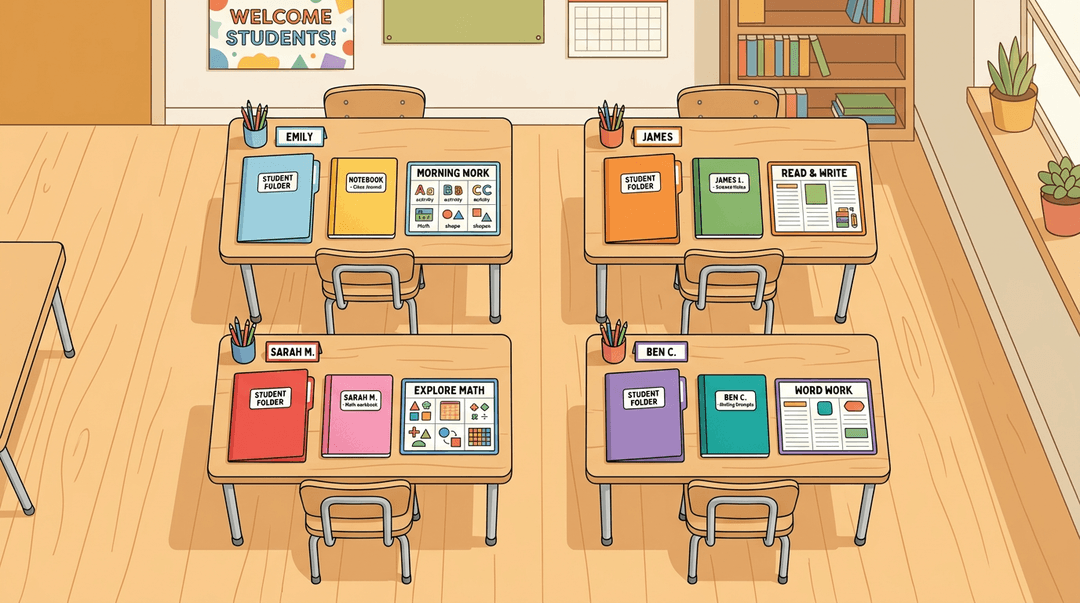
Walking in on the first day to a desk that already feels ready tells a student this classroom is organized and they belong in it. Before students arrive:
- Take-home folders are labeled and in place.
- Interactive notebooks are pre-labeled with the student's name.
- A back-to-school activity mat sits on each desk, so early arrivals have something purposeful to do.
Five minutes of prep per desk saves a morning of confusion.
Managing Paper and Handouts All Year
Paper is one of those things that quietly takes over if you let it. A few simple systems keep it in its place all year.
Batch your copies once a week
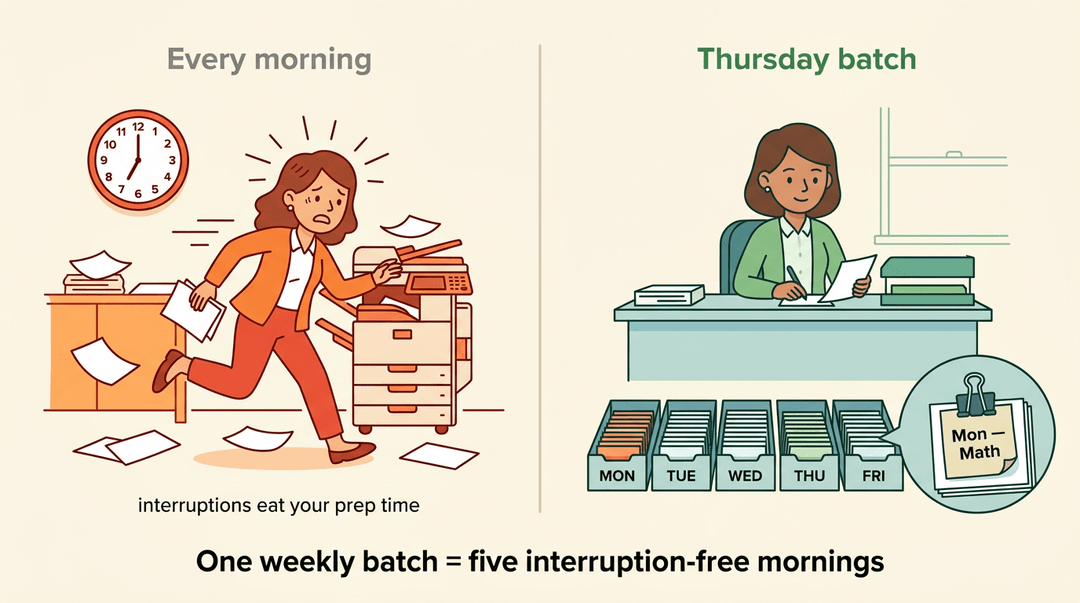
Instead of running to the copier every morning, set aside time on Thursdays or Fridays to pull and sort everything you'll need for the following week.
Sort copies by subject or day, then drop them into a day-labeled drawer so Monday's materials are never buried under Wednesday's.
For loose piles, binder clips with a sticky label work perfectly as a low-tech filing system. This one weekly habit protects your planning time from the small interruptions that add up fast.
Monthly binders make makeup work easy
Keeping one binder per school month, with a page protector for each day, solves two problems at once. When a student misses class, you're not hunting through stacks: the handout is right where it should be, filed by date.
It also quietly builds a resource archive. At the end of the year, you'll have a month-by-month record of everything you taught, which makes planning the following year noticeably easier. A few seconds of filing each day saves a lot of searching later.
Build Your Organized Teacher System Step by Step
You don't fix a whole year of clutter in a weekend. This is a three-week build with a weekly habit that keeps it standing: work one week at a time, and don't start week 2 until week 1 holds.
Week 1: audit and purge
Before you build anything, see clearly what's broken and clear the deck.
- Name your top three pain points. Write them down where you see them daily.
- For example: "papers pile up by the door," "I can't find last year's units," "kids ask where supplies go."
- Pull every unused physical item. If it didn't help a student this year, it goes.
- One donate box, one recycle bin, one "decide later" box you revisit in a month.
- Archive or delete stale digital files. Move old-year work into one dated folder.
- Format:
Archive_2023-24, then empty your desktop down to active files only.
- Format:
Week 2: build your core storage
Now decide where things live. Pick one home for paper, one for digital, and label both.
Choose your mode first. Paper, digital, or hybrid: most teachers land on hybrid (digital plans, physical student work).
Label your physical zones. Give every category a named, visible spot.
| Zone | What lives there |
|---|---|
| Turn-in | One tray per class period |
| To copy | A single front-of-desk folder |
| Graded, to return | One labeled bin by the door |
Set up one digital hub. Plans and grades live in a single place, not scattered across apps.
⚠️ Watch out: Two half-used systems are worse than one. If plans live in three folders and two apps, you'll keep losing them. Pick one hub and move everything in.
Week 3: hand the routines to students
A system only survives if students run it without you. Teach the moves, then post the reminders.
- Assign classroom jobs. Give the recurring tasks away on a rotating chart.
- Materials manager, paper passer, end-of-day tidy crew.
- Teach the supply and turn-in routines. Walk it, don't just say it.
- Say: "Finished work goes in the period-3 tray, name up, every time."
- Post visual reminders at each zone. A small sign beats repeating yourself.
- A photo of the tidy supply shelf taped above it shows the target state.
The weekly reset
Systems drift. A short Friday habit is what keeps the first three weeks from unraveling.
- Run a 10-minute Friday reset. Clear surfaces, empty trays, reset zones to their labels.
- Prep next week's copies and plans. Pull what you'll hand out so Monday isn't a scramble.
- Review one system per month. Pick the weakest, tweak it, leave the rest alone.
💡 Tip: Set a recurring 2:45 Friday alarm labeled "reset." The habit sticks faster when the cue isn't your own memory.
At a glance:
| Phase | Key move | What you get |
|---|---|---|
| Week 1 | Audit and purge | A clear, honest starting point |
| Week 2 | Build storage | One home for paper, one for digital |
| Week 3 | Train students | Routines that run without you |
| Weekly | 10-min reset | Systems that stay built |
Keeping your plans in one hub is the hardest piece to hold, which is why EMStudio's AI Lesson Editor lets you draft, store, and update all your lesson plans in one place, so your planning system stays organized without extra effort.
Classroom Organization Products Worth Buying
The right products make your systems stick. But you don't need to spend a fortune or start from scratch to set up a well-organized classroom.
Storage products that actually get used
A few categories show up again and again in organized classrooms:
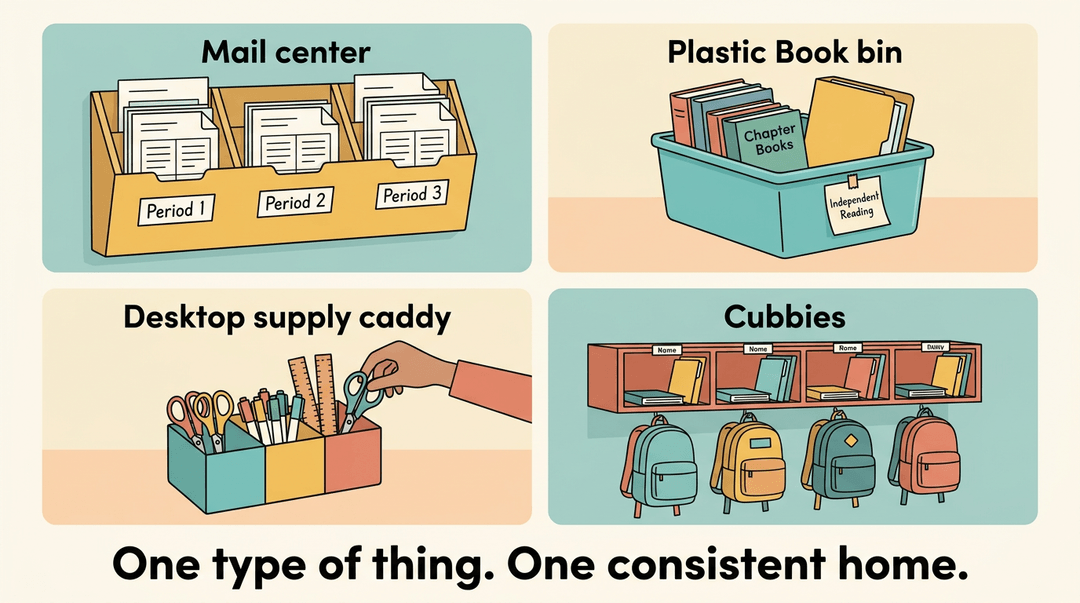
- Mail centers and slot trays keep papers sorted by class period, student group, or subject so nothing disappears into a pile.
- Book bins and tubs give students a consistent home for independent reading books, folders, and ongoing work.
- Multi-compartment stations work well for supplies like scissors, markers, and rulers: students can grab what they need without asking.
- Bookcases and cubbies create clear ownership of space, whether that's a personal cubby for a second-grader's gear or a shared bookcase organized by reading level.
The common thread: each product gives one type of thing one consistent home.
How to budget for classroom supplies
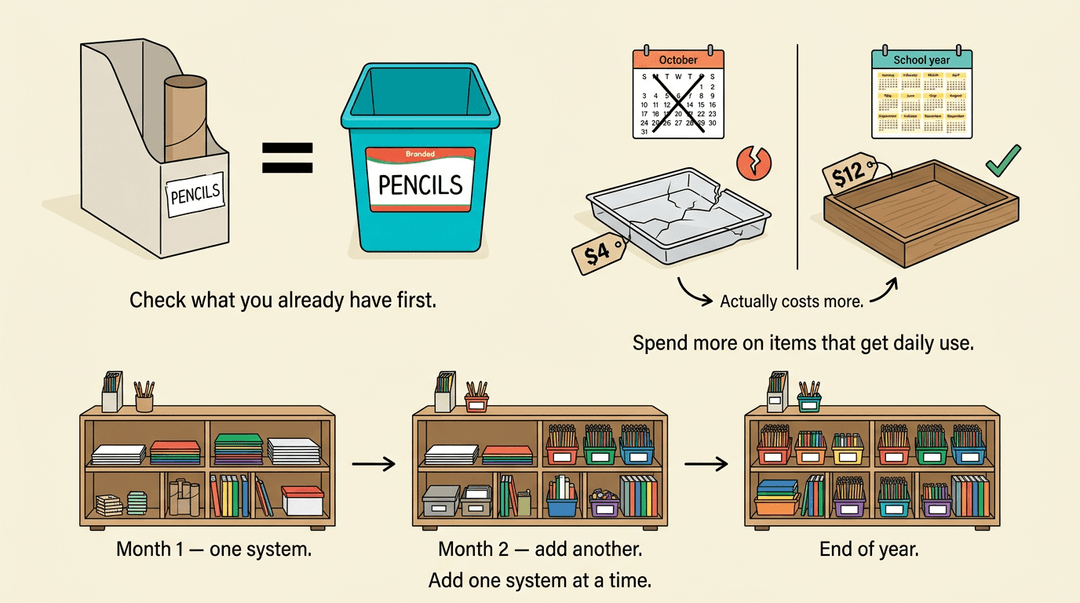
Organization products span a wide price range, so there's usually a workable option at every budget. Before you buy anything, look at what you already have. A repurposed magazine holder works just as well as a branded bin if students know what goes in it.
When you do spend, prioritize durable, high-quality pieces for the items that take daily wear: a flimsy tray that breaks in October costs more than one sturdy purchase upfront. Fill the gaps with low-cost or donated items.
You don't need to buy everything at once. Add one system at a time, see what your students actually use, and build from there.
Digital Organization for Teachers
Paper binders work for some teachers; others think better on a screen. The key is picking one system and sticking with it. Splitting your attention between a physical planner and three different apps is a fast track to double-booking yourself.
Digital tools that keep plans and grades tidy
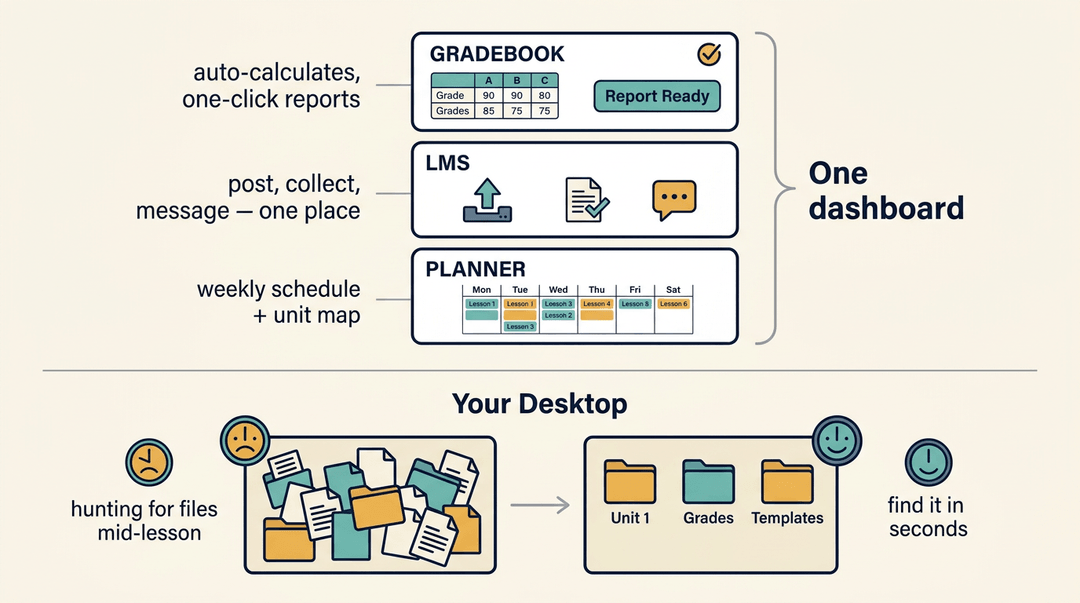
The right tools let you centralize planning, grades, and attendance in a single place instead of hunting across tabs and notebooks. A gradebook app like ThinkWave handles calculations automatically and keeps parent-ready reports a click away.
A learning management system (LMS) goes further: you can post assignments, collect submissions, and message students without switching platforms.
Layer a digital teacher planner on top for your weekly schedule and unit maps, and you've got one dashboard for your whole professional life.
Your computer desktop matters more than most teachers realize. A cluttered screen slows you down every time you go searching for a file mid-lesson.
Keep a simple folder structure, name files clearly, and delete what you no longer need. Small habits, real time savings.
Build healthier habits around personal tech
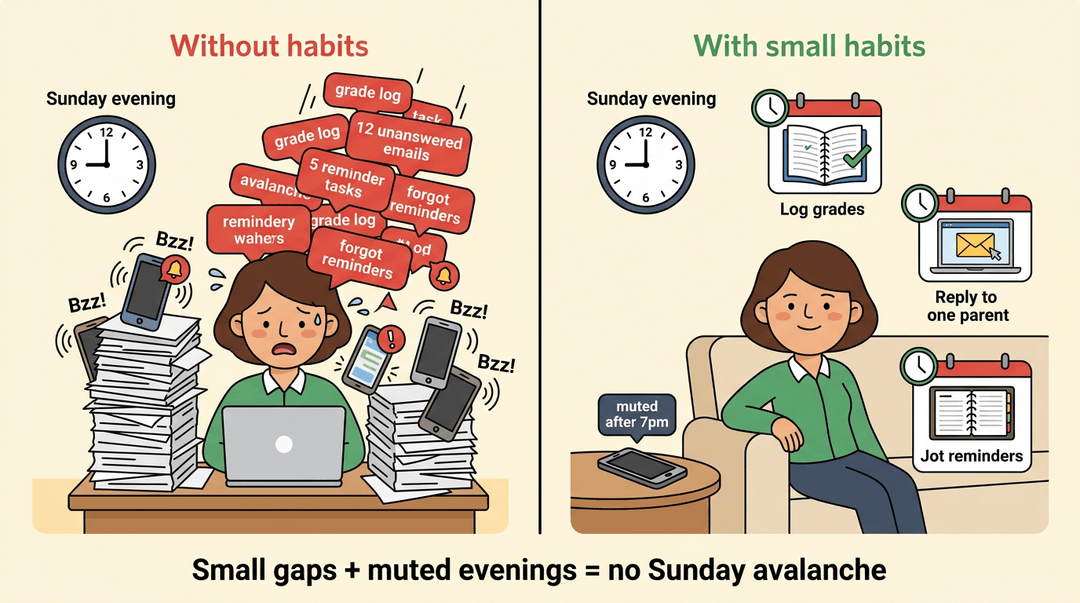
Digital organization isn't just about the tools you use at school. At home, phone notifications can chip away at the recovery time you actually need. Muting work apps after a set hour protects your evenings without leaving anything important unread.
Those spare minutes between tasks are worth something too. A five-minute gap is enough to:
- log a few grades
- reply to one parent email
- jot tomorrow's reminders into your planner
Purposeful tech habits like these keep the small tasks from stacking up into a Sunday-evening avalanche.
How to Organize Your Read Aloud Books
Your read aloud collection deserves its own system. These books aren't part of the student library: they're your teaching tools, and mixing the two creates daily friction you don't need.
Store and display books by season and skill
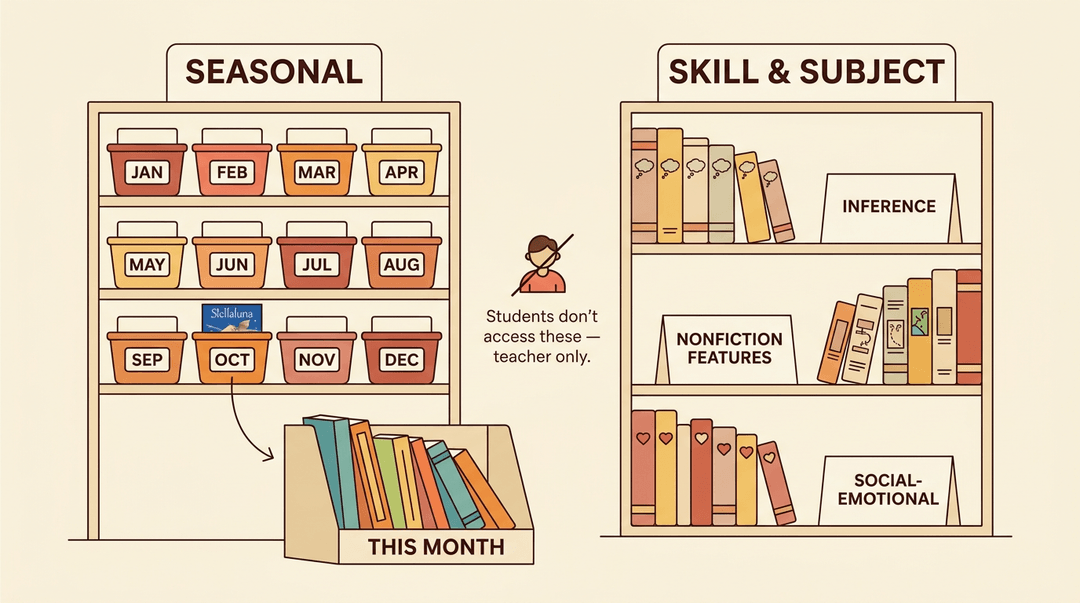
Keep your teacher read alouds on a separate shelf or cart that students simply don't access. From there, split the collection in two ways.
For seasonal titles, a set of labeled monthly bins works well. Drop October's books into October's bin at the start of the year, and you'll never hunt for Stellaluna in November again. For non-seasonal titles, sort by subject or skill:
- a section for books that teach inference
- one for nonfiction text features
- one for social-emotional learning
Then add a small display shelf, just big enough for the current month's titles. A first-grade teacher, for example, might rotate in five or six books each month and pull directly from that display during her morning meeting or shared reading block.
Everything else stays in the bins, out of the way but easy to find when the time comes.
Preparing a Sub Kit That Actually Works
An absent day shouldn't mean a chaotic one. When your sub kit is ready to grab and go, whoever steps into your room has everything they need before they even look for you.
What to put in your substitute teacher tub
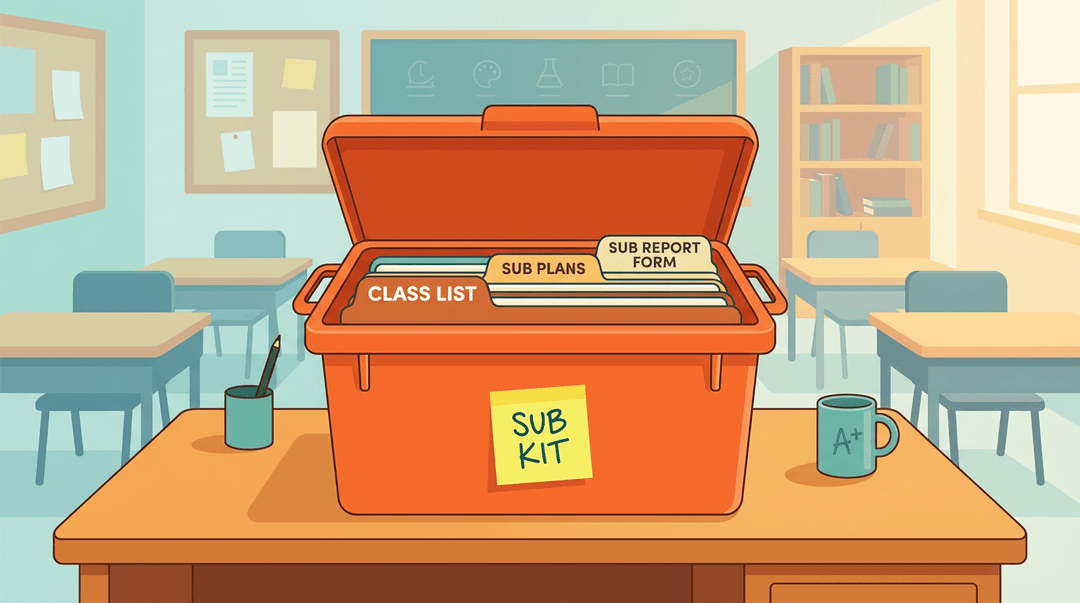
A dedicated tub or crate keeps everything in one place: no hunting, no guessing. Stock it with a few essentials and update it at the start of each unit.
Here's what belongs inside:
- Class lists and seating charts. A current roster and a visual map of the room help a substitute manage the space and learn names fast.
- Editable sub plan templates. A fillable template means you're not writing from scratch at 6 a.m. Include your daily schedule, key routines, and a note about any students with specific needs.
- Substitute review forms. A simple end-of-day form lets your sub report how things went: what got done, what didn't, and any behavior worth knowing about. You'll walk in Tuesday morning already informed.
Think of a first-year teacher scrambling the night before an emergency absence, piecing together notes on sticky pads. A prepared tub flips that entirely. Spend thirty minutes building it once, and every absence after that is a non-event.
Keep the tub somewhere obvious and tell a trusted colleague where it lives. The best sub kit is the one your substitute can actually find.
Getting organized isn't a one-weekend project you check off and forget. It's a set of habits and systems you build layer by layer, and each one you add gives you a little more breathing room in the classroom.
The teachers who make it look effortless aren't the ones who never feel overwhelmed. They're the ones who built structures that carry the load. You can do the same.
Ready to bring that same thinking to your lesson planning? Check out our Workflow & Tools to plan smarter and spend more time on the work that actually counts.
Frequently asked questions
What is an organized teacher?
An organized teacher is someone who establishes reliable structures for their time, classroom space, and student routines. This approach minimizes logistical energy, allowing them to focus more on instruction. It means building repeatable systems that govern how the classroom operates daily.
What is organization in teaching?
Organization in teaching involves creating clear structures for materials, managing time efficiently, establishing consistent routines, and maintaining effective communication. The goal is to ensure that learning remains the central focus, rather than logistical challenges. These systems benefit both the teacher and students by creating a predictable and calm learning environment.
What is the organization of a teacher?
The organization of a teacher refers to their systematic approach to structuring classroom operations, personal time, and student engagement. It encompasses setting up physical and digital systems for materials, planning, and routines. This organization is key to reducing chaos and maximizing instructional effectiveness.
What are the 4 types of teachers?
Teachers can be categorized in various ways based on their teaching style or approach, rather than specific types. Some common classifications include authoritative, democratic, laissez-faire, and apathetic, reflecting different levels of control and interaction in the classroom.
What are some teacher organizations?
Common teacher organizations include the National Education Association (NEA), the American Federation of Teachers (AFT), and subject-specific professional organizations like the National Council of Teachers of English (NCTE) or the National Council of Teachers of Mathematics (NCTM). These groups often provide professional development, advocacy, and resources for educators.
What are the 5 importance of organization?
The five importance of organization include saving time by reducing searching and re-planning, decreasing stress levels for both teachers and students, improving student engagement and on-task behavior through predictable routines, fostering student independence, and enhancing overall classroom management and learning efficiency.