How Differentiated Instruction Education Actually Works

Jump to section
Think about the last time you tried to explain something to two people at once, and one already knew half of it while the other was hearing it for the first time.
You probably shifted your language, your examples, maybe even your pace, without thinking twice. That's differentiated instruction in its simplest form.
Differentiated instruction is the practice of adjusting what you teach, how you teach it, and how students show what they've learned, so every learner in the room has a real shot at success.
It's not a separate curriculum for every student: it's a flexible approach to a shared classroom.
In this post, we'll cover what differentiated instruction actually means, the four areas you can adjust, real classroom practices that make it work, and how to build and reuse differentiated lesson plans without burning out.
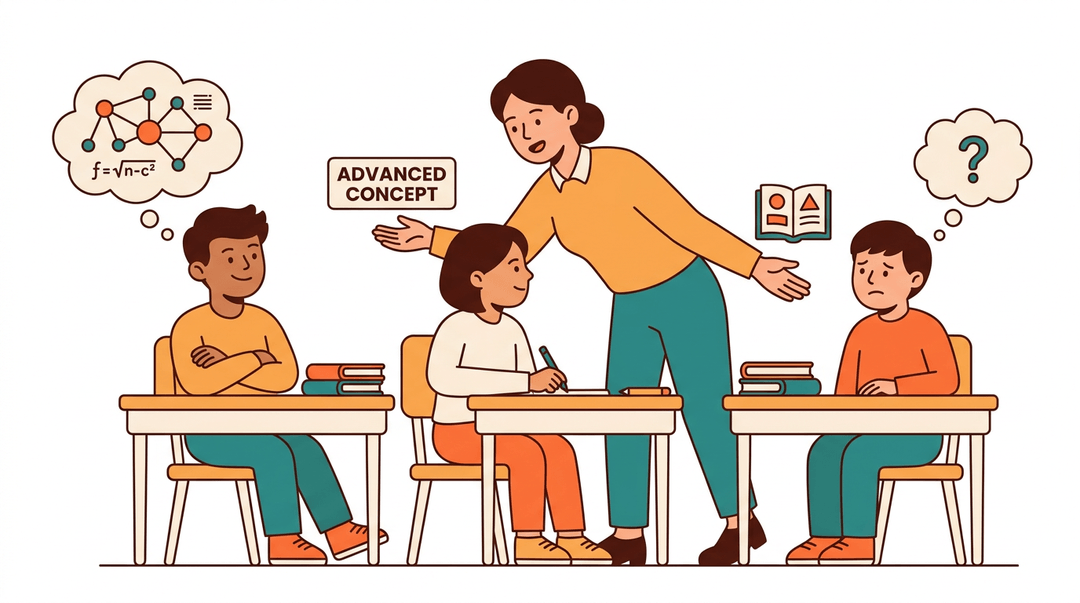
What Differentiated Instruction Education Really Means
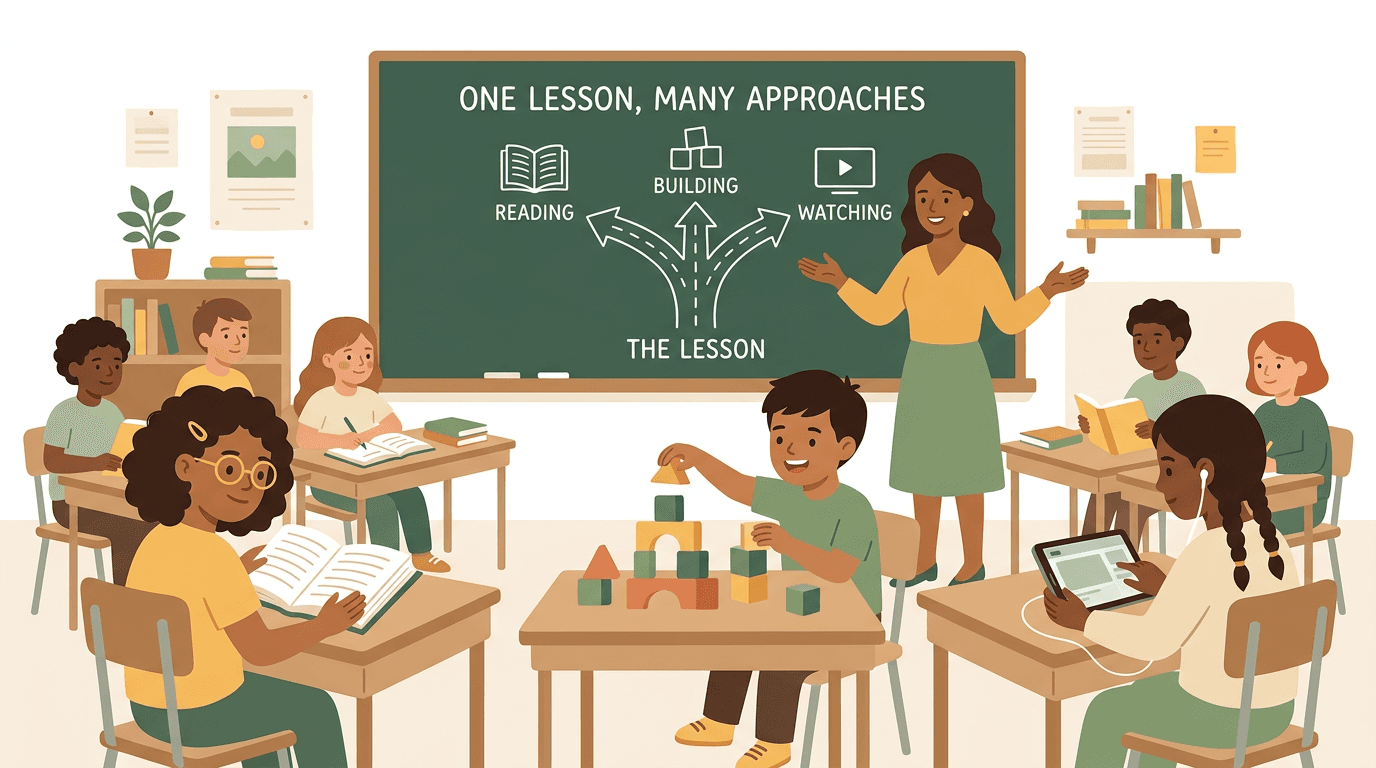
Differentiated instruction isn't a single strategy you slot into a lesson. It's a teaching philosophy: every student works toward the same learning goal, but the path there looks different depending on who they are.
Teachers adjust five key areas to make that happen:
- content (what students learn)
- process (how they make sense of it)
- product (how they show what they know)
- environment (the physical and emotional classroom setup)
- affect (how students' interests and feelings shape their engagement)
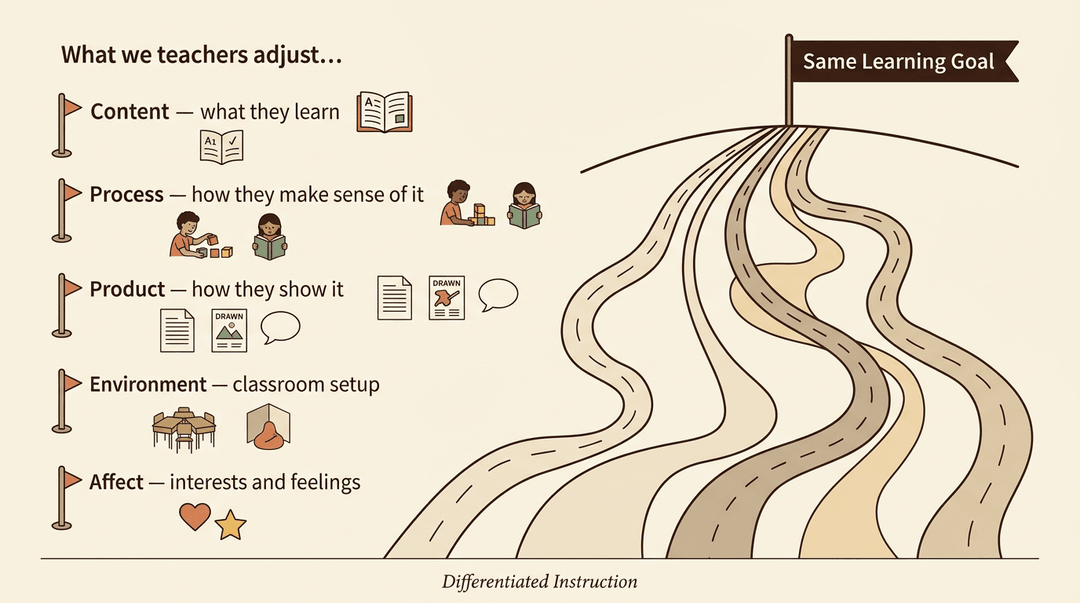
What differentiated instruction actually is
At its core, differentiated instruction responds to the real variance in any classroom. Students arrive with different background knowledge, different learning preferences, and different levels of readiness.
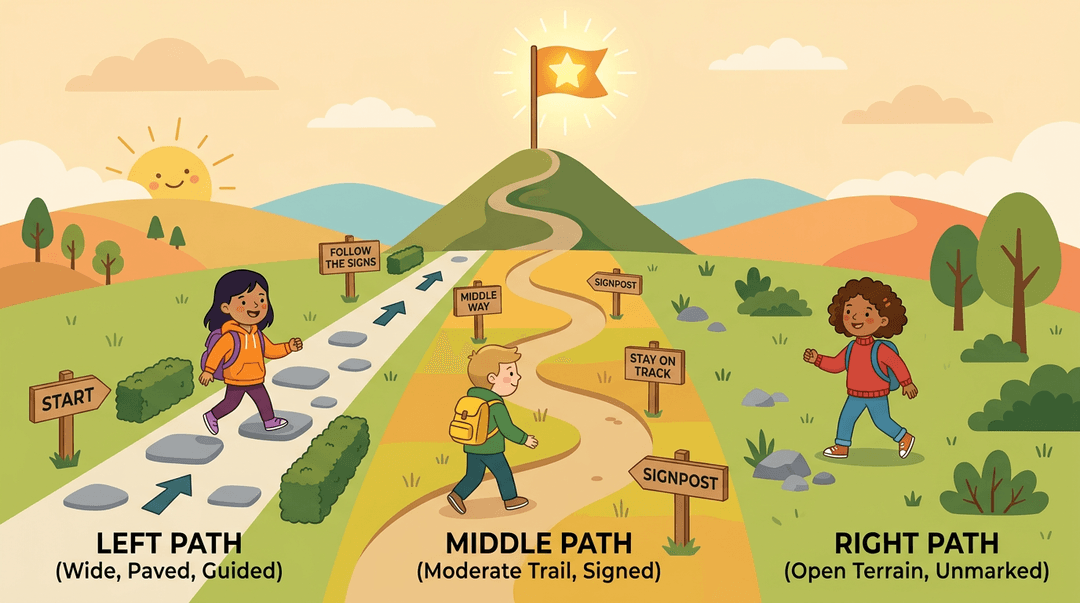
Differentiation means adjusting your instruction so all of them can reach the same destination, even if they take different routes.
For example, a fifth-grade teacher introducing persuasive writing might give some students a sentence-frame scaffold, offer others an anchor text to annotate, and challenge a few to draft with no template at all. Same goal, multiple paths.
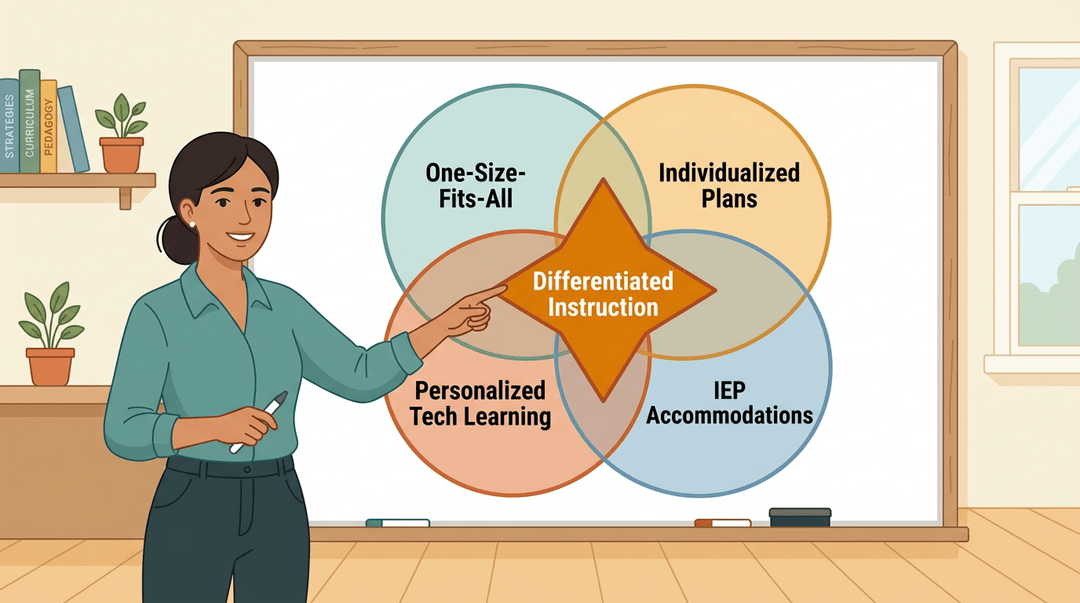
What differentiated instruction is not
It's easy to confuse differentiation with similar-sounding approaches, so it's worth being clear about the boundaries.
- It's not one-size-fits-all lecturing, where everyone gets the same input regardless of readiness.
- It's not individualized instruction, where each student follows a completely separate learning plan.
- It's not personalized learning, which typically relies on student-driven choice and technology-led pathways.
- It's not a replacement for an Individualized Education Program (IEP). Students who need legally mandated accommodations still need those; differentiation works alongside them, not instead of them.
The Four Areas You Can Differentiate
Differentiated instruction works across four core areas: what students learn, how they learn it, how they show what they know, and the environment where all of that happens.
Some frameworks add affect as a fifth area, recognizing that students' emotional investment and sense of belonging shape everything else. Here's what each one looks like in practice.
Differentiating content
Content differentiation is about adjusting what students access, not what they're expected to understand.
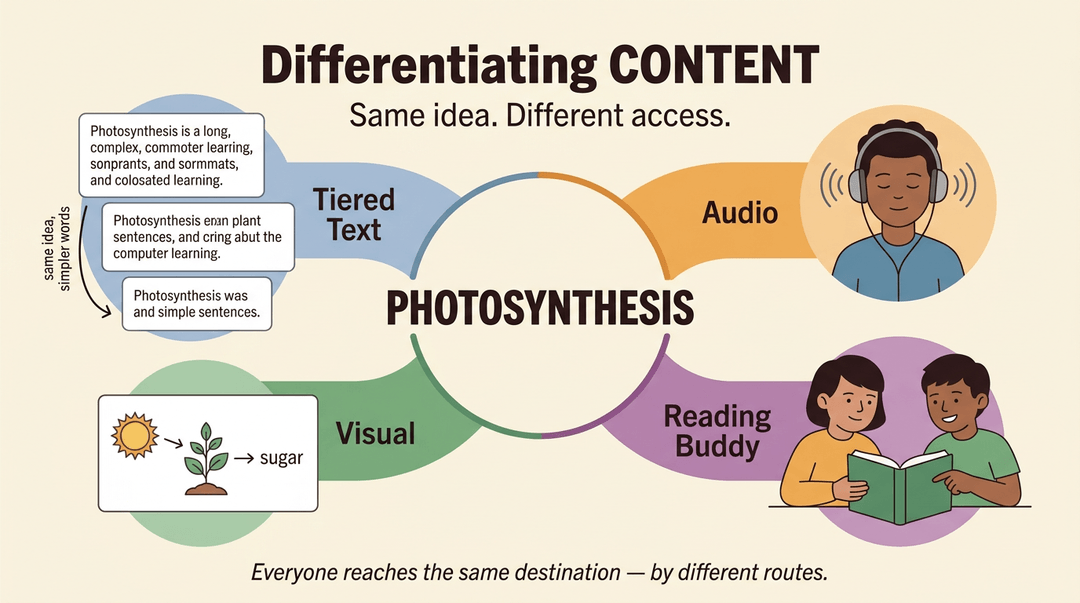
A classic approach is tiered texts: the same concept delivered at three reading levels, so every student engages with the core idea without hitting a wall of unfamiliar vocabulary.
Beyond readability, you can present content through audio explanations or visual displays for students who absorb information better that way.
Reading buddies, student choice in texts, and small-group re-teaching sessions give you even more ways to meet learners where they are.
Differentiating the learning process
Process differentiation adjusts how students work through the material. Tiered activities let you set different complexity levels for the same concept: one group applies a skill in a familiar context while another extends it to something new.
Interest centers invite students to explore the topic through their own curiosity. Scaffolding provides structured support for those who need it, while visual, auditory, and kinesthetic options keep different learners engaged.
Personal agendas and task lists help students manage their own work, and flexible time removes the pressure of a one-size pace.
Differentiating products and projects
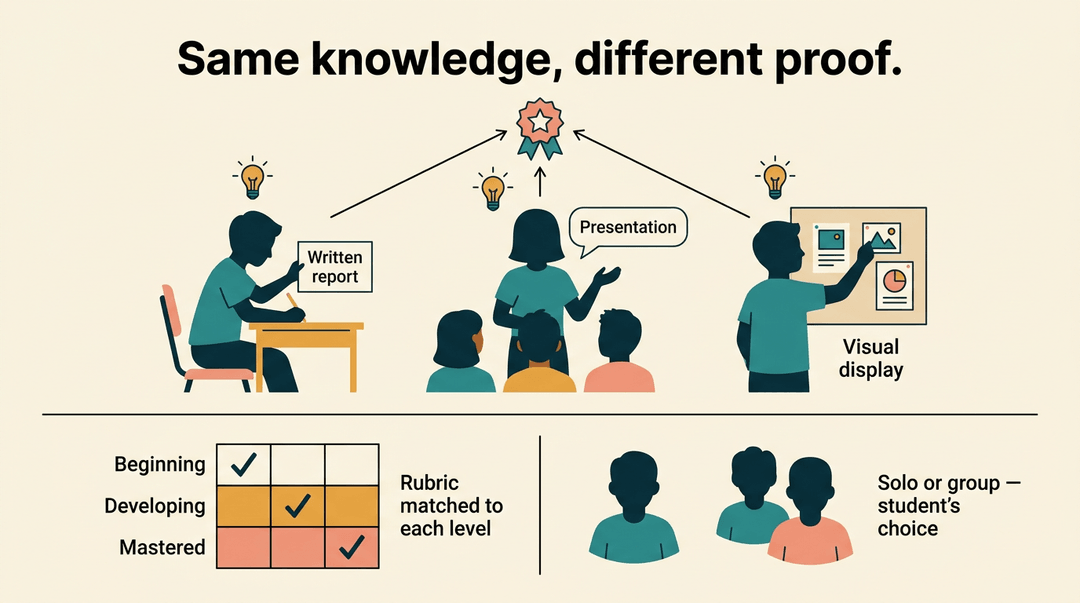
Not every student shows mastery the same way. Letting students choose their expression format (a written report, a short presentation, a visual display) opens the door for more accurate evidence of what they actually know.
Rubrics matched to skill levels keep expectations clear and fair. You can also offer solo or small-group options, or invite students to help design their own assignment formats within your parameters.
Shaping the learning environment
The physical and emotional setup of your classroom matters more than it gets credit for. Quiet corners and collaborative spaces let students self-select what they need in the moment.
Alternative seating, culturally diverse materials, and predictable routines for independent work all reduce friction. Clear guidelines for what students should do when you're working with another group keep the room running without constant redirection.
Key Classroom Practices That Make It Work
Differentiation lives in the daily decisions you make: how you group students, what your assessments tell you, and what you actually base your adjustments on. Here are the three practices that hold it together.
How to group students effectively
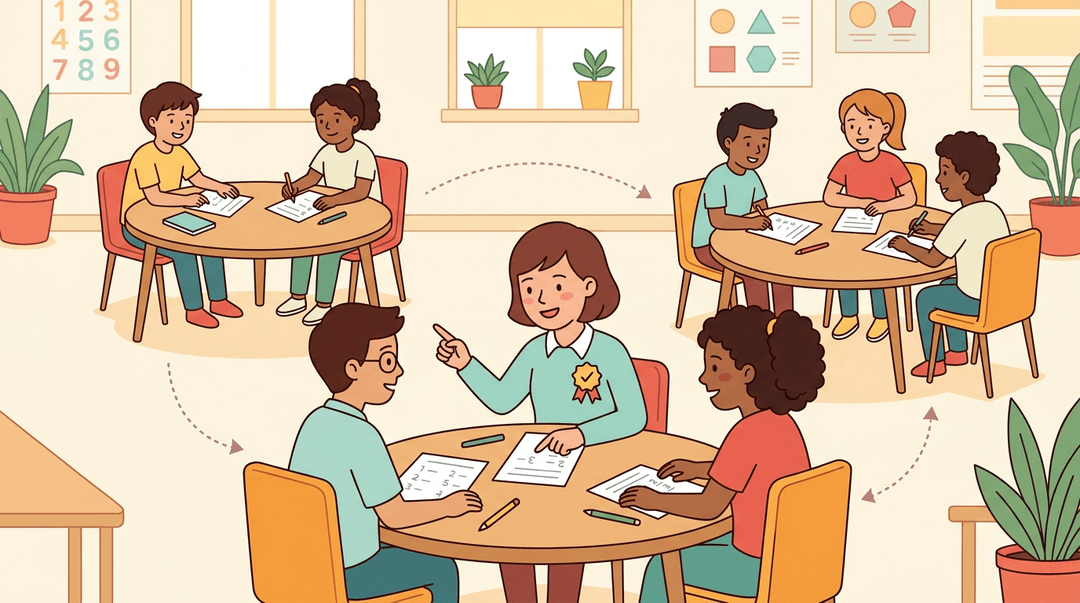
Flexible grouping is the engine of a differentiated classroom. Rather than locking students into fixed ability tracks, rotate small groups weekly based on the skill you're teaching.
One week a student might be in a group that needs more support with fractions; the next, they're a peer tutor for a classmate working on the same concept.
Reciprocal peer learning works especially well here: students reinforce their own understanding by explaining it to someone else. One-on-one sessions fill the gaps that group work can't reach.
Using assessment to drive your decisions
Assessment isn't just a checkpoint at the end. A quick pre-assessment before a new unit is often the trigger that shapes everything: it shows you who already has the concept, who's partway there, and who needs a different entry point.
From there, informal check-ins and rubrics aligned to different skill levels let you track progress rather than just completion, and adjust in real time.
What to base differentiation on
Three things tell you how to differentiate:
- a student's readiness level
- their interests
- their learning profile
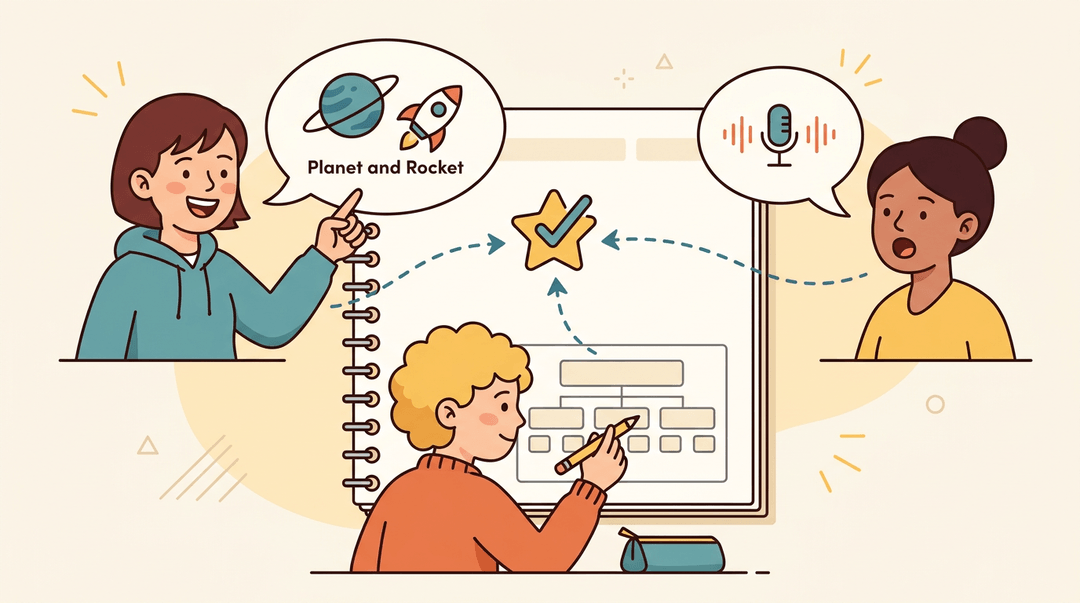
For example, a fifth-grade teacher introducing persuasive writing might let one group choose their own debate topic (interest), offer a structured graphic organizer to students still developing their argument skills (readiness), and allow a verbal planner to outline ideas by talking through them first (learning profile).
One lesson, three entry points, the same learning goal.
How to Build a Differentiated Lesson Plan
A differentiated lesson plan isn't three separate lesson plans. It's one plan with deliberate forks, and you can build it in five steps, in order, before students ever walk in.
The five-step build
- Write one learning goal for everyone.
- Every student works toward the same objective; only the route there changes.
- On the board: "I can explain how an author supports a claim with evidence."
- Anchor test: if a planning tweak doesn't serve this line, cut it.
- Every student works toward the same objective; only the route there changes.
- Pre-assess to find readiness tiers.
- Run a quick poll, exit ticket, or KWL chart (Know / Want to know / Learned).
- Try this exit ticket: "Name one way an author proves a point."
- Sort responses into 2 or 3 groups: not yet, on track, ready to stretch.
- Run a quick poll, exit ticket, or KWL chart (Know / Want to know / Learned).
- Differentiate one area at a time.
- Beginners get a scaffolded process: a numbered step card plus sentence starters.
- Advanced students get open-ended product choice: essay, podcast, or annotated poster.
- Everyone works with the same core content; the material itself never shrinks.
- Beginners get a scaffolded process: a numbered step card plus sentence starters.
- Assign flexible groups before class.
- Put names on a slide before students arrive; deciding live eats lesson time.
- Build in one regrouping point, usually around the lesson's midpoint.
- Say: "When the timer rings, find the group that matches your product choice."
- Put names on a slide before students arrive; deciding live eats lesson time.
- Attach a tiered rubric to the product.
- Keep the criteria identical across tiers; only the success descriptors change.
- Grading stays consistent and fair, and students can see the next tier up.
- Keep the criteria identical across tiers; only the success descriptors change.
Key principle: The goal never tiers. Readiness changes the path and the product, never the destination.
See it on the page
Tiered rubrics fail when the descriptors go vague, so write them as observable actions:
- ❌ "Good use of evidence." Nobody at any tier knows what to aim for.
- ✅ "Cites two pieces of evidence using the sentence starters." Observable, countable, tier-matched.
One rubric row, written out:
| Criterion | Developing tier | Advanced tier |
|---|---|---|
| Use of evidence | Cites 2 pieces using the sentence starters | Selects 3+ pieces and ranks them by strength |
Example: A seventh-grade science teacher builds this plan for a food-web lesson. One goal ("explain how energy flows through an ecosystem"), a five-question pre-poll the day before, a step card for the developing group, a model-it-your-way product for the advanced group, and a single rubric with two descriptor columns. Same lesson, forked twice, graded once.
A plan this deliberate shouldn't live and die with one class: use EMStudio's lesson planner to save tiered lesson templates and reuse them across classes with one click.
Why Differentiated Instruction Matters
Differentiation isn't just a teaching philosophy. It's one of the clearest paths to better results for every student in the room.
A systematic review published in the Journal of Teaching and Learning found that differentiated instruction leads to both improved educational outcomes and increased student engagement. That's a meaningful combination.
How it improves student outcomes
When lessons match where students actually are, rather than where a pacing guide assumes they should be, more students succeed.
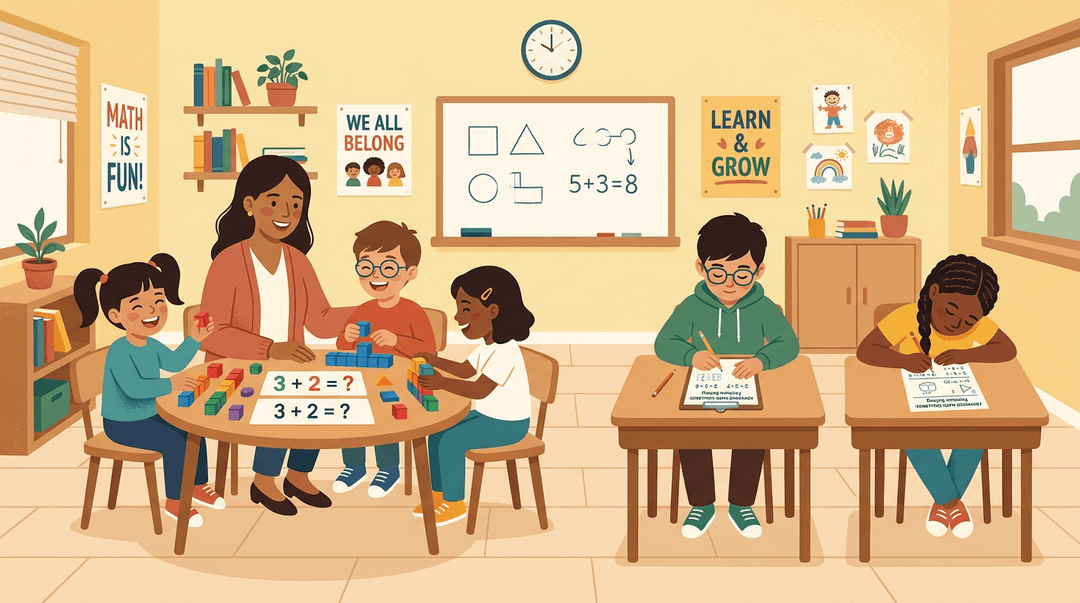
Think of a fifth-grade teacher who offers a challenging extension problem for students who've mastered long division, while pulling a small group to work through the concept with manipulatives. Both groups stay engaged because the work fits.
Differentiation supports every ability level, from the student who needs more time and scaffolding to the one who's ready to go deeper.
It also promotes a sense of inclusivity and belonging: when students feel seen as individuals rather than sorted into a single mold, they're more likely to take risks and stay invested.
How it fits alongside RTI and IEPs
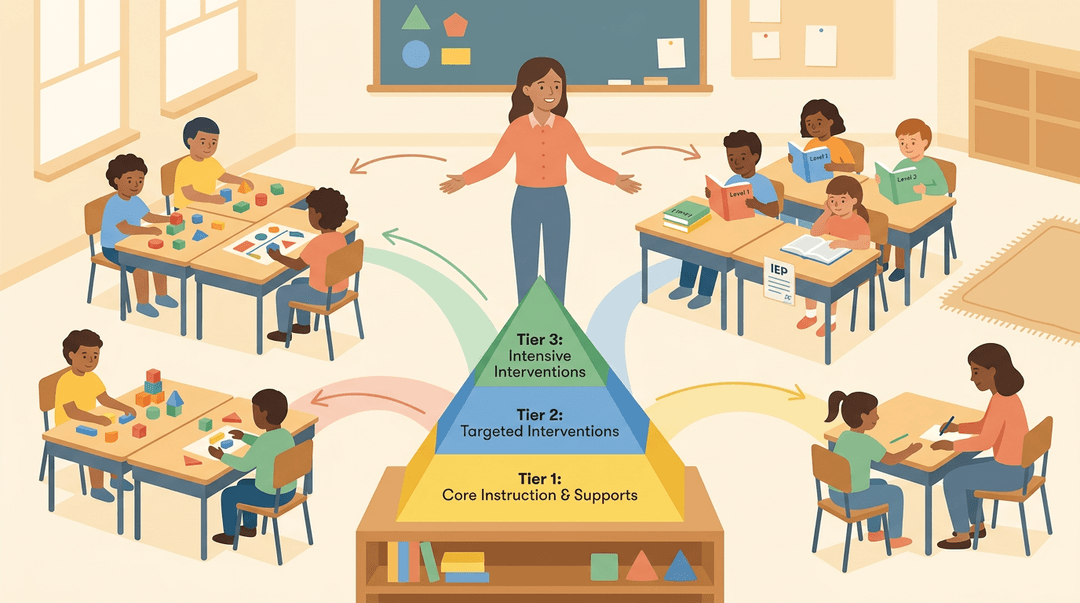
Response to Intervention (RTI) is a tiered framework for identifying and supporting students who are struggling.
Differentiated instruction fits naturally inside it: the flexible grouping and adjusted content you're already using make it easier to respond early, before a small gap becomes a big one.
For students with Individualized Education Programs (IEPs) or 504 plans, differentiation complements the specific accommodations and modifications those plans require.
It doesn't replace them, but it creates a classroom environment where meeting varied needs is already the norm, not the exception.
Criticisms and Real Limitations
Differentiated instruction has a lot going for it, but it's not without real drawbacks. Teachers and researchers have raised legitimate concerns, and it's worth looking at them honestly.
Practical challenges teachers face
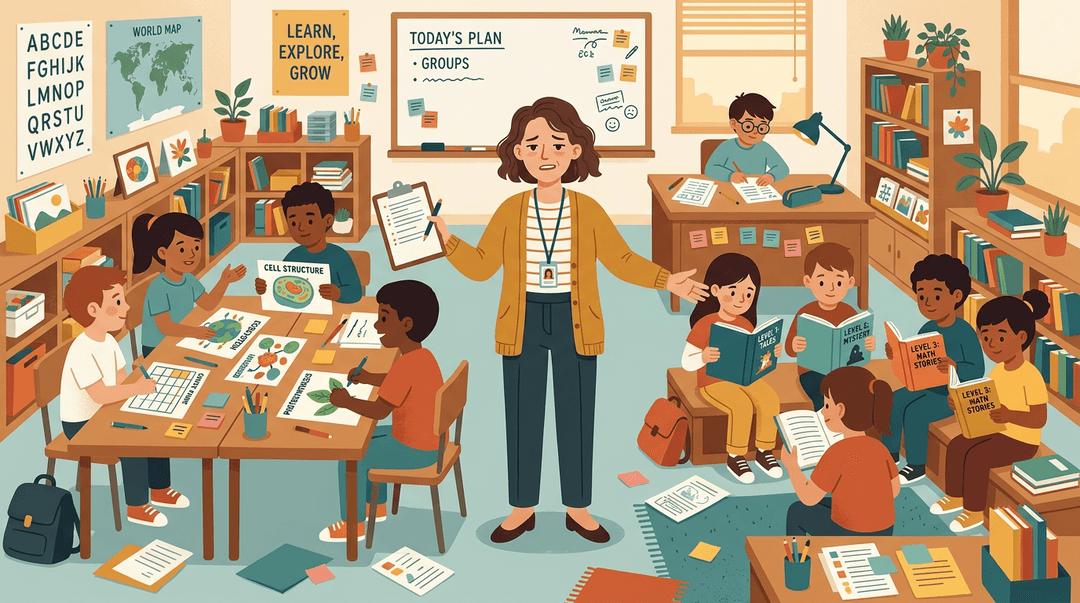
For many educators, the biggest obstacle is simply the reality of the classroom. In a class of 30 students, designing and managing multiple learning pathways at once is genuinely hard. It can feel chaotic, and for less experienced teachers, it often is.
Keeping groups on task, rotating between them, and preventing the room from becoming a distraction for everyone takes real skill and practice.
It's also time-consuming. Writing separate tasks, gathering varied materials, and monitoring individual progress eats into planning time that most teachers don't have to spare. The good news: reusable lesson plan templates change that equation.
Build a differentiated structure once, swap in new content, and your prep time drops significantly the next time around.
What has replaced differentiation?
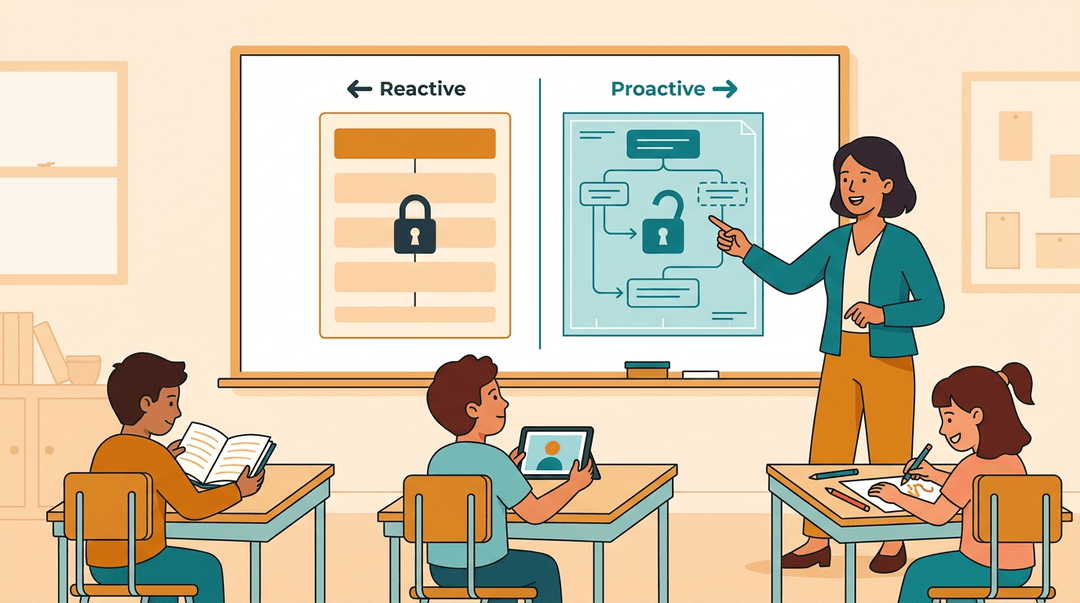
Some critics argue that differentiated instruction is reactive rather than proactive: it responds to learner differences after the fact instead of designing for them from the start. Research has added fuel to that concern.
A commentary from the Thomas B. Fordham Institute found that "the trend suggests that more individualization actually decreases achievement," suggesting differentiation isn't the universal fix it's sometimes sold as.
Universal Design for Learning (UDL) is the framework most often proposed as a proactive alternative. Rather than adapting a single lesson for different learners, UDL builds flexibility in from the beginning.
As researchers note in a systematic review published via Document ServerUHasselt, significant confusion still exists about how the two approaches relate, which means many schools are still working out how to use them together.
Differentiated instruction isn't about doing more work for every student, it's about doing smarter work for all of them. When you adjust content, process, product, or environment to meet learners where they are, the whole class moves forward together.
The teachers who make it sustainable aren't reinventing every lesson from scratch. They build flexible plans once and adapt them as needed. That's where good planning habits pay off.
Ready to put it into practice? Check out our Lesson Planning tool to build differentiated lessons you can reuse, adjust, and rely on.
References
- Unveiling the Potential: A Systematic Review on Harnessing the Affordances of Differentiated Instruction — jtl.uwindsor.ca (2025)
- Exploring the interrelationship between Universal Design for Learning (UDL) and Differentiated Instruction (DI): A systematic review — documentserver.uhasselt.be
- The problem with “differentiation” — fordhaminstitute.org
Frequently asked questions
What is the meaning of differentiated instruction?
Differentiated instruction is an educational approach where teachers adjust what they teach, how they teach it, and how students demonstrate their learning to meet the varied needs of every student. It functions as a teaching philosophy where all students pursue the same learning goal, but their paths to achieve it are customized.
What is differentiated instruction in simple terms?
In simple terms, differentiated instruction means tailoring teaching methods and materials to suit each student's individual learning needs. This allows every student to succeed by giving them different ways to learn and show what they know, even though they all aim for the same understanding.
What are the 4 types of differentiated instruction?
The 4 types of differentiated instruction are content, process, product, and learning environment. Content refers to what students learn, process how they learn it, product how they demonstrate understanding, and environment where learning occurs.
What are the 4 principles of differentiated instruction?
The 4 principles of differentiated instruction are a high-quality curriculum, assessment to inform instruction, respectful tasks, and flexible grouping. These principles guide educators in creating an inclusive and effective learning experience for all students.
What are the 4 elements of differentiated instruction?
The four core elements of differentiated instruction are content (what students learn), process (how they learn it), product (how they show what they know), and environment (the physical and emotional classroom setup). These are the main areas teachers adjust to cater to diverse student needs.
Is differentiated learning the same as IEP?
No, differentiated learning is not the same as an Individualized Education Program (IEP). Differentiation is a general teaching approach to meet varied student needs in a flexible classroom setting. An IEP is a legally mandated document that outlines specific accommodations and modifications for students with disabilities, typically requiring more formal and individualized support.
What has replaced differentiation?
Universal Design for Learning (UDL) is often proposed as a proactive alternative to differentiation, which some critics view as reactive. UDL builds flexibility into lesson design from the beginning, aiming to accommodate diverse learners inherently, rather than adapting a single lesson plan afterwards.
Is differentiated instruction the same as IEP?
No, differentiated instruction is not the same as an Individualized Education Program (IEP). Differentiated instruction is a flexible teaching approach that modifies teaching strategies for all students within a shared classroom, while an IEP is a legally binding document that specifies accommodations and modifications for students with identified disabilities.