What Is Social Learning Theory, and Why Does It Matter?


Jump to section
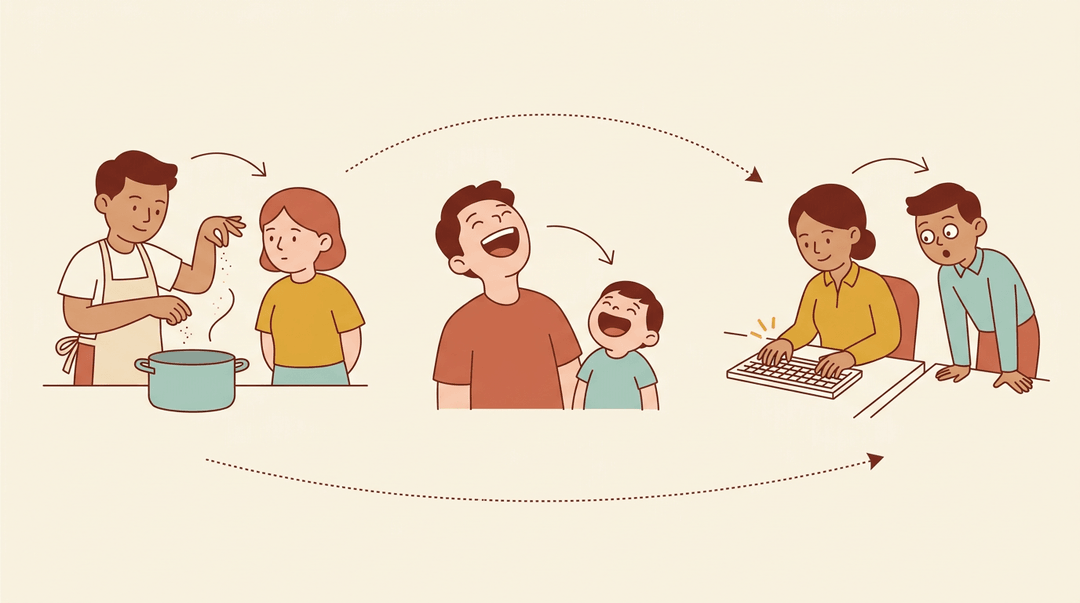
Think about the last time you picked up a new habit just by watching someone else do it: a coworker's shortcut, a friend's recipe tweak, a kid mimicking a parent's laugh. You didn't need a lecture. You needed a model.
That's the core of social learning theory: the idea that we learn largely by observing others, not just by trial and error.
In this post, we'll unpack Bandura's key ideas, the famous Bobo Doll study, and practical ways to put this theory to work in your classroom.
The Basics of Social Learning Theory
Think of a student who picks up a teacher's habit of pausing before answering a hard question, without ever being told to do it. That's the heart of social learning theory: we learn plenty just by watching.
How we learn by watching others
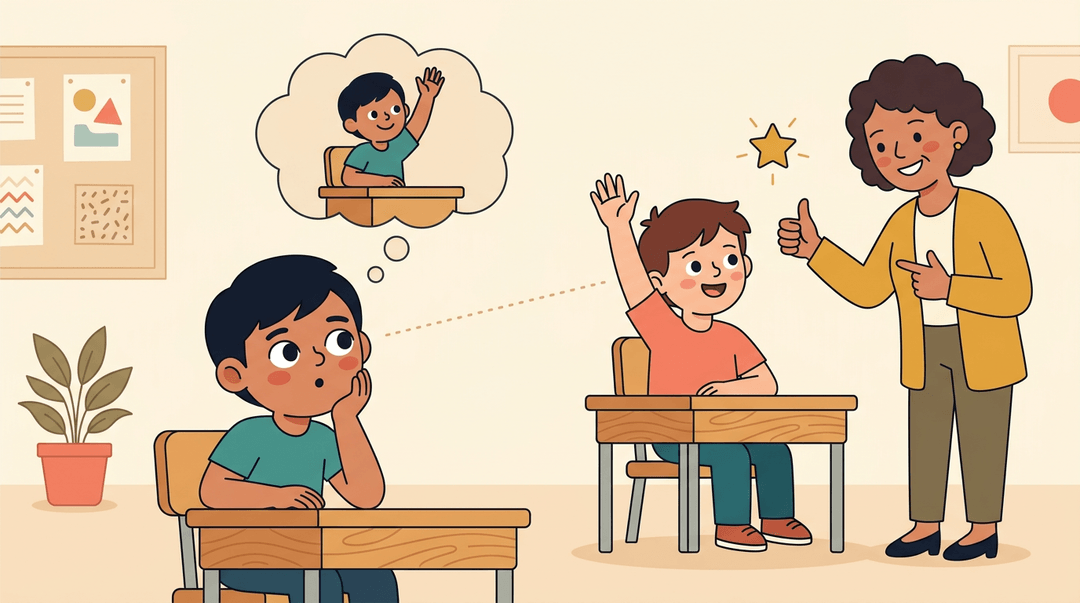
Students don't need to try every behavior firsthand to learn it. They watch a classmate get praised for raising a hand, a teacher model patience during a tough conversation, or a peer's frustration after a failed experiment, and they pick up the behavior, the attitude, or the emotion right along with it. Learning happens through observation and imitation, not just direct experience.
Connecting behaviorism and cognitive theory
Social learning theory bridges two schools of thought. It keeps behaviorism's focus on observable behavior but adds something new: the thinking that happens in between seeing and doing. Where Skinner treated the mind as a black box, only inputs and outputs mattered, this theory opens that box up and tracks the mediating cognitive processes, like attention and memory, that decide whether a student actually imitates what they see.
Meet Albert Bandura, the theory's creator
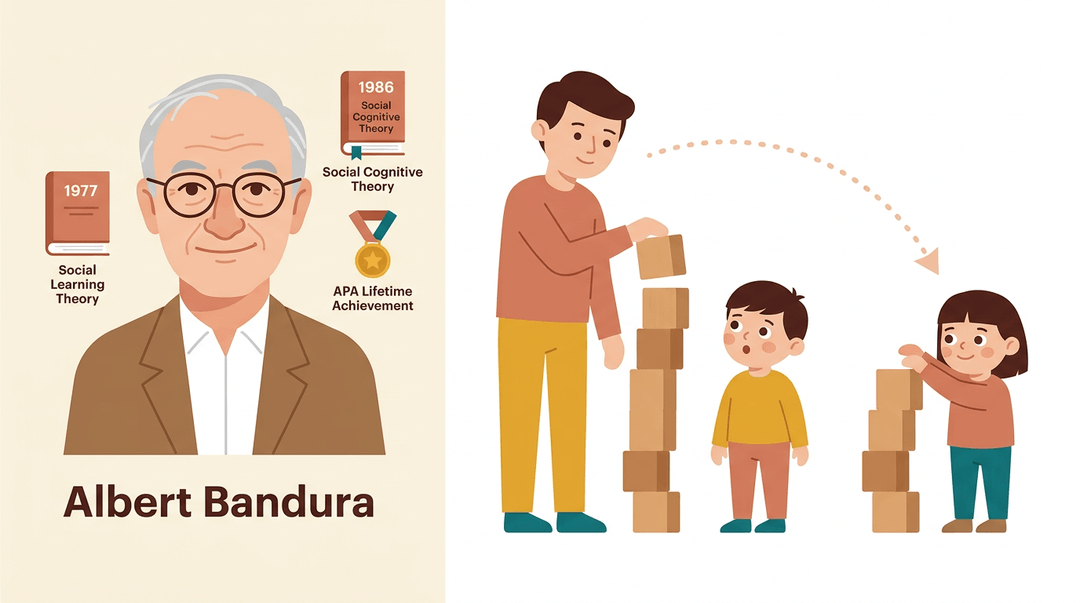
Psychologist Albert Bandura developed the theory in his 1977 book Social Learning Theory, explaining that "most human behavior is learned observationally through modeling." He later broadened it into a 1986 theory of human functioning that centers cognitive and self-regulatory processes, renaming it Social Cognitive Theory. Bandura's legacy runs deep: he served as president of the American Psychological Association in 1974 and later received its Gold Medal Award for Distinguished Lifetime Contribution to Psychological Science.
The Four Mental Steps Behind Imitation
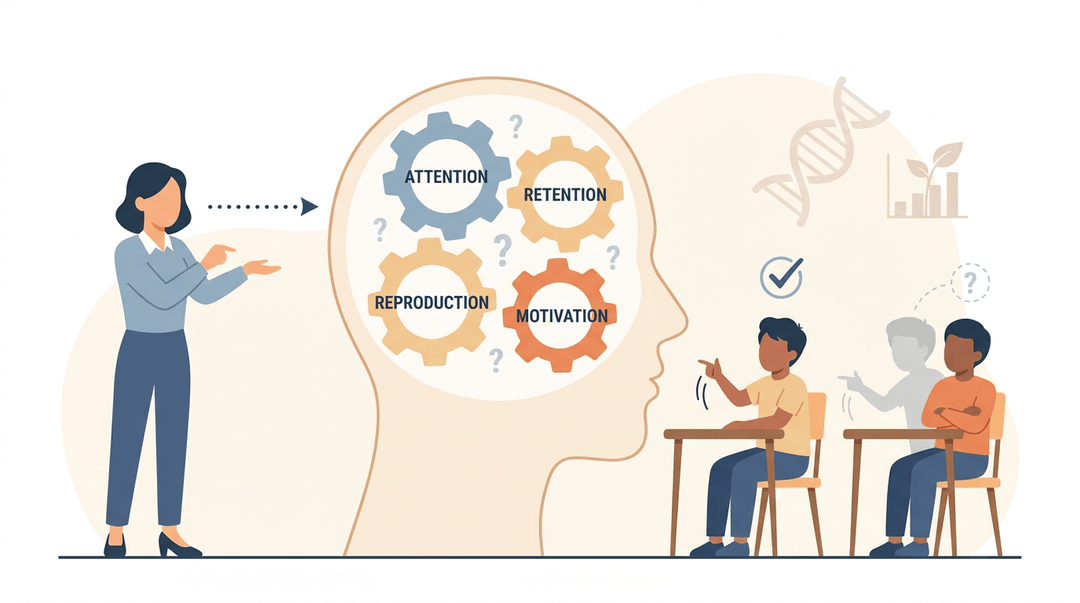
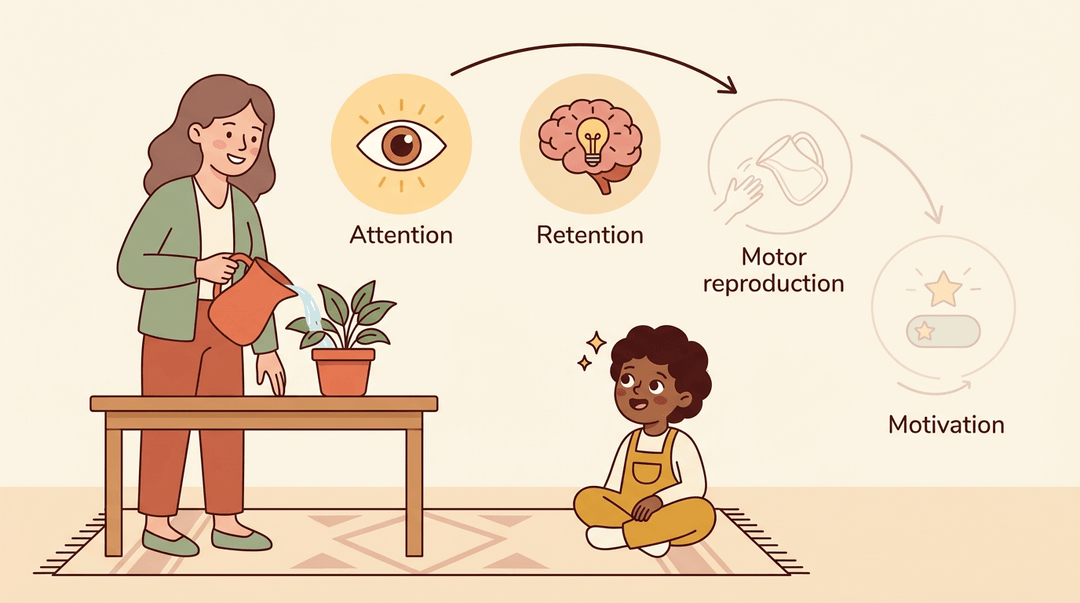
Watching someone else isn't enough to learn from them. Bandura argued that four mediational processes have to click into place, in order, before observation turns into a new behavior:
- Attention
- Retention
- Reproduction
- Motivation
Why attention comes first
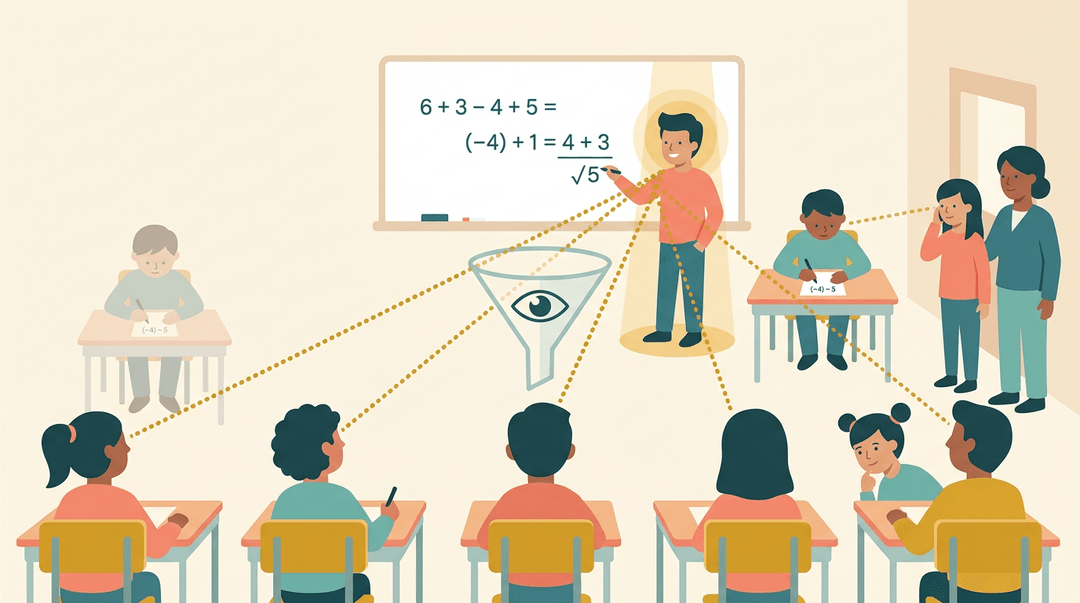
A student can't copy what they never noticed. Attention is the gatekeeper: if the model's behavior doesn't register, nothing downstream happens.
High-status models pull focus fastest, which is why students track a popular classmate, an older sibling, or a teacher they admire far more closely than a random peer. Attention is also selective.
Students don't absorb everything a model does; they zero in on the specific behavior that stands out to them, whether that's a clever way to phrase an answer or a shortcut for solving a problem.
Storing what you observe
Once a behavior is noticed, it has to be kept somewhere. Retention is that mental storage, and it works through symbolic coding: turning what was seen into words or images the brain can hold onto. This step is what makes delayed imitation possible.
A student can watch a demonstration on Monday and still reproduce it on Friday, because the behavior got coded into memory instead of fading the moment it was observed.
Turning observation into action
Noticing and remembering something doesn't guarantee a student can do it.
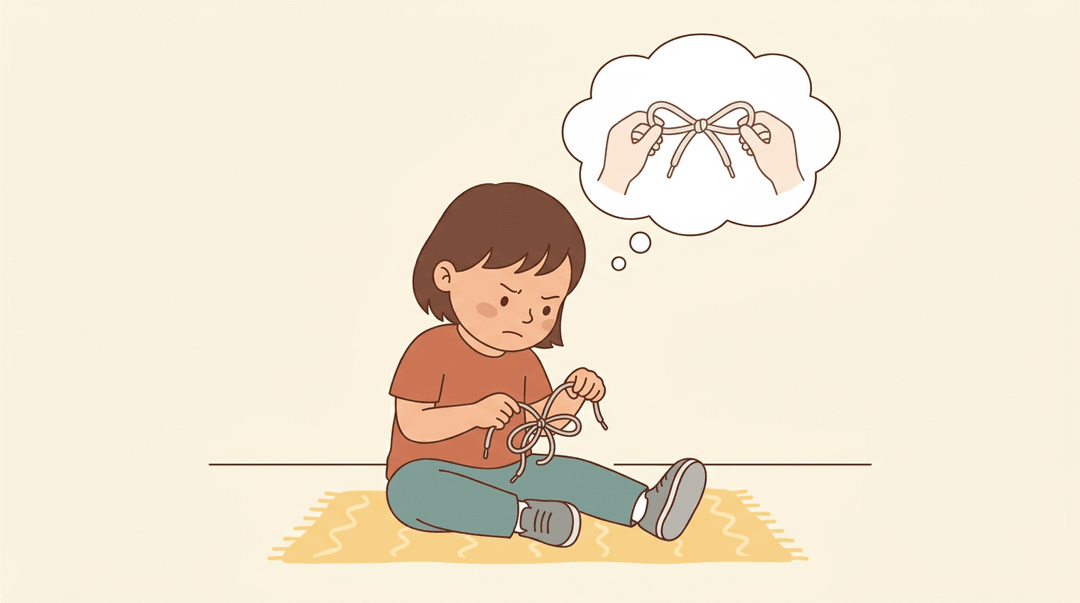
Reproduction depends on physical or cognitive capability, and it usually starts with internal rehearsal, running the behavior through in your head before attempting it out loud or on paper.
A kindergartner might mentally rehearse tying a shoelace for days before their fingers can actually manage it. Ability sets the ceiling here, not willingness.
What motivates us to imitate
Even a fully learned behavior stays dormant without a reason to use it. Motivation runs on vicarious reinforcement: students weigh the rewards they see a model receive against the costs, then decide whether the behavior is worth enacting.
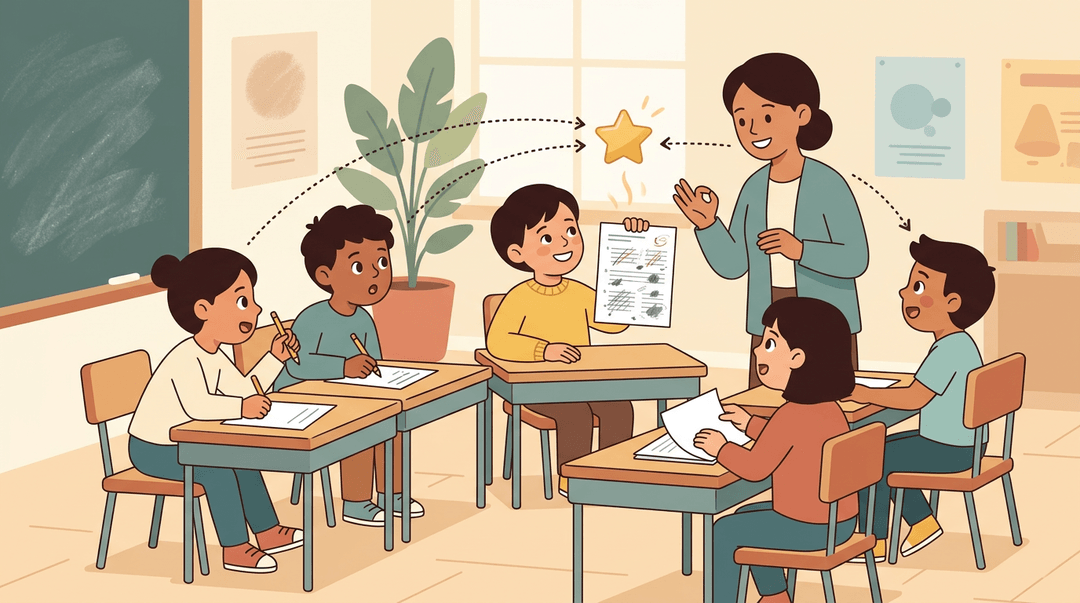
Praise a single student for raising a hand instead of calling out, and watch the rest of the class start doing the same within minutes. That's motivation doing its job.
How Modeling Shapes Observational Learning
Not every model influences students the same way, and not every student imitates the same model. Bandura's theory breaks that down into who students watch and why some models stick more than others.
Different kinds of role models
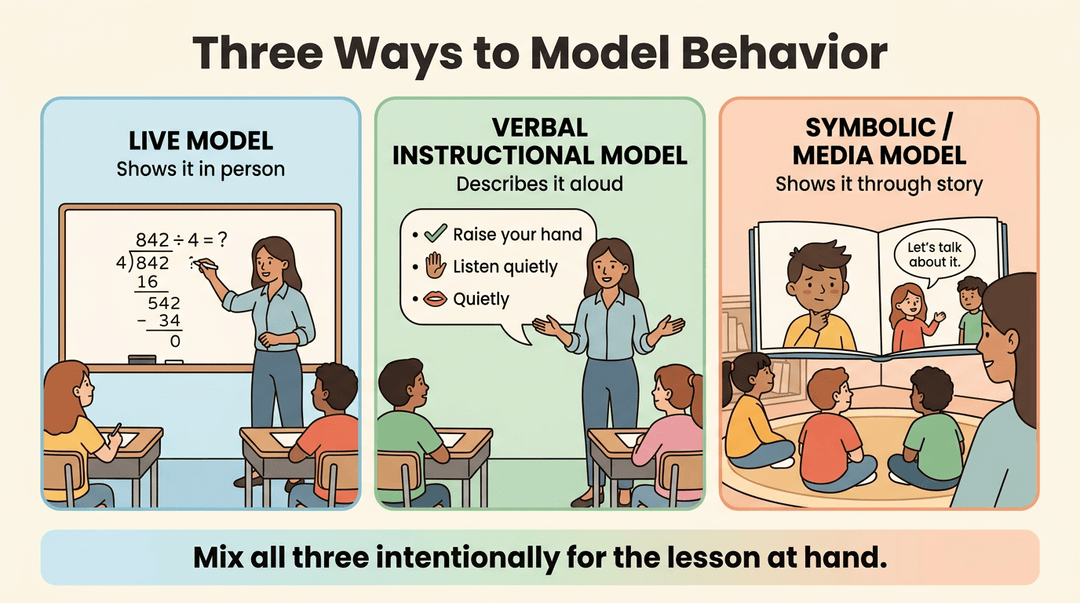
- A live model is a real person demonstrating a behavior in person, like a teacher walking through a long division problem step by step at the board.
- A verbal instructional model skips the demonstration and describes the behavior instead, such as talking students through classroom expectations out loud.
- A symbolic/media model reaches students through books, videos, or characters: think of a read-aloud where the main character handles a conflict calmly.
Mixing all three deliberately, and choosing the right one for the lesson at hand, is one of the simplest techniques for intentional behavior modeling.
What makes us more likely to imitate
Students don't copy everyone equally. They're more likely to imitate a model who is:
- Similar to them in age, background, or interests
- Someone they identify with personally
- Seen as having high status or expertise
- Doing something that looks attainable, not out of reach
That's why pairing a struggling student with a near-peer role model, a slightly older or more advanced classmate, often lands better than always pointing to the teacher.
Learning from others' rewards
Students also learn by watching what happens to other people, a process Bandura called vicarious reinforcement. When a classmate's effort earns praise, classmates tend to copy the effort, not just the result. Behavior that gets rewarded is imitated far more than behavior that's ignored, whether that reinforcement is positive (praise, privileges) or negative (removing an unwanted task).
Bringing Social Learning Theory into Your Classroom
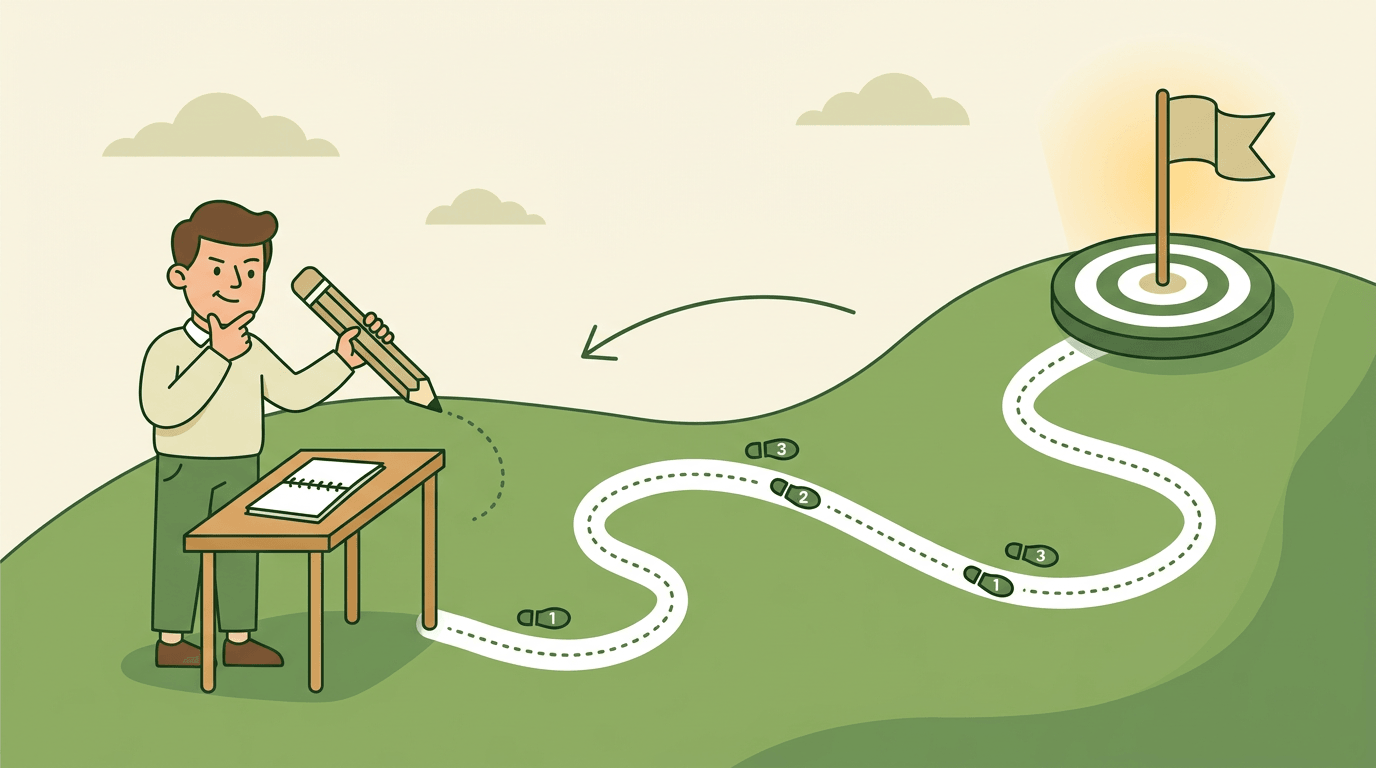
This guide turns the theory into a lesson you can run tomorrow: pick the right kind of model for your grade, build the lesson around it, then check that watching actually became learning.
Pick the right model for your grade
Students pay attention to models who feel like "someone like me," so the best model shifts as students age: from you, to a peer, to a real-world figure.
| Grade band | Lead strategy | What it looks like |
|---|---|---|
| Elementary | Think-alouds and demos | You narrate every decision as you work |
| Middle school | Peer role-model groups | A student demonstrates; the group names each move |
| High school | Case-study models | Students analyze how a real practitioner solved it |
For elementary think-alouds, say the invisible part out loud: "I'm stuck, so I'll reread the question before I try anything else."
Build the modeling lesson
- State the target behavior in observable terms.
- On the board: "Today you'll learn to check a solution by substituting it back in."
- Choose a model your students relate to.
- Use the grade-band table above; relatability is what earns attention.
- Add guided practice right after the demonstration.
- Students try the same move while it's fresh; watching alone isn't learning.
- Close with reflection or an exit ticket.
- Exit ticket prompt: "Name one move the model made that you'll copy next time."
Example: A seventh-grade teacher wants better peer feedback. One group models a feedback exchange while she narrates: "Notice how Maya named something specific before suggesting a change." Every pair then practices the same exchange, and the exit ticket asks for one sentence starter they'll reuse.
Key principle: Students imitate what they see rewarded. Praise the modeled move publicly when you spot it ("That's exactly the checking step we practiced"), and imitation spreads.
Check that observation turned into learning
Observational learning is invisible until it shows up in behavior, so assess by watching, not quizzing. Confirm:
- Imitation appears during practice. The modeled move shows up unprompted in independent work.
- A behavior-change rubric shows movement. Rate each target behavior weekly: not yet, with prompting, or independent.
- Anecdotal notes catch it over time. One line per student: date, the modeled behavior you saw, and the context.
If a student can describe the move but never uses it, that's a retention win and a reproduction gap: reteach with more guided practice, not more demonstration.
Once this sequence works for you, save these modeling-based steps as a reusable template in EMStudio's lesson planner.
Self-efficacy and Reciprocal Determinism Explained
Two more pieces bring Bandura's theory full circle: how much a student believes they can succeed, and how that belief loops back into everything else happening in the room. Here's where that belief comes from and how it connects to the bigger picture.
Where self-efficacy comes from
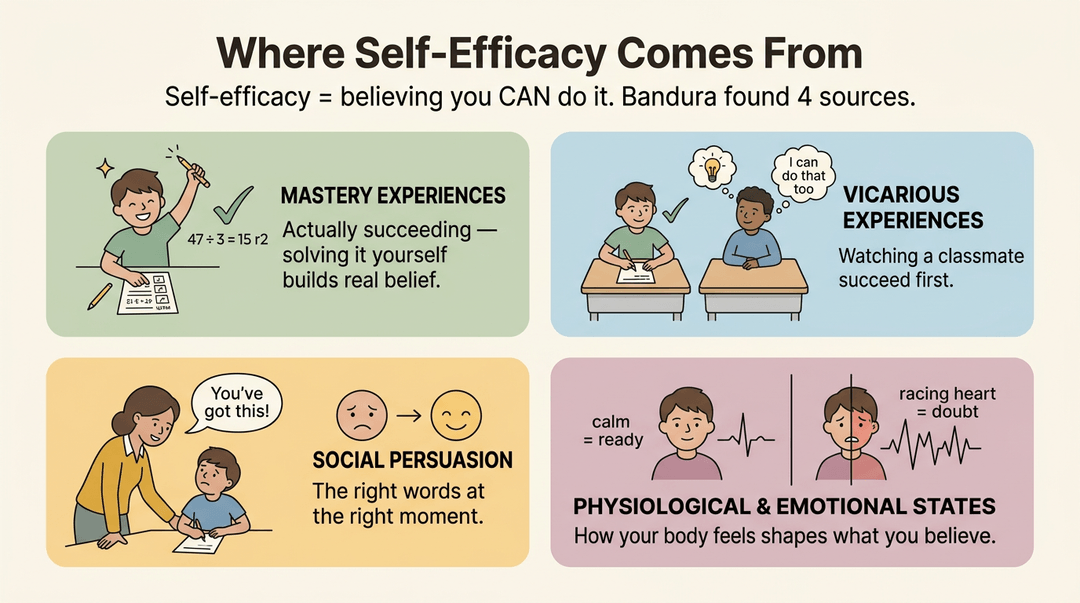
Self-efficacy is a person's belief in their own ability to handle a task. Bandura traced it to four sources:
- Mastery experiences. Actually succeeding at something, like finally solving a long division problem alone.
- Vicarious experiences. Watching a classmate pull it off first.
- Social persuasion. A teacher saying, "You've got this," at the right moment.
- Physiological and emotional states. Calm nerves read as readiness; a racing heart reads as doubt.
How self-efficacy boosts motivation
Students who believe they can improve tend to try harder and stay with a task longer instead of giving up at the first wrong answer. That belief also shapes the goals they set: a confident student aims higher, not lower. The payoff shows up in performance itself, since sustained effort and ambitious goals tend to produce better results than either alone.
Person, behavior, and environment interact
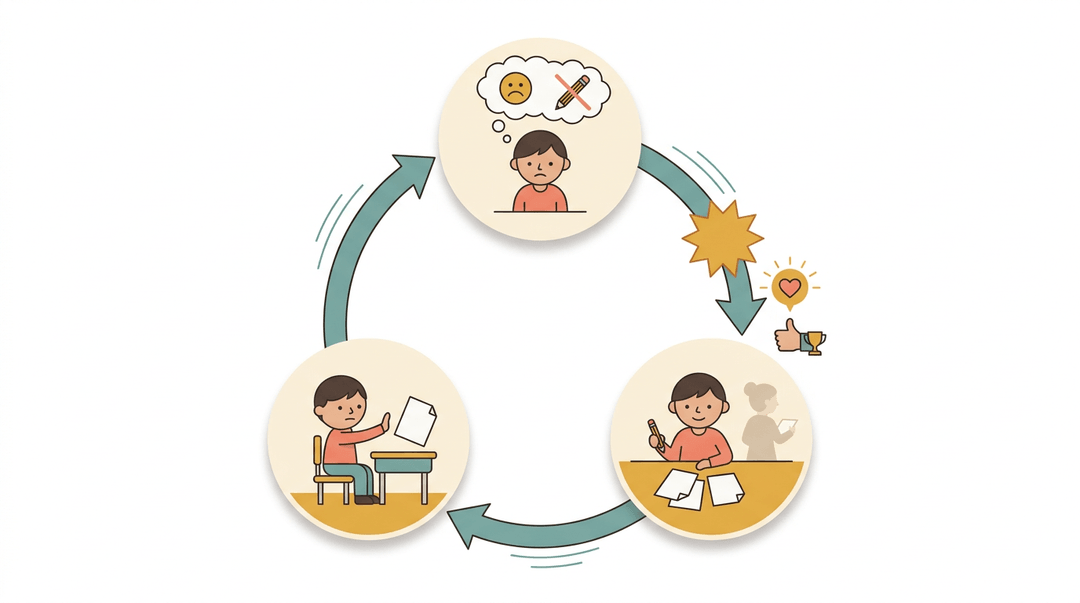
Bandura's triadic model holds that the person (thoughts, beliefs), their behavior, and their environment all shape one another, not in one direction but in a constant loop. Consider a student who believes they're bad at writing (person), so they avoid drafting (behavior), which means they get less feedback (environment), which confirms the belief. Break the loop anywhere, with one solid piece of encouragement or one small win, and the whole cycle can shift.
How the theory became social cognitive theory
As the model grew to include belief, thought, and self-control, the name Social Learning Theory no longer covered the ground it did. As Saul McLeod explains, "Bandura modified his theory and, in 1986, renamed his Social Learning Theory, Social Cognitive Theory (SCT), as a better description of how we learn from our social experiences." The update folded in self-regulation, the ability to monitor and adjust your own behavior, and put a sharper focus on cognition throughout.
Social Learning Theory in Everyday Life
Bandura's ideas didn't stay in a psychology lab.
They show up everywhere people watch, imitate, and learn from each other: in schools, health clinics, workplaces, and even in criminology, where researcher Ronald Akers built his own social learning theory of crime on the same premise that people pick up criminal behavior the same way they pick up anything else, by watching others do it.
Role models in the classroom
A teacher is a model whether they mean to be one or not.
Students who see themselves reflected in a role model tend to feel a stronger sense of belonging, and research on self-efficacy (a person's belief in their own ability to succeed) shows that students often gain more confidence from watching a same-gender teacher navigate a challenge successfully.
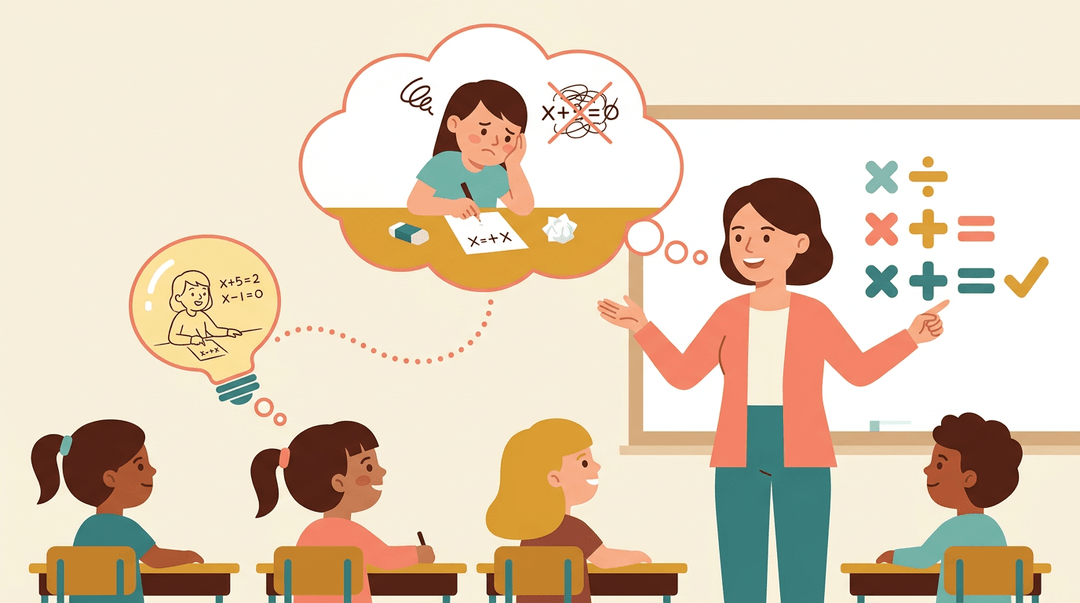
Sharing stories of perseverance, not just success, tends to lift achievement more than polished stories of easy wins. Consider a math teacher who tells students about the year she struggled with algebra before it clicked.
That kind of relatable modeling does more for motivation than a flawless example ever could.
Shaping health habits through modeling
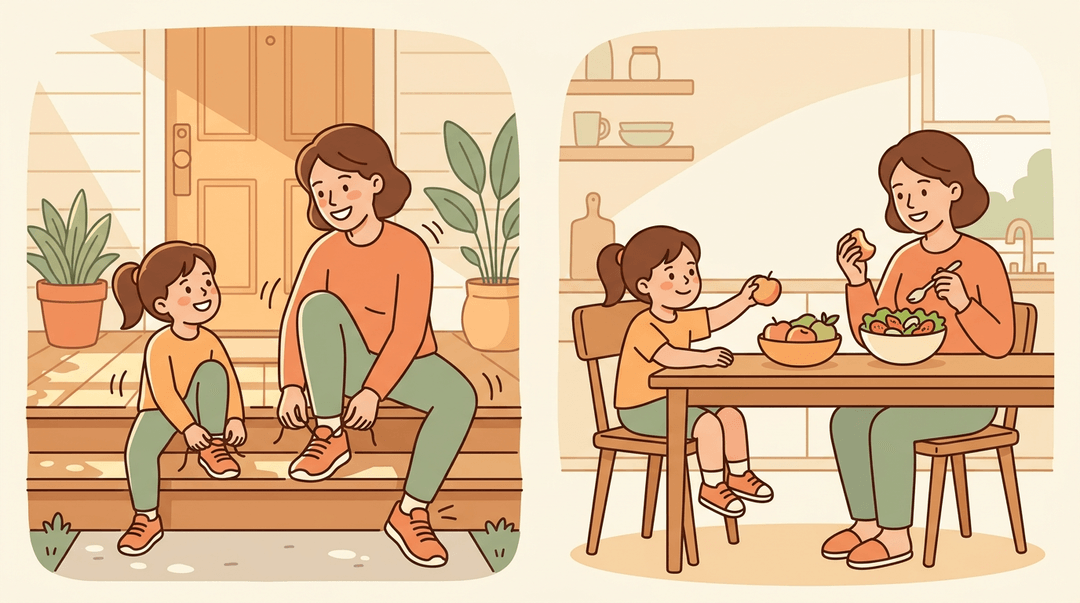
Modeling shapes health behavior long before anyone sets foot in a classroom.
As Berkeley's People & Culture guide to social learning theory explains, learning, according to Bandura, can occur simply by observing others' behavior, which is why teens who watch a parent smoke are more likely to start, and why watching someone quit can help others quit too.
The same principle drives exercise habits: seeing a role model stick with a routine builds the belief that you can stick with one as well.
On the food side, research from University of Utah Health found that parents are strong influencers of children's eating behaviors, and much of that influence comes through modeling, not lecturing.
Training employees by example
Shadowing a veteran colleague is social learning in action: a new teacher watches how a mentor handles a chaotic Monday morning, then borrows the moves that work.
Formal behavior modeling programs build on this instinct on purpose, walking new staff through a skill step by step before asking them to try it. Done well, this kind of training builds self-efficacy fast, because trainees aren't guessing.
They're following a model who's already proven it works.
How media shapes cultural norms
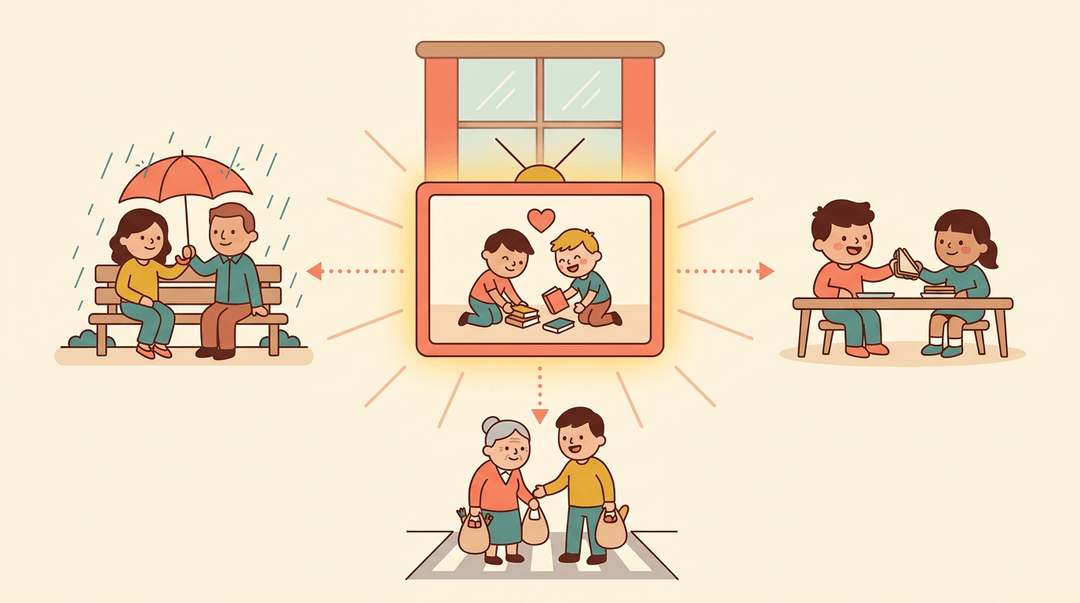
Media models shape what feels normal just as much as any person in the room. Shows and campaigns built around prosocial content (behavior meant to help or benefit others) can increase kindness in viewers who see it modeled repeatedly.
That's the logic behind entertainment-education campaigns: storylines designed to shift real behavior, from health choices to civic habits, by making the desired behavior look ordinary and doable.
Media violence and learned aggression
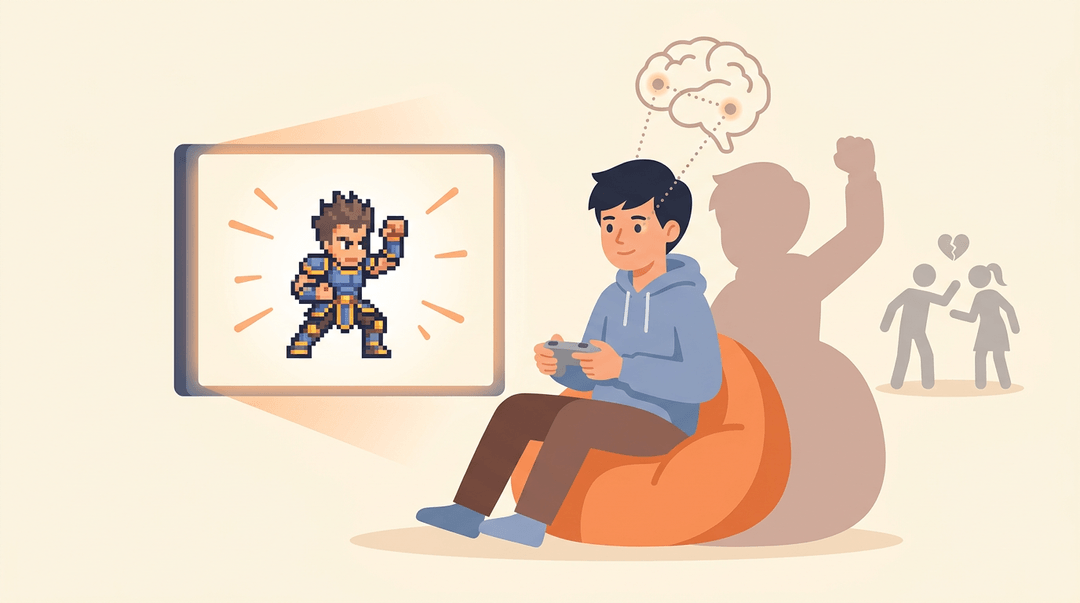
The same mechanism has a darker edge. Repeated exposure to violent media can hand viewers ready-made aggressive scripts for how to respond to conflict.
Over time, research published in PMC links high or repeated exposure to violence with emotional desensitization, showing up as blunted emotional responses to real conflict.
Some of this may trace back to biology: Caltech researchers point to mirror neurons, brain cells active both when we act and when we watch someone else act, as a likely piece of how imitation happens.
Video games push this further into enactive learning (learning by doing, not just watching), letting players rehearse aggressive behavior instead of only observing it.
The Bobo Doll Experiment
If social learning theory has one signature study, this is it. Picture a room with an inflatable clown, an adult acting out, and a child watching closely: that's the whole setup, and it changed how we think about classroom behavior.
How the experiment was designed
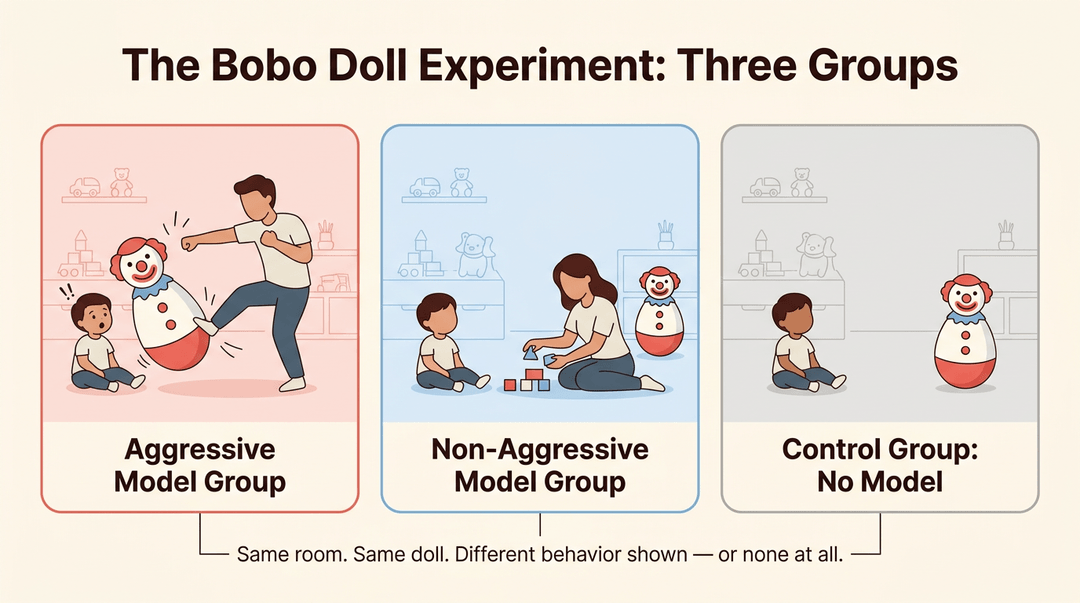
Bandura, Ross, and Ross ran the study at the Stanford University nursery school, and the design was deliberately simple. Some children watched an aggressive model attack the Bobo doll; others watched a non-aggressive model play calmly nearby.
As the researchers noted, "half the experimental subjects were exposed to aggressive models and half were exposed to models that were subdued and nonaggressive in their behavior."
A third group saw no model at all, giving the researchers a clean control group to measure everyone else against.
What the experiment revealed
The results lined up with what Bandura predicted. Children who'd watched the aggressive model were far more likely to lash out at the doll themselves, a pattern SimplyPsychology describes as children "replicating both physical and verbal aggression."
The non-aggressive and control groups stayed noticeably calmer.
It wasn't just punches and kicks, either: kids also copied specific insults and phrases they'd heard, right down to the same wording the model used, which included "acts of striking the Bobo doll with the mallet, sitting on the doll and punching it in the nose."
Ethical concerns about the study
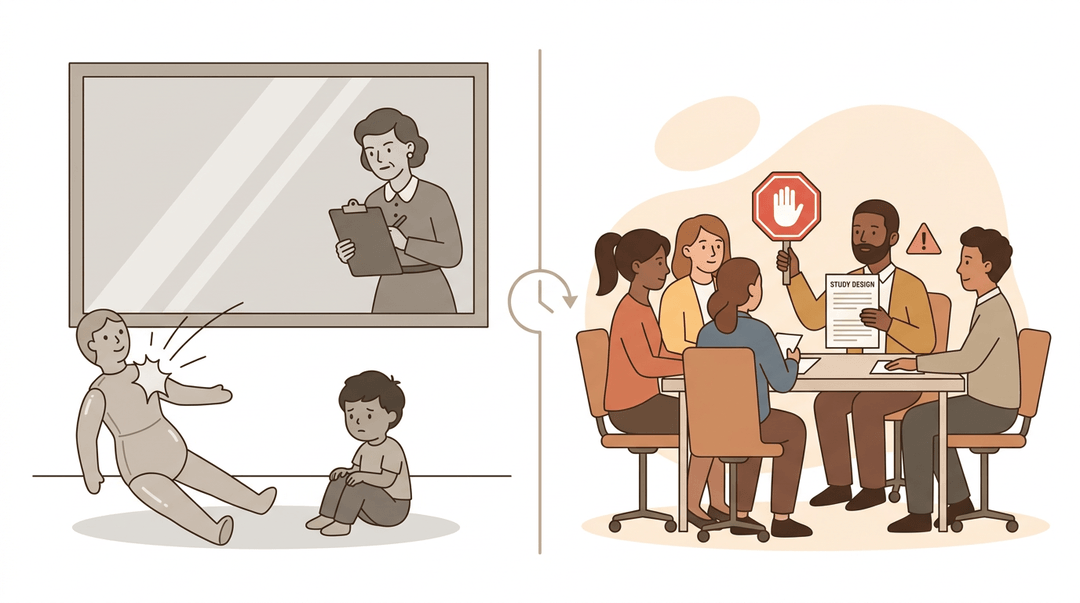
By today's standards, the study raises real red flags. Deliberately exposing young children to a model who models aggression risks genuine psychological harm, and it's unclear the children's parents gave truly informed consent to that exposure.
There's also no record of a debriefing afterward to help children process what they'd seen and done. Modern research ethics boards would almost certainly reject this design outright.
Critiques, Comparisons, and What's Next
No theory holds every answer, and social learning theory draws its share of pushback. It also doesn't operate alone: it's one of the 7 learning theories in education, according to a research guide from Texas A&M University-San Antonio, alongside:
- behaviorism
- constructivism
- cognitivism
- experiential learning
- situated learning theory
Scholars sort learning theory broadly into four types of social theory, as a 1980 analysis in Theory & Research in Social Education lays out, and Bandura's work is often weighed against five other major social learning theories, plus comparisons with experiential learning theory and the ARCS motivation model, and against Vygotsky's sociocultural theory, which leans on culture and language more than solo observation.
Where the theory falls short
Critics point to real gaps. The four mediational processes describe that learning happens through modeling but not always how, leaving the cognitive machinery underneath a little vague.
The theory also leans hard on observation, sidelining biological drives like genetics or maturation, and it struggles to predict whether a given student will actually act on a modeled behavior or quietly ignore it.
How this theory differs from Freud's
Sigmund Freud's psychoanalytic theory centers on the unconscious; Bandura's centers on conscious cognition, what a learner notices, remembers, and chooses to try.
Freud's identification forms mostly in early childhood, tied to a parent; Bandura's modeling happens with anyone, anytime. Freud leaned toward determinism; Bandura argued for agency.
And where Freud saw personality locking in through early fixation, social learning theory allows change across a lifetime.
What researchers still want to know
Three areas stay thin:
- motor reproduction, the step where a student actually attempts a modeled skill, gets far less study than attention or retention
- behavioral scripts, the mental routines built from repeated modeling
- the motivational processes that decide whether a rehearsed behavior ever shows up in real practice
Social learning theory boils down to something teachers already sense: students are always watching, and modeling shapes behavior as much as any lecture does.
From Bandura's mediational steps to the Bobo Doll findings, the throughline is clear: attention, memory, imitation, and motivation drive what sticks.
Ready to design lessons that put modeling to work? Check out our Lesson Planning tool to build it right in.
References
- How Social Learning Theory Works — hr.berkeley.edu
- Overview of Social Cognitive Theory and of SelfEfficacy — people.wku.edu
- Learning Theories & Pedagogy — libguides.tamusa.edu (2026)
- Albert Bandura's Social Learning Theory In Psychology — simplypsychology.org
- Bandura, Ross, & Ross (1961) — psychclassics.yorku.ca
- Influencing Your Child's Eating Behaviors — healthcare.utah.edu
- Emotional Desensitization to Violence Contributes to Adolescents’ Violent Behavior — pmc.ncbi.nlm.nih.gov
- Watch and Learn: Study Shows How Brain Gains Knowledge Through Observation — hss.caltech.edu
- jisem-journal.com
- Four Types of Theory: Implications for Research in Social Education — tandfonline.com
- "Rational Choice, Deterrence, and Social Learning Theory in Criminology" by Ronald L. Akers — scholarlycommons.law.northwestern.edu
- The Role of Grit on Students' Academic Success in Experiential Learning Context — pmc.ncbi.nlm.nih.gov
- How to Promote Prosocial Behaviors in the Classroom — edutopia.org
Frequently asked questions
What is the social learning theory in simple terms?
Social learning theory explains that we primarily learn by observing and imitating others, rather than solely through direct experience or trial and error. It emphasizes that seeing someone else perform an action and its consequences can influence our own behavior. This theory connects observable behaviors with the internal cognitive processes involved in learning.
What is the social learning theory simply psychology?
Simply Psychology details Albert Bandura's social learning theory as the idea that humans learn significantly through observation and modeling. It outlines the four mediational processes (attention, retention, reproduction, motivation) necessary for observational learning and explains how models, vicarious reinforcement, and self-efficacy play roles in this process.
What are the 5 social learning theories?
Albert Bandura's social learning theory is a prominent model focusing on observational learning, imitation, and modeling. Other related theories include Julian Rotter's social learning theory, which emphasizes expectancy and reinforcement value, and models by Neal Miller and John Dollard, who connected social learning with drive reduction theory. Additionally, theories around social cognitive learning, a refinement of social learning theory, are also prominent. Lastly, socio-cultural theories, such as Lev Vygotsky's, highlight the role of social interaction and culture in cognitive development, extending beyond individual observational learning.
What are the 4 concepts of social learning theory?
The four concepts, or mediational processes, of social learning theory are attention, retention, reproduction, and motivation. Attention is necessary to notice the model's behavior; retention involves remembering the behavior; reproduction is the ability to physically or cognitively re-enact it; and motivation provides the reason to perform the learned behavior.
What are the 4 types of social theory?
Scholars categorize social theories into different types to better understand societal phenomena. While classifications can vary, common types include structural functionalism, conflict theory, symbolic interactionism, and rational choice theory, each offering a distinct lens through which to analyze society and human behavior.
What are real life examples of social learning theory?
Real-life examples of social learning theory include a child mimicking a parent's laugh, a coworker adopting a shortcut observed from another, or a student picking up a teacher's habit of pausing before answering difficult questions. Additionally, teens may be more likely to start smoking if they observe a parent doing so, and employees learn by shadowing veteran colleagues.
What are the 7 learning theories in education with examples?
The seven major learning theories in education include Behaviorism, Cognitivism, Constructivism, Humanism, Connectivism, Transformative Learning, and Social Learning. Behaviorism, for example, is seen in rote memorization and direct instruction. Cognitivism is applied when students are taught problem-solving strategies, while Constructivism is evident in project-based learning. Humanism is reflected in student-centered approaches, and Connectivism can be observed in collaborative online learning environments. Transformative Learning occurs when a learner's perspective significantly changes, and Social Learning is utilized when students learn through group work and peer observation.
What best describes social learning theory?
Social learning theory is best described as the idea that people learn primarily through observing others. It incorporates cognitive processes, such as attention and memory, alongside the external environmental influences, to explain how observed behaviors, attitudes, and emotional reactions are acquired and imitated.