Teaching Strategies Every Educator Should Understand


Jump to section
Think about the last time you tried to explain something to someone who just wasn't getting it. Maybe you switched your approach, tried an analogy, drew a quick sketch, or asked a question instead of giving an answer. And then it clicked.
That moment, that instinct to adjust, is exactly what teaching strategies are: the deliberate choices you make about how to deliver, structure, and support learning.
This post covers the full range of evidence-based strategies available to you, from how you deliver instruction and design your classroom environment, to differentiation, assessment, metacognition, technology, and beyond.
You'll also find a practical planning layer at the end to help you put it all together.

What Teaching Strategies Actually Are
A teaching strategy is any method a teacher uses to support learning: how you introduce a concept, how you check for understanding, how you structure practice. You choose based on the topic and where your students are, not on what's new or trending.
Evidence-based approaches are always preferred, and they don't need to be flashy to work.
You'll find these packaged in various frameworks out there: some name a "Big 8," others offer a top 10 or 15 methods. The numbering differs; the underlying principle doesn't. What matters is whether a strategy actually moves students forward.
What counts as a teaching strategy
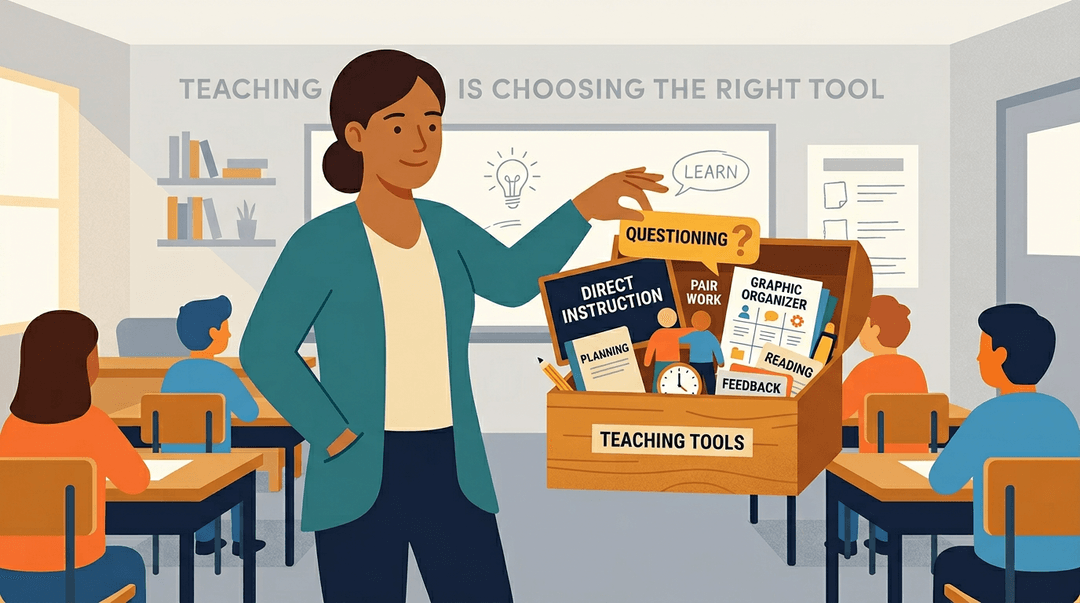
A teaching strategy is any deliberate choice you make to help students learn:
- direct instruction
- guided questioning
- pair work
- graphic organizers
The range is wide, and there's no requirement to be innovative. A well-executed tried-and-tested approach beats a poorly executed novel one every time. The key is matching the method to the content and the learners in front of you.
How research shapes which strategies work
Not all strategies are equal, and large-scale research has made that clearer. John Hattie built an index of teaching strategies by calculating an effect size for each one based on its bearing on student achievement.
His work is informed by more than 130,000 studies involving over 400 million students aged three to 25, making it one of the most comprehensive references teachers have.
Policy has moved in the same direction. The Every Student Succeeds Act (ESSA) now requires evidence-based interventions in schools, replacing older, looser standards.
That's a good reason to be wary of unproven strategies, however compelling they sound in a staff meeting.

Ways to Deliver Instruction
How you deliver a lesson matters as much as what's in it. The methods below sit on a spectrum from teacher-led to student-led: no single approach fits every classroom moment, but each has a clear use case.
How explicit direct instruction works
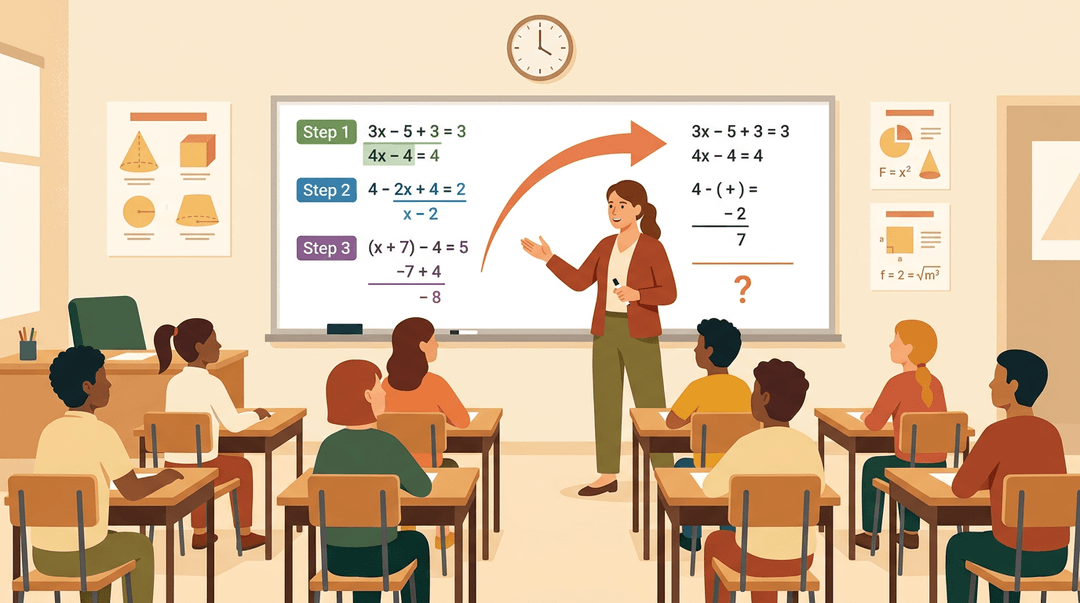
Explicit direct instruction puts the teacher at the front, but it's anything but passive. You model a concept, pause to ask questions, and listen carefully to what comes back before moving on.
During the modeling phase, students stay silent so they can focus on the worked example without splitting their attention.
The sequencing matters: worked example first, similar problem second.
A New South Wales practice guide on cognitive load theory explains that providing guidance through worked examples reduces the cognitive burden on novice learners, freeing up mental space to actually understand the content.
After the example-problem pair, guided practice builds gradually until students can work independently.
Scaffolding with I do, We do, You do
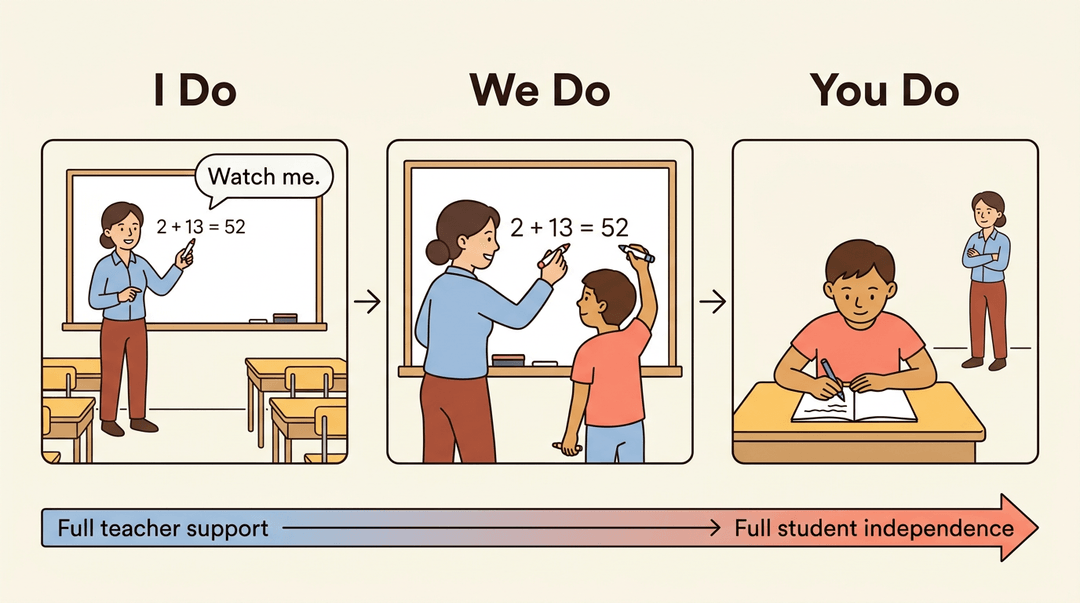
This three-part framework gives students a visible ramp into new material:
- You model first (I do)
- Then work through problems together with the class (We do)
- Then step back and let students tackle it alone (You do)
Each phase reduces cognitive load by ensuring students aren't asked to perform independently before they're ready. It's especially useful for introducing a skill that builds on several moving parts at once.
Building skills through deliberate practice
Not all practice is equal. Deliberate practice means isolating a specific sub-skill, working it until students are secure, and checking mastery before layering the next piece. A final performance task then pulls the sub-skills together.
Spacing retrieval practice across later lessons keeps the learning from fading: returning to a concept a week or two after it was taught strengthens long-term retention far more than reviewing it the next day.
Active and experiential learning approaches
On the other end of the spectrum, active learning hands the thinking back to students. Discussion, inquiry tasks, and open-ended projects replace direct delivery.
The pause procedure is a small but effective move: stop every ten to fifteen minutes, give students two minutes to compare notes with a partner, and let them surface their own questions.
Outcomes here are intentionally flexible, because the process of wrestling with a problem is often the point.

Classroom Environment and Management
The strategies in this section matter before you teach a single lesson. A well-managed classroom with clear expectations and genuine relationships isn't the backdrop for good teaching: it's part of the teaching itself.
Why knowing your students matters
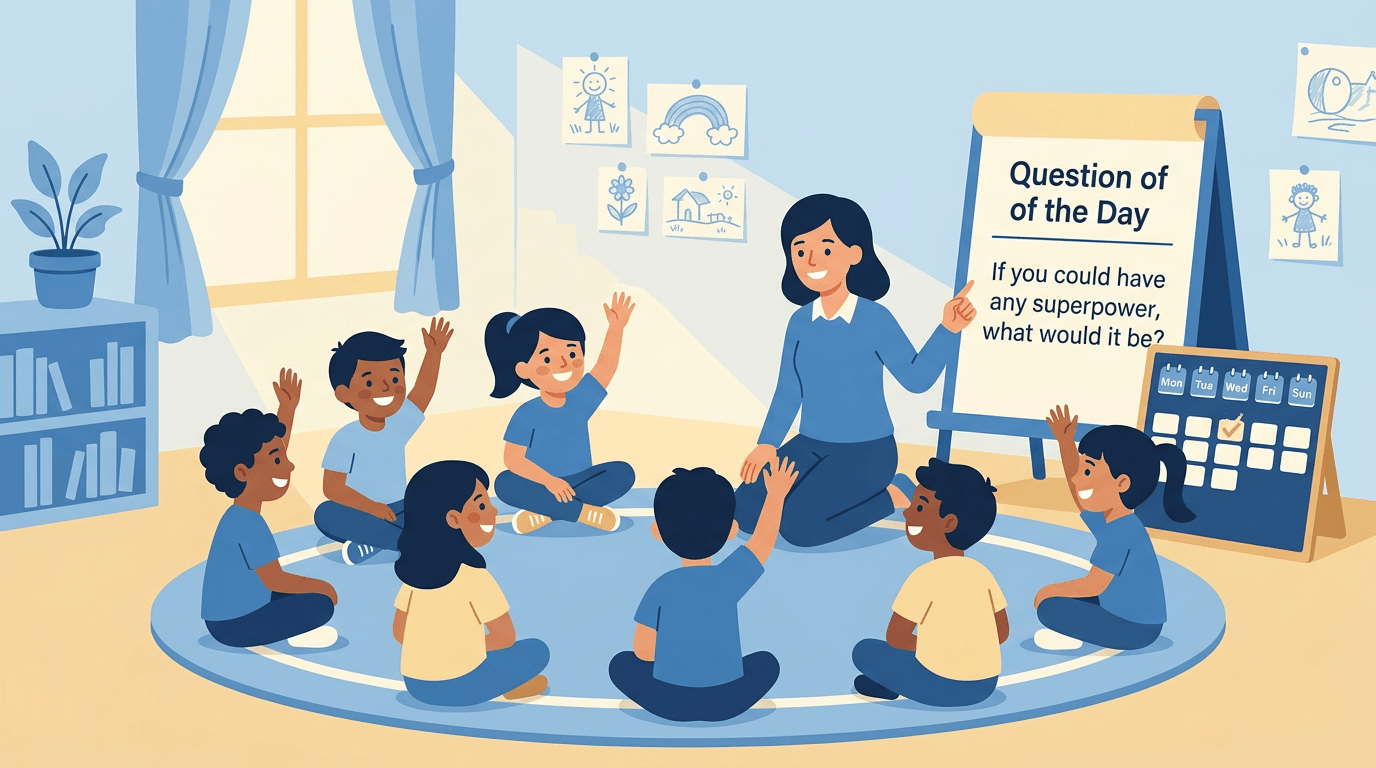
Memorise names early. It sounds small, but it signals to every student that they're seen. From there, get curious about what motivates them, what gets in their way, and what they actually care about.
A strong teacher-student relationship is one of the most consistent predictors of engagement and learning.
When you know a student loves football or struggles with mornings, you can personalise activities in ways that make content feel relevant instead of arbitrary.
Setting clear expectations and managing behavior
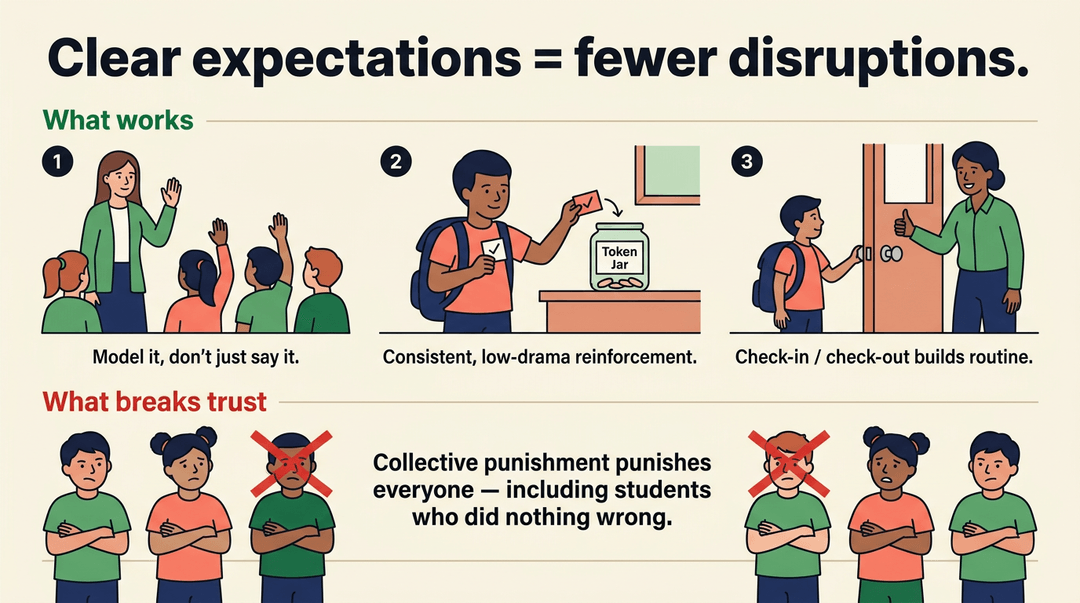
Behavior management frameworks like PBIS (Positive Behavioral Interventions and Supports), restorative practices, and trauma-informed approaches all share one foundation: clarity. When students know what's expected, focus improves and disruptions drop.
Model the behavior you want to see rather than just naming it. Encourage student initiative so that responsibility becomes shared, not policed. Avoid collective punishment: it erodes trust and punishes students who did nothing wrong.
Practical systems such as token economies, check-in/check-out routines, and logical consequences give you consistent, low-drama ways to reinforce expectations every day.
Building motivation through a growth mindset
Praise effort, process, and persistence rather than correctness or natural ability. That shift alone changes how students respond to difficulty.
Goal-based journaling using SMART goals (Specific, Measurable, Achievable, Relevant, Time-bound) gives students a concrete way to track their own progress.
Promote diverse perspectives in discussion and celebrate risk-taking: a classroom where wrong answers are safe is a classroom where students try.
How flexible seating supports different learners
Your physical setup is a teaching decision. Seating charts, classroom jobs, and smooth transition routines all reduce wasted time and low-level friction.
Beyond that, flexible seating configurations (floor cushions, standing desks, small-group clusters) integrate different sensory learning systems and support the varied ways students focus and process.
One arrangement rarely fits everyone: rotating configurations keeps the space working for your students rather than against them.

Differentiating and Personalizing Learning
No two students arrive at your classroom door with the same gaps, strengths, or pace. The strategies in this section share one goal: making sure every learner gets what they need, not just what the middle of the room needs.
Adjusting instruction for diverse learners
Start with the content itself. Adjusting what students read, watch, or practice based on readiness is the foundation of differentiation.
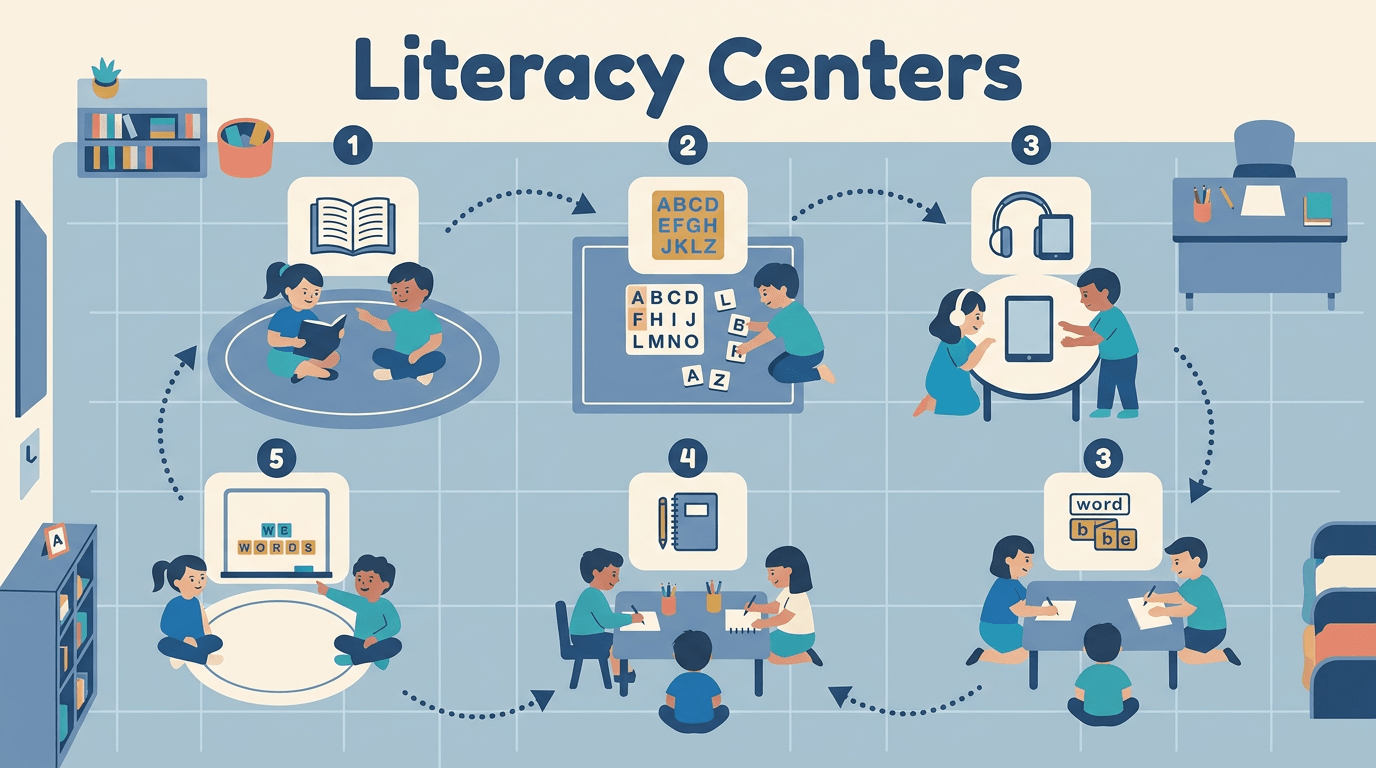
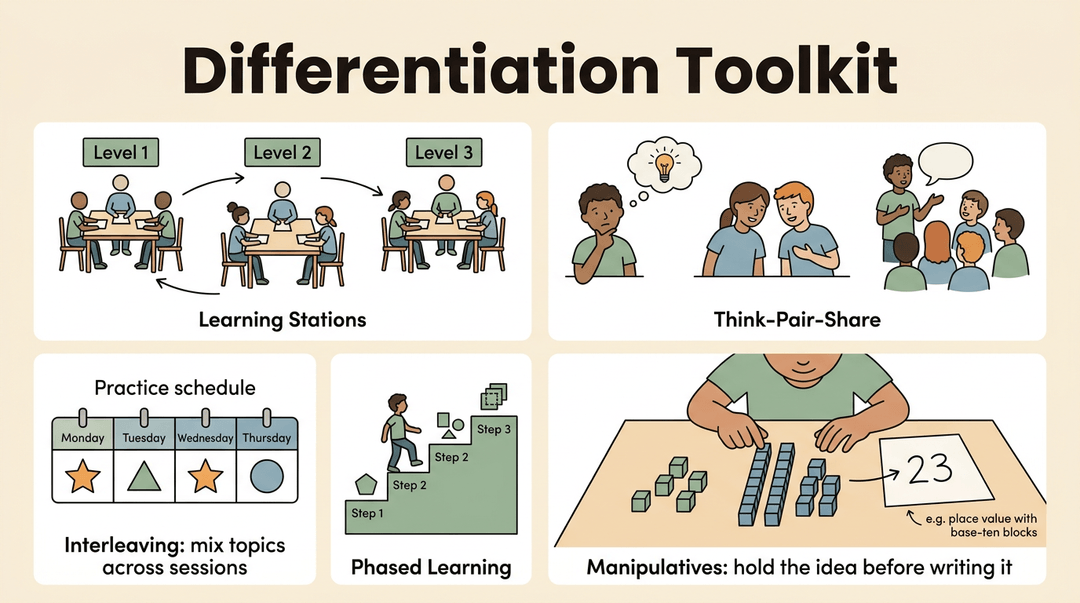
From there, structures like learning stations let small groups rotate through tasks pitched at different levels, while think-pair-share gives every student processing time before the class moves on.
Interleaving (mixing topics across practice sessions rather than blocking them) and phased learning (breaking new content into stages) both help material stick longer.
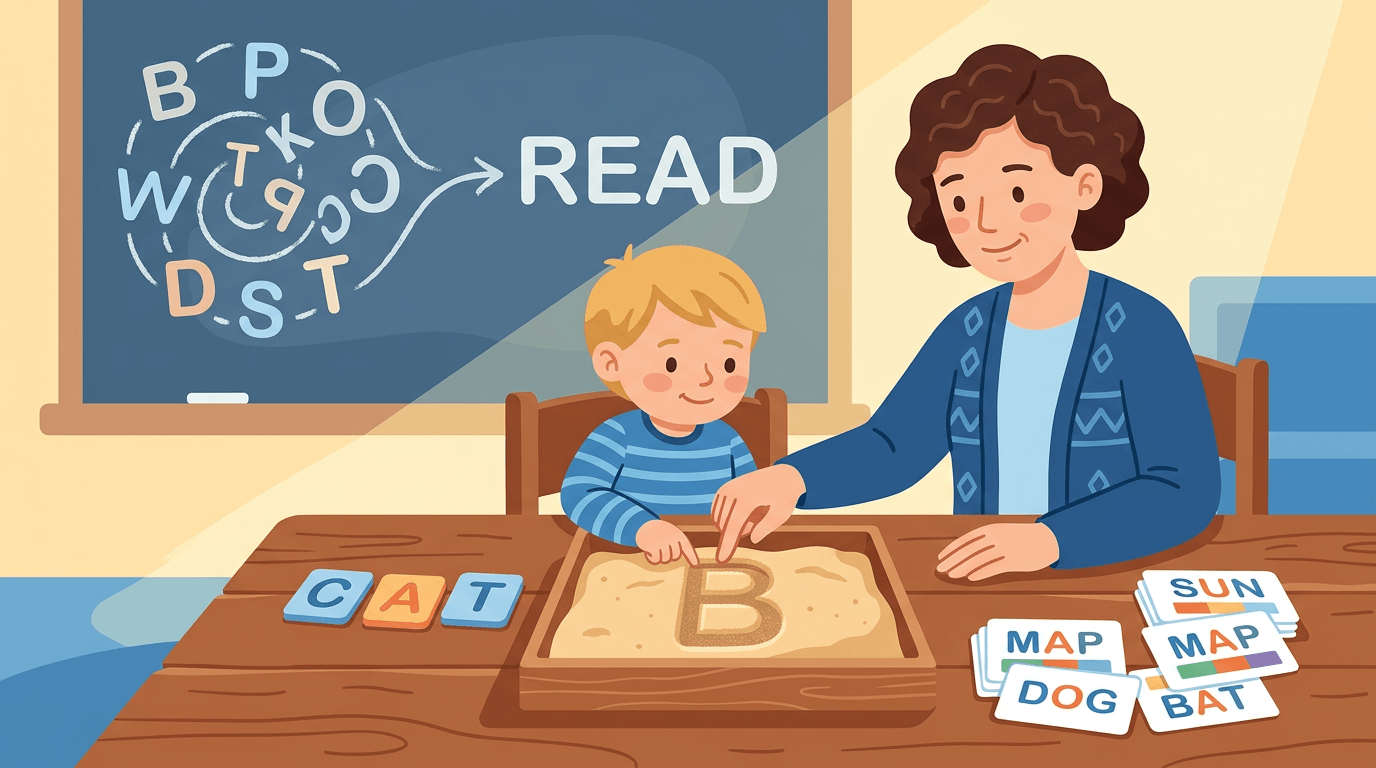
For students who need a concrete foothold, manipulatives turn abstract ideas into something you can hold and move around.
A third-grade teacher introducing place value, for instance, can have students build numbers with base-ten blocks before they ever write an equation.
Personalized learning and student ownership
Personalized learning goes a step further: it addresses each student's unique abilities and puts them in the driver's seat of their own progress.
Early research supported by the Gates Foundation found that personalized learning can improve achievement for students regardless of their starting level, which matters because the gains show up across the full range, not just for students who are already close to grade level.
Student involvement is central to this. When learners set goals, track their progress, and choose some of their tasks, engagement follows.
EdTech tools support this well: adaptive platforms can surface the right practice at the right moment, freeing you to work with the students who need your direct attention most.
Universal Design for Learning in practice
Universal Design for Learning (UDL) builds equal access into lessons from the start rather than retrofitting it. Flexible pathways mean students can demonstrate understanding in more than one way.
UDL is especially valuable for multilingual learners, who may grasp the concept but struggle with a single-format assessment. Knowing your students' strengths and weaknesses in advance lets you design those pathways before the lesson begins, not after.

Using Response to Intervention early
Response to Intervention (RTI) is a framework for catching learning needs before they compound. Tiered small-group support matches the intensity of help to the level of need:
- most students get core instruction
- a smaller group gets targeted practice
- a few get intensive support
The key is proactive, continuous monitoring, so you're adjusting based on current data, not last semester's grades.
Student-centered and Collaborative Approaches
Student-centered strategies shift the focus from delivering content to building understanding. When students talk, question, debate, and create together, learning tends to stick. Here are the key approaches worth knowing:
Structuring group and cooperative learning
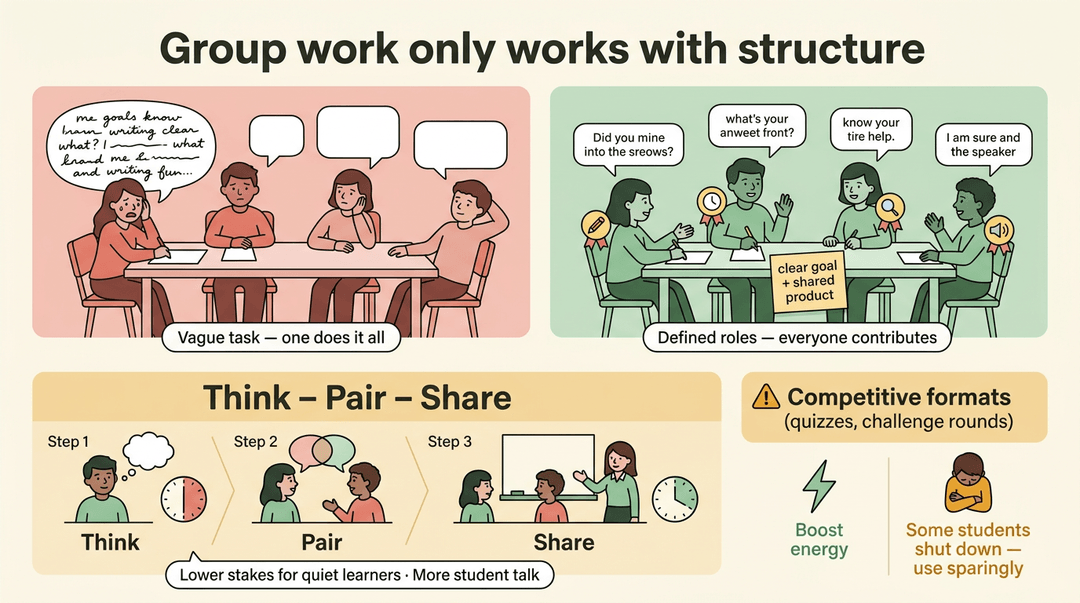
Group work only pays off when the task is structured. Vague instructions lead to one student doing everything while the rest coast. Give each group a clear goal, defined roles, and a concrete product to hand in.
Think-pair-share is one of the simplest ways to get that structure right: pose a question, give students a moment to think alone, then pair them up before opening to the class.
It increases student talk, lowers the stakes for quieter learners, and takes about three minutes. Competitive group formats (team quizzes, challenge rounds) can boost energy, but watch for students who shut down under pressure: use them sparingly.
Inquiry and problem-based learning
Here, students wrestle with open-ended problems rather than waiting for an answer from the front of the room. The four types of inquiry range from structured (teacher provides the question and method) to open (students drive everything).
Real-world contexts matter: a question tied to something students actually encounter gives the work a reason to exist.
The research is encouraging.
According to a Project-Based Learning research review from Edutopia, well-implemented project-based learning increases long-term retention and helps students perform as well as or better than peers in traditional settings on high-stakes tests.

Project-based learning for real-world problems
Project-based learning (PBL) takes that idea further: students spend an extended period working in groups on an authentic, immersive problem. The payoff is real engagement and sharper critical thinking.
The honest trade-off is that assessing a multi-week project is harder to standardize than a test, so build clear rubrics in before you start.
Peer teaching and its benefits
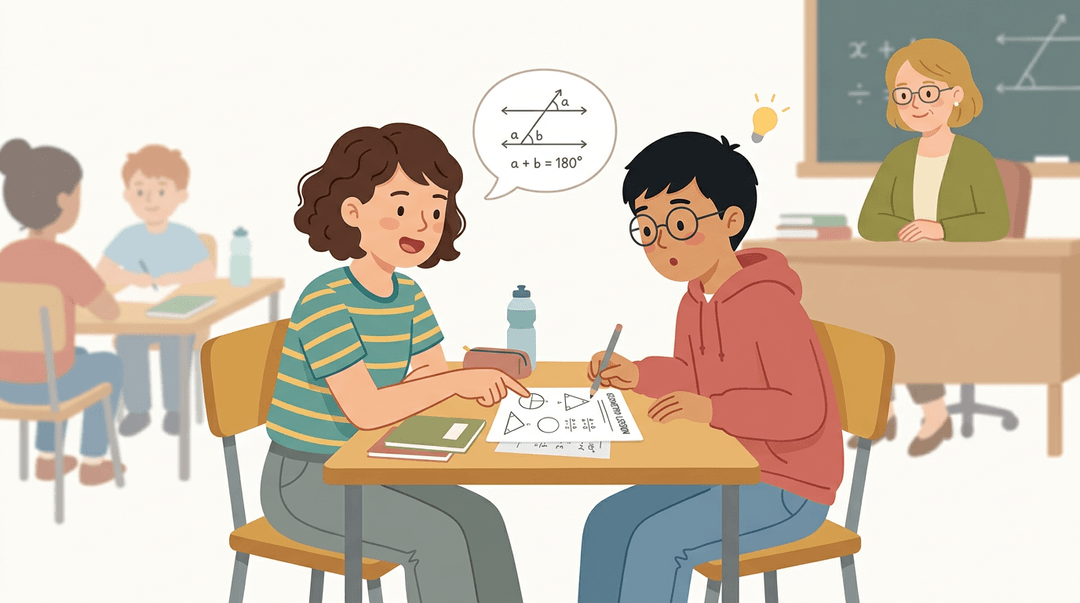
Asking students to teach each other does more than free up your time. Research highlighted by Morgan International Community School shows that peer learning improves both academic performance and self-esteem.
Written prompts help: a student explaining their reasoning in writing, or guiding a classwide peer-editing session, builds metacognitive habits that straight instruction rarely touches.
The main caution is proficiency gaps: if one student is significantly behind, pair them thoughtfully so the dynamic stays productive for both.
How to Choose and Apply Teaching Strategies
Knowing the strategies is half the job. The other half is picking the right one for Tuesday's lesson, making it survive real classroom conditions, and checking whether it actually worked.
This guide takes you through that cycle: match, plan, manage, measure.
Match the strategy to the learning goal
Start with what you want students to walk out with, then pick the method that gets them there.
| Your goal | Best-fit strategy | What it looks like |
|---|---|---|
| Introduce a new concept | Direct instruction | You model, students follow guided practice |
| Open-ended exploration | Inquiry | Pose a question, students investigate |
| Consolidate earlier learning | Retrieval practice | Low-stakes quiz or brain dump |
When a lesson mixes goals, sequence the strategies rather than choosing one: direct instruction to build the foundation, inquiry once students have something to explore with.
⚠️ Watch out: Don't pick a strategy because it's your favorite or because it's new. If the goal is a brand-new concept, inquiry alone leaves students guessing.
Build a weekly rotation
A simple rotation guarantees variety without daily reinvention. Here's the default week:
| Day | Move | Try |
|---|---|---|
| Monday | Activate prior knowledge | 3-minute brain dump on last week's topic |
| Mid-week | Collaborative or inquiry task | Jigsaw groups or one driving question |
| Friday | Retrieval or metacognitive reflection | Short quiz, then "What still confuses me is..." |
Lay the management track first
A great strategy collapses without the routines underneath it. Before introducing any new method, confirm:
- Routines are rehearsed. Practice "desks to groups in 60 seconds" before your first jigsaw.
- Your behavior system covers group work. Assigned roles plus a visible team score keep groups accountable.
- A de-escalation protocol is ready for transitions. Say: "Take two minutes at the reset desk, then rejoin your group."
Transitions between strategies are where lessons wobble most, so treat the protocol as part of the lesson plan, not an emergency measure.
Track what works and adjust
Run this loop every week or two:
- Tag each exit ticket with the strategy used
- Write "retrieval" or "inquiry" in the corner, then sort by tag, not date.
- Note engagement shifts across methods
- One margin note per lesson: "jigsaw: 4 off-task vs. 9 during lecture."
- Adjust based on the formative signals
- If tickets dip after inquiry days, add a 10-minute direct-instruction recap the next morning.
Example: A seventh-grade science teacher tags two weeks of exit tickets and spots a pattern: retrieval days score highest, but inquiry days produce the best student questions. She keeps both, moving inquiry earlier in each unit and locking retrieval to Fridays.
As the data piles up, keep the logistics light: EMStudio's class management tools let you organize rosters, timetables, and sections in one place, so you spend less time on admin and more time refining your strategies.
Assessment Strategies That Inform Teaching
Good teaching doesn't run in one direction. Assessment is how you check whether your students are keeping up, falling behind, or ready to move on. There are three types worth knowing, and each one serves a different purpose:
Formative assessment during learning
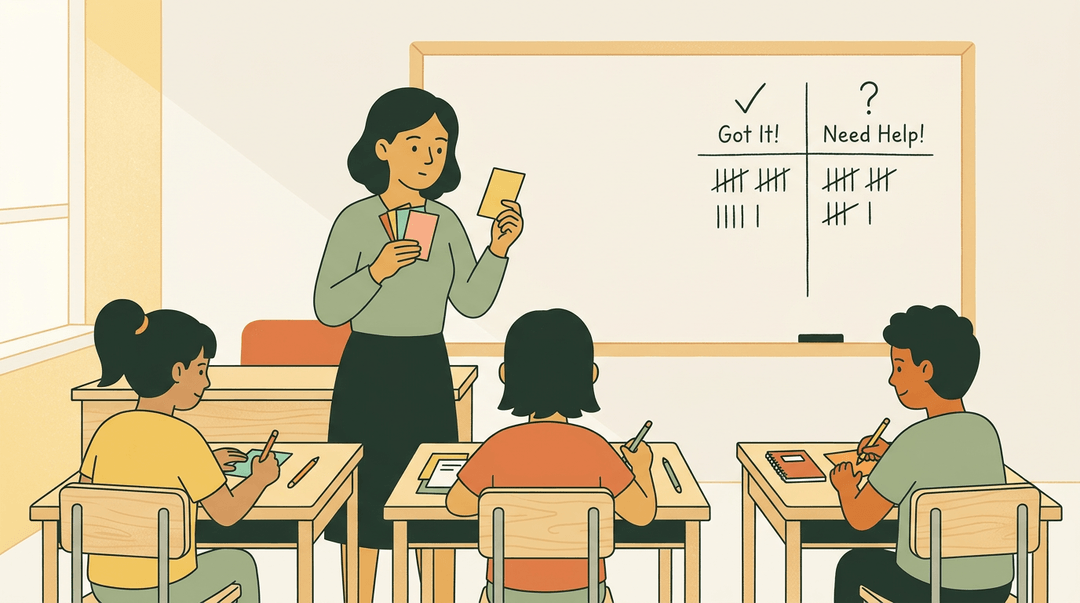
Formative assessment happens during instruction, not after it. It monitors ongoing understanding and gives you the signal you need to adjust mid-lesson rather than discovering problems on a test three weeks later.
A quick exit ticket at the end of class, for instance, tells you who got it and who didn't before you've even packed up your bag.
Think-pair-share works the same way: a minute of student conversation surfaces confusion you might never have seen from the front of the room.
Those exit tickets also double as next-lesson planning data. If eight students write the same wrong answer, you know exactly where to start tomorrow.
And because students get regular, low-stakes feedback along the way, research published in PMC found that formative assessment can reduce pre-test stress and anxiety.
Summative assessment at the end of a unit
Summative assessment steps back and looks at the big picture. An end-of-unit test or a year-end project evaluates learning at a broader level, motivates students to pay attention throughout a unit, and helps you spot gaps across your whole class at once.
Diagnostic assessment to find misconceptions
Diagnostic assessment zeroes in on why students are struggling.
Multiple-choice questions with carefully chosen wrong answers (distractors) are a practical tool here: the option a student picks often reveals the exact misconception they're carrying, so your follow-up instruction can be targeted rather than general.
Metacognition and Memory-based Strategies
The strategies in this section work because they change how students interact with their own learning, not just what they study. Together, they're some of the highest-leverage moves you can make.
Teaching students to think about their thinking
Metacognition is thinking about your own thinking: helping students plan an approach, monitor their progress, and evaluate how well they've understood something. The payoff is significant.
According to a guide on metacognition and self-regulated learning, the evidence suggests an impact equivalent to seven months of additional progress per pupil, at low cost.
Beyond attainment, students who develop these habits also show stronger motivation and clearer communication about their learning.

Why retrieval and spaced practice beat rereading
Asking students to recall information without their notes or textbook in front of them is far more effective than having them reread the same material. Research confirms it: low-stakes retrieval quizzes outperform rereading as a study strategy.
Pair that with spaced repetition, returning to material at regular intervals rather than in one long session, and information embeds far more thoroughly.
For older students, a simple study calendar that spaces out review sessions puts this into practice immediately.
Interleaving and elaboration to deepen understanding
Interleaving means mixing practice of different skills within a single session rather than drilling one at a time. When topics are connected, the effect is even stronger.
Pair it with elaboration: asking open-ended questions that push students to explain their reasoning and link new ideas to what they already know. Both moves shift students from passive reception to active sense-making.

Culturally Responsive and Interdisciplinary Teaching
Two strategies help close the gap between your curriculum and your students' real lives: building on cultural identity and reaching across subject lines. Used together, they make learning feel less like school and more like the world.
Linking content to students' cultures
Culturally responsive teaching means connecting what you teach to who your students are.
According to research highlighted by the Institute of Education Sciences, teaching students of color through their own cultural and experiential filters can improve their academic achievement. That's not a small finding.
In practice, this can look simple: swap out generic word problems for ones that reflect your students' neighborhoods, swap stock-photo media for images and stories from their communities. Invite parents in, too.
When families see their experiences reflected in the classroom, engagement at home tends to follow.

Crossing subjects with service learning
Service learning pulls two or more subjects together around a real community problem, and it gives students a reason to care about both.
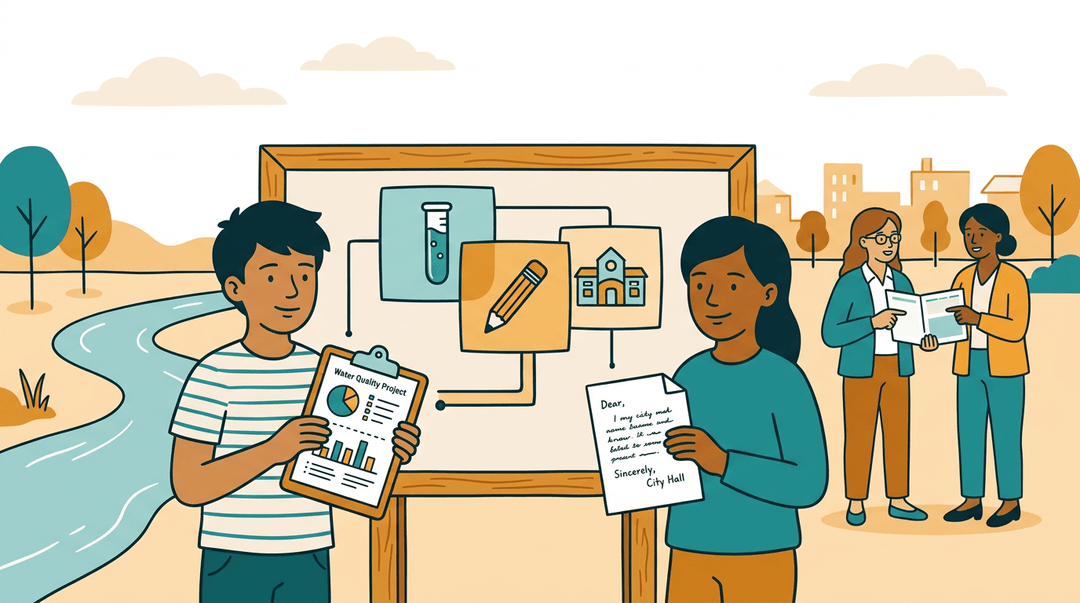
Think of a middle school class researching local water quality, writing persuasive letters to city officials, and presenting findings in a science fair. That's literacy, science, and civic engagement in one project.
The five steps follow a straightforward pattern:
- Investigate a community need
- Prepare students with relevant knowledge
- Take action
- Reflect on what happened
- Share what they learned
It works best when you plan alongside a colleague in another subject, so the connections feel genuine rather than forced.
Technology and Blended Learning
The right tools don't replace your teaching; they extend it. Here are two practical ways to bring technology into your classroom without overcomplicating things.
Classroom technology tools worth using
A few tools earn their place in the rotation:
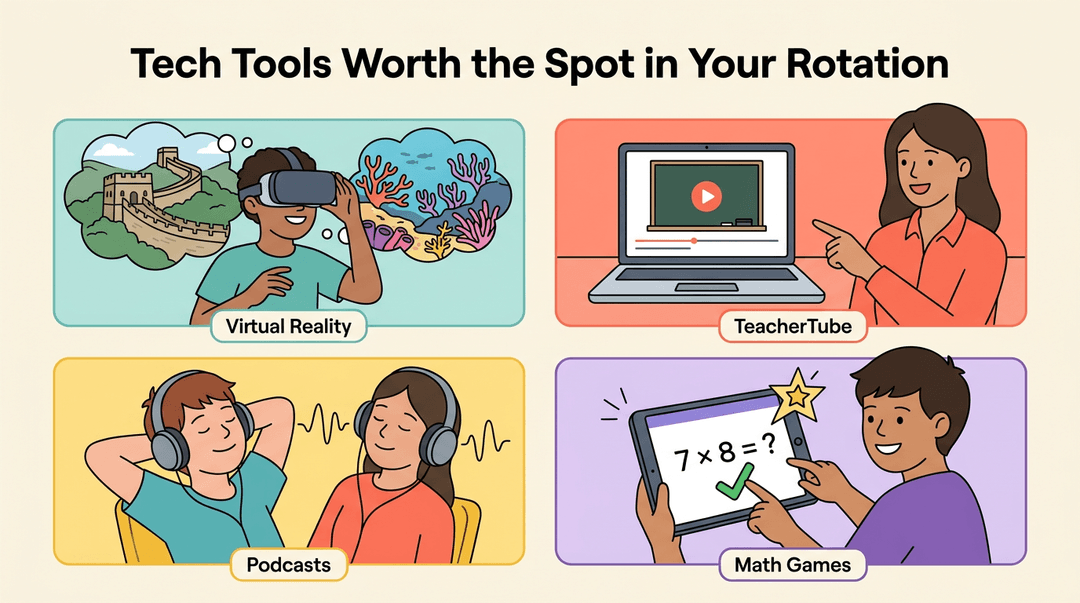
- Virtual reality apps can take students on virtual field trips to places a bus never could.
- TeacherTube is a reliable source of short video mini-lessons you can assign or play during class.
- For auditory learners, podcasts offer a welcome change of pace from reading-heavy content.
- And for math practice, purpose-built websites and games give students immediate feedback while keeping the repetition from feeling like a chore.
Blending online and in-person instruction
Blended learning combines online and in-person instruction so each mode does what it does best. In the classroom, you might run learning stations where some students rotate to a device-based online lesson while others work with you directly.
At home, portfolio tasks give students a meaningful alternative to passive screen time, and online discussion boards let the conversation continue long after the bell.
The payoff is flexibility: students who need more time get it, and students who are ready to move forward can. You stay in the room where the human connection matters most.
Teaching Strategies Specific to Math
Math asks students to move between the concrete and the abstract, build fluency, and think flexibly under pressure. The strategies below target each of those demands directly.
Concrete to abstract in math instruction
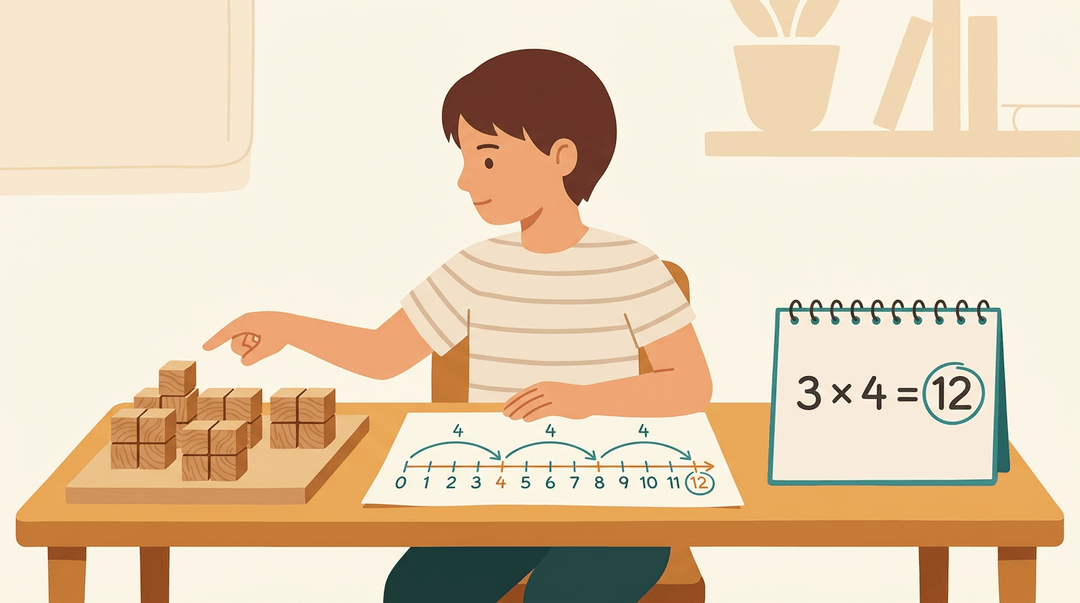
Manipulatives come before symbols. When students handle base-ten blocks, fraction tiles, or counters, the abstract notation that follows has something real to anchor to.
Visual aids (number lines, area models, diagrams) bridge the gap between the hands-on stage and the written text.
Push further by having students create their own concrete examples: a learner who invents a real-world story for 3 × 4 understands multiplication differently than one who only memorizes it.
Games and puzzles that build math fluency
Fluency grows faster when practice doesn't feel like drilling. Card games, dice games, and board games build fact recall through repetition that students barely notice.
Both offline and customizable online games let you adjust the difficulty to match where each student is. Puzzles add a different layer: they demand logical thinking and patience, not just speed.
The motivational lift from gamification (points, levels, friendly competition) keeps students returning to the practice they need most.
Developing mental math and number sense
Number sense is flexible thinking about quantities: knowing that 48 + 25 is easier as 50 + 23 than grinding through the algorithm. Mnemonic devices and fast-paced fact games give students reliable shortcuts to retrieve.
Over time, small wins with mental math build the confidence students need when problems get harder. The payoff is efficiency, accuracy, and flexibility: three qualities that transfer across every math topic they'll meet.
Teaching problem-solving and mathematical thinking
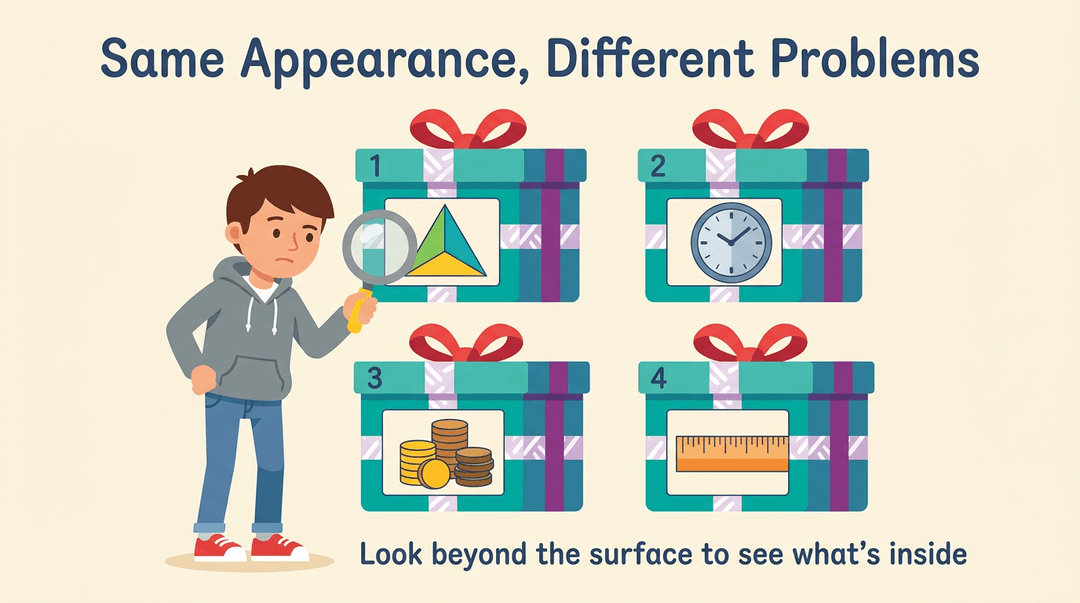
Problem-solving isn't caught; it's taught. Explicitly teaching students to recognize the deep structure of a problem (what type of problem is this, not just what numbers appear) makes a lasting difference.
SSDD problems (same surface, different deep structure) are a clean tool for this: they train students to look past the familiar wrapper and identify what's actually being asked.
From there, you can push into convergent thinking (one correct path) and divergent thinking (multiple valid approaches). One caveat: domain knowledge has to come first. Students can't think flexibly about problems they don't yet understand.
Teacher Development and Student Feedback
Growing as a teacher and listening to your students aren't separate tasks. They feed each other.
Professional development that improves your practice
Teachers with regular access to professional development (PD) use a wider range of strategies and use them more consistently.
Formal workshops matter, but so do the informal moments: a colleague stopping by to watch your lesson, a quick conversation in the hallway about what's clicking and what isn't, or a mentor who's been in your shoes.
Peer observation is especially underused. Watching how another teacher handles transitions or cold-calling can give you ideas no conference session will.
The underlying mindset is simple: your practice is always a work in progress, and that's not a weakness. It's the point.
Collecting honest feedback from students
Your students know things you don't. The trick is making it easy and safe for them to tell you.
A few approaches that work:
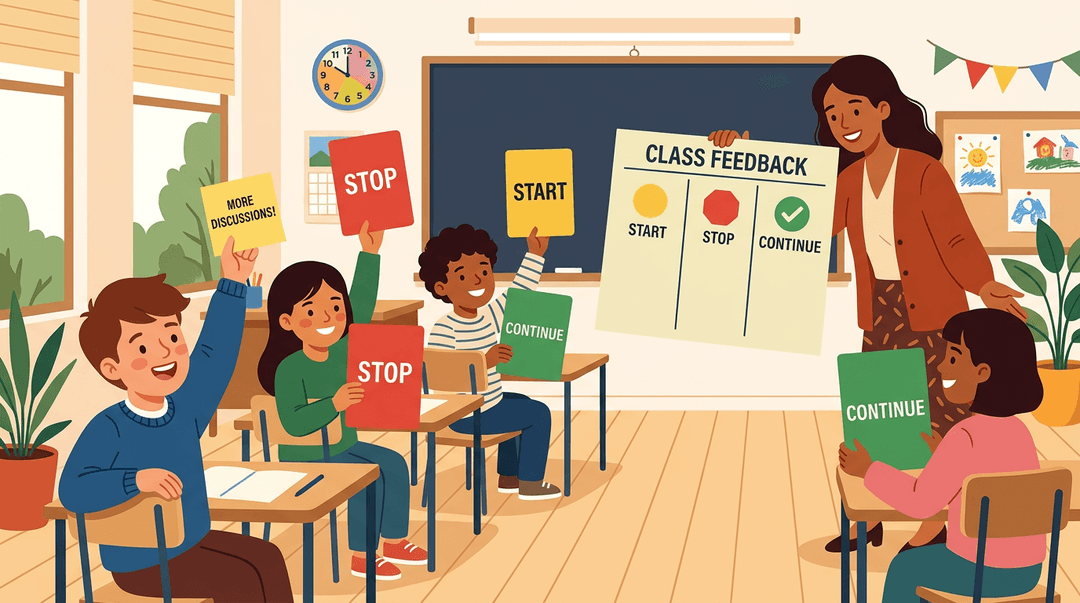
- Start-Stop-Continue. Ask students what you should start doing, stop doing, and keep doing. Short, specific, actionable.
- Google Forms surveys. A quick anonymous form takes five minutes to set up and gives you honest data you can actually act on.
- Mid-lesson color-coded signals. Red, yellow, or green cards (or sticky notes) let you read the room while the lesson is still running, not after.
When students feel heard, engagement goes up. It's that direct. Asking for feedback also models something worth teaching: that good learners seek input and adjust.
Great teaching isn't one move. It's knowing which move to make, for which student, at which moment, and having a wide enough repertoire to pull it off. The strategies in this post give you that range: grounded in evidence, ready for Monday morning.
Because when you match the right approach to the right learner, the classroom stops feeling like a juggling act and starts feeling like it's actually working. Ready to build the environment where these strategies can thrive?
Check out our guide on Classroom Management to set the conditions for real learning.
References
- Active learning methodology, associated to formative assessment ... — pmc.ncbi.nlm.nih.gov (2023)
- Visible Learning — visiblelearningmetax.com
- Evidence-Based Interventions Under the ESSA — cde.ca.gov
- How Peer Learning Improves Student Confidence — mics.edu.gh
- A Guide to Metacognition and Self-Regulated Learning — wolverhampton.gov.uk
- Valuing Student Experiences: An Introduction to Culturally Responsive Education (CRE) — ies.ed.gov
- Cognitive load theory in practice — education.nsw.gov.au
- Low-Stakes Quizzes Improve Learning and Reduce ... — files.eric.ed.gov
- Education expert John Hattie’s new book draws on more than 130,000 studies to find out what helps students learn — theconversation.com (2023)
- How Does Personalized Learning Affect Student Achievement? — rand.org
- Project-Based Learning Research Review — edutopia.org
Frequently asked questions
What are the 10 strategies of teaching?
It is not possible to definitively list 'the' 10 strategies of teaching, as educational approaches are diverse and categorized in various ways. Common effective strategies include direct instruction, collaborative learning, inquiry-based learning, and differentiated instruction. The most suitable approach often depends on the learning objectives, student needs, and subject matter.
What are the 15 methods of teaching?
There isn't a universally agreed-upon list of 'the' 15 methods of teaching, as teaching methodologies are numerous and often overlap or are combined. Some frequently cited methods include lectures, discussions, demonstrations, group work, problem-based learning, and project-based learning. Educators select methods based on the learning goals and student engagement requirements.