What Is an IEP in Education — Everything You Need to Know

Jump to section
Picture a student in your classroom who's clearly working hard but still struggling to keep up, no matter what you try. You adjust your pacing, offer extra support, check in after class. Something still isn't clicking.
For some students, what they need isn't just a good teacher. It's a legally binding, individualized plan built around their specific needs.
An IEP, or Individualized Education Program, is exactly that: a written document that outlines the goals, services, and accommodations a student with a disability is entitled to receive. It's a legal guarantee, not a suggestion.
In this post, we'll cover what an IEP actually includes, who qualifies, how the process works, and what it means for you as a general education teacher when one lands on your desk.
What Is an IEP in Education
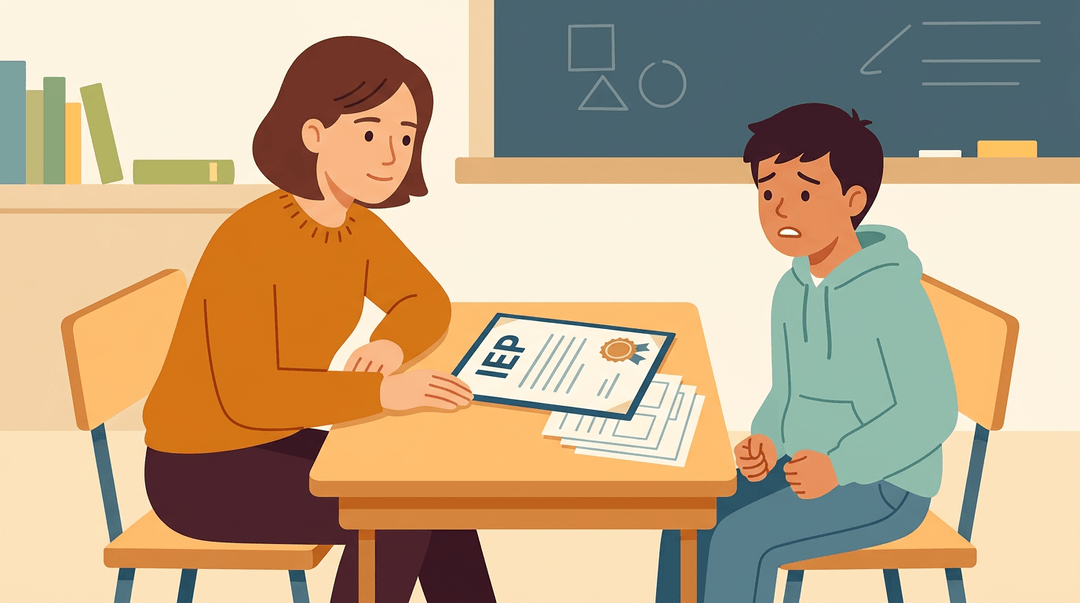
An Individualized Education Program (IEP) is a written, legally binding document that maps out a student's entire educational program.
It's not a general support plan or an informal agreement: it's the school's documented commitment to providing a free appropriate public education (FAPE) to a student with a disability.
One thing worth clarifying right away: an IEP and special education aren't the same thing. Special education is a placement. The IEP is the plan that drives it.
What an IEP actually is
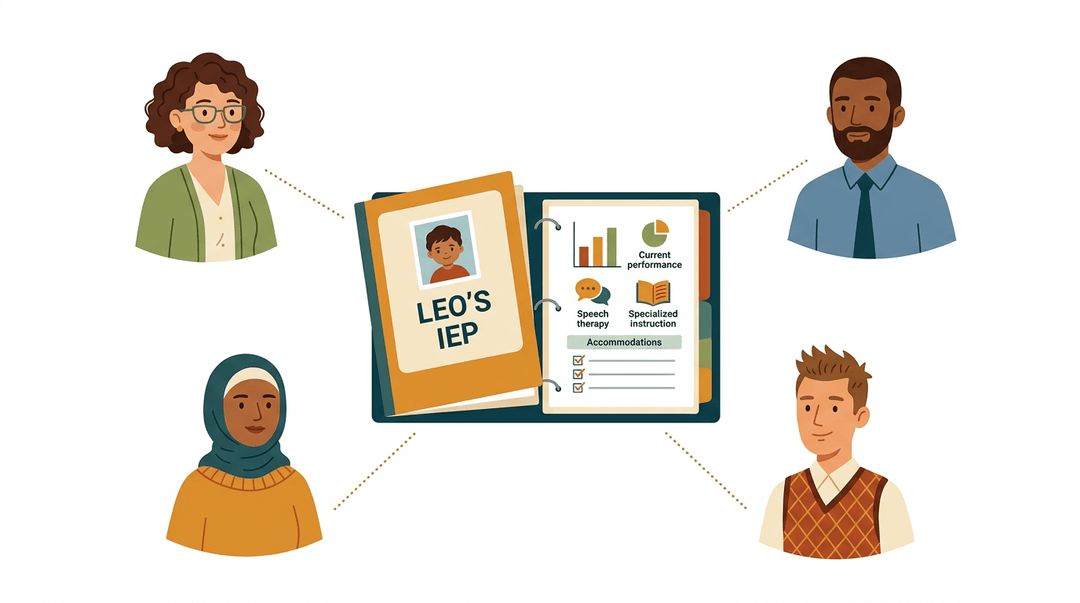
At its core, an IEP is a personalized document, built around one specific student's strengths, challenges, and needs. No two are identical.
It details the student's current performance levels, the services the school will provide, and the accommodations and modifications that apply to their daily instruction.
Every general education teacher who works with that student is bound by what's in it.
To qualify, a student must have a disability that falls within one of the 13 categories recognized under federal law.
According to Understood.org's overview of IDEA disability categories, the Individuals with Disabilities Education Act (IDEA) groups disabilities into 13 categories, including specific learning disabilities, autism, speech or language impairments, and emotional disturbance, among others.
What an IEP is designed to do
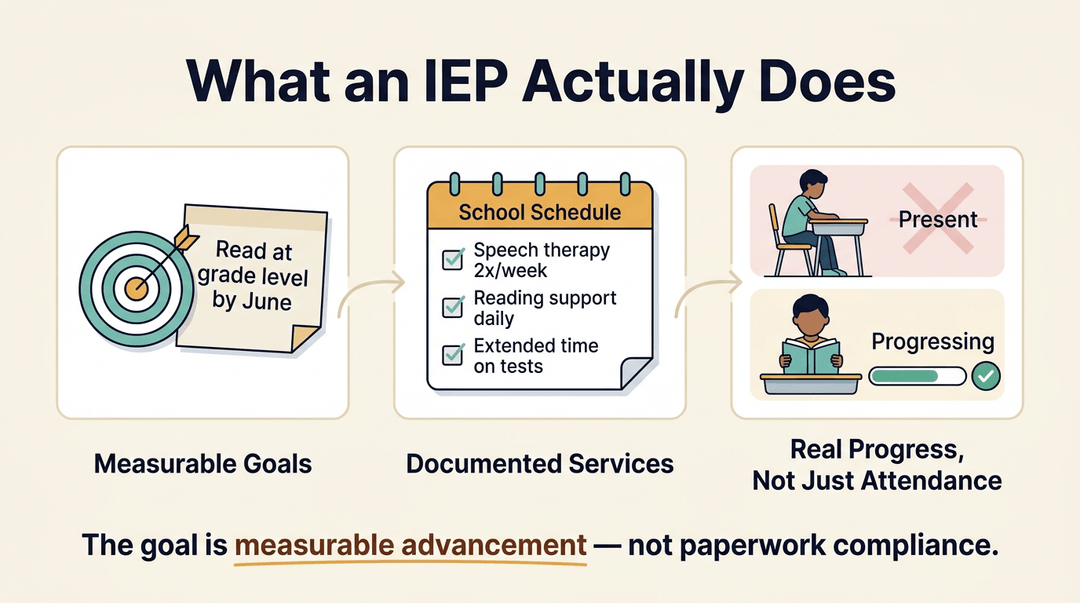
The IEP has three practical jobs:
- It sets measurable annual goals tied to the student's academic and functional needs.
- It documents exactly which services the school will deliver: think speech therapy, reading support, or extended time.
- And it keeps the focus on real progress, not just showing up.
The goal isn't compliance on paper. It's advancement, in ways you can actually measure.
The Law Behind Every IEP
IEPs don't exist by chance. They're grounded in federal law, which means every public school district in the country has to follow the same core rules: the same process, the same protections, the same timelines.
How IDEA shapes IEP requirements
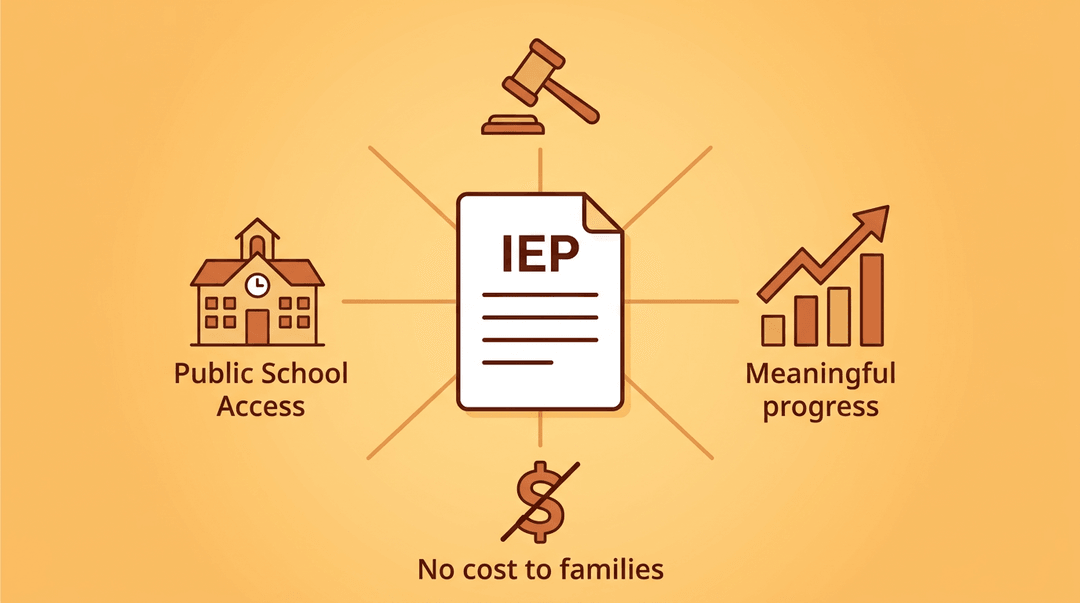
The Individuals with Disabilities Education Act (IDEA) is the federal law that makes IEPs a legal requirement.
It guarantees every eligible student a Free Appropriate Public Education (FAPE): an education tailored to their individual needs, at no cost to the family, in a public school setting.
The legal bar for what "appropriate" actually means was sharpened by the U.S. Supreme Court. In *Endrew F. v.
Douglas County School District*, the Court interpreted the scope of the FAPE requirements under IDEA, establishing that students must be given the chance to make meaningful progress, not just minimal gains.
Key deadlines and review rules
So what qualifies a child for an IEP? The process starts with a referral, moves through a formal assessment, and ends with an eligibility meeting where a team decides if the student meets the criteria. Once eligibility is confirmed, the clock starts.
According to the Maryland IEP System's guidance on initial eligibility, the IEP must be developed within 30 days of the date the student is determined eligible and in need of specialized instruction.
From there, the IEP isn't filed away and forgotten. The Washington State Governor's Office of the Education Ombuds notes that IEPs should be reviewed at least once a year.
Teams can also revise the plan sooner if goals are met ahead of schedule or a student's needs shift.
Who Sits on the IEP Team
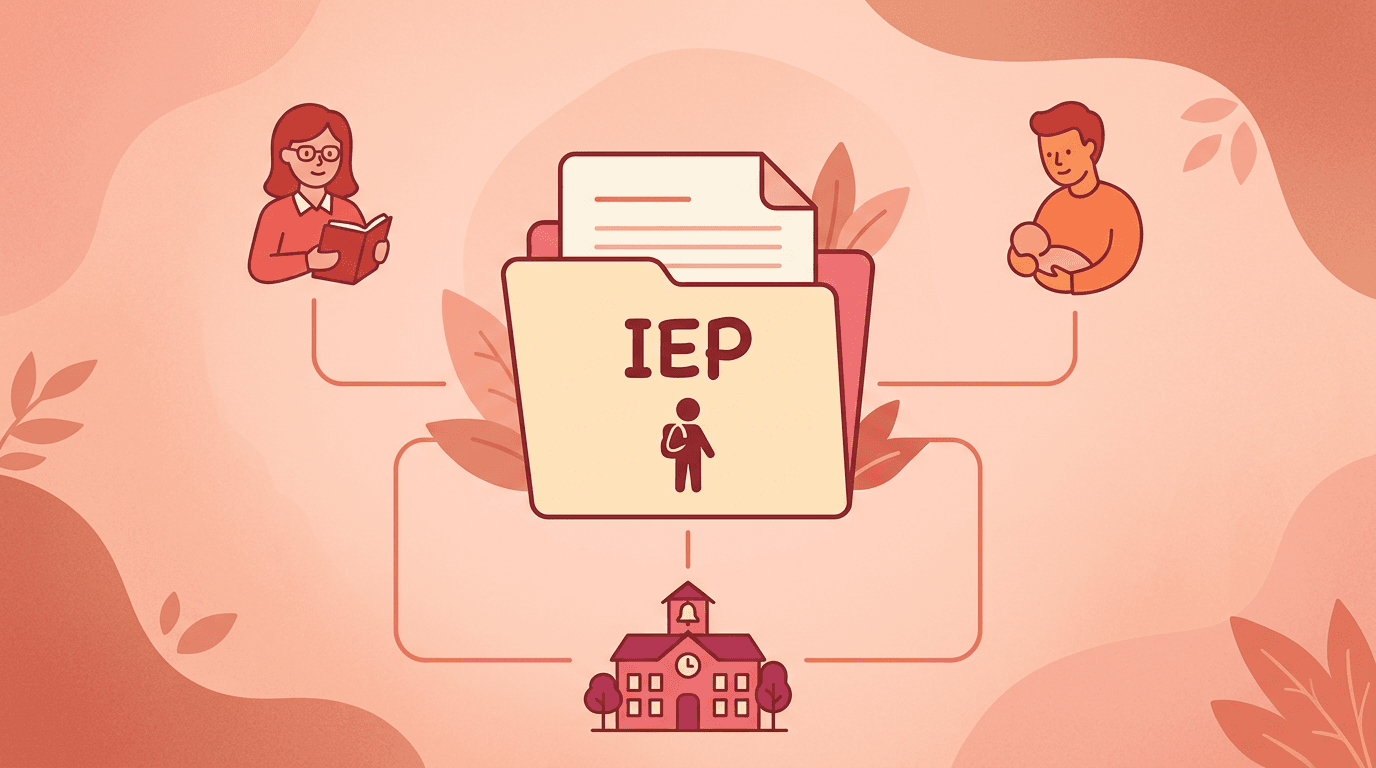
An IEP isn't written by one person in a back office. It's built by a team, and every seat at the table serves a purpose.
Required members at every meeting
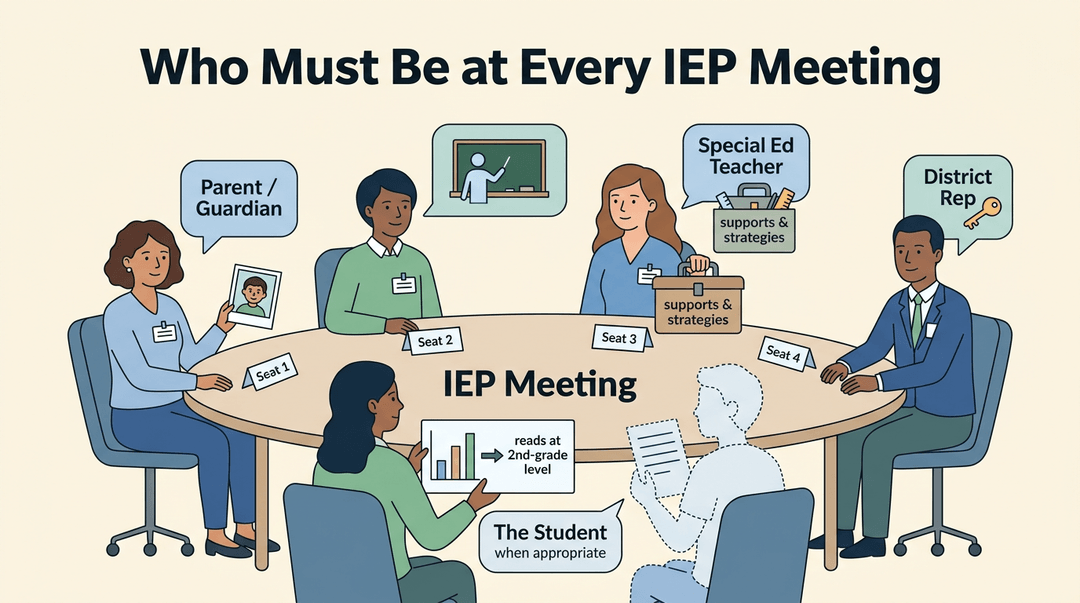
Federal law specifies who must be present. At every IEP meeting, that includes:
- Parents or guardians, who know the student better than anyone else in the room
- A general education teacher, representing the classroom the student spends time in
- A special education teacher, who brings expertise in instruction and supports
- A district representative, someone with authority to commit school resources
- An evaluation interpreter, able to explain assessment results in plain terms
- The student, when appropriate (more on this below)
Rights parents hold in the process
Parents aren't just invited guests. They're equal participants, and IDEA (the Individuals with Disabilities Education Act) protects their role.
Schools must notify parents before any meeting, and parents can request additional meetings if concerns come up between scheduled reviews. If a parent can't attend in person, the meeting can proceed by phone or video.
If a school denies a parent's request for a meeting, it must provide written notice explaining why.
When students join their own IEP
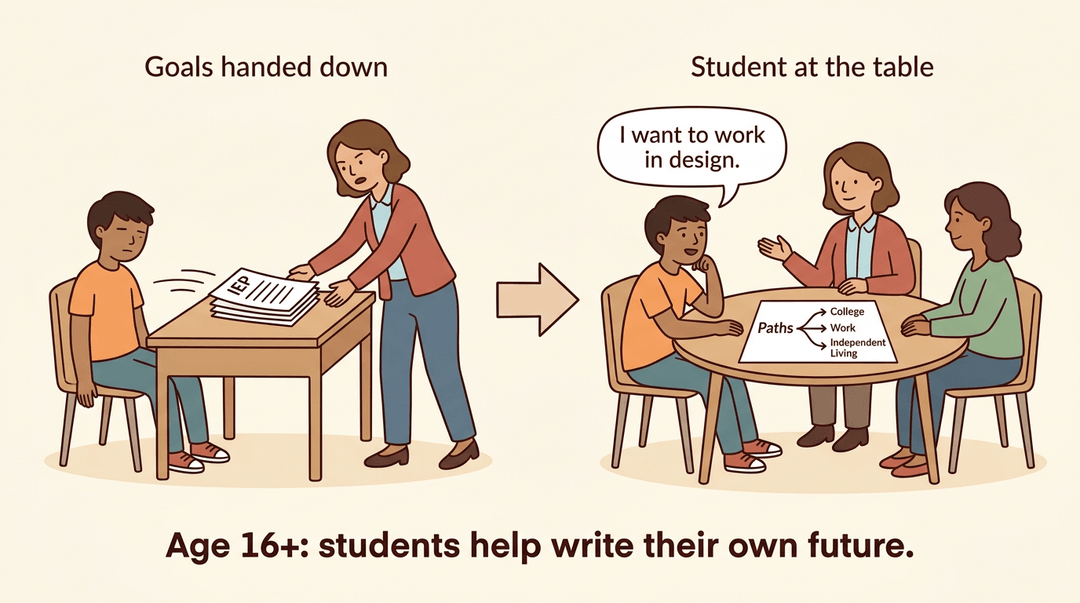
Students can take an active role in developing their own plan.
Beginning at age 16 (and sometimes earlier), student attendance is required whenever the IEP includes transition planning, which maps the path toward post-secondary education, work, or independent living.
For high school students especially, being part of the conversation builds self-advocacy skills and makes goals feel genuinely theirs, not just paperwork handed down to them.
What Every IEP Must Include
A completed IEP is more than a form with signatures on it.
Federal law specifies exactly what has to be in there, and each piece serves a real purpose: to give everyone who works with the student, including you as the general education teacher, a clear picture of where they are and what they need.
Where the student stands right now
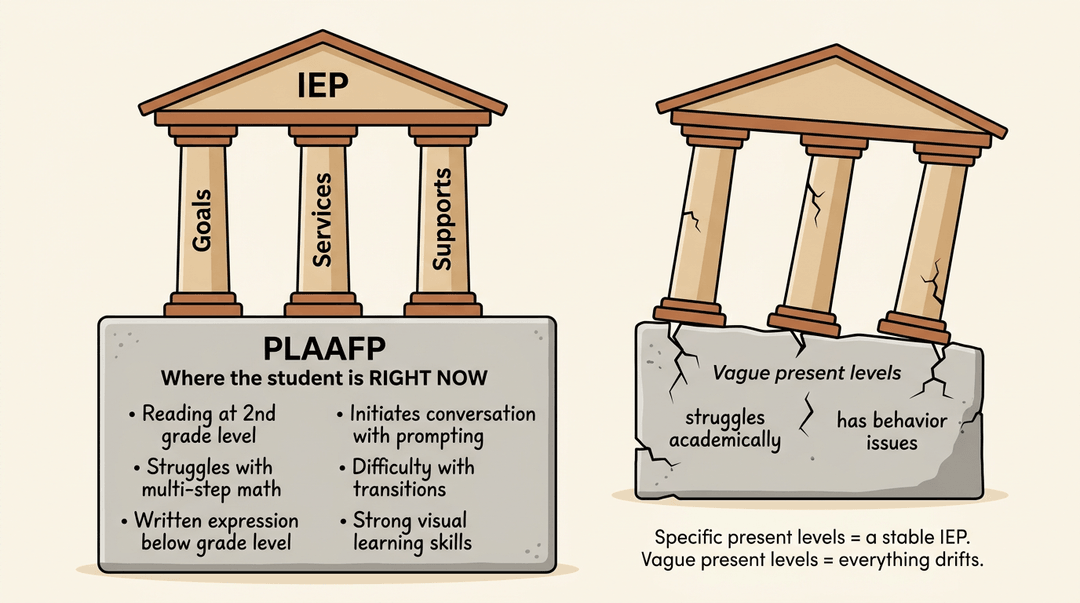
Every IEP opens with a present level of academic achievement and functional performance (PLAAFP), sometimes called the "present levels" statement.
It documents how the student is currently doing academically (reading, math, writing) and functionally (behavior, communication, social skills), and it spells out how the disability affects their access to the general curriculum.
This section matters because every goal and service that follows is supposed to grow directly from it. If the present levels are vague, the rest of the IEP tends to drift.
Annual goals and tracking progress
Annual goals must be measurable. Not "will improve in reading," but something closer to "will read a grade-level passage and answer four out of five comprehension questions correctly."
The IEP must also describe how progress will be measured (observations, assessments, data logs) and how often families will receive progress reports, typically aligned to the regular report card schedule.
Services and supports the school provides
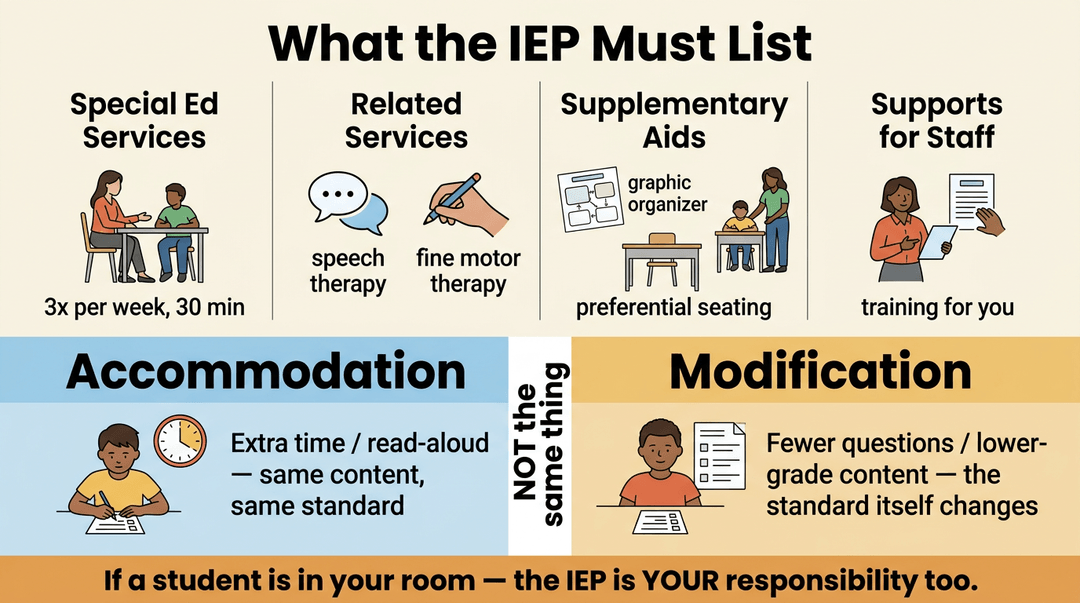
This is one of the most practical sections for classroom teachers. The IEP must list:
- Special education services: the type, frequency, and duration of instruction from a special education teacher
- Related services: supports like speech-language therapy, occupational therapy, counseling, or transportation
- Supplementary aids and services: tools and supports that allow the student to participate in the general education setting (graphic organizers, preferential seating, a paraprofessional)
- Supports for school personnel: training or assistance the school provides to staff who work with the student
One thing teachers sometimes misunderstand: implementing the IEP is not only the special education teacher's job. If a student is in your classroom, you are responsible for delivering the accommodations listed there, every day.
Accommodations change how a student accesses material (extra time, a read-aloud) without changing what they're expected to learn. Modifications, by contrast, change the actual content or standard itself.
That's a meaningful distinction, and mixing them up can create compliance problems.
Placement and time in general education
The IEP must state how much time the student spends in the general education setting and document the extent to which they're separated from nondisabled peers.
Federal law presumes the least restrictive environment, which means a more separate placement requires a clear justification. The document also covers the student's participation in extracurricular activities and other nonacademic parts of school life.
Testing accommodations and alternate assessments
The IEP must address how the student participates in state and district-wide assessments. Most students take standard assessments with accommodations (extended time, a scribe, a quiet room).
For students with the most significant cognitive disabilities, an alternate assessment is available, but the IEP team must document why the standard assessment isn't appropriate for that student.
Planning for life after high school
Once a student approaches age 16, the IEP takes on a forward-looking dimension.
According to Washington state's Office of Superintendent of Public Instruction, transition services must be included in the IEP beginning the year the student reaches age 16, or earlier if the team decides it's appropriate.
This post-secondary transition plan covers goals for education, employment, and independent living after high school.
There's also a legal shift worth knowing: according to Virginia Department of Education guidance on the transfer of rights for students with disabilities, parental rights in special education transfer to the student at age 18.
That means the student, not the parent, becomes the decision-maker for the IEP. It's a shift teams sometimes forget to prepare families for.

Using the IEP in Your Classroom Every Day
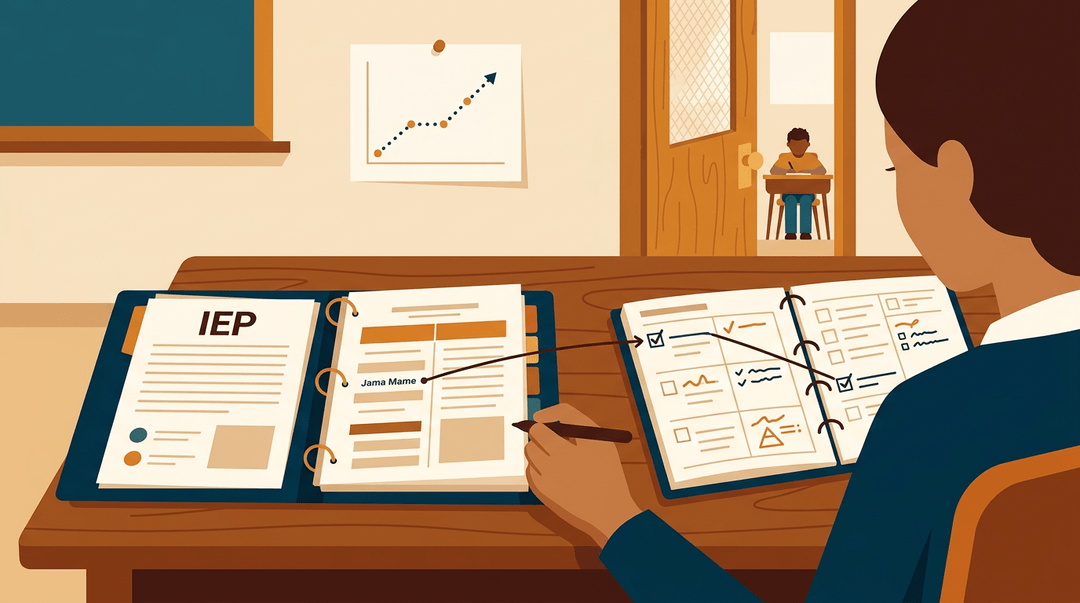
You don't need to write IEPs to be responsible for them. As the general education teacher, you implement the plan daily, and the law treats that as a legal obligation. Here's how to do it without it taking over your prep time.
Before students arrive
Read each IEP you've received before the first lesson, scanning for three things you'll act on right away.
- Find accommodations and modifications. Accommodations change how a student learns; modifications change what they're expected to master.
- Jot a quick list per student: "extended time, reads-aloud, reduced problem set."
- Note required assessment adjustments. These apply to quizzes and state tests, not just daily work.
- Example: "separate setting + 1.5x time on all summative assessments."
- Flag transition and behavioral supports. Look for anything triggered by routine changes or conduct.
- A behavior plan may say: "offer a two-minute break before redirecting."
⚠️ Watch out: Accommodations aren't optional courtesies you grant when convenient. They're legally required, and skipping them puts the district out of compliance.
Applying accommodations all year
Consistency is the whole job. A support that shows up Monday but not Thursday isn't a support.
- Deliver the common accommodations every time. Extended time, preferential seating, chunked tasks.
- Chunk a 20-problem worksheet into four labeled sets of five.
- Document when you provide each one. A dated note protects the student and you.
- Keep a simple log row: "10/14, math quiz, extended time given, seated front."
- Tell the SpEd teacher when something isn't working. You're the eyes in the room.
- Say: "The chunking helps, but he's still overwhelmed by the reading load. Can we look at that?"
| When you see... | Try... |
|---|---|
| Student finishes far ahead with extended time unused | Note it; the accommodation may need review |
| Preferential seating isn't reducing distraction | Flag it for the SpEd teacher, don't just abandon it |
| A modification leaves work too easy | Report it as data, not a unilateral change |
Feeding the annual review
The IEP gets rewritten once a year, and your classroom is the richest source of evidence for that meeting.
- Share concrete performance data. Grades, work samples, observation notes.
- "Met the writing goal on 4 of 5 paragraphs in March; struggles with transitions."
- Report progress on each academic goal. Tie what you saw to the goal's wording.
- Attend the meeting or submit written input. Your two paragraphs count when you can't be there.
Example: A seventh-grade science teacher couldn't attend a review, so she sent three dated lab-report samples plus one line: "Independent on procedure, needs sentence starters for conclusions." The team wrote that support straight into the new goal.
Keeping all of this in one spot is half the battle: EMStudio's Curriculum Planner lets you map standards and note IEP accommodations alongside your unit plans, so nothing falls through the cracks.
How the IEP Process Actually Works
An IEP doesn't appear out of thin air, and it doesn't stay frozen once it's written. It's built by a team, then kept alive all year long.
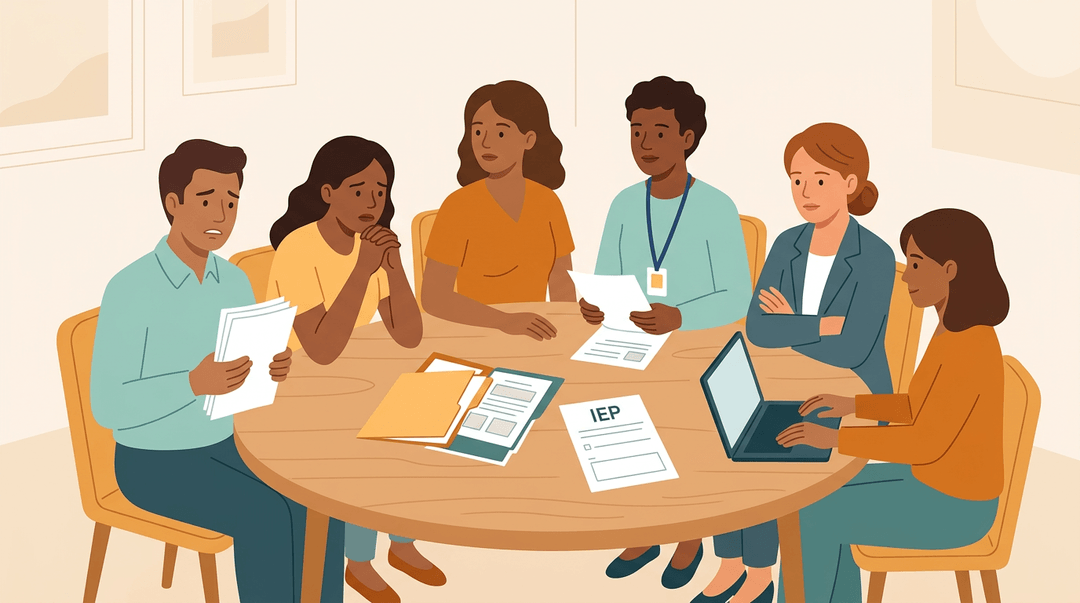
Building the IEP as a team
Every IEP begins with people around a table: the student's parents or guardians, general and special education teachers, a school administrator, and often a specialist or the student themselves.
Together, the team reviews evaluation data and decides on goals, services, and accommodations. Schools and families are equal partners in that conversation, at least in principle.
In practice, some schools push back on the process. The resistance usually comes down to funding (services cost money), staffing (qualified providers are hard to find), and the compliance burden of keeping detailed records.
That's worth knowing, because if a meeting feels rushed or a request gets deflected, those pressures are often behind it.
The IEP as a living document
Signing the document is the start, not the finish. Federal law requires at least one annual review, but many students have their plans revisited more frequently as goals are met, needs shift, or new data comes in.
Changes can be made at any point when the team agrees they're warranted.
For general education teachers, this means you'll want somewhere reliable to track goal progress alongside your lesson plans.
Keeping everything in one place makes it easier to spot when a student is falling behind a benchmark and flag it before the next review. The IEP is only as useful as the follow-through behind it.
An IEP isn't just paperwork. It's a roadmap for a student who needs more than the default, and you're one of the most important people holding that map.
Understanding what's in it, why it exists, and how to use it day-to-day makes a real difference, not just for compliance, but for the student sitting in front of you.
When every teacher on the team understands the plan, students get the support they were promised.
Ready to organize your curriculum around every learner's needs? Explore our Curriculum & Standards tools to keep your planning aligned and accessible.
References
- Initial Eligibility - Student Ages 3-21 (PG) — md-online-iep.elevio.help
- Transition Services (Ages 16–22) — ospi.k12.wa.us
- TRANSFER OF RIGHTS FOR STUDENTS WITH DISABILITIES — townhall.virginia.gov
- Questions and Answers (Q&A) on U. S. Supreme Court Case Decision Endrew F. v. Douglas County School District Re-1 — sites.ed.gov
- Individualized Education Programs (IEP) — oeo.wa.gov
- IDEA disability categories — understood.org
Frequently asked questions
What is an IEP and what is its purpose?
An IEP, or Individualized Education Program, is a legally binding written document that outlines the educational goals, services, and accommodations a student with a disability is entitled to receive. Its purpose is to ensure the student receives a free appropriate public education (FAPE) tailored to their specific needs, enabling them to make meaningful progress.
What is the simple definition of IEP?
An IEP is a legally binding written document that details the specific educational program, goals, and accommodations for a student with a disability. It serves as the school's commitment to provide a free appropriate public education (FAPE) to that student.
Is an IEP the same as Special ED?
No, an IEP and special education are not the same thing. Special education refers to the specialized instruction and services provided, while an IEP is the specific plan that drives and outlines those services for an individual student with a disability.
Is IEP the same as ADHD?
No, an IEP is not the same as ADHD. ADHD (Attention-Deficit/Hyperactivity Disorder) is a medical diagnosis, which can be one of the conditions that might qualify a student for an IEP if it significantly impacts their educational performance. An IEP is a legal document outlining educational supports, not a diagnosis itself.
What qualifies a child for an IEP near me?
To qualify for an IEP, a student must have a disability that falls under one of the 13 categories recognized by federal law, such as specific learning disabilities, autism, or speech impairments. Additionally, the disability must adversely affect their educational performance, making them eligible for specialized instruction and services.
What does it mean if a child has IEP?
If a child has an IEP, it means they have been identified as having a disability that impacts their education and requires individualized support. The IEP is a legal document that ensures the child receives specific services, accommodations, and modifications designed to help them achieve their educational goals.
Can you have an IEP and not be in Special ED?
Yes, a student can have an IEP and not be in a separate special education classroom full-time. The law requires placement in the least restrictive environment, meaning students should spend as much time as possible with their nondisabled peers. An IEP may outline supports and services to be provided within the general education classroom setting.
Does autism fall under IEP?
Yes, autism is one of the 13 categories of disabilities recognized under the Individuals with Disabilities Education Act (IDEA) that can qualify a student for an IEP. If a student has autism and it adversely affects their educational performance, they may be eligible for an IEP to receive necessary specialized instruction and supports.