Why Does Early Education Matter So Much for Young Children?

Jump to section
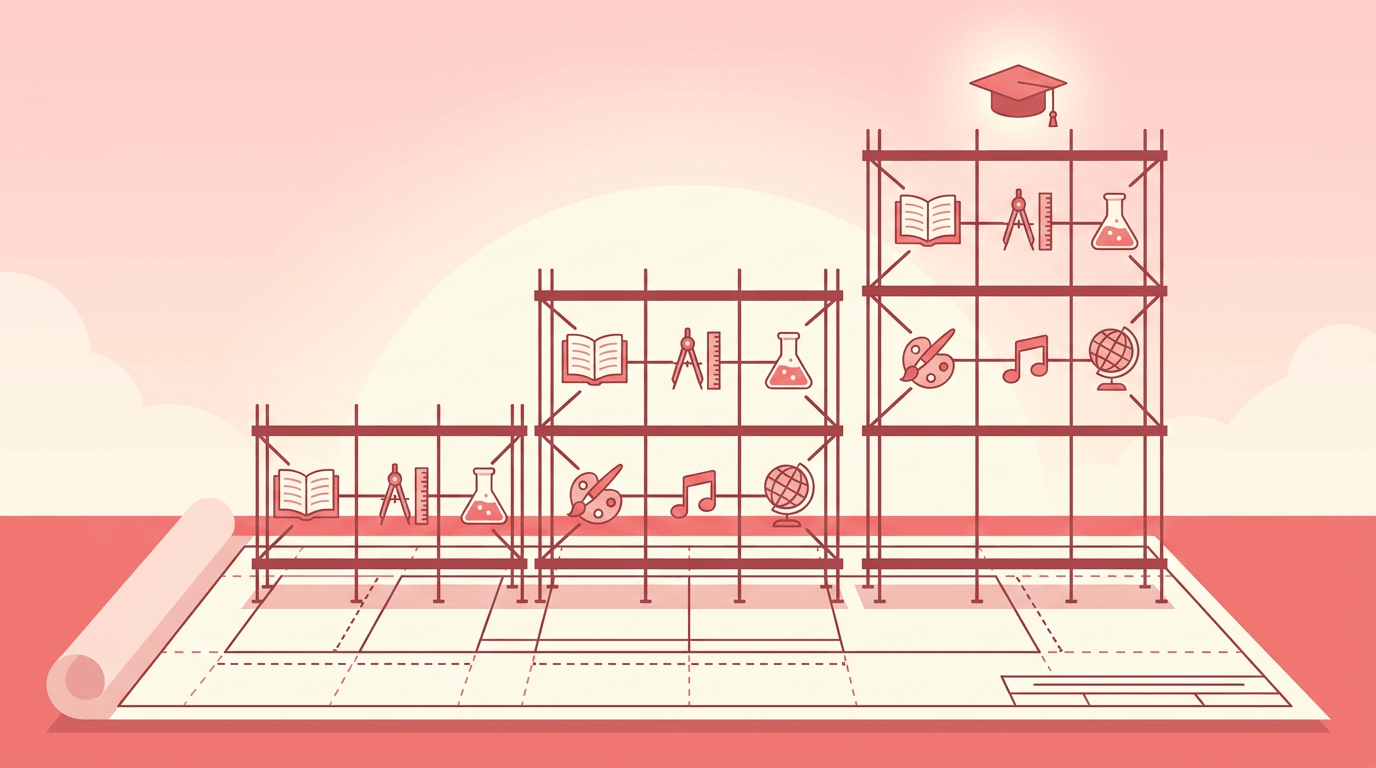
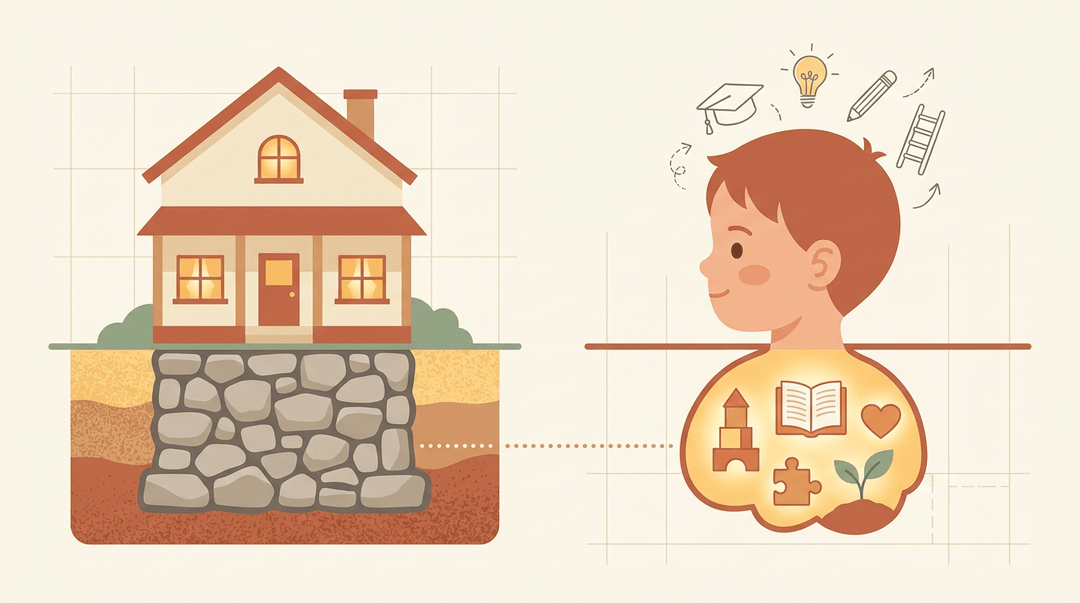
Think about the foundation of a house. You never see it once the walls go up, but it decides whether everything above it stands strong for years. Early education works the same way for a child's mind.
Early education is the learning and care young children receive before kindergarten, and it shapes far more than most people realize.
In this post, we'll define it fully: its stages, program types, the government supports behind it, and how you can turn that understanding into a real curriculum.
Types of Early Education and Child Care Programs
Early education covers the learning and care children receive from birth through age eight, spanning four developmental stages: infant, toddler, preschool, and early elementary.
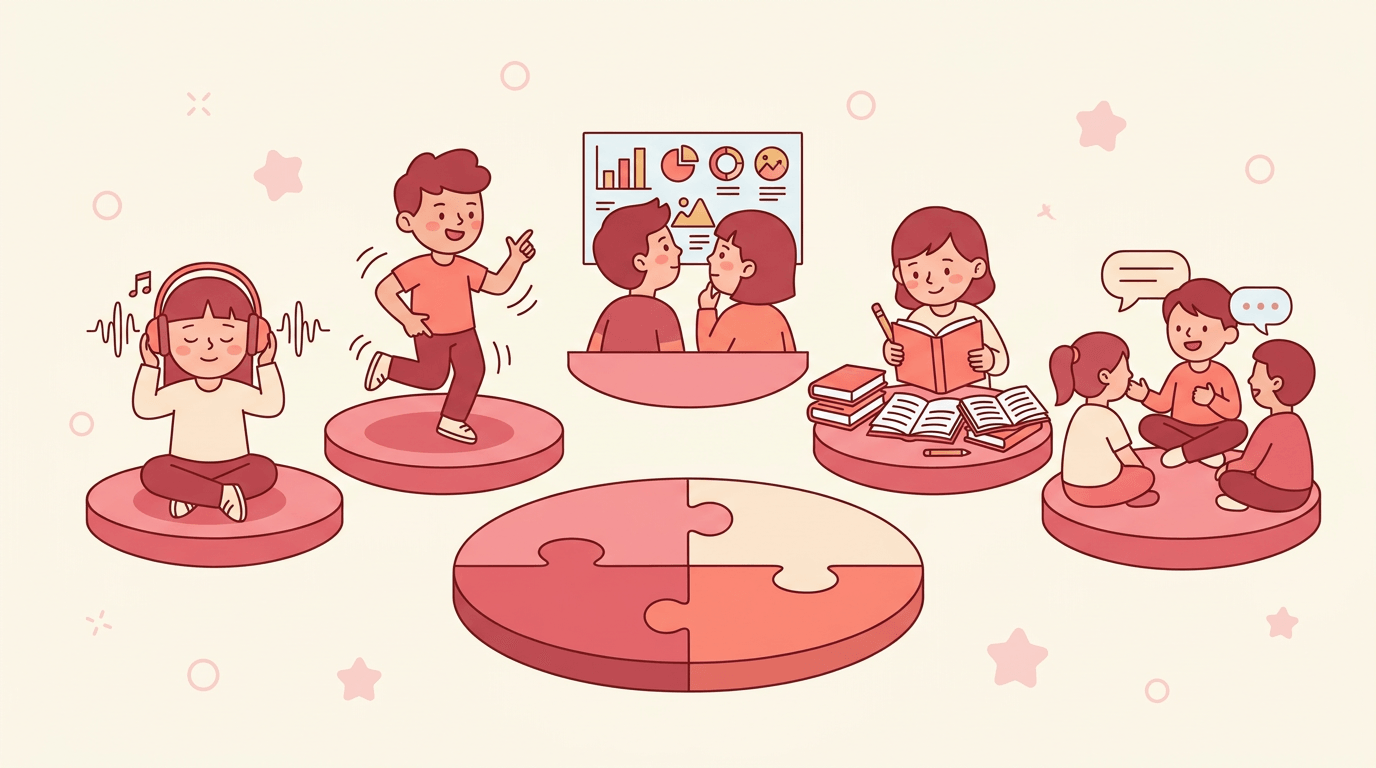
Within that window, families choose from several program types, including Montessori (child-led, hands-on exploration) and play-based programs (learning through guided play). Here's how the major public and government-backed options break down.
Public pre-K and preschool programs
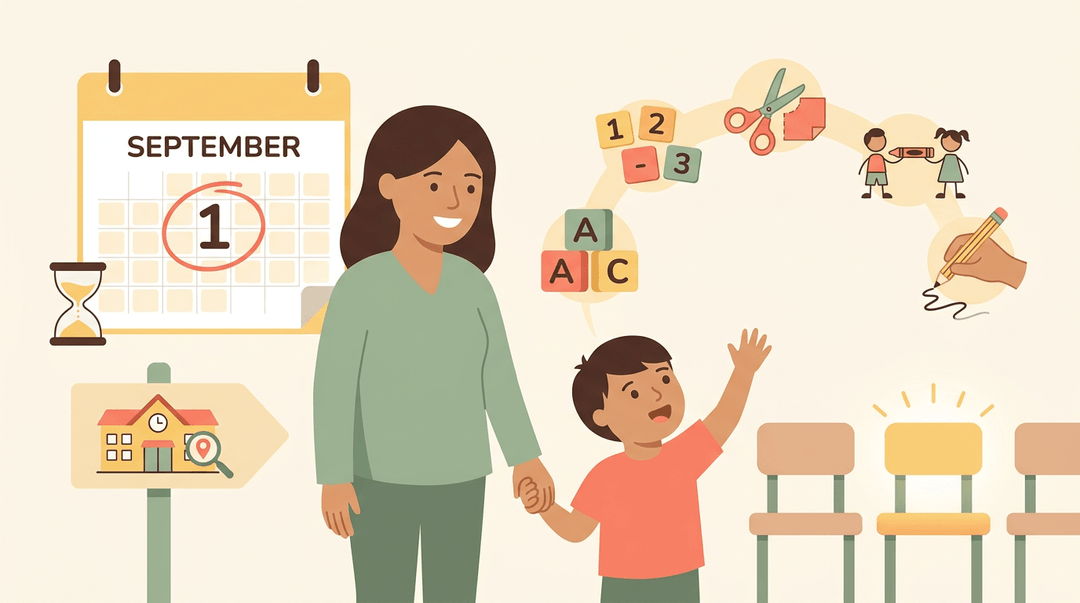
Most states set an age cutoff around four years old by September 1, though rules vary, so check your local deadline early since seats fill fast. Options range from free state preschool programs to tuition-based private options, and most districts offer a program locator tool to help parents find one nearby. So, what should a four-year-old learn in Pre-K? Expect milestones like recognizing letters and numbers, following multi-step directions, sharing with peers, and building early fine motor skills through cutting and drawing.
How Head Start supports young children
Head Start's core focus is school readiness, closing gaps before kindergarten starts. It serves children from infancy through preschool age, offered across center-based, home-based, and family child care settings. It also includes services for pregnant women, supporting healthy development before a child is even born.
Getting help paying for child care
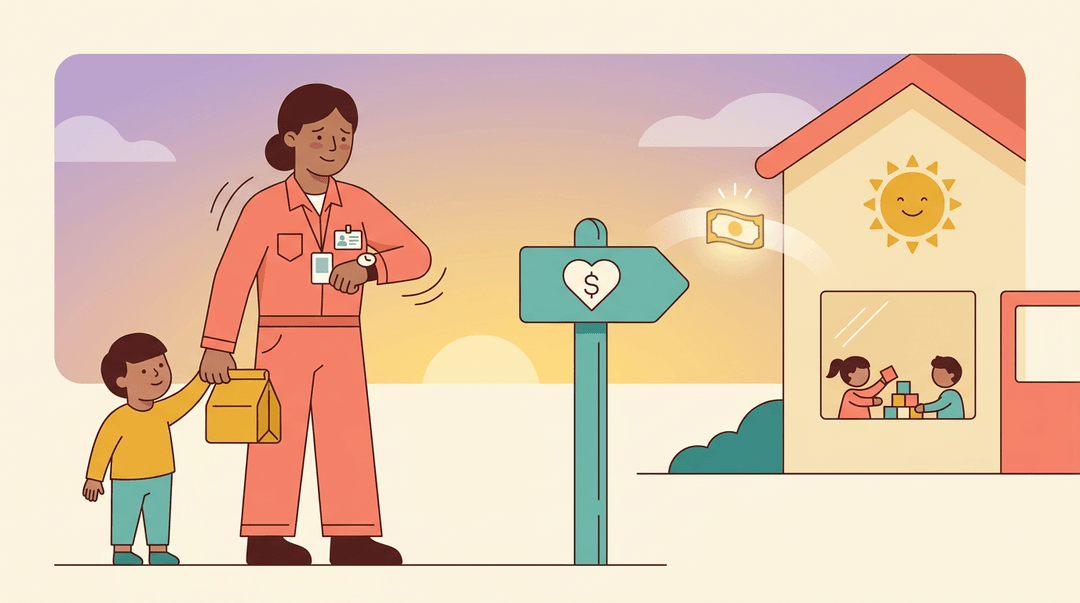
For a working parent juggling shifts and drop-off, cost is often the biggest barrier. State and federally funded assistance programs help cover child care costs for eligible families, typically based on income eligibility and whether a parent is working or attending job training. These supports exist to keep parents in the workforce without sacrificing quality care.
How states oversee child care quality
States enforce quality through a mix of tools: licensing laws and regulations, grant programs, and a Quality Rating and Improvement System (QRIS) that scores providers on measurable standards. Providers can access contractor resources and required forms through state portals, and data reporting systems track outcomes over time, giving families a clearer picture of quality before they enroll.
Planning Your Early Education Curriculum
Everything above explains what early education is; this part turns it into a year you can teach. Work through three moves in order: set the goals, map the calendar, then collect the evidence.
Set goals that fit the child, not the grade
Before you write any goal, confirm it passes all three checks:
- It matches the developmental stage. One step ahead of what most of your children can already do.
- It maps to a state early learning standard. Copy the standard's code next to the goal so alignment is visible.
- It targets a foundational skill. Letter sounds, counting, taking turns, self-regulation: the skills everything later builds on.
Here's the difference in practice:
- ❌ "Students will read simple sentences."
- ✅ "Students will identify the first sound in their own name."
The weak goal skips the stage; the strong one sits exactly one step beyond current reach.
Build a simple scope and sequence
Map the year in themes first, then balance each week inside them. A three-row start might look like this:
| Month | Theme | Skill anchor |
|---|---|---|
| September | All about me | Recognizing letters in my name |
| October | Fall and harvest | Counting and sorting by attribute |
| November | Families and helpers | Retelling and taking turns |
Once themes are set, check every week touches all four areas: literacy, math, motor, and social-emotional. If a week is all letters and no movement, trade one activity out.
💡 Tip: Write play-based blocks into the schedule like lessons, at least one open block daily. Unscheduled play is the first thing that gets squeezed out, and it's where much of the learning happens.
Track progress and share what you see
You need evidence of readiness, not a gradebook. Three lightweight tools cover it:
- Developmental checklists. A roster with milestones across the top; date each one as you observe it.
- Instance: "cuts along a straight line: 10/14."
- Portfolio samples. One dated work sample per child per month.
- A September name-writing sample next to January's shows growth no score can.
- Family updates. A short note or conference each term, framed forward.
- Say: "Here's what Maya can do now, and here's what we're practicing next."
Example: A pre-K teacher photographs each child's block structure during the "helpers" theme, files it in the portfolio, and checks off "builds with a plan" on the roster. One activity, two pieces of evidence, five minutes.
When the goals, themes, and tracking live in separate documents, something always drifts: map your early learning standards and pacing in one place with EMStudio's Curriculum Planner.
Program Quality and Advocacy Groups
Great early education doesn't happen by accident: it's measured, reported, and pushed forward by systems built specifically for that job. Here's how those systems work, and who steers them.
How quality rating systems work
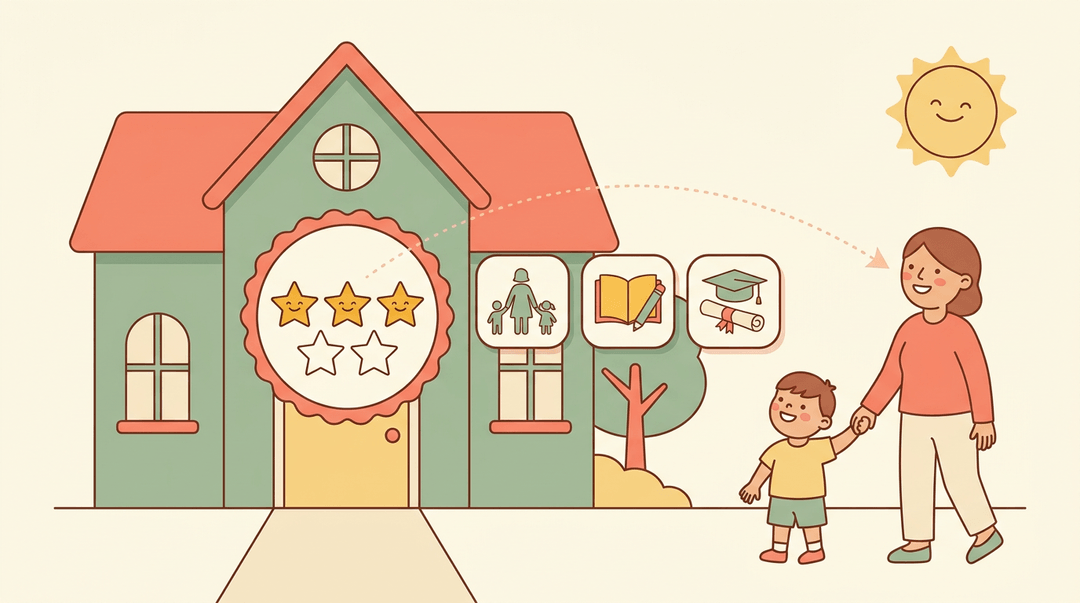
Most states rely on a Quality Rating and Improvement System (QRIS), a systemic approach that scores programs on things like teacher-child ratios, curriculum use, and staff qualifications. The goal is threefold:
- assess a program's quality
- help it improve
- communicate that rating to families choosing where to enroll
Staff qualifications matter here too, and it's the direct answer to a question a lot of aspiring educators ask: what education is needed to teach preschool?
Most states require at least an associate degree in early childhood education, with many programs now expecting a bachelor's degree plus a state-issued teaching credential or Child Development Associate (CDA) certification.
Curriculum frameworks and learning standards
States also publish preschool curriculum frameworks that spell out what children should learn at each age, often released as multi-part learning foundations volumes covering domains like language, math, and social-emotional growth. Alongside these, tools like the Desired Results Developmental Profile give teachers a structured way to observe and record each child's progress against those standards, turning broad goals into everyday classroom checkpoints.
Statewide policy groups for early education
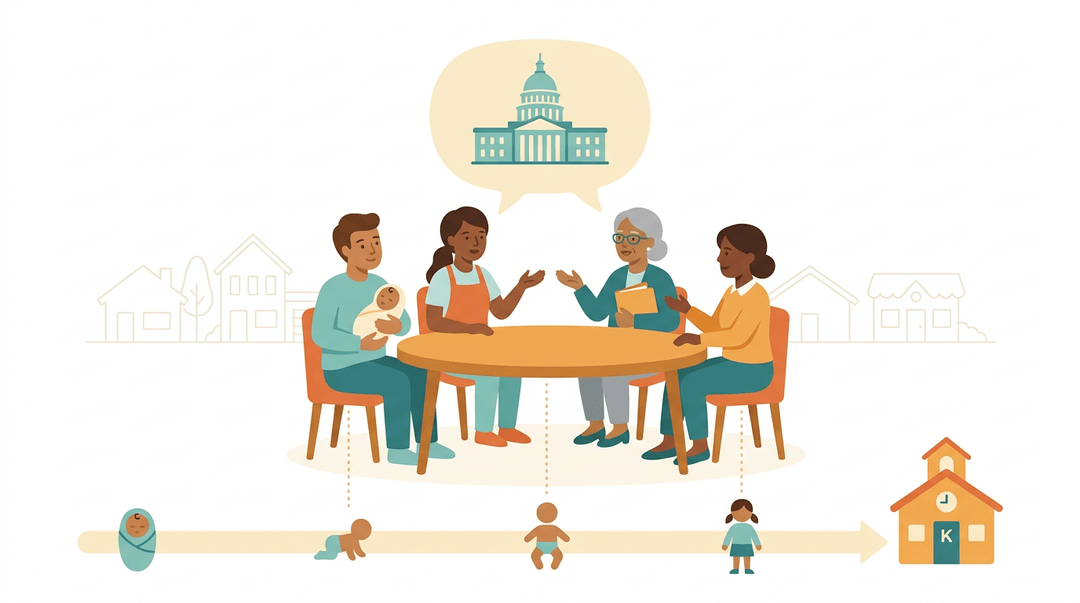
Behind the frameworks sit interest holder groups (coalitions of parents, providers, and advocates) and policy leadership bodies that shape funding and regulation. Many of these groups focus specifically on the birth-to-kindergarten stretch, pushing for consistent quality and access long before a child ever sits in a kindergarten classroom.
Getting Health and Developmental Support Services
A young child's brain does most of its wiring before kindergarten even starts, which is exactly why support services exist at every stage of early education.
As the CDC puts it, "The early years of a child's life are very important for later health and development." Here's a practical map of the services, benefits, and healthcare programs your students and their families can lean on.
Early intervention and special education services
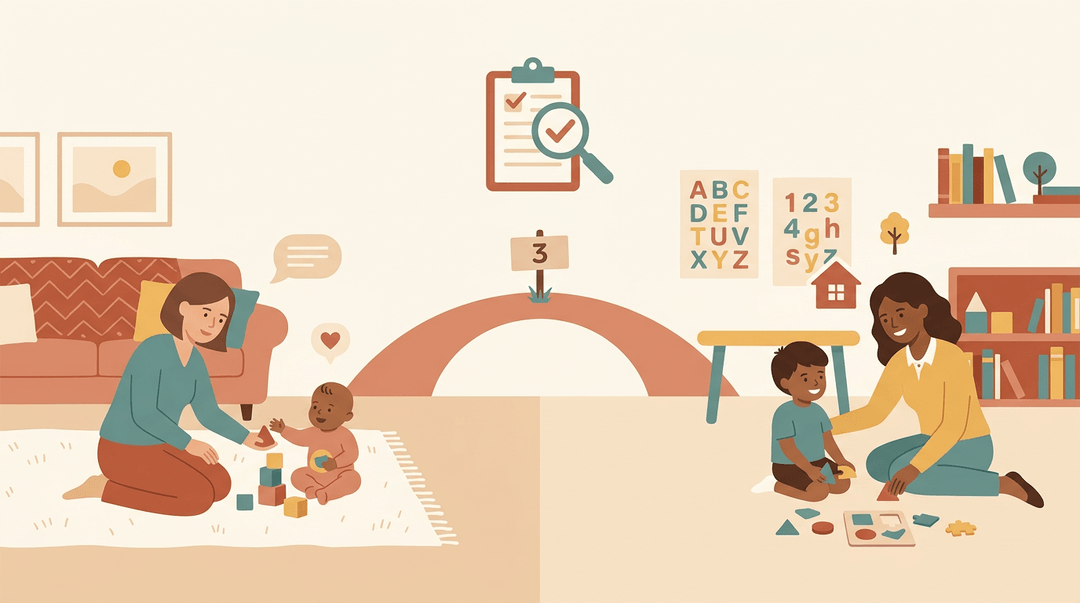
For infants and toddlers from birth to age 3, early intervention connects families with services like speech therapy, physical therapy, and developmental support, often delivered right in the home.
Once a child turns 3, early childhood special education picks up where early intervention leaves off, offering individualized instruction in classroom, home, or community settings depending on what a child needs.
Eligibility isn't automatic: it depends on a documented disability or developmental delay, confirmed through evaluation, so a family's first step is usually a referral for assessment.
Finding autism services and support
For a child with autism, applied behavior analysis (ABA), a therapy that uses structured, repeatable techniques to build communication and social skills, is one of the most common supports available.
Families don't have to find a provider alone: local community agencies, from school districts to nonprofit disability organizations, can help connect them to qualified help nearby.
Nutrition assistance for families
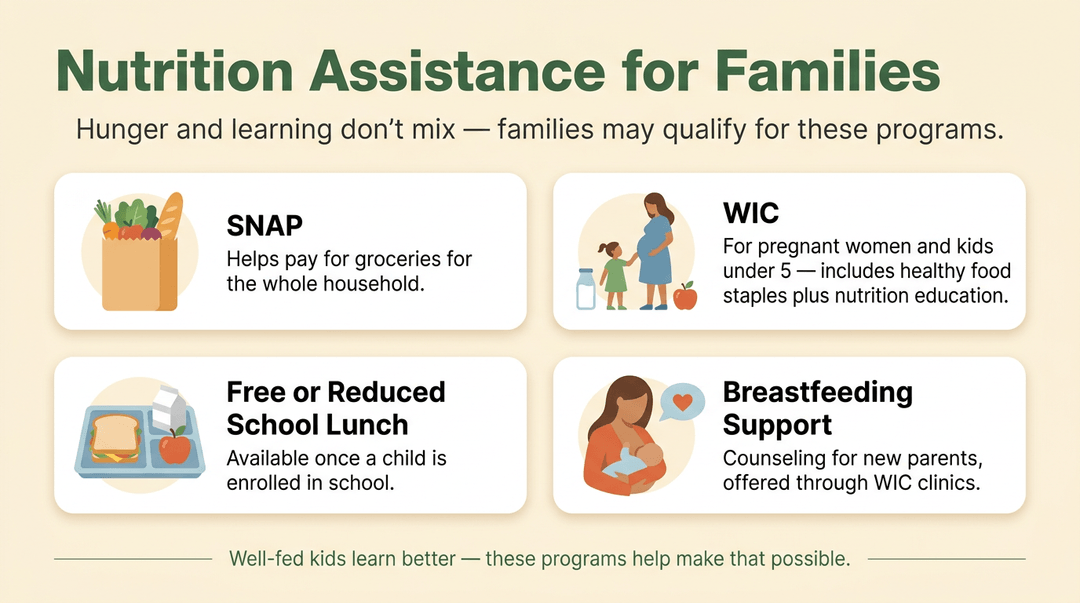
Hunger and learning don't mix, so nutrition programs matter just as much as classroom instruction. Families may qualify for:
- SNAP food benefits, which help cover groceries for the household.
- WIC, tailored to pregnant women and children under 5, adding nutrition education and healthy food staples.
- Free or reduced school lunch, once a child is enrolled.
- Breastfeeding support counseling, available through WIC clinics for new parents.
Healthcare coverage and access programs
On the healthcare side, Medicaid and the Children's Health Insurance Program (CHIP) cover checkups, immunizations, and treatment for eligible children and families.
A special health care needs program can step in for kids with chronic conditions or disabilities who need extra coordination, while women's health and family planning services round things out for parents.
Many of these programs are available at no cost to eligible families, removing one more barrier between a child and the care they need.
Support for Families and Parents
Early education doesn't stop at the classroom door. A whole layer of support exists to help families get what their kids need at home, and knowing where to point parents can be just as valuable as anything you teach in a lesson.
Parenting classes and child support help
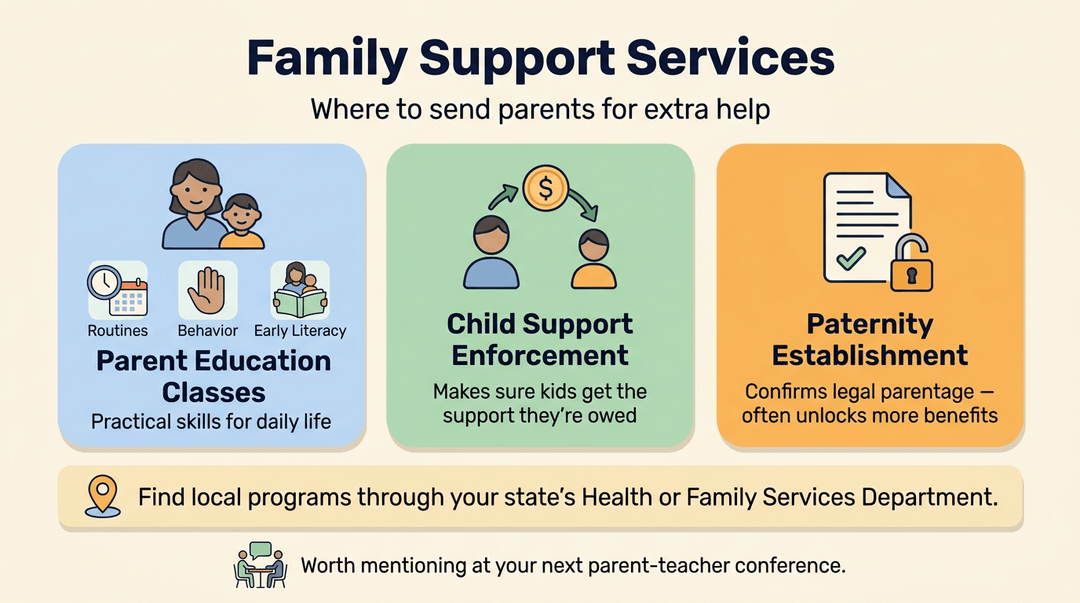
Many states offer parent education classes that build practical skills:
- managing routines
- handling behavior
- supporting early literacy at home
Alongside those, child support enforcement services help make sure kids receive the financial support they're owed, and paternity establishment support helps parents establish legal parentage, which often unlocks access to other benefits down the line.
Families can usually find local parenting programs through their state's health or family services department, so it's worth keeping that link handy for a parent-conference conversation.
Developmental screenings and family referrals
The Help Me Grow framework acts like a front door for families who aren't sure where to start.
It connects them to local resources based on what their child actually needs, and it offers developmental screenings that catch delays early, before they become bigger hurdles in a classroom setting.
Finding other family benefits and help
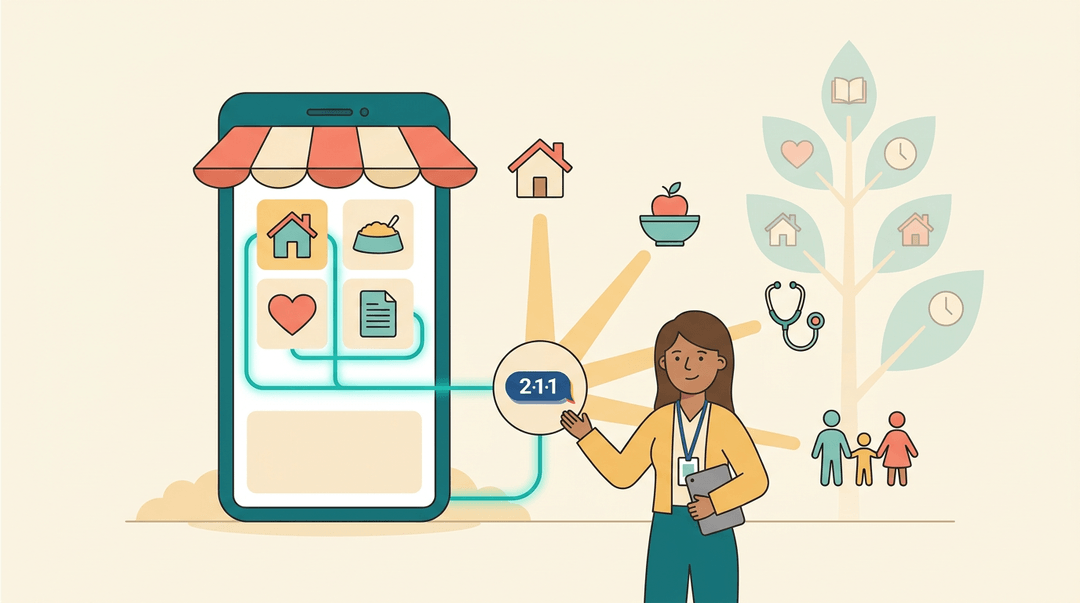
When a family needs something outside your wheelhouse, the 211 helpline is a fast way to find food, housing, or health support nearby.
For ongoing benefits, most states run a benefits application portal where families apply once and manage everything in one place:
- renewals
- updates
- account details
without repeating paperwork every time their situation changes.
Early education isn't one program or one age group. It's a whole system: types of care, quality standards, health support, and family resources, all working toward the same goal of helping young children grow.
Once you know how the pieces fit, the next step is putting that knowledge to work in your own classroom. Ready to build it out? Check out our Curriculum Planning feature to plan units, lessons, and standards across the whole school year.
References
- Early Brain Development and Health — archive.cdc.gov
Frequently asked questions
What is early education called?
Early education is the learning and care children receive from birth through age eight, spanning infant, toddler, preschool, and early elementary stages. It focuses on foundational skills for later development.
What is the early start program in Florida?
The Early Steps program in Florida is a statewide early intervention system for infants and toddlers, from birth to 36 months, with developmental delays or physical conditions that could lead to developmental delays. It provides services like therapies, special instruction, and family support to help children meet their developmental milestones.
What is an ecd program?
An ECD program, or Early Childhood Development program, encompasses the learning, care, and developmental support young children receive before kindergarten. This includes various educational settings, health services, and family assistance programs for children from birth through age eight.
What are the 4 stages of early childhood?
The four developmental stages of early childhood mentioned are infant, toddler, preschool, and early elementary. These stages cover the period from birth through age eight.
What are the types of early childhood education programs?
Types of early childhood education programs include Montessori, which features child-led and hands-on exploration, and play-based programs, which emphasize learning through guided play. Public pre-K and preschool programs, as well as Head Start, are also significant options.
How long is an early education degree?
The duration of an early education degree typically varies depending on the type of degree. An associate's degree usually takes two years to complete, while a bachelor's degree in early childhood education generally requires four years of full-time study. Master's and doctoral programs take additional time.
What do you mean by early education?
Early education refers to the learning and care that young children receive from birth through age eight, before they begin kindergarten. It is considered crucial for setting a strong foundation for a child's mental, social, and emotional development.
Is early education a hard major?
The difficulty of an early education major can vary for individuals, but it is generally considered a challenging and rewarding field. It requires a strong understanding of child development, teaching methodologies, and the ability to work with diverse learners. The curriculum often includes coursework in psychology, special education, and curriculum design.