Classroom Theme Ideas for Every Space, Style, and Curriculum

Jump to section
Think about walking into a friend's newly decorated living room. Before they say a word, the colors, the furniture, and the little touches already tell you who lives there.
A classroom works the same way: the theme you choose sets the tone before a single lesson begins.
A classroom theme is simply the visual thread that ties your space together, from bulletin boards to reading nooks.
In this post, we'll cover why themes matter, how to pick one that fits your students and your curriculum, and a step-by-step plan to bring it to life.
Why Classroom Theme Ideas Matter
Picking a classroom theme can feel like just another decorating decision, but it does more work than most teachers give it credit for. The right theme quietly shapes your budget, your students' first impression, and even how smoothly the year starts.
The real benefits of a theme
A good theme earns its keep in a few concrete ways:
- Simplifies decisions. Once you commit to a theme, every bulletin board, label, and bin has an obvious answer instead of an open-ended choice.
- Limits overspending. A defined look keeps you from buying one more cute thing that doesn't match anything else.
- Creates a cohesive, planned look. The room reads as intentional rather than thrown together over a hectic August weekend.
- Excites students for the year ahead. Walking into a space that feels designed for them, not just decorated, sets the tone before the first lesson.
- Shows off your creativity. A theme is a small, visible expression of your personality as a teacher.
- Parents and admin notice the effort. It signals care, even before they know your teaching style.
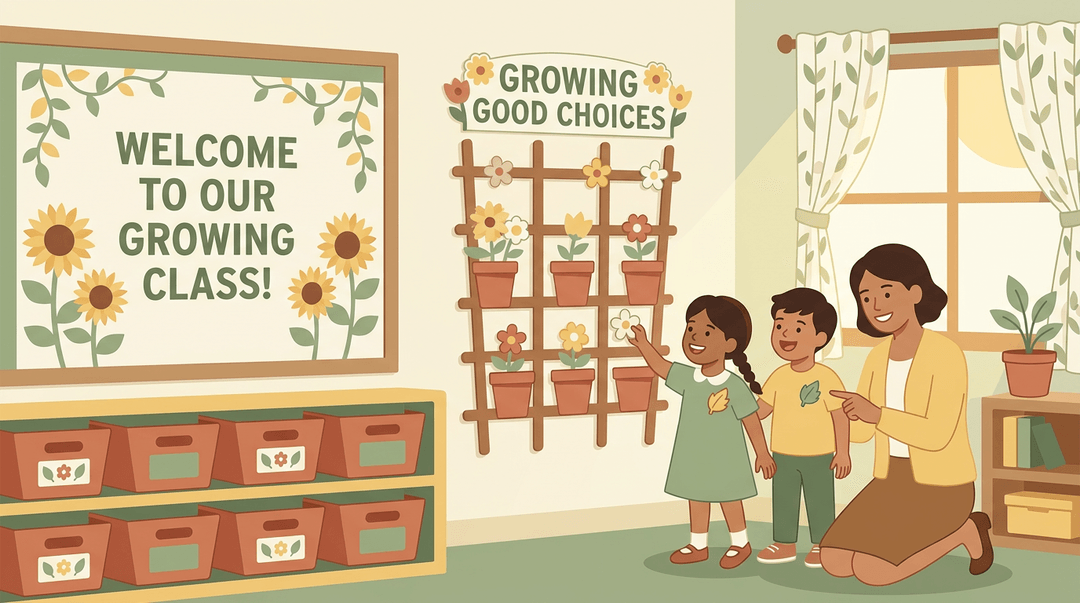
Many teachers get even more mileage by linking the theme to a behavior system, like a growth-themed classroom where students “plant” good choices on a garden chart.
As for what makes a good theme for the school year: pick something broad enough to stretch, like growth, exploration, or teamwork, so it still feels fresh in April instead of fading after the first month.
When skipping a theme makes sense
Sometimes a theme isn't worth the effort. Classroom management and organization matter more than decor for how the year actually runs, and a busy teacher can get the same visual payoff with a simple, consistent color scheme instead of a full concept.
If that's you, a less-is-more approach is a perfectly reasonable choice.
How to Pick a Classroom Theme
So how do you actually choose one? The right theme comes down to a few key factors:
- your grade level
- the subject you teach
- how much you (and your wallet) can commit to decor
- whether the theme can flex for a virtual or hybrid classroom
Get those answers first, and everything else falls into place.
Where to start planning your theme
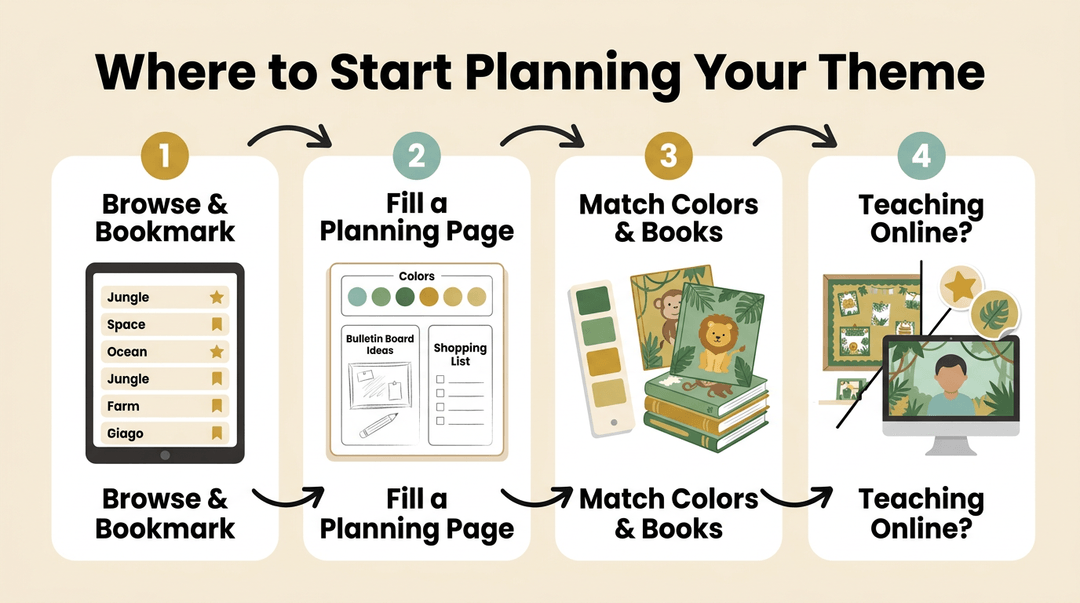
Before you buy a single banner, browse a full theme list to see what's out there. Bookmark a few favorites, then use a planning organizer page to sketch out colors, bulletin board ideas, and a rough shopping list in one spot.
From there, research color schemes and grab a few read-alouds that match your theme: a jungle unit pairs naturally with a green-and-gold palette and a stack of animal books.
If you're teaching online, pick a theme that translates to a virtual background and a few digital sticker rewards, not just wall space.
Finding decor without overspending
Inventory what you already have before buying anything new. Dollar stores and party stores are goldmines for cheap, on-theme extras like tablecloths, streamers, and dollar-bin bins.
It never hurts to ask family and friends, either: a relative's leftover party supplies can fill in the gaps for free.
Setting up without cluttering the room
Start with your bulletin board basics: a clean border and a title, then build out from there. Resist the urge to fill every inch. A packed room can overwhelm students and bury the message you're trying to send.
Always leave space for student work; it's the best decor you have. A small, laminated cheat sheet by the door (routines, seating, theme quirks) keeps a substitute confident, even on a day you're not there.

Your Step-by-step Classroom Setup Plan
You've browsed the ideas; now let's get one on the walls. This plan takes you from choosing a theme to a finished, refreshable room in three weeks, without blowing your budget in week one.
Match the theme to your grade band
Start with the age group, not the Pinterest board. These three pairings hold up all year:
| Grade band | Theme that works | Anchor piece |
|---|---|---|
| Preschool | Bright animal theme | Paper-vine door with animal cutouts |
| Elementary | Adventure and travel | "Where we're headed" world map board |
| Middle school | STEM and tech | Circuit-board border, "Now loading..." banner |
Budget the decor before you buy
Spend in this order, and stop when the room feels done:
- Start with free and DIY options.
- Butcher paper backdrops, hand-cut letters, printables you already own.
- Fill the gaps with dollar-store staples.
- Grab: bulletin borders, plastic tablecloths for backdrops, bins, clothespins, ribbon.
- Invest last in one reusable branded decor set.
- Choose pieces that survive years: a banner, calendar set, and matching labels.
💡 Tip: Put your money into things hands touch daily (bins, labels, job cards), not wall filler. Paper fades; a labeled bin works for five years.
Roll it out week by week
You don't need the room finished on day one. Build it in three passes:
| Week | Focus | What done looks like |
|---|---|---|
| 1 | Bulletin board basics | Background, border, and title banner up |
| 2 | Seating and jobs chart | Desks grouped; theme-named jobs posted |
| 3 | Add student work | First assignments fill the empty board space |
Leave the middle of your week 1 board deliberately blank: that's the space student work will claim. In week 2, fold the theme into your jobs chart with renamed roles, like "Trail Guide" for line leader in an adventure room.
Example: An elementary teacher running the travel theme hangs a bare world map in week 1, names table groups after continents in week 2, then pins each student's "postcard about me" to the map in week 3. The room fills up as the students do the work.
Refresh it mid-year
Around the winter slump, three small moves make the room feel new without a redo:
- Swap seasonal accents. Paper snowflakes on the jungle vines; fall leaves on the map.
- Rotate the student showcase space. New work every three to four weeks; put the swap date on your calendar.
- Re-energize with a new banner. Same theme, fresh message: trade "Welcome aboard!" for "Look how far we've traveled."
Once the walls are set, keep rosters, seating charts, and weekly routines organized alongside your new theme with EMStudio's classroom management tools.
Themes Tied to Your Curriculum
A theme doesn't have to live apart from your lessons. When your decor echoes what you're actually teaching, the room itself becomes a teaching tool, not just a backdrop.
STEM and technology theme ideas
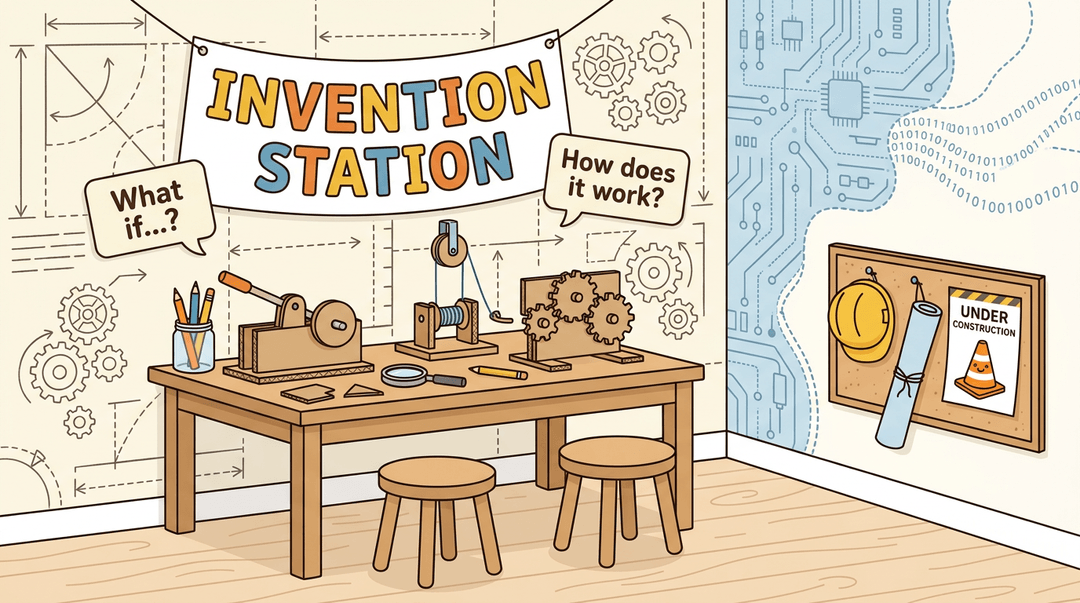
An inventors/STEM theme turns your walls into a hall of curiosity: gears, blueprints, and "what if" questions posted above student workstations.
For example, a fifth-grade teacher launching a unit on simple machines might set up an "Invention Station" corner where kids test their own contraptions between lessons.
A technology or computer lab theme leans into circuit boards, binary code patterns, and screens-as-windows decor, useful for reinforcing digital literacy vocabulary at a glance.
A construction theme works similarly: hard hats, blueprints, and "under construction" signage make a natural home for a classroom still building its skills, literally and figuratively.
Reading and literacy themes
A reading or books theme is the classic choice for good reason: cozy nooks, book-spine borders, and character cutouts make reading feel like a destination, not a chore.
A genre-based fairy tale theme takes it further, dressing the room in castles, forests, and "once upon a time" banners that double as anchor points for lessons on story structure and genre conventions.
Science and nature themes
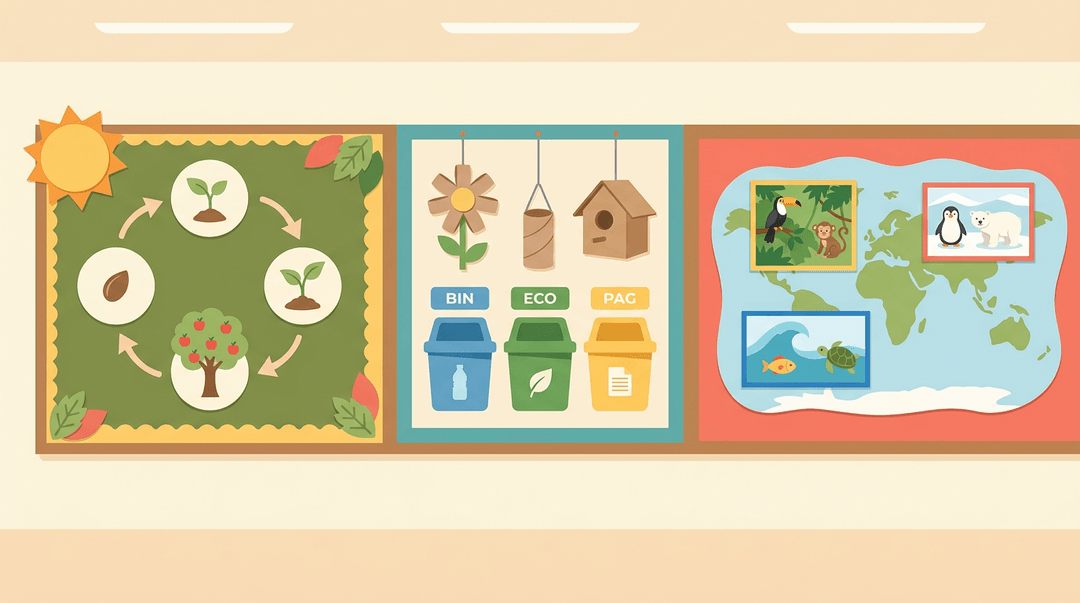
An apple or garden life-cycle theme suits early elementary science beautifully, tracking seed to sprout to harvest right on the wall. A recycling or eco theme reinforces sustainability lessons with sorted-bin displays and repurposed materials as decor.
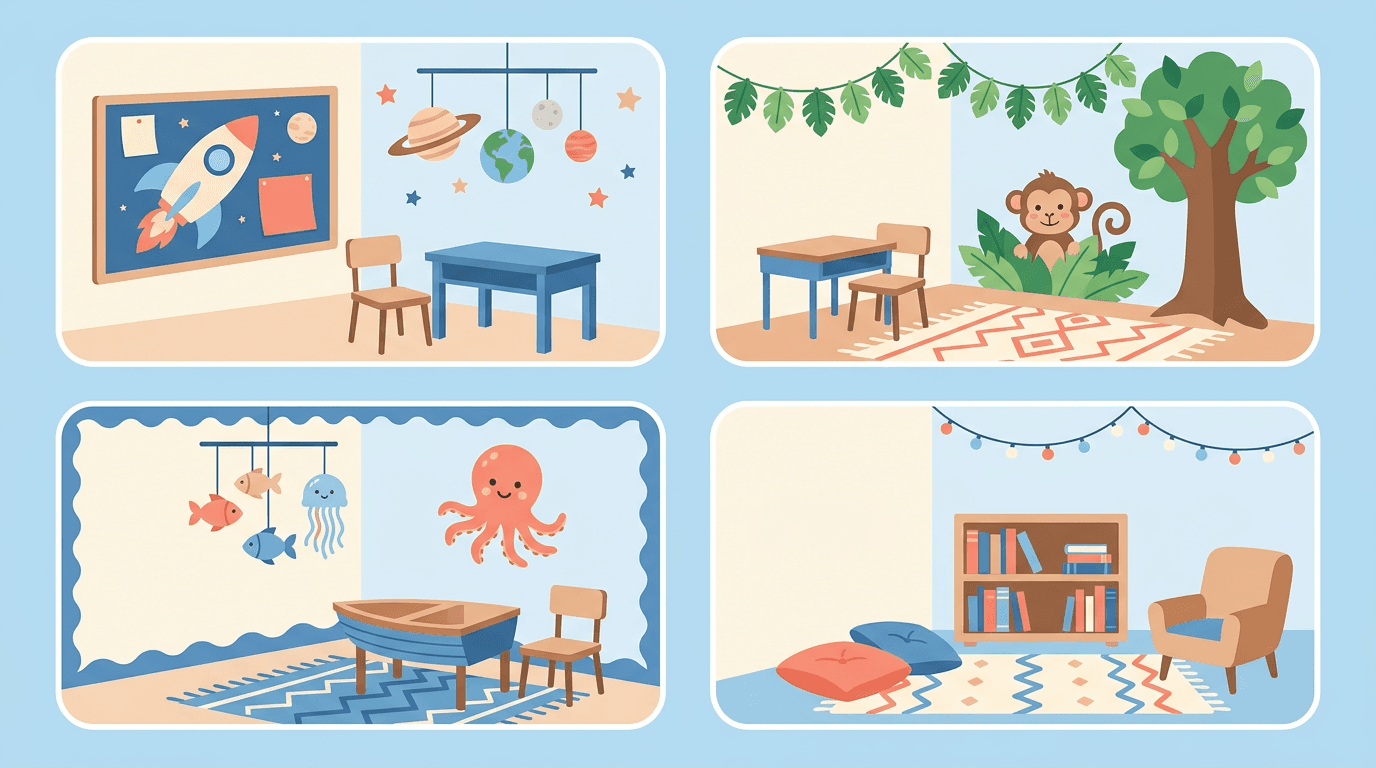
And biome-based animal tie-ins (rainforest, ocean, arctic) let you match your classroom's creatures to whatever ecosystem unit you're teaching next.
Animal Themes for Your Classroom
Nothing warms up a room faster than a favorite creature on the wall, and animal themes give you the widest menu of any classroom style: pick one animal, build a whole ecosystem, or let your students help name the herd.
Picking a favorite animal theme
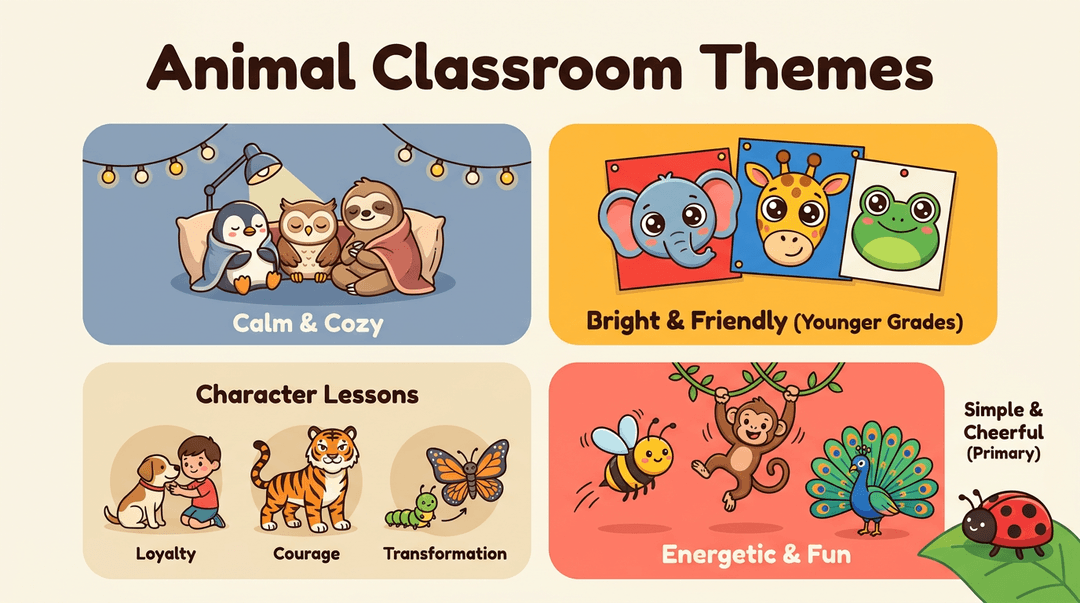
Some animals just make natural classroom mascots. Penguins, owls, and sloths bring a calm, cozy feel: think huddle-and-waddle bulletin boards or a quiet reading nook.
Elephants, giraffes, and frogs work well for younger grades that love bright colors and big, friendly faces. Dogs, tigers, and butterflies lean into loyalty, courage, and transformation, themes you can tie straight into character lessons.
Bees, monkeys, and peacocks bring energy and personality, while ladybugs are a reliable go-to for a simple, cheerful primary-grade look.
Bigger animal and nature settings
If one animal doesn't feel like enough, build an entire habitat instead:
- Jungle safari. Vines, animal print, and an explorer vibe that carries the whole year.
- Farm. Barns, tractors, and friendly livestock: a natural fit for younger classrooms.
- Under the sea. An ocean theme turns your room into a coral reef of color.
- Rainforest retreat. Layers of green and hidden critters reward close looking.
- Desert biome. Cacti and warm, sandy tones make for an easy, low-clutter look.
- Tropical island. Palm leaves and bright hues bring a permanent-vacation feel.
Giving your class a group name
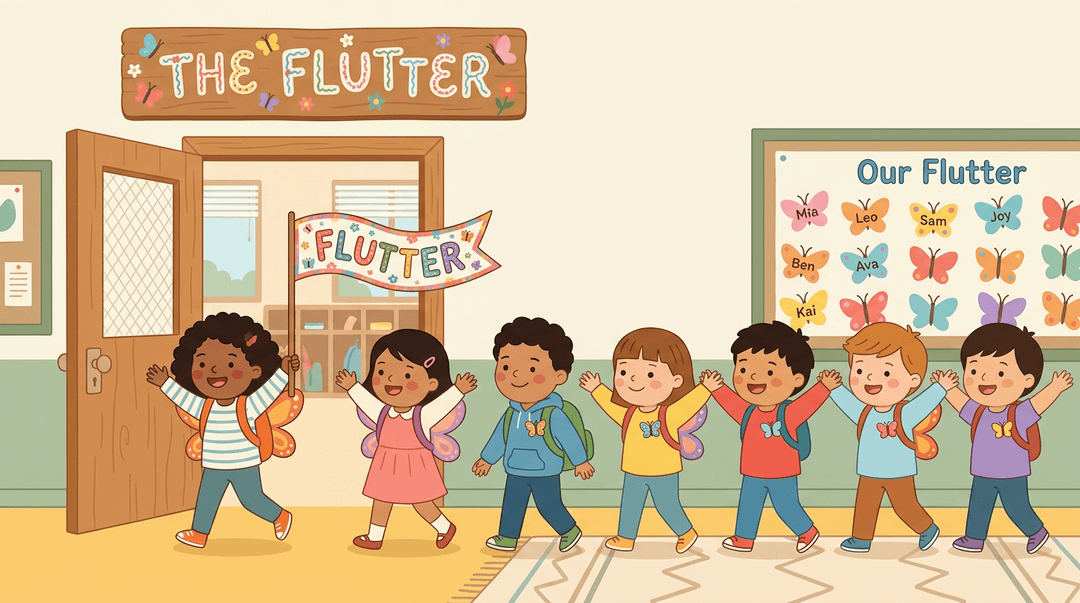
Once you've picked an animal, give your students a group identity to match. A penguin room might call itself a colony; a butterfly room becomes a flutter.
Small, fun class nicknames like these build instant belonging, and they turn roll call, hallway lines, and class shout-outs into part of the theme instead of an afterthought.
What Are Some Unique Classroom Themes?
So what are some unique themes for a classroom that go beyond the standard apple-and-pencil decor? Plenty, once you sort them by what excites your students most: a place to go, a story to step into, a hobby to chase.
Below, we've grouped a full sweep of ideas, from travel to ancient Rome to detective work, so you can find the one that fits your room.
Travel and exploration themes
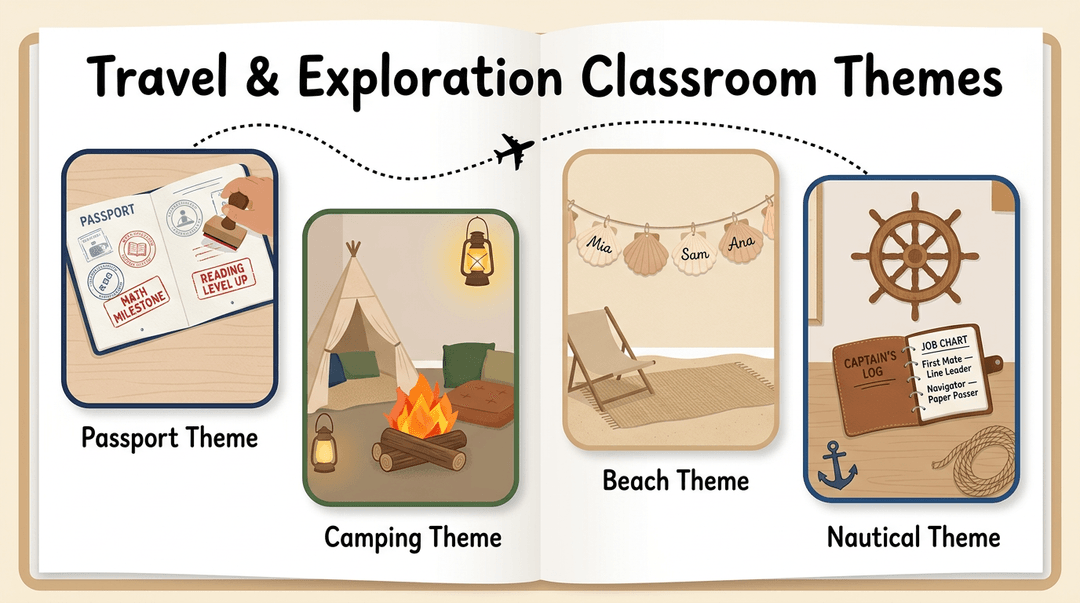
Travel and exploration themes turn the classroom into a passport waiting to be stamped:
- Travel the map/passport theme. Give each student a passport booklet and stamp it as they hit reading or math milestones.
- Camping theme. Swap desks for a "campsite" complete with a fake fire pit and a lantern-lit reading nook.
- Beach theme. Cool the room down with sand-colored reading corners and shell-shaped name tags.
- Nautical theme. Lean into ships, anchors, and a captain's log for classroom jobs.
Fantasy and storybook themes
Fantasy and storybook themes hand students a built-in reason to imagine:
- Wizards and sorcery theme. Turn the room into a spell-casting academy, with house points standing in for classroom rewards.
- Fairy tales and castles theme. Dress the reading corner as a turret and frame assignments as "quests."
- Wizard of Oz theme. Paint a yellow brick road across the floor leading to a reading rainbow.
- Dinosaurs theme. Fill bulletin boards with fossils and turn a supply shelf into a "dig site."
Space sci-fi and entertainment themes
Space sci-fi and entertainment themes work well when you want big visual impact:
- Outer space theme. Fill the ceiling with planets and turn each table into a "mission control" pod.
- Hollywood/movie star theme. Roll out a red carpet for student presentations and spotlight a "featured" learner each week.
- Robots theme. Swap desks for "charging stations" and reward effort with gears instead of stickers.
- Circus/carnival theme. String up pennant flags and turn learning centers into "big top" acts.

History and culture themes
History and culture themes give older students a reason to dig into research they'd otherwise skim:
- Ancient Rome/Greece theme. Cover walls with columns and togas, and frame classroom leadership as a "senate."
- Western theme. Trade a corner for a "saloon" reading nook and hand out sheriff badges for good behavior.
- Patriotic theme. Lean on red, white, and blue decor and frame the room as a mini "town hall," a natural fit around civics units.
Themes built around hobbies and interests
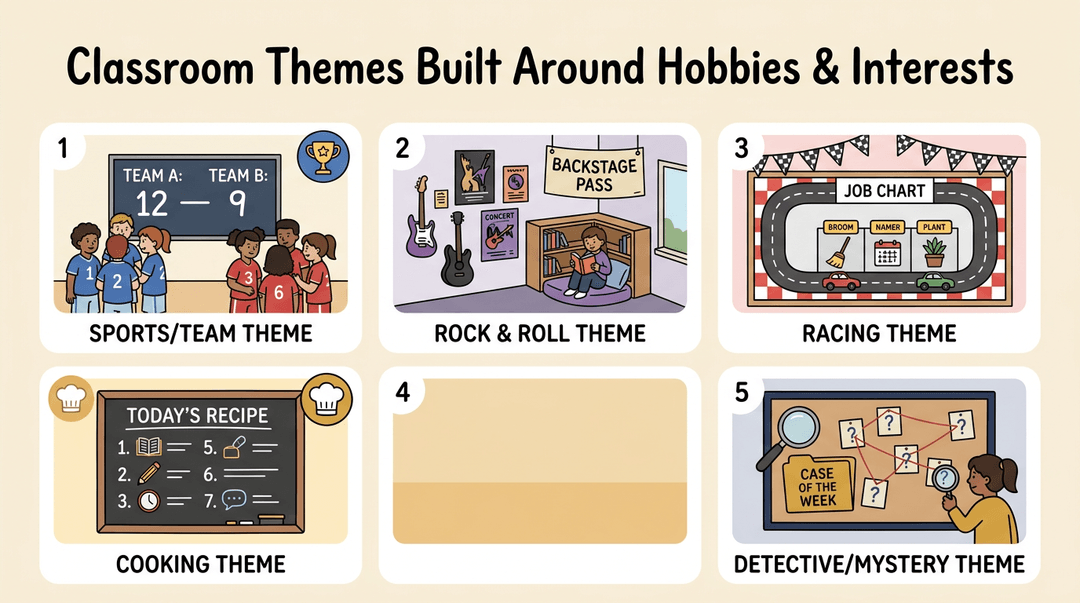
Themes built around hobbies and interests meet students where their passions already are:
- Sports/team theme. Divide the class into "teams" that earn points together.
- Rock and roll theme. Decorate with guitars and concert posters, and turn the reading corner into a "backstage" pass.
- Racing theme. Use checkered flags and a "pit crew" system for classroom jobs.
- Cooking theme. Turn the day's objectives into a "recipe" students follow.
- Detective/mystery theme. Have students solve a weekly classroom "case" tied to that week's lesson.
Mindset and Social-emotional Themes
A classroom's walls can shape how students see themselves and each other before a single lesson starts. These mindset and social-emotional themes work best when the decor reflects every student actually sitting in the room.
Kindness and growth mindset themes
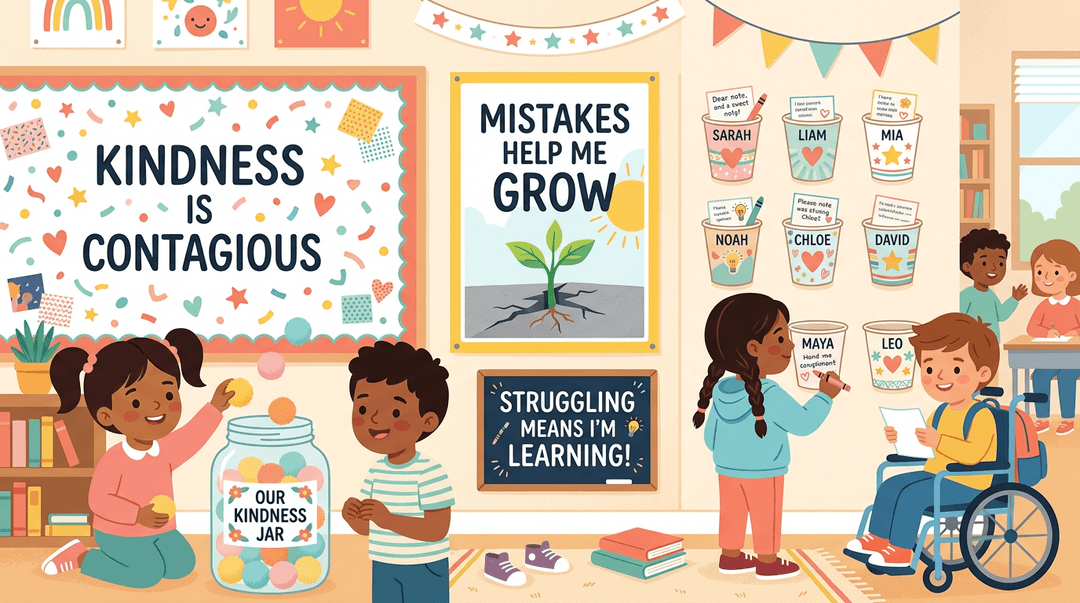
A kindness or confetti theme wraps the room in bright colors and encouraging language: bulletin boards reading "Kindness is contagious," paired with a jar that fills with pom-poms whenever a student catches a classmate being kind.
A growth mindset focus centers on phrases like "mistakes help me grow," reminding students that struggling with a problem is part of learning it, not proof they can't.
The fill your cup concept builds on the idea that everyone carries an invisible cup that needs topping up with kindness: a paper cup per student that classmates decorate with compliments makes the idea visible all year.
Whatever version you pick, make sure the images and language reflect the students actually in the room.
Teamwork and cooperation themes
A sports-based teamwork theme uses jerseys, pennants, or a "Team [Room Number]" banner to frame the class as one squad working toward a shared goal.
For example, a fifth-grade teacher might rotate weekly "team captains" to lead a cooperative task, tying the decor to an actual routine.
A cooperation emphasis skips the sports angle and centers on group problem-solving instead, often through linked-hands art, puzzle pieces, or a class contract students sign together.
Either way, the theme lands best when it's paired with real partner or group work, not just decor on a wall.
How to Make Your Classroom Cozy
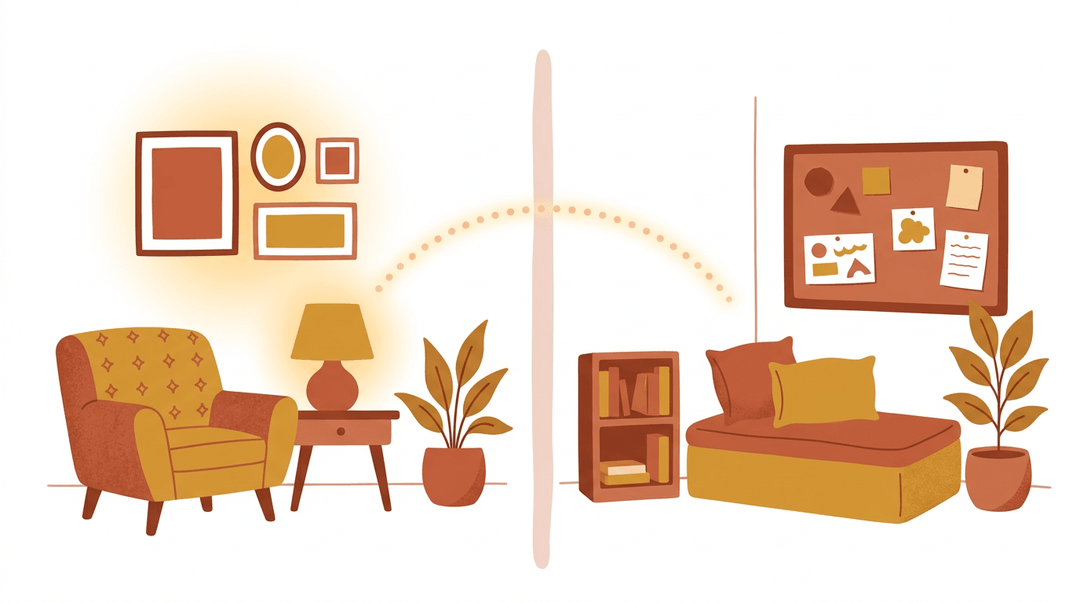
A cozy classroom isn't about spending a fortune. It's about layering a few thoughtful touches: warm colors, personal accents, and a display or two that feels lived-in rather than sterile. Think of a first-year teacher walking into a bare room in August.
A roll of patterned border, a soft-toned poster, and a name tag on every desk can turn that room into somewhere students want to be by the first bell.
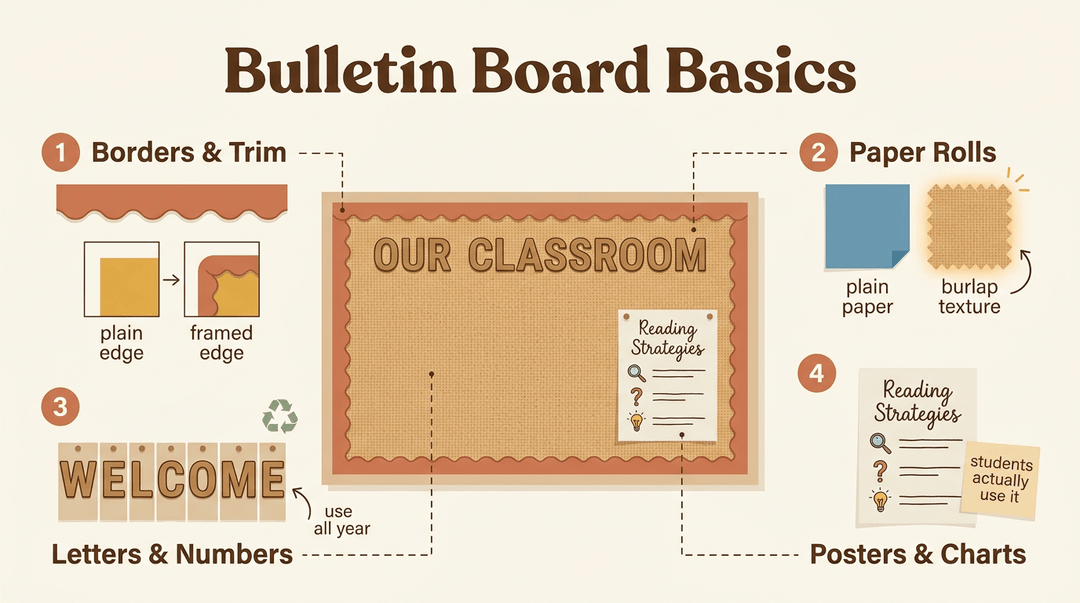
Bulletin board basics you'll need
Every cozy room starts with the basics on the wall:
- Borders and trim. Scalloped or wavy trim softens hard edges and frames a board instantly.
- Bulletin board paper rolls. A neutral or textured backdrop (think burlap or wood-grain) reads warmer than plain construction paper.
- Letters and numbers sets. Reusable sets save prep time all year.
- Posters and charts. Choose ones that double as decor and instruction, like an anchor chart students actually reference.
Seasonal and celebration decor
Rotating decor keeps the room feeling fresh without a full redo:
- Spring, summer, and fall sets to swap in with the seasons.
- Birthday charts that make every student feel noticed.
- Welcome banners for the first day and new arrivals.
- Holiday-specific accents used sparingly, so they feel special rather than cluttered.
Small accent pieces that add charm
The smallest pieces often make the biggest difference:
- Dimensional flower accents for pops of color on flat boards.
- Name tags and name plates that give students ownership of their space.
- Motivational stickers for folders, charts, and work returned with a little encouragement.
Decorating with Color and Pattern
Color and pattern aren't just decoration, they set the mood before a single lesson starts. Get the palette right and the room feels calm and inviting from the first bell.
Choosing a single color scheme
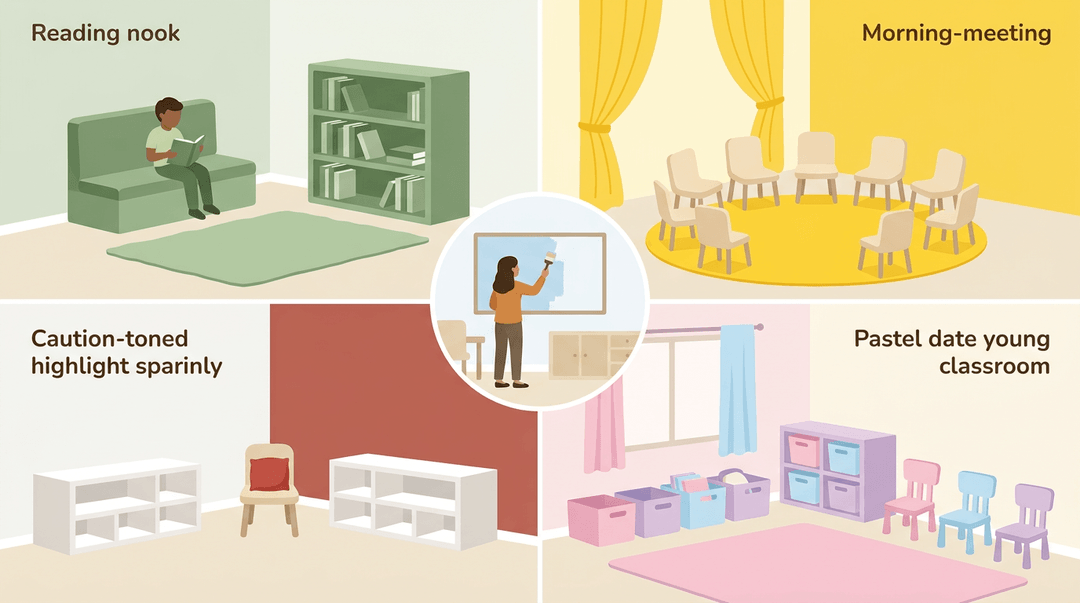
Picking one color for your whole room keeps things simple and cohesive, and each shade sends a different signal:
- Calming green. Good for a reading corner or a classroom that tends to run loud.
- Cheery yellow. Bright and energizing, ideal for morning meetings.
- Muted red. Use it sparingly since red can read as a caution color, better as an accent than a wall-to-wall choice.
- Pink, blue, and purple. Softer options that work well for younger grades who respond to gentler tones.
Think of a kindergarten teacher who paints one bulletin board pale blue and keeps everything else neutral: the room feels tidy without looking sparse.
Patterned and abstract design options
If a single color feels flat, pattern adds texture without overwhelming the space:
- Chevron, tartan, and dots for a classic, structured look.
- Boho rainbow and geometric prints for a playful, modern feel.
- Retro vibes and watercolors for a softer, artistic touch.
Mix one pattern with a neutral background rather than layering several at once. That's the difference between purposeful pattern and visual clutter.
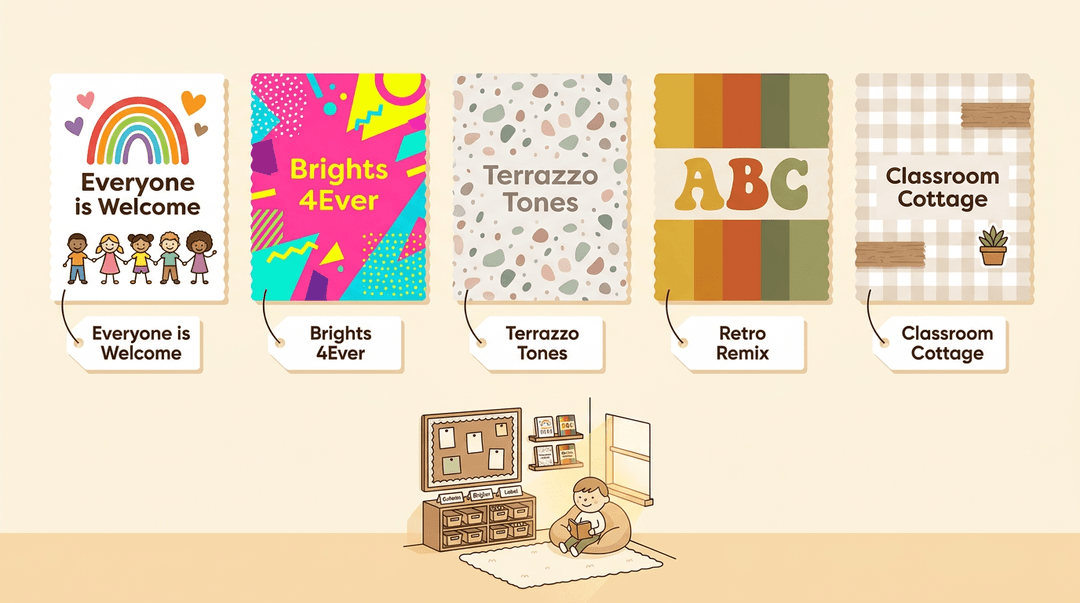
Popular branded decor collections
For teachers who'd rather buy a coordinated set than piece one together, several branded collections do the matching for you:
- Everyone is Welcome, built around inclusive, community-minded messaging.
- Brights 4Ever, a bold, high-energy palette.
- Terrazzo Tones, a muted, modern take on speckled stone patterns.
- Retro Remix, a nod to vintage color and type.
- Classroom Cottage, a cozy, farmhouse-style theme.
Grabbing one collection means your bulletin boards, labels, and borders arrive already matched: fewer decisions, fewer mismatched corners.
Whether you land on a jungle corner, a growth-mindset wall, or a soft, cozy reading nook, the best classroom themes do one thing well: they make your students feel like the room was built for them, not just decorated for a photo.
That's a small shift with a big payoff in engagement and calm.
Once your theme is set, the real work is keeping everything else just as organized. Ready to bring that same structure to your rosters and timetables? Check out our post, Classroom Management, to keep your classroom running as smoothly as it looks.
Frequently asked questions
What is a good theme for a school year?
A good theme for a school year is one that is broad and flexible, allowing it to remain fresh throughout the entire academic period. Themes like growth, exploration, or teamwork are effective because they can be integrated into various lessons and activities, staying relevant from the beginning of the year until the end.
What are some unique themes?
Unique classroom themes often revolve around categories like hobbies, specific historical eras, or imaginative concepts. Examples include a "Detective/Mystery" theme, "Ancient Rome/Greece," "Wizards and Sorcery," or "Robots." These themes offer creative ways to engage students and make learning more interactive.
How to pick a classroom theme?
To pick a classroom theme, consider your grade level, the subjects you teach, and your budget for decorations. It's also important to think about whether the theme can adapt to virtual or hybrid learning environments. Starting with these factors helps narrow down choices and ensures the theme is practical and relevant.
How to make your classroom cozy?
Making your classroom cozy involves layering thoughtful touches such as warm colors, personal accents, and displays that feel inviting. Begin with comfortable bulletin board basics like patterned borders and soft-toned paper, then add small accent pieces like dimensional flowers or personalized name tags. Rotating seasonal and celebration decor also helps keep the room fresh and welcoming.