Responsive Classroom Explained: What It Is and How It Works

Jump to section
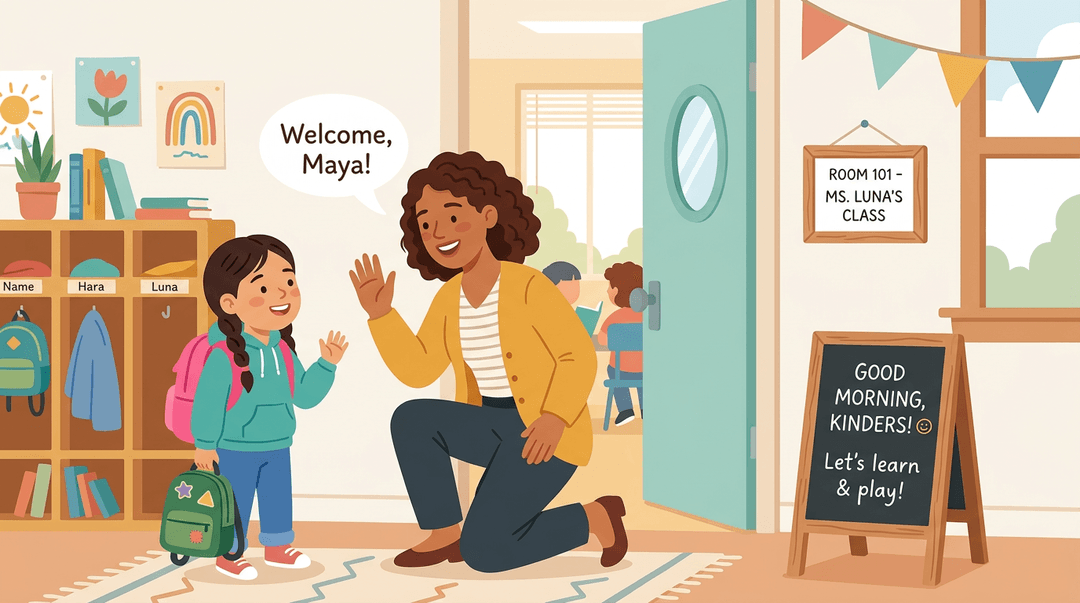
Think about the last time you walked into a room where you immediately felt welcome. Maybe someone greeted you by name, the space was set up so you knew exactly where to go, and the first few minutes put you at ease before anything serious started.
You didn't have to wonder if you belonged. You just knew.
That feeling is what Responsive Classroom aims to create for students every single day.
It's a research-backed approach to teaching that ties social-emotional learning directly to academic success, built on the belief that how students feel in a classroom shapes what they're able to learn there.
In this post, we'll walk through what Responsive Classroom actually means, the practices that bring it to life, how it plays out across grade levels, and how you can start putting it to work in your own classroom.
What Responsive Classroom Means and Why It Works
What actually happens in a classroom where students feel safe, engaged, and ready to learn? More often than not, there's a deliberate framework behind it.
Responsive Classroom is a student-centered, evidence-based approach that integrates social, emotional, and academic learning, and it organizes that integration across four domains:
- Engaging academics
- Positive community
- Effective management
- Developmentally responsive teaching
What does a Responsive Classroom look like?
A Responsive Classroom puts students at the center.
Instead of reacting to misbehavior after the fact, teachers use proactive discipline: building routines, setting clear expectations, and creating the kind of safe, joyful environment where behavioral issues are less likely to take root in the first place.
Social and behavioral learning isn't separate from academics here. It's woven into every part of the day.
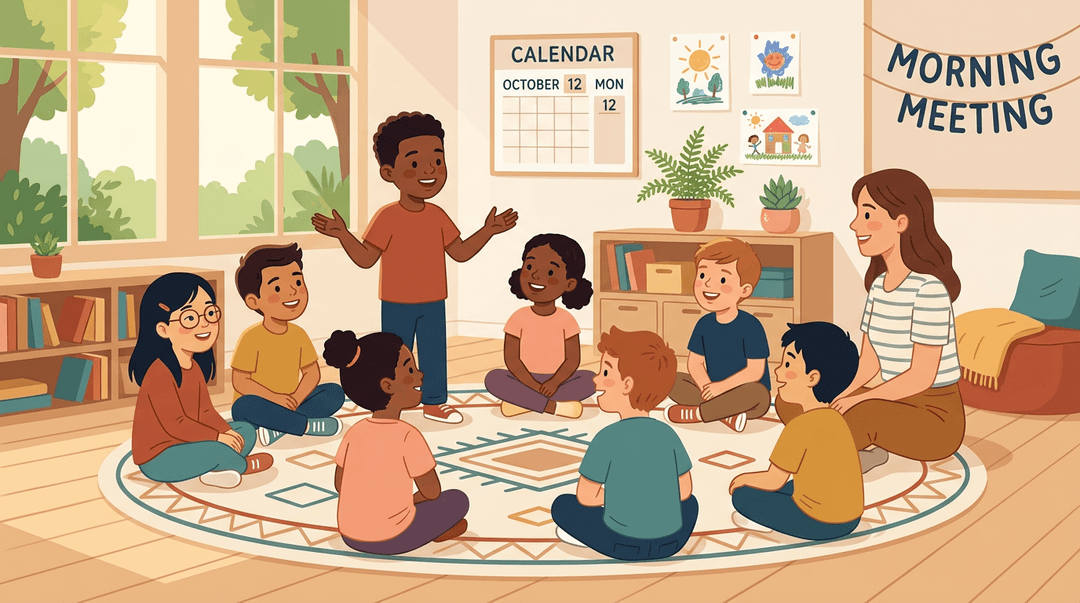
For example, a fourth-grade teacher might open each morning with a structured meeting that builds community, practices listening skills, and eases students into focused work, all before the first math problem appears.
The guiding principles behind the approach
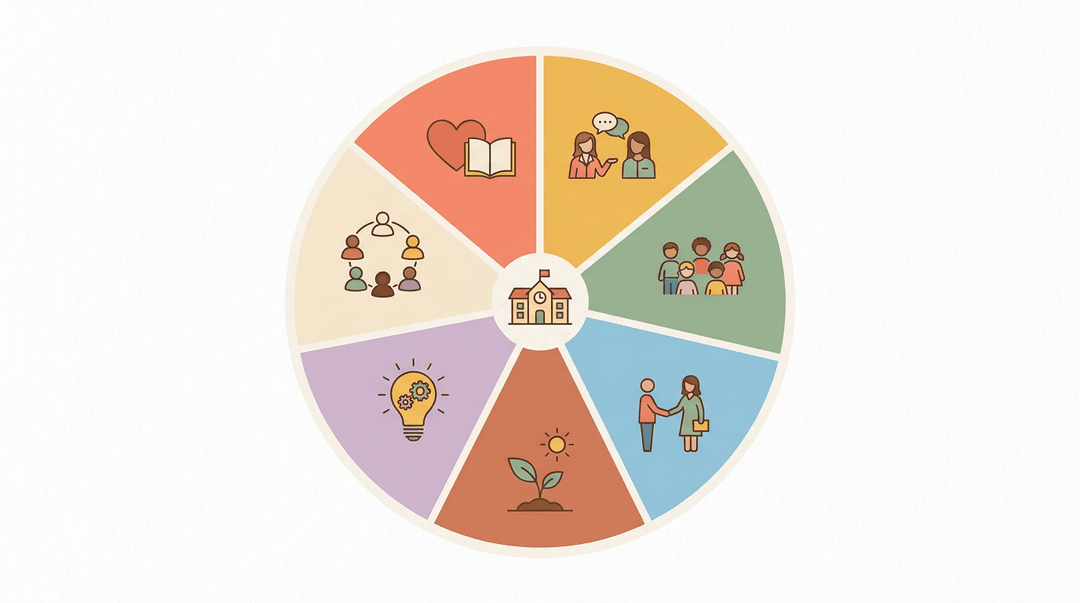
Responsive Classroom rests on seven core guiding principles. A few of the most important:
- SEL belongs alongside academics, not after them.
- Adult collaboration shapes school culture: teachers working together matters as much as any single lesson.
- Knowing your students means understanding them culturally and developmentally, not just academically.
- Family partnership is part of the model, not an optional add-on.
Taken together, these principles describe a school-wide commitment, not just a set of classroom tricks.
Skills Students Build Along the Way
Responsive Classroom isn't just about managing a room. It's about building the kind of students who can handle what the room throws at them. Over time, the approach develops a clear set of skills: social, emotional, and academic.
Social and emotional skills the approach develops
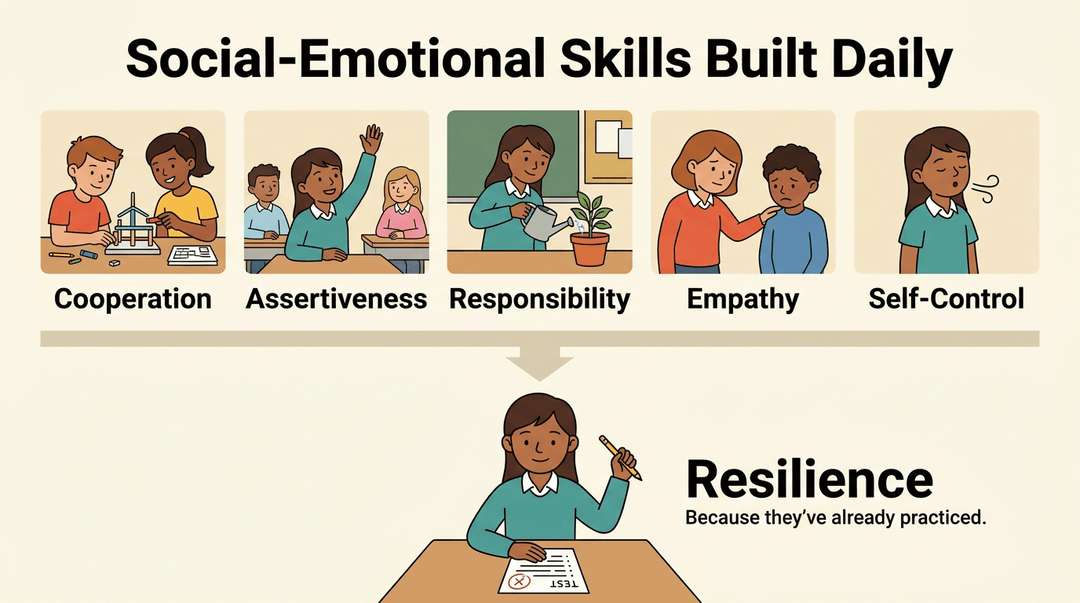
The framework targets five core social-emotional competencies directly:
- cooperation
- assertiveness
- responsibility
- empathy
- self-control
Students practice navigating emotions and social situations as part of the daily classroom routine, not as a one-off lesson when conflict breaks out. That regular practice builds something harder to teach: resilience.
When a student hits a challenge, a project that stalls, a peer disagreement, a test that doesn't go well, they've already rehearsed the skills to work through it rather than shut down.
Academic gains tied to the approach
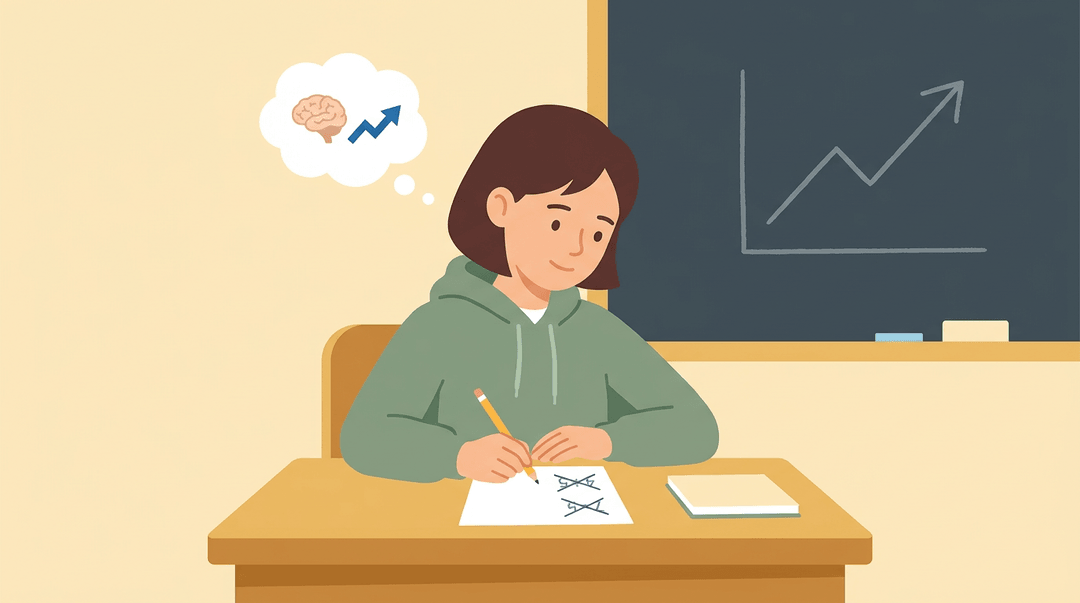
The social-emotional foundation doesn't stay separate from academics. It feeds into them. Students develop an academic mindset: the belief that effort matters and that struggle is part of learning, not a sign to give up.
They build practical learning strategies, on-task habits, and the kind of behavioral consistency that makes sustained work possible.
That translates into real outcomes. According to California Learning Resource Network, Responsive Classroom leads to higher student engagement and stronger academic performance overall.
And research published by Responsive Classroom found that students in these classrooms showed greater increases in reading and math test scores, had better social skills, and felt more positive about school, while their teachers reported feeling more effective and more satisfied in their work.
The skills build on each other. Better self-regulation means more time on task. More time on task means more learning.
Core Practices Every Responsive Classroom Uses
Responsive Classroom isn't a single strategy. It's a set of practices teachers use every day, and four of them show up in almost every RC classroom: Morning Meeting, Interactive Modeling, positive language, and collaborative structures.
What are the 4 components of morning meeting?
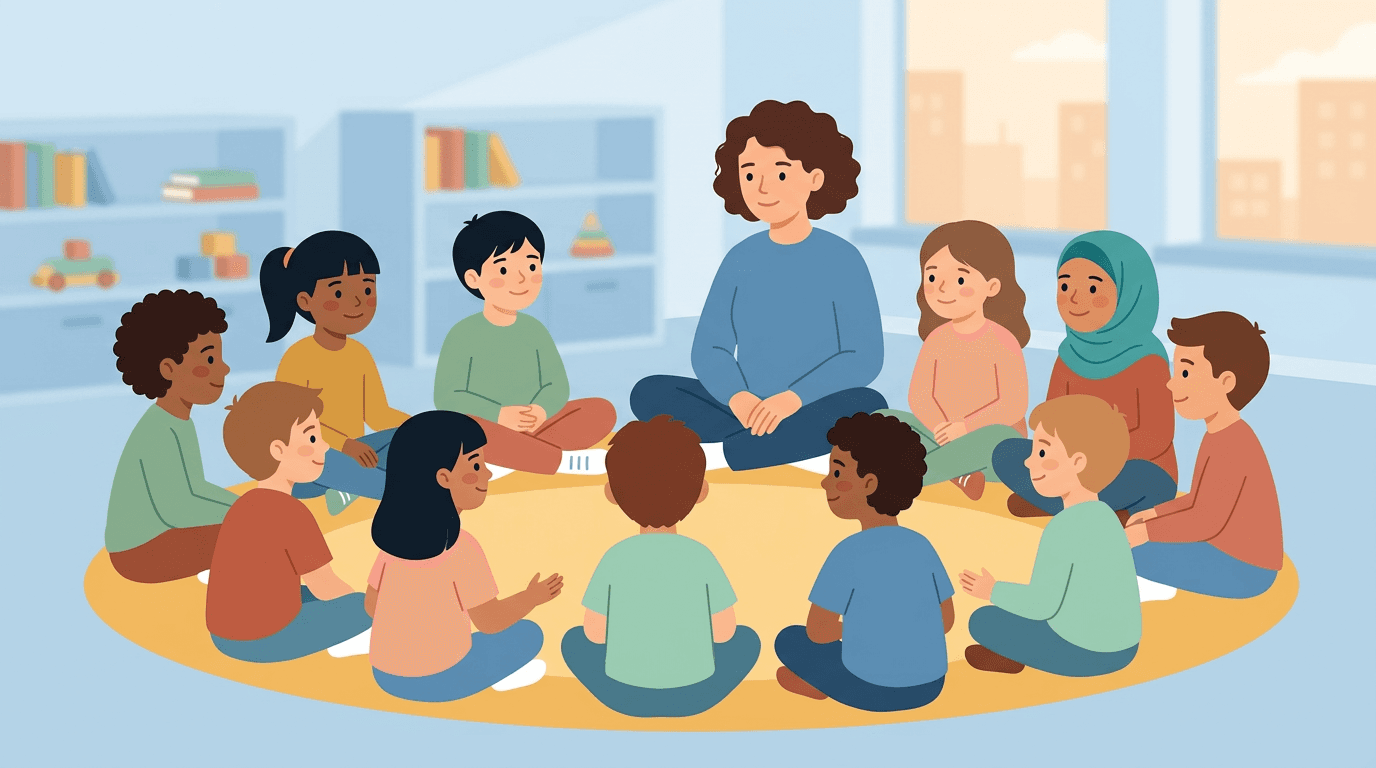
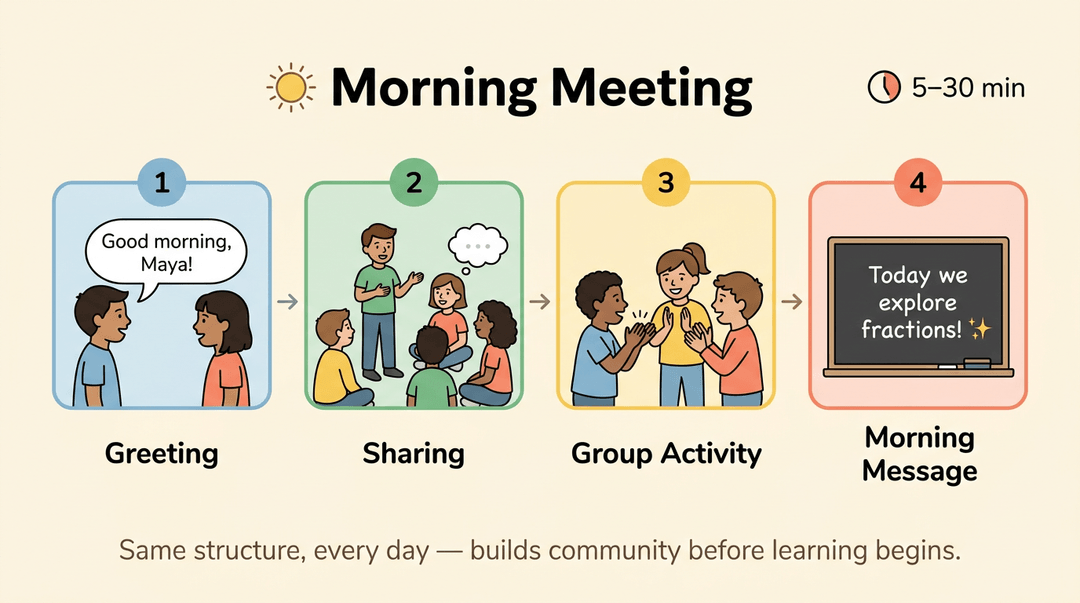
Morning Meeting is a daily gathering of 5 to 30 minutes that builds the kind of social climate where learning can actually happen. It follows four components, in order:
- Greeting — students address each other by name, building personal connection
- Sharing — one or a few students share personal news, practicing listening and responding
- Group activity — a brief, whole-class team-building exercise
- Morning message — a short written note from the teacher that previews the day
You can adjust the length and activities to fit your grade level and classroom culture. A kindergarten meeting looks different from a fifth-grade one, but the structure holds.
These four components aren't rigid steps so much as a reliable container for community-building.
And when something goes sideways later in the day, having that positive morning foundation makes logical consequences easier to apply: students already feel respected, so a calm, matter-of-fact response to misbehavior lands differently than it would without that context.
How interactive modeling teaches routines
Telling students what to do rarely sticks. Interactive Modeling is a seven-step process where the teacher demonstrates the expected behavior, students notice what they saw, then a student models it again while the class observes.
It covers both academic routines (how to handle materials) and social behaviors (how to disagree respectfully). The teacher shows the exact actions expected, not a general idea of them. Students see it, name it, practice it, and then do it.
Why your words and tone shape student behavior
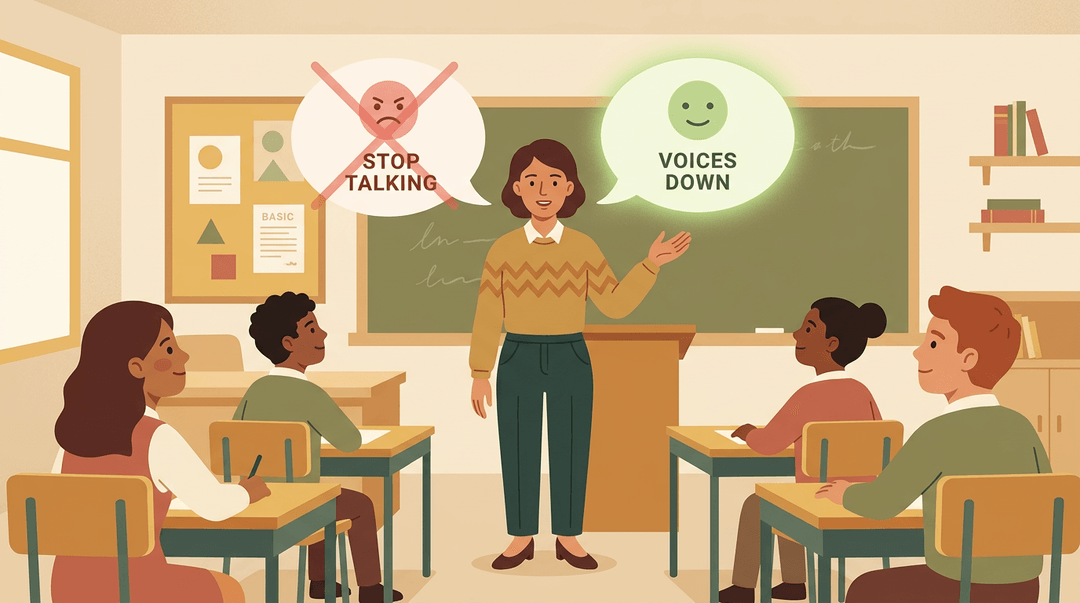
Intentional, positive language keeps the focus on what students should do rather than what they shouldn't.
Tone carries as much weight as vocabulary: a calm, direct voice signals that you expect cooperation, and it models the kind of communication you want students to use with each other.
Small shifts, like saying "Voices down" instead of "Stop talking," make the expectation concrete and forward-looking.
Collaborative structures that keep students active
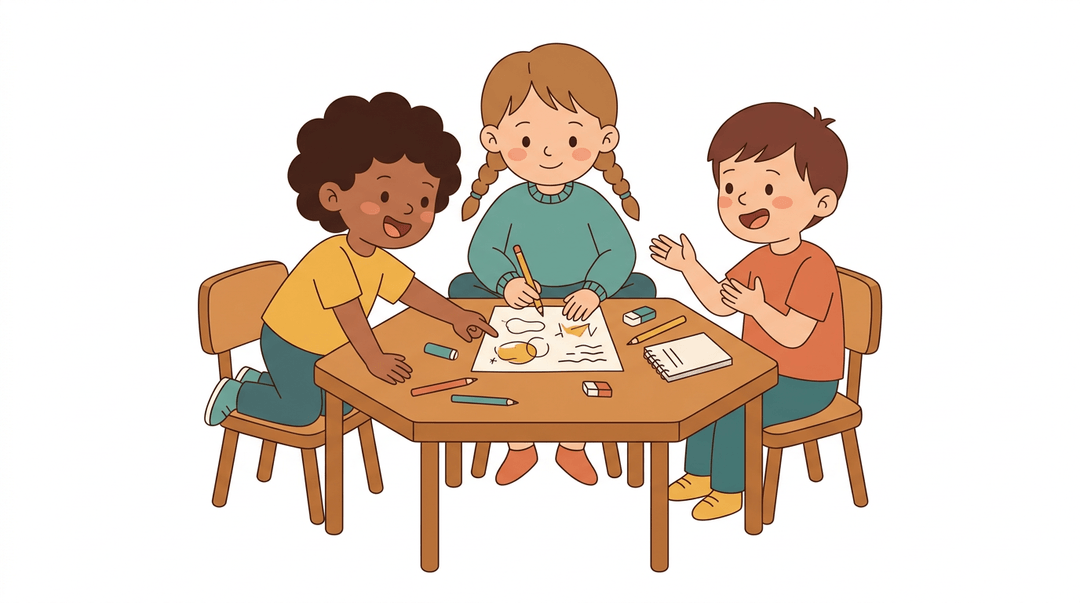
RC lessons lean on hands-on, collaborative work in small groups, with students having genuine choice in how they engage.
This isn't just about engagement for its own sake: when students work together on a real task, they practice the social skills Morning Meeting introduces. Choice and autonomy reduce the low-level resistance that drains a classroom.
Teaching whole-body listening to cut distractions
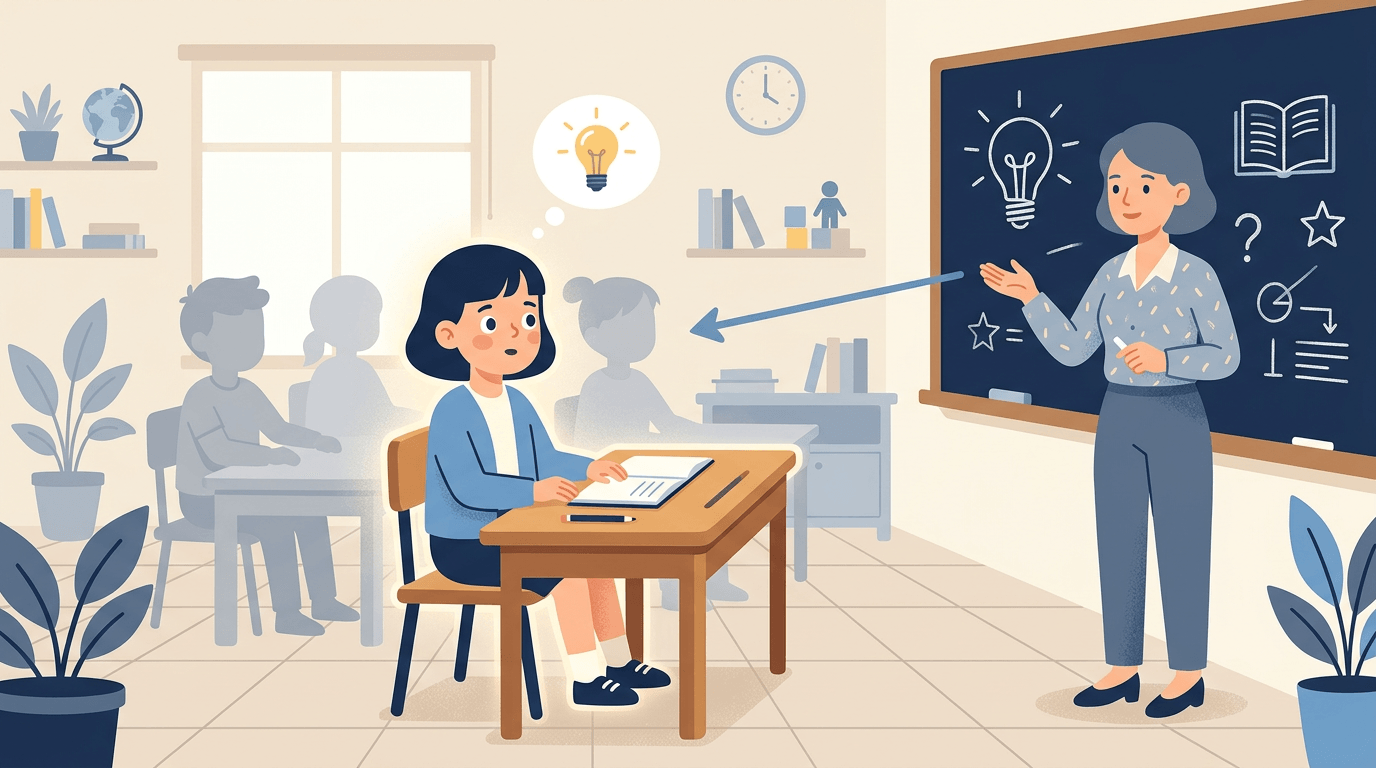
Whole-body listening makes attention visible. Students learn to coordinate eyes, hands, feet, and posture as explicit signals of focus. When you can see who's with you, you can redirect quietly before a distraction spreads.
It also gives students a concrete, learnable skill rather than a vague instruction to "pay attention."
Quick-start Checklist for Your Classroom
You don't roll out Responsive Classroom all at once. This is a phased launch: lock the foundation in week one, build community over the next two, then settle into the rhythms that keep it alive all year.
Week 1: lay the foundation
Three moves, in order. Each is small on purpose, so the routines actually stick.
- Teach one routine via Interactive Modeling
- Pick a high-traffic one: lining up, or turning in work.
- Show it, name what students notice, let a student model, then practice.
- Pick a high-traffic one: lining up, or turning in work.
- Launch Morning Meeting with the greeting only
- Start tiny: a name-and-handshake circle, five minutes max.
- Hold the other components until the greeting runs smoothly.
- Start tiny: a name-and-handshake circle, five minutes max.
- Post three co-created class rules
- Build them with students, not for them.
Example: A fourth-grade class brainstorms "what helps us learn," then groups the ideas into three rules posted by the door: Take care of ourselves. Take care of each other. Take care of our space.
Weeks 2–3: build community
The foundation holds, so now you add layers and put the language to work.
- Add the sharing and activity components to Morning Meeting once the greeting is automatic.
- Introduce logical consequences explicitly so students know what follows a choice.
- Name the three types: you break it, you fix it; loss of privilege; time-out to reset.
- Use reinforcing language daily to name specific positive behavior.
Reinforcing language describes what a student did well, concretely, instead of generic praise. Say it the moment you see it:
"You went back and checked your work before turning it in. That's exactly the habit careful mathematicians build."
Not "Good job!" The difference is the named behavior the student can repeat.
Ongoing: sustain and adjust
Three habits keep the system from quietly decaying.
- Track behavior patterns by week to catch trends before they become problems.
- Note what time of day and which transitions trigger the most redirections.
- Schedule a closing circle every Friday to reflect on the week together.
- One round: "Name one thing that went well this week."
- Revisit the rules after every break because routines fade over a long weekend.
⚠️ Watch out: The most common failure is treating week one as the whole job. Routines you modeled in September need re-modeling after winter break, not a reminder lecture.
At a glance:
| Phase | Key move | What you get |
|---|---|---|
| Week 1 | Model one routine, greeting, post rules | A predictable baseline |
| Weeks 2–3 | Full Morning Meeting, consequences, reinforcing language | A working community |
| Ongoing | Track, close the week, re-teach after breaks | A system that lasts |
Use EMStudio's classroom management tools to log routines, track behavior trends, and keep your RC implementation organized in one place.
How It Looks at Different Grade Levels
Responsive Classroom was built with elementary schools in mind, but the core idea, that belonging and structure fuel learning, holds at every grade. The approach just looks different depending on the room.
Elementary practices from PreK through 5
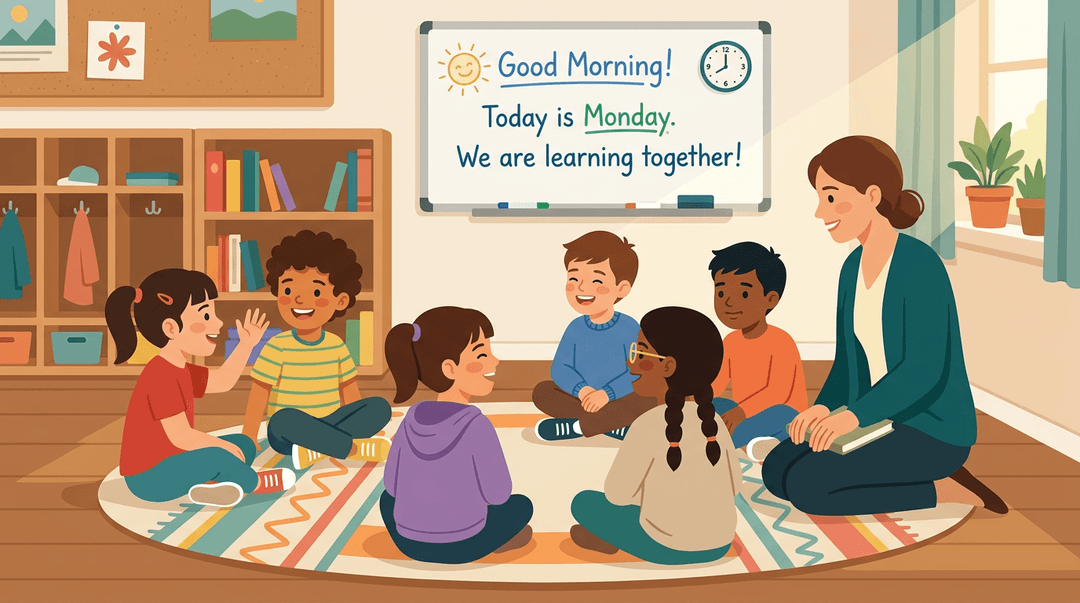
In early childhood and elementary classrooms, Morning Meeting does the heaviest lifting. The four components (greeting, sharing, group activity, morning message) give students a predictable start that builds cooperation and empathy from week one.
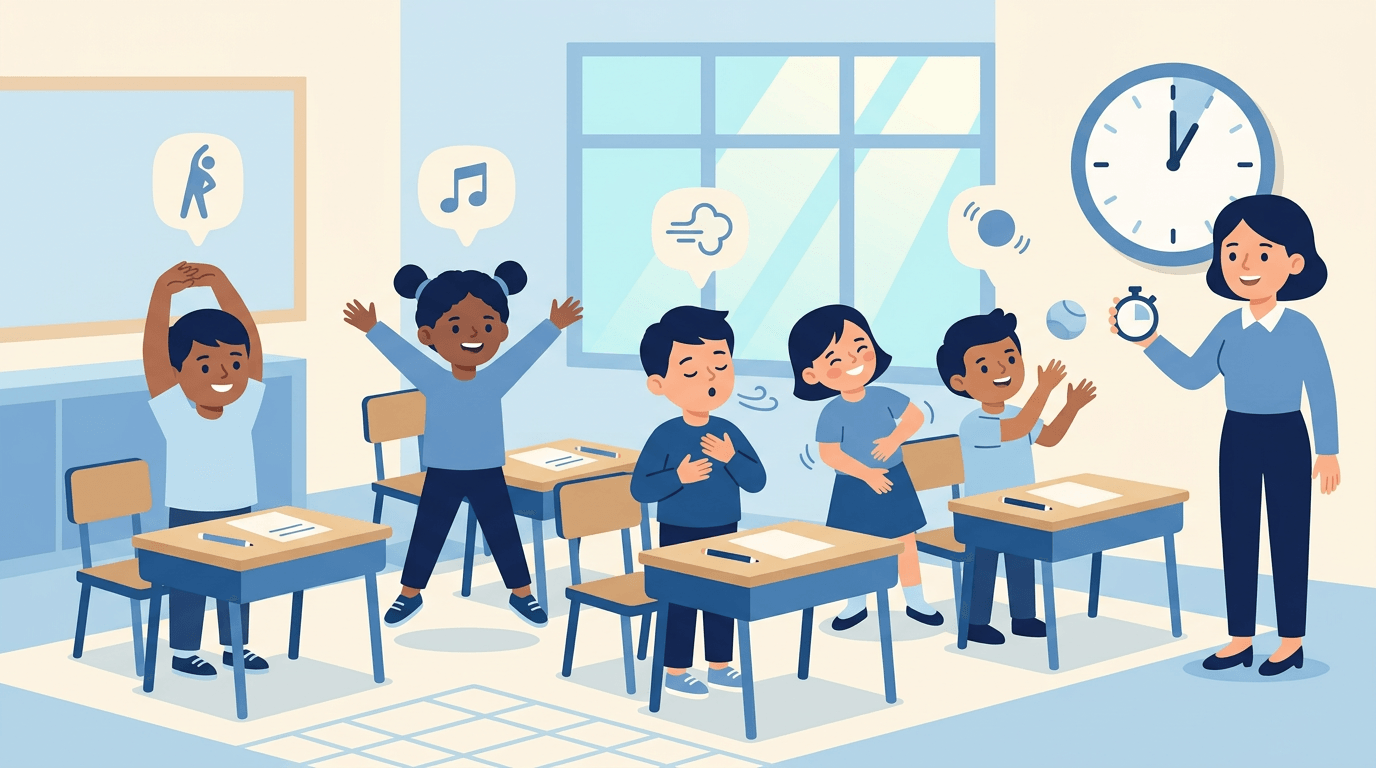
Energizers and closing circles bookend the day with the same warm, structured feeling.
Teachers who establish these routines in the first weeks of school often find that transitions, conflict, and off-task behavior drop steadily as students learn what's expected and feel genuinely known.
Adapting the approach for middle and high school
Tweens and teens need belonging just as much as younger students; they're just quicker to reject anything that feels babyish.
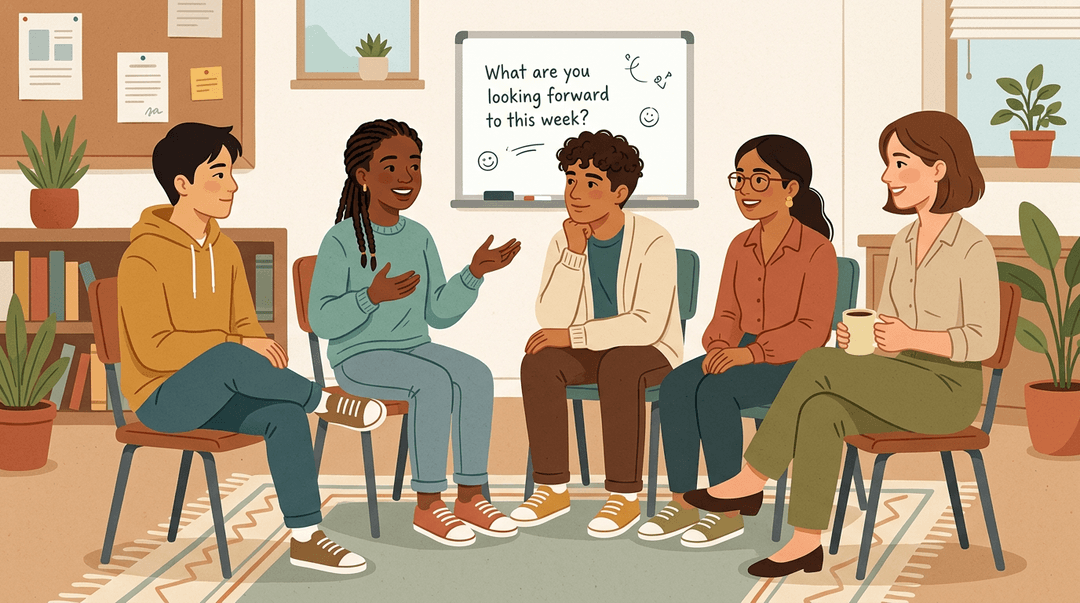
For secondary classrooms, Responsive Classroom offers the Responsive Advisory Meeting, a shorter, age-calibrated version of Morning Meeting that centers on three things teenagers actually care about:
- belonging
- significance
- fun
A typical advisory session might open with a low-stakes partner question ("What's one thing you're looking forward to this week?"), move into a brief energizer or brain break, then shift into the day's academic focus.
Active teaching strategies keep students moving and thinking rather than sitting and absorbing.
At this level, the approach also leans into academic mindset: perseverance, goal-setting, and the belief that effort matters. That's a natural fit for advisory periods, where the relationship between teacher and student is the whole point.
Benefits Backed by Research
The research case for Responsive Classroom is solid, and it covers more ground than you might expect. Students gain academically and socially, teachers feel the difference, and schools build a culture that works for everyone.
Here's what the evidence shows, and how it stacks up against another popular approach.
What students gain in and out of the classroom
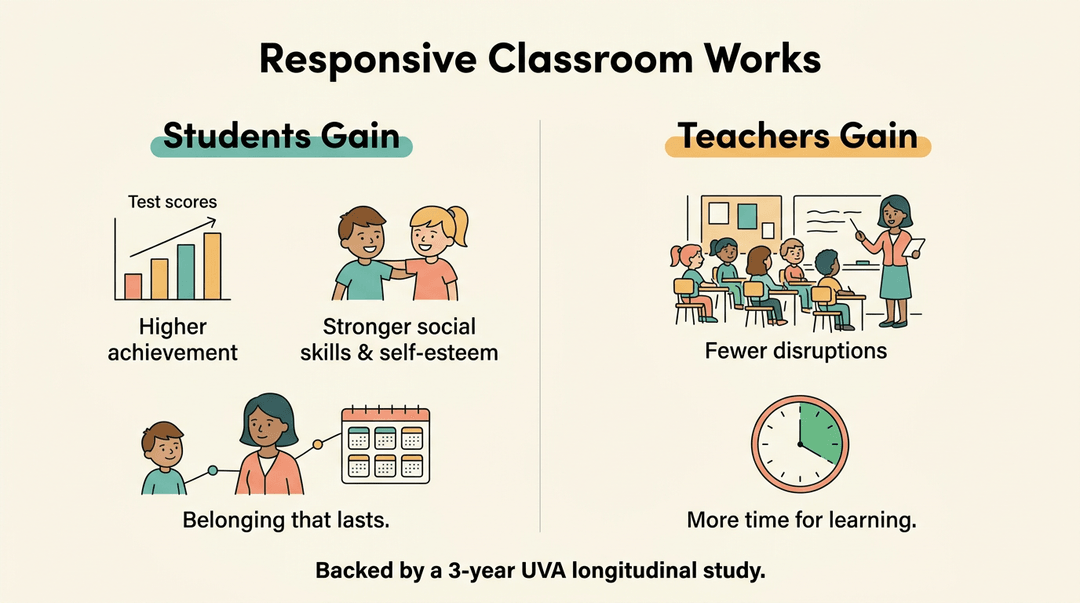
Start with the headline finding: a three-year longitudinal study from the UVA School of Education and Human Development found that Responsive Classroom is associated with better academic and social outcomes for elementary students.
That's not just higher test scores. Students in Responsive Classroom schools show:
- fewer behavioral issues
- stronger self-esteem
- more developed social skills
Those teacher-student bonds that get built early? They tend to stick, giving students a sense of belonging that carries well beyond a single school year.
According to an IES-funded efficacy study, the approach gives teachers strategies that reduce behavior problems and open up more time for actual learning. Fewer disruptions means more instruction, which matters every single day.
How teachers and schools benefit too
Teachers report higher job satisfaction and a renewed sense of purpose when they use Responsive Classroom consistently. The approach shifts classroom management from reactive to proactive, so you're spending less energy putting out fires.
Over time, that ripples outward into a more positive school community where adults and students alike feel respected.
Why this approach matters more after COVID
Pandemic isolation left real gaps: social skill deficits, emotional dysregulation, and widening academic divides.
Responsive Classroom directly addresses all three by weaving social-emotional learning into the school day rather than treating it as a separate add-on.
It's worth noting how this differs from PBIS (Positive Behavioral Interventions and Supports). PBIS is a schoolwide framework built around tiered behavior supports and external incentives.
Responsive Classroom works at the classroom level, focusing on relationships and community as the foundation for behavior. Both have value, but Responsive Classroom is the approach you feel in the room.
Training and Professional Development Options
Getting trained in Responsive Classroom doesn't have to mean a week away from your school or a steep learning curve. There are several entry points depending on your role, your schedule, and how deep you want to go.
Ways to get trained in the approach
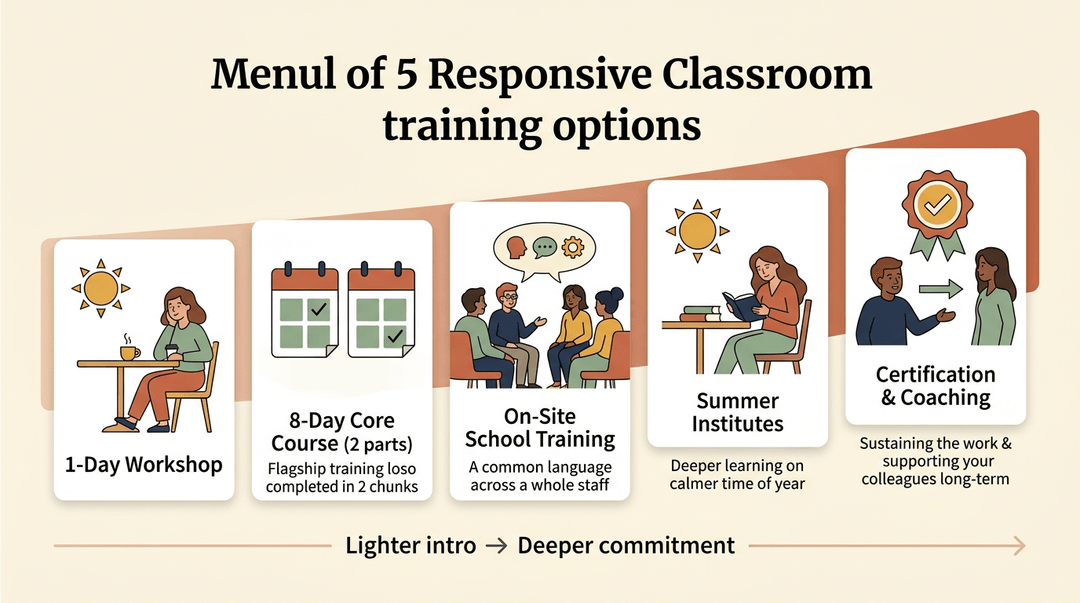
The flagship option is an eight-day course split into two parts, offered by Responsive Classroom, that lets you move through the core training in two manageable blocks rather than all at once.
If you want a lighter introduction first, one-day workshops give you a feel for the approach before committing to the full course.
Schools and districts can also bring training on-site, which makes it easier to build a shared language across a whole staff.
Summer professional learning events round out the calendar, giving teachers a chance to go deeper during a less hectic stretch of the year.
Beyond initial training, certification and ongoing coaching pathways are available for teachers and administrators who want to sustain the work and support colleagues over time.
Books and resources worth having on your shelf
The training is stronger when you pair it with the right reading. Four resources come up again and again:
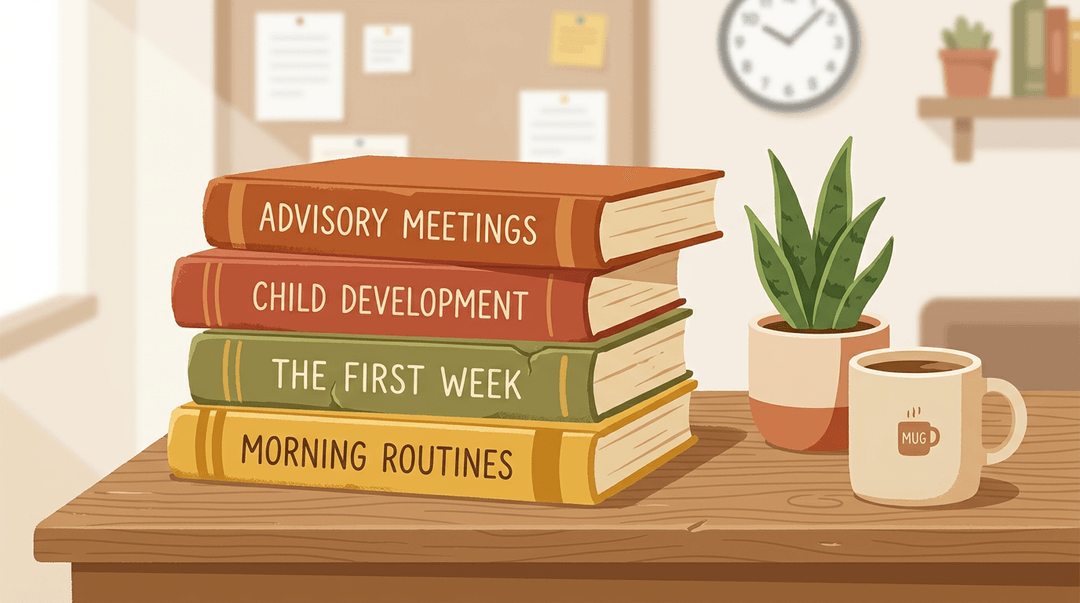
- The Morning Meeting Book walks you through the daily practice that anchors the whole approach.
- The First Six Weeks of School gives you a practical guide for building routines and relationships right from day one.
- Yardsticks is a child development reference that helps you match expectations to where students actually are developmentally.
- Responsive Advisory Meeting extends the Morning Meeting framework into middle school advisory settings.
Keep these close: you'll reach for them more than you expect.
Responsive Classroom isn't a curriculum you bolt on or a program you run once a week. It's a way of teaching: one where every routine, every greeting, and every expectation is designed to help students feel safe, connected, and ready to learn.
When that foundation is in place, everything else gets easier.
Ready to strengthen the classroom-management side of your practice? Check out our guide to Classroom Management to find the tools and strategies that keep your classroom running smoothly all year long.
References
- The Social and Academic Learning Study — education.virginia.edu
- The Efficacy of the Responsive Classroom Approach for Improving Teacher Quality and Children's Academic Performance — ies.ed.gov
- What is responsive classroom? — clrn.org (2025)
- Professional Development Overview — responsiveclassroom.org (2024)
- Responsive Classroom and PBIS: Building School Environments Where Students Thrive — responsiveclassroom.org
- Research — responsiveclassroom.org
Frequently asked questions
What is a Responsive Classroom approach?
Responsive Classroom is a research-backed teaching approach that integrates social-emotional learning with academic success. It is built on the idea that how students feel in a classroom directly influences their ability to learn. This approach aims to create a safe, engaging, and joyful environment where students feel a sense of belonging and are ready to learn.
What is a Responsive Classroom structure?
A Responsive Classroom structure focuses on proactive discipline, establishing routines, and setting clear expectations. It integrates social and behavioral learning into every part of the day, rather than separating it from academics. This framework helps create a classroom environment where behavioral issues are less likely to occur.
What is Responsive Classroom training?
Responsive Classroom training involves professional development options like an eight-day core course, one-day workshops, and on-site training for schools. These programs teach educators how to implement the approach's practices. There are also resources such as books and ongoing coaching for continued support.
What is the 70 30 rule in teaching?
The 70 30 rule in teaching is often an informal guideline suggesting that students should speak for 70% of the class time, and the teacher for 30%. It emphasizes student-centered learning and active participation. This rule aims to shift the focus from teacher-led instruction to a more collaborative and engaging environment where students construct their own understanding.
What are the four domains of Responsive Classroom?
The four domains of Responsive Classroom are engaging academics, positive community, effective management, and developmentally responsive teaching. These domains organize how social, emotional, and academic learning are integrated. They collectively contribute to creating a supportive and effective learning environment for students.
What are the 4 R's of culturally responsive teaching?
The 4 R's of culturally responsive teaching are generally recognized as relevance, relationships, rigor, and responsiveness. These principles guide educators in designing instruction that connects to students' cultural backgrounds. They help foster strong connections, maintain high academic expectations, and adapt teaching methods to meet diverse needs.
What are the 4 components of Responsive Classroom morning meeting?
The four components of a Responsive Classroom Morning Meeting are greeting, sharing, group activity, and morning message. These are designed to be conducted in order and typically last between 5 to 30 minutes. The meeting builds community, practices social skills, and prepares students for the day's learning.
What is an example of responsive teaching?
An example of responsive teaching is opening each morning with a structured meeting that builds community and practices listening skills before academic work begins. Another example is using Interactive Modeling to demonstrate expected behaviors, allowing students to observe, model, and practice the desired actions. This approach focuses on proactive strategies and integrating social-emotional learning into daily routines.