What Is a GPA? The Complete Guide to Scales & Scores

Jump to section
Picture the end of a school year: report cards are printed, transcripts are filed, and somewhere on each one sits a single number that tries to sum up months of work.
That number is a GPA, or grade point average, and it does exactly what the name says: it averages a student's grades into one figure on a standard scale.
For teachers, GPA is more than a data point on a transcript. It shapes conversations with students and parents, flags who needs support, and follows learners into college admissions and scholarship decisions.
This post breaks down how GPA works, how it's calculated across different scales, and what you can do to help every student understand and improve theirs.

What Is a GPA
GPA is the shorthand that follows students from freshman year all the way to graduation. Here's how it actually works.
What GPA stands for
GPA stands for grade point average, a single number that summarizes a student's academic achievement across all their courses.
Instead of flipping through every grade on every transcript, schools and colleges use one consistent score to compare students quickly and fairly. You'll see it used at both the high school and college level.
How the GPA scale works
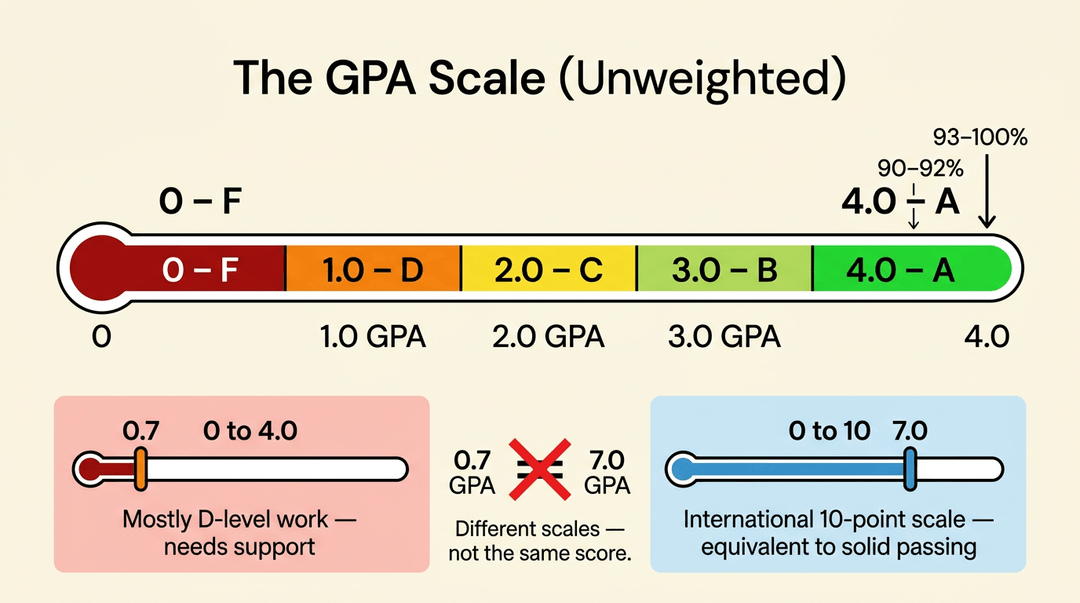
The standard scale runs from 0 to 4.0. Letter grades convert to numbers like this:
- A = 4.0
- B = 3.0
- C = 2.0
- D = 1.0
- F = 0
On an unweighted scale, 4.0 is the highest a student can earn.
Percentage scores map onto this scale too. A score of 93% or 94% both land at a 4.0, since they fall in the A range. Once you drop below 90%, you're typically looking at a 3.0 range (B), and so on down the scale.
You may occasionally see GPAs outside the 0–4.0 range, and they're worth knowing. A 0.7 GPA sits far below passing: it signals that a student is earning mostly D-level work and likely needs significant support.
A 7.0 GPA, on the other hand, appears on a 10-point scale used in some international systems, where the grading bands are simply wider. Neither is a typo; they just reflect a different measuring stick.
Types of GPA Explained
Not all GPAs are built the same. Depending on the context, you might be looking at a student's weighted average, a single semester's snapshot, or a focused picture of their major coursework alone. Here's how the main types break down.
Unweighted vs. weighted GPA
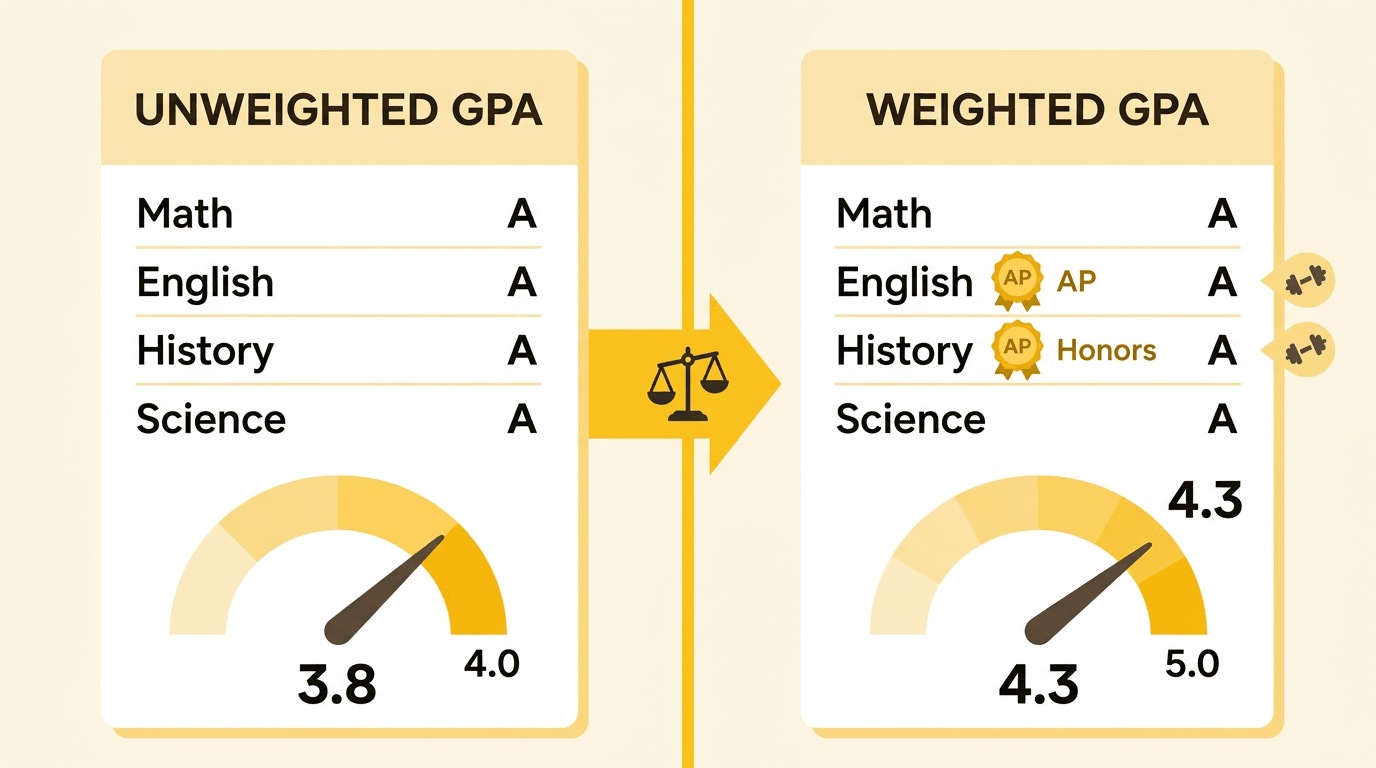
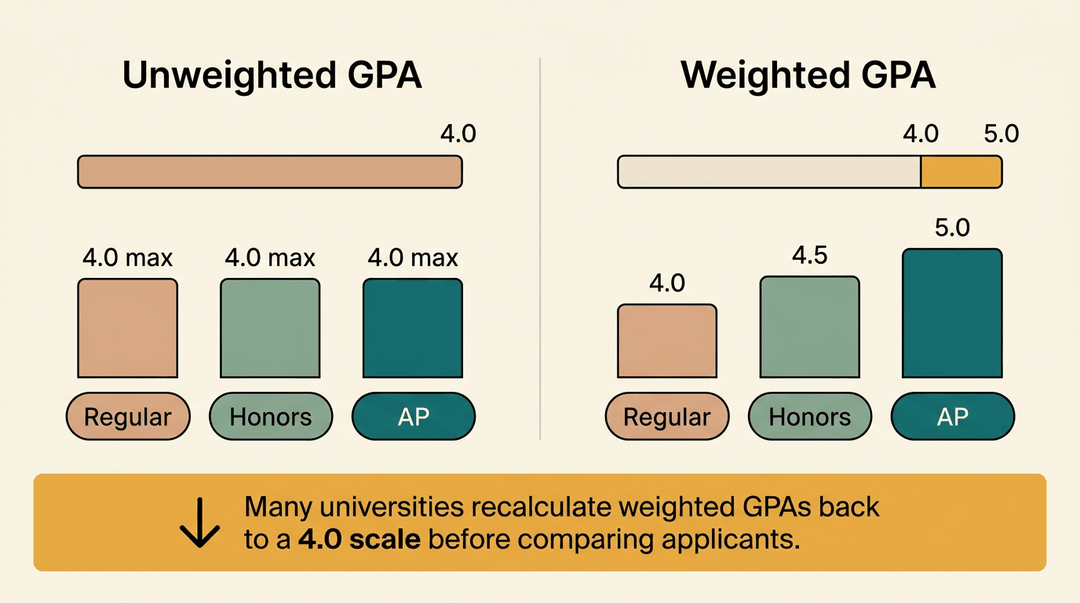
An unweighted GPA runs on a standard 4.0 scale, treating every course equally regardless of difficulty. A weighted GPA goes higher, often to 5.0 or beyond, because it adds extra points for rigorous courses like AP or honors classes.
It's a meaningful distinction, but it doesn't always travel well.
Universities frequently recalculate weighted GPAs back down to an unweighted scale when reviewing applications: Miami University's admissions office, for instance, recalculates GPAs for all incoming students, including international applicants, using a standardized method.
Cumulative vs. semester GPA
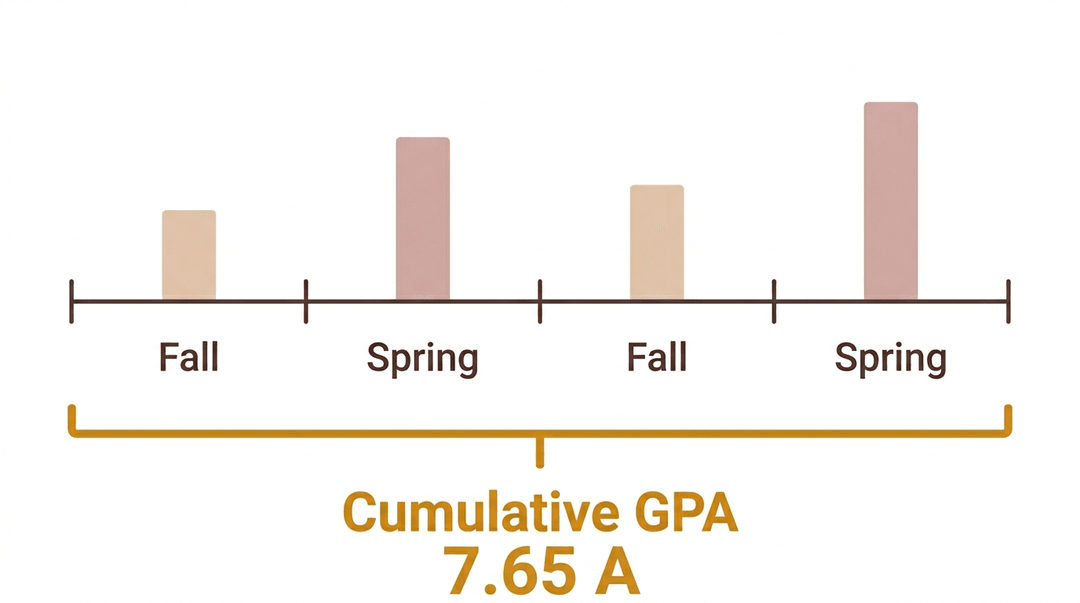
A semester GPA captures a single term's performance. It's useful for spotting short-term trends: a dip after a hard stretch, or a real improvement after a student buckled down.
Cumulative GPA (also called overall GPA) spans the student's entire academic record. This is the number that matters for honors eligibility and graduation requirements.
What a major GPA measures
A major GPA narrows the view further. It only counts courses in a student's chosen field, leaving out electives and general education requirements.
That means it can look quite different from a student's cumulative GPA, and for graduate school admissions it often matters just as much, since programs want to see how a student performed specifically in their area of study.
How GPA Is Calculated
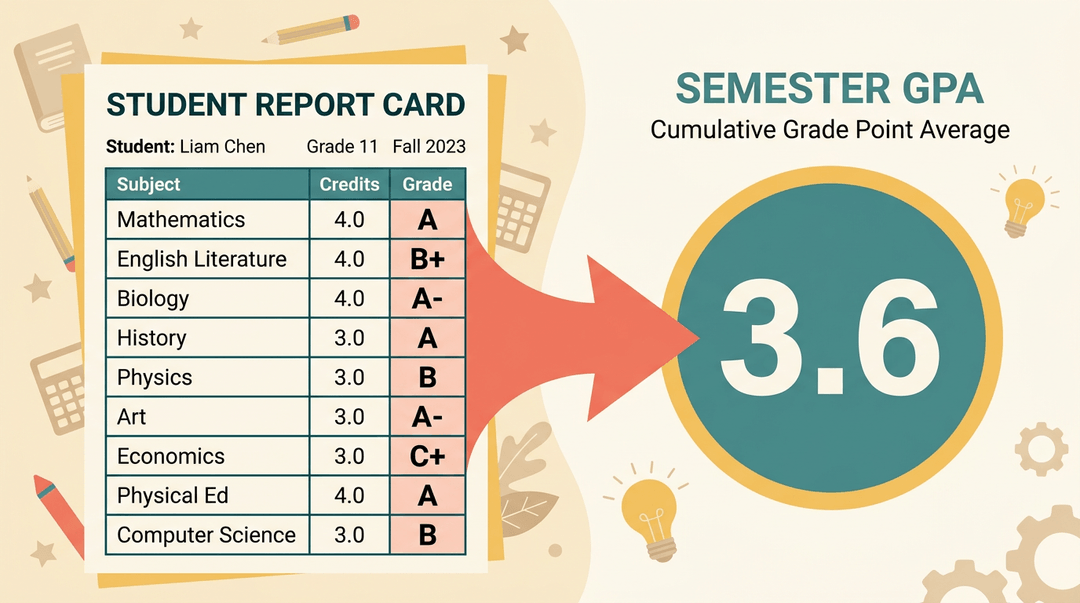
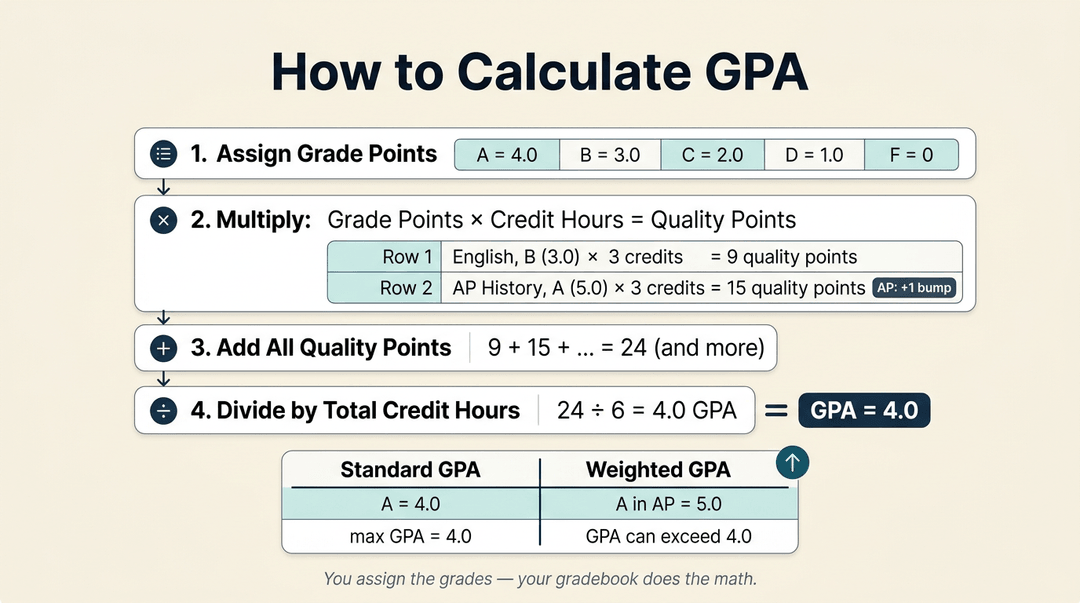
The math behind GPA is straightforward once you see it in steps. Each letter grade carries a point value, you multiply that by the course's credit hours, add everything up, then divide by total credits.
How to calculate your GPA step by step
Here's the process:
- Assign grade points to each letter grade (A = 4.0, B = 3.0, C = 2.0, D = 1.0, F = 0).
- Multiply each course's grade points by its credit hours to get quality points.
- Add all quality points together.
- Divide by total credit hours. That number is the GPA.
For a weighted GPA, honors and AP courses typically get a one-point bump (A = 5.0 instead of 4.0). So a student earning an A in a 3-credit AP class contributes 15 quality points rather than 12, raising the overall average above a 4.0.
In practice, you assign the grade points. Gradebook tools handle the quality-point math automatically.
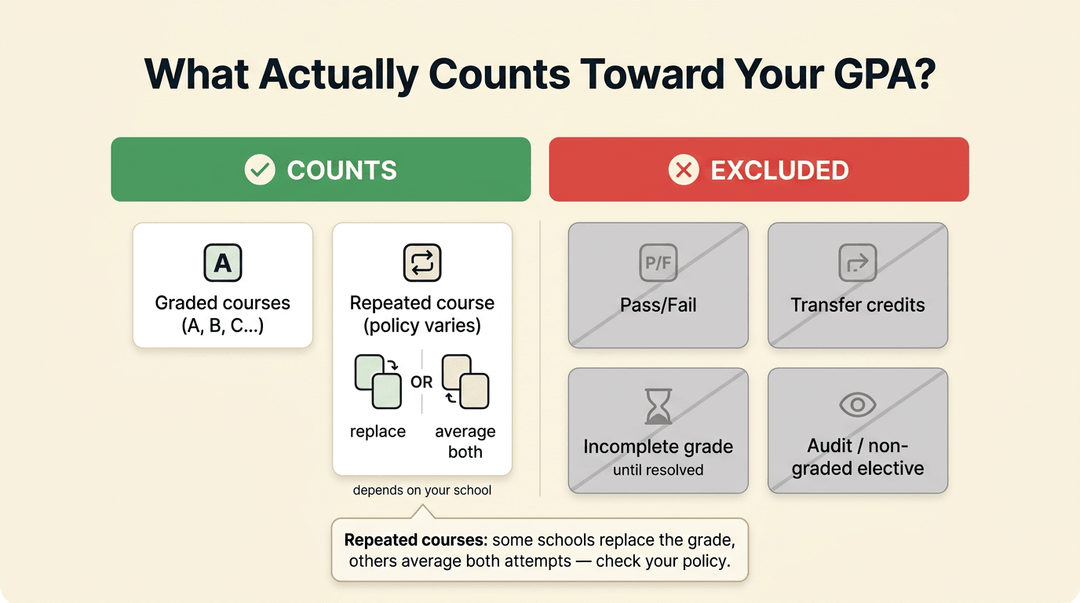
What counts toward your GPA
Not every course feeds into the calculation:
- Pass/fail courses are typically excluded.
- Transfer credits usually don't count toward the GPA at the receiving institution.
- Incomplete grades may be held out until resolved.
- Non-graded electives and audited courses are excluded.
- Repeated courses: policies vary. Some schools replace the original grade; others average both attempts.
Tools that do the math for you
Online GPA calculators let students enter grades and credit hours and get an instant result. Planning calculators show what grades are needed to hit a target GPA. The College Board and other free tools offer both options at no cost.
How Teachers Calculate and Share GPA
If you assign grades, you're already feeding the GPA pipeline. A documented scale, a repeatable calculation, and a thoughtful conversation keep that number fair and useful. Here's the routine in three phases.
Lock in your scale before the semester starts
Before you can calculate anything, confirm these three things are settled:
- Every letter grade maps to a grade point. Standard scale: A = 4.0, B = 3.0, C = 2.0, D = 1.0, F = 0.0.
- Your weighting policy is decided. Unweighted caps at 4.0; weighted adds points for advanced courses.
- Common weighted move: an A in an honors or AP section earns 5.0 instead of 4.0.
- The scale appears in your syllabus. Students should never be surprised by how a B becomes a number.
Here's a syllabus line you can adapt:
"Final letter grades convert to grade points as follows: A = 4.0, B = 3.0, C = 2.0, D = 1.0, F = 0.0. Honors sections add 1.0 to the converted grade."
Run the math
- Multiply grade points by credit hours for each course.
- That product is the course's quality points.
- Sum all quality points, then divide by total credits. The quotient is the GPA.
- Flag pass/fail courses as excluded from both totals.
- They count toward graduation credit, but they carry no grade points.
Example: A student takes English (3 credits, B = 3.0), Biology (4 credits, A = 4.0), and Art (2 credits, B = 3.0). Quality points: 9 + 16 + 6 = 31. Divide by 9 credits: GPA = 3.44.
⚠️ Watch out: if you accidentally include a pass/fail course's credits in the divisor, the GPA drops even though the student passed. Check your exclusions before anything goes home.
Share the number with its story attached
A GPA without context reads as a verdict. Pair each number with what it actually tells the student:
| What you share | What it shows |
|---|---|
| Semester GPA | Short-term progress: did this term's effort move the number? |
| Cumulative GPA + grade trend | The long view, plus which direction it's heading |
| A context note | Course difficulty and any upward trajectory |
The trend line is often more motivating than the number itself. Try: "Your cumulative GPA is 3.1, but your last two semesters were 3.4 and 3.6. That climb is the part worth talking about."
At a glance: set the scale and publish it, multiply-sum-divide (minus pass/fail), then deliver the number alongside its trend.
And if the multiply-sum-divide part is eating your planning period, EMStudio's gradebook automatically calculates weighted averages and GPA so you can focus on feedback, not formulas.
What Is a Good GPA
GPA benchmarks give numbers context. Here's what the common ones actually mean in practice:
What does a 3.0 GPA mean?
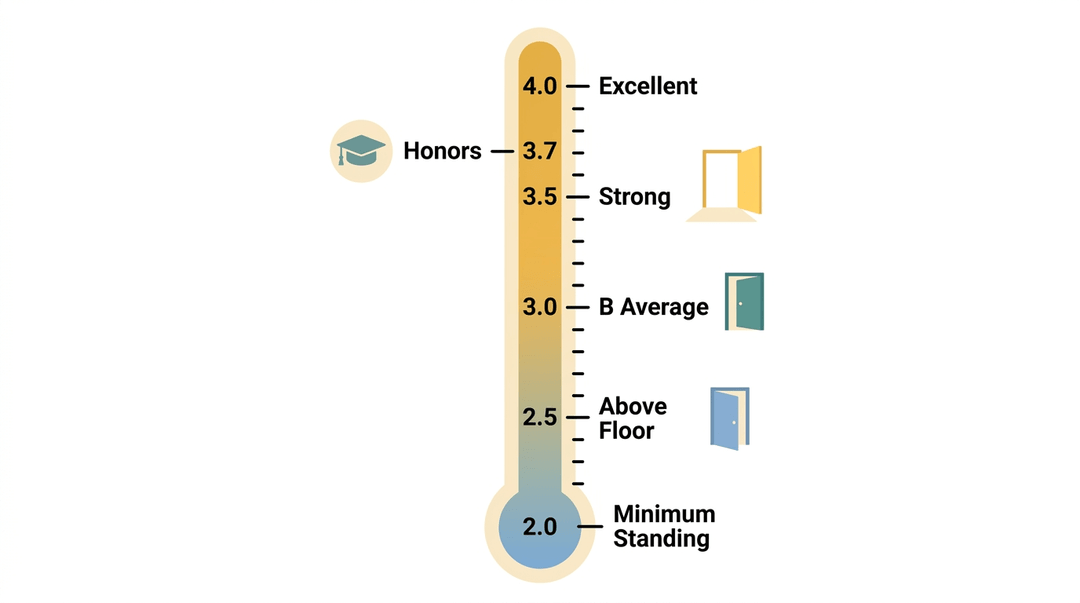
A 3.0 GPA is a B average and works as a common minimum for many scholarships, graduate programs, and honors eligibility. It signals solid, consistent work. A 3.5 moves into strong territory, and anything from 3.5 to 4.0 is generally considered excellent.
A 3.7 often qualifies a student for Latin honors (cum laude and above, depending on the school). A 2.5 is above the floor but can close doors to more competitive programs. A 2.0 is typically the minimum to stay in good academic standing and graduate.
These are useful anchors, but no single number tells the whole story. Selective colleges and universities routinely expect a 3.5 or higher, while a community college certificate program may only require a 2.0.
What counts as "good" shifts with the institution and the program.
Why context shapes every GPA
The same GPA can read very differently depending on where and how it was earned. A 3.2 in a rigorous course load of Advanced Placement and honors classes carries more weight than a 3.2 built on easier electives.
Admissions teams know this, and they factor in course difficulty alongside the number.
An upward trend matters too. A student who started at 2.8 and climbed to 3.4 often looks more promising than one who coasted at a flat 3.2.
International students add another layer: grades from other countries are converted to the US scale, and conversion standards vary by institution, so a direct comparison isn't always straightforward.
Why GPA Matters
GPA isn't just a number on a transcript. It opens doors, closes them, and follows your students further than most of them realize.
How GPA affects college admissions
Admissions officers use GPA as a quick read on academic consistency: did this student show up and do the work, semester after semester? A strong GPA signals readiness for college-level coursework in a way a single test score can't.
Most selective schools use holistic review, so GPA sits alongside essays and activities rather than replacing them, but it's still the backbone of the application.
The higher the GPA, the wider the field of universities a student can realistically consider.

GPA requirements for scholarships
Money is where GPA gets very concrete, very fast. Most merit scholarships set a minimum GPA cutoff for eligibility, and many require students to maintain that floor to keep funding from year to year.
Departmental prizes, honors designations, and campus awards often work the same way. Even need-based financial aid packages can include an academic progress requirement tied to GPA minimums, so a dip mid-college can cost a student more than just pride.
GPA in careers and campus life
The stakes don't disappear at graduation. According to Collegiate Gateway, competitive industries like finance and consulting pay close attention to GPA, especially for selective entry-level roles.
A GPA above 3.5 tends to read as a signal of dependability and follow-through to those employers.
On campus, the impact is immediate: many clubs, honor societies, fraternities, and sororities set minimum GPA requirements for membership, so a student's grade record shapes their social opportunities too.
How to Raise a Low GPA
A low GPA isn't a verdict. It's a signal, and most students can move it with the right adjustments. As a teacher, sharing GPA trends through regular progress reports gives students the concrete feedback they need to act before a semester slips away.
Study habits that move the needle
The basics matter more than students expect. Attending class consistently, keeping notes organized, and staying on top of deadlines removes the friction that quietly tanks grades.
Add periodic review (revisiting material a few days after a lesson, not just the night before a test) and the retention gap closes fast. Help students map their week across all courses so one demanding class doesn't crowd out the rest.

Smart academic choices that help
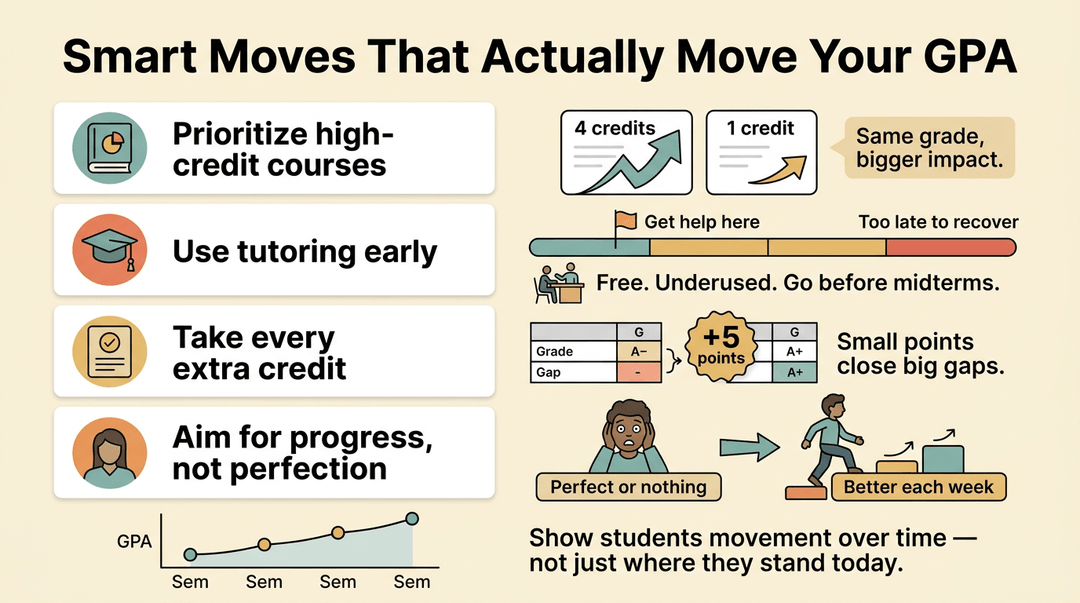
Not every course carries the same weight. Encourage students to prioritize high-credit courses first: a strong grade in a four-credit class moves a GPA more than the same grade in a one-credit elective.
A few other levers worth knowing:
- Tutoring and office hours. They're underused and free. Identifying a weak subject early, before the midpoint, leaves time to recover.
- Extra credit. When it's available, take it. A few points in the gradebook can close a gap that feels larger than it is.
- Progress over perfection. Students who fixate on a perfect GPA often freeze. Shifting the goal to improvement keeps momentum going.
Sharing a simple progress report that shows GPA movement over time, not just a single snapshot, helps students see that effort is working. That visibility is often what keeps them going.
GPA Across Different Grading Systems
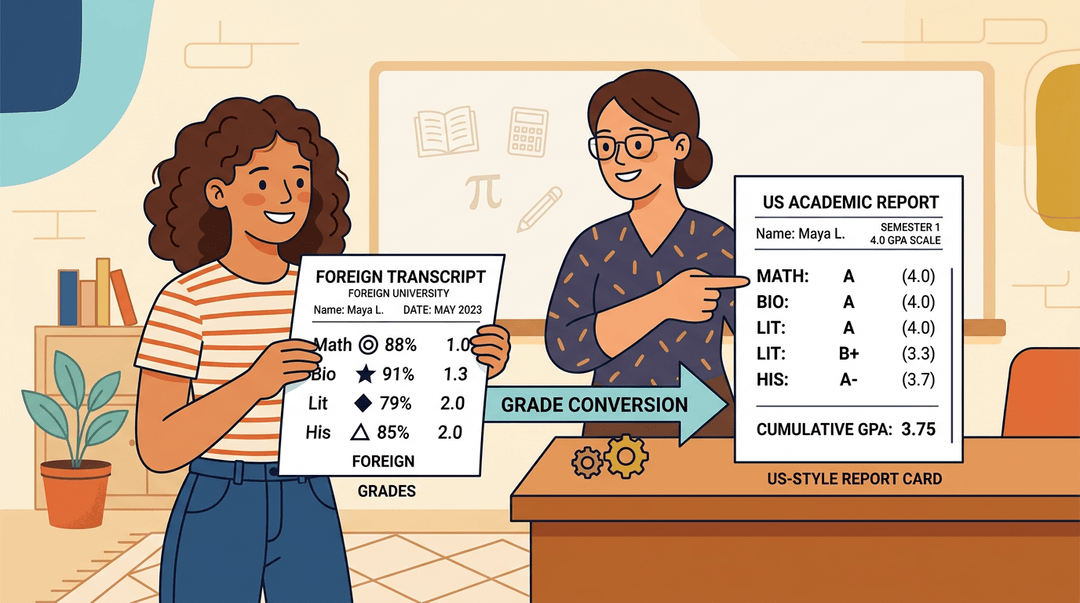
Not every country hands students a letter grade and calls it a day. Grading scales vary widely around the world, which creates a real challenge when a student's transcript arrives from abroad and needs to make sense on a 4.0 scale.
How other countries grade students
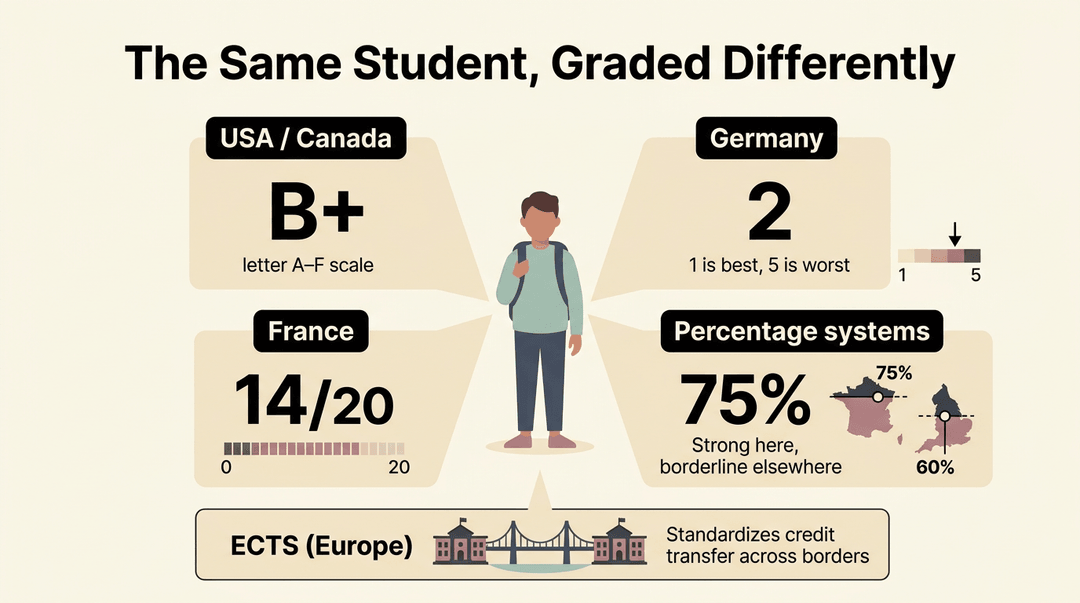
The A–F letter grade system is familiar territory in the US and Canada, but step outside North America and things look different fast. Many countries use percentage systems, where a 75% might be a strong result in one place and barely passing in another.
Others rely on numerical scales that don't map neatly to any letter: Germany grades on a 1–5 scale (where 1 is the best), while France often uses a 20-point system.
In Europe, the European Credit Transfer and Accumulation System (ECTS) adds another layer: it's been adopted by most countries in the European Higher Education Area as the national credit system and is increasingly used elsewhere, standardizing how credits transfer across borders.
Converting foreign grades to a US GPA
When a student applies to a US university with international transcripts, those grades don't speak for themselves.
Universities typically recalculate foreign grades using their own conversion tables, and percentage scores get mapped to the 4.0 scale accordingly.
For the UK specifically, degree classifications (First, 2:1, 2:2) each correspond to a GPA range: King's College London's Study Abroad guidance illustrates this, listing a GPA of 3.3 out of 4.0 as the equivalent for certain entry requirements.
For a more formal assessment, students often turn to credential evaluation services. World Education Services (WES) converts international transcripts into a US-equivalent GPA on the 4.0 scale, giving admissions offices a consistent baseline to work from.
GPA is a small number with a long reach. It shapes how students see themselves as learners, how colleges read a transcript, and how teachers know where to focus support.
Understanding how it's built, what the scales actually mean, and how to talk about it clearly puts you in a much stronger position to help your students move the needle.
Ready to make grading and GPA tracking simpler in your classroom? Visit our Grading & Assessment hub to see how the right tools make the process cleaner for you and clearer for your students.
References
- Recalculated GPA | First-Year Application Requirements — miamioh.edu
- European Credit Transfer and Accumulation System (ECTS) — ec.europa.eu
- GPA Equivalent by Country — kcl.ac.uk
- The Difference Between Document-by-Document and Course-by-Course Credential Evaluation Reports — wes.org (2025)
- College Grades and Employers: What Matters to Whom — collegiategateway.com
Frequently asked questions
Is a 93% a 4.0 GPA?
Yes, a 93% is generally considered a 4.0 GPA on the standard unweighted scale. Both 93% and 94% fall within the 'A' range, which converts to a 4.0. If a percentage drops below 90%, it typically falls into the 3.0 range or 'B' grade.