Common Core State Standards Initiative: A Complete Guide


Jump to section
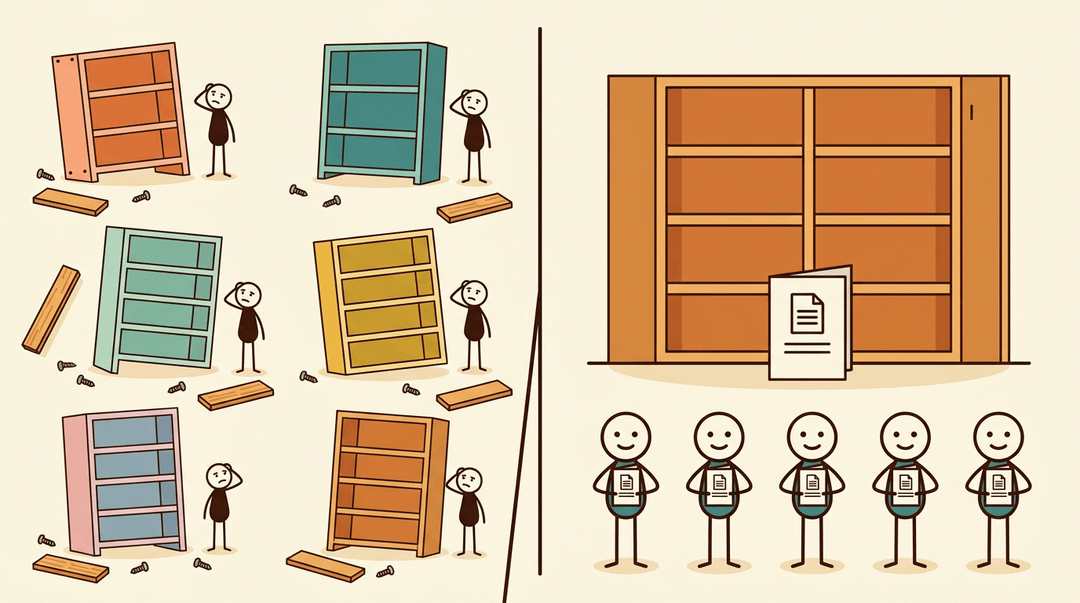
Think about assembling furniture without the instructions: everyone ends up with a slightly different bookshelf. For years, that's what state standards looked like across the country.
The Common Core State Standards Initiative set out to write one shared instruction manual for what students should know in math and English language arts, grade by grade.
This post walks through what it actually says, how schools use it, and how you can turn it into a lesson plan that works Monday morning.
Understanding the Common Core State Standards Initiative
Before you can turn these standards into a lesson plan, it helps to know exactly what they are and what they're not.
The Common Core State Standards Initiative sets the destination for student learning, not the map for getting there: standards define what students should know, while curriculum is the textbooks, materials, and daily lessons you choose to get them there.
What these standards aim to achieve
At its core, this is a set of academic standards covering math and English language arts/literacy (ELA), built around one goal: college and career readiness. Instead of a patchwork of expectations from district to district, the standards give every teacher clear, consistent learning goals and grade-level expectations, so a fifth grader in one state is working toward the same benchmarks as a fifth grader in another.

How states worked together to build them
This wasn't handed down from a federal office. It was a state-led initiative, with governors and chief school officers from 48 states bringing in educators and content experts to do the writing. Rather than starting from scratch, the team built on the strengths of existing state standards and looked at what top-performing countries were doing well, then folded those lessons in.
What makes the standards rigorous and coherent
The result is research and evidence based, with two guiding principles: focus and coherence. Fewer topics, taught in more depth, so ideas connect from one grade to the next instead of resetting each year. Rigor matters here too: it's less about memorizing facts and more about the application of knowledge and building real critical thinking skills students can use beyond the test.
How the Standards Are Organized
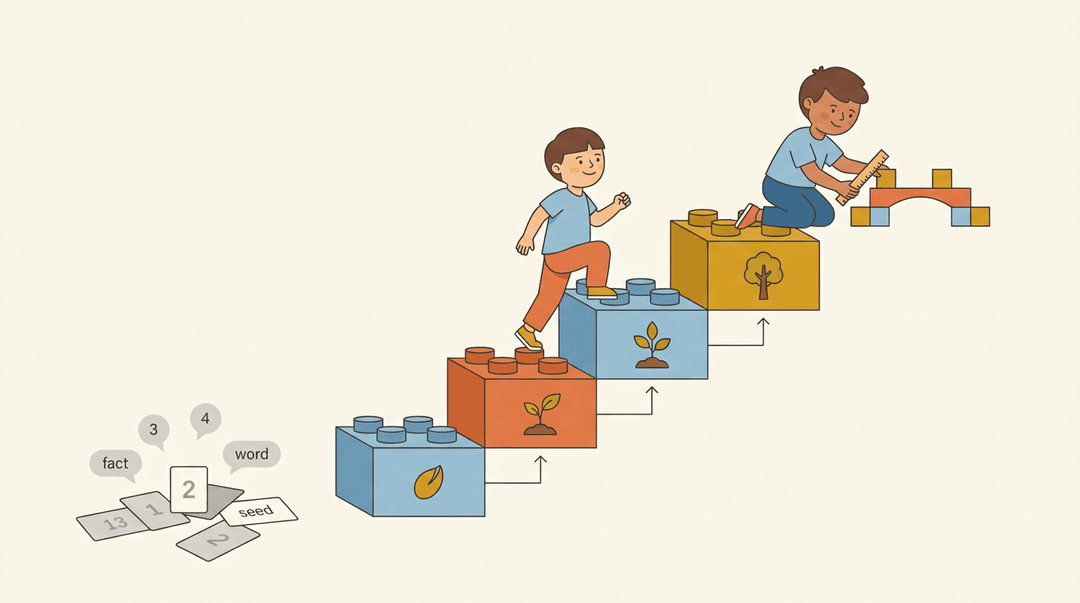
Think of the standards less like a single rulebook and more like a set of building blueprints, laid out by grade and by subject so any teacher can find exactly where their students should be.
That structure is what makes the whole initiative usable in a real classroom.
How standards break down by grade level
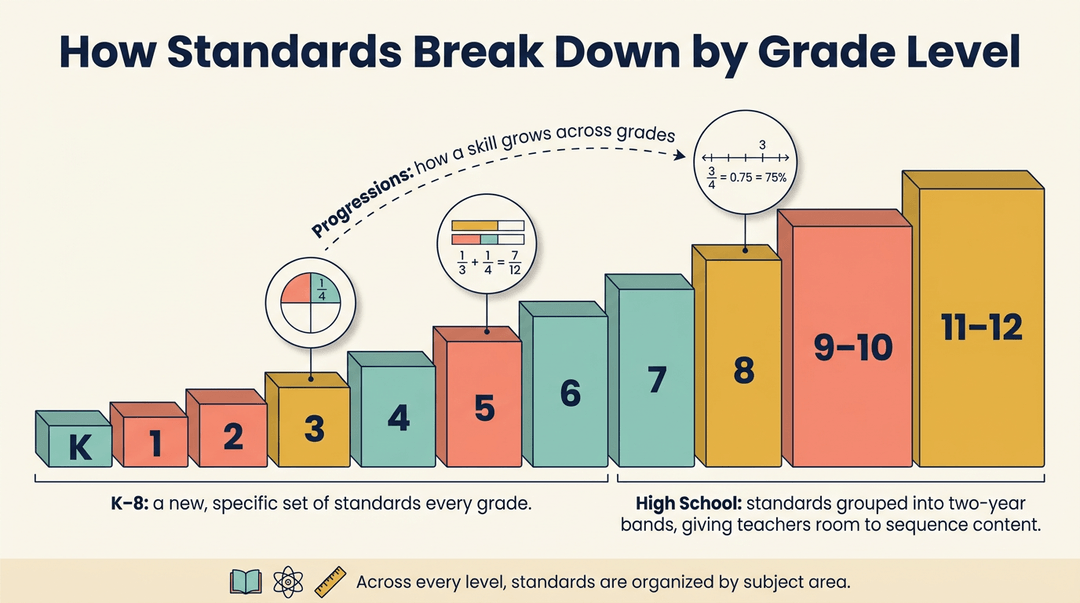
For kindergarten through eighth grade, the standards are grade-by-grade: a third-grade teacher and a fourth-grade teacher are each working from a distinct, specific set of expectations for their year. High school works a little differently.
Instead of one grade at a time, it's organized into two bands: 9-10 and 11-12, giving high school teachers more room to sequence content across those two years.
Across every level, standards are organized by subject area, and progressions documents map how a skill grows from one grade to the next.
For example, a progressions document might trace how understanding of fractions builds from third grade through middle school, so a teacher can see not just this year's target, but where a student came from and where they're headed.
What are some Common Core standards?
The standards cover four main areas:
- English language arts/literacy
- mathematics
- history/social studies literacy
- science and technical subjects (the last two folded into literacy expectations rather than separate content standards)
A sample English language arts standard might ask a fourth grader to explain how key details support the main idea of a text. A matching math standard might ask that same student to fluently add and subtract multi-digit whole numbers.
Simple to state, but each one sets a clear, checkable bar for what students should actually be able to do.
Key Teaching Shifts by Subject
So what do these shifts look like once you're actually teaching? They play out differently by subject, but the aim stays the same: real understanding over surface coverage.
What are the Common Core writing standards?
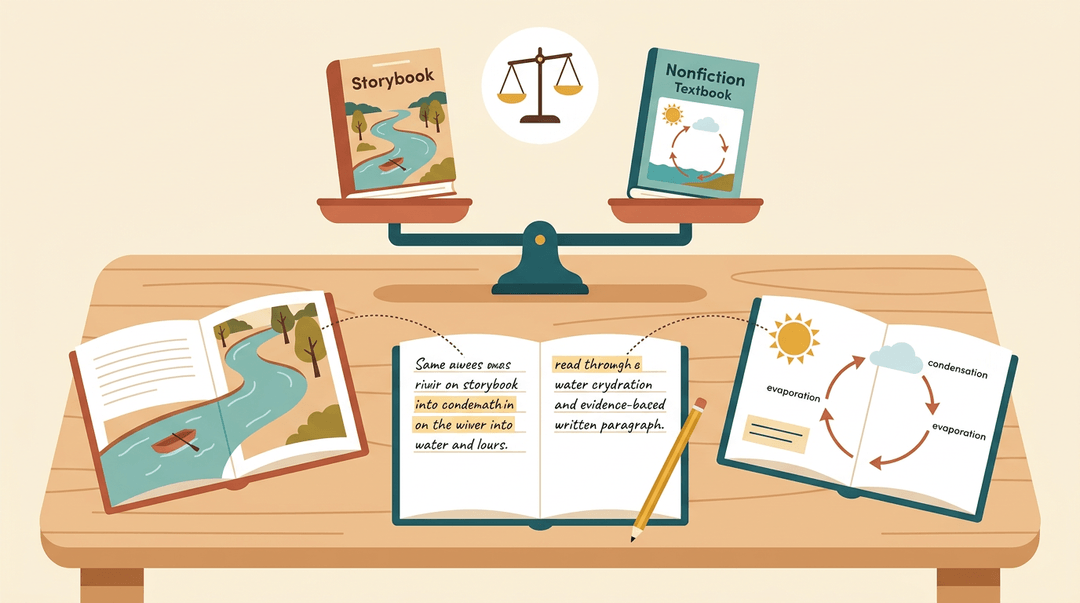
The Common Core writing standards push students to build knowledge through nonfiction and back up every claim with evidence-based writing pulled straight from the text, not just opinion. That means more analyzing and less summarizing.
Reading demands grow too: students tackle complex text and pick up academic language they'll need well beyond the classroom. The old literary-heavy balance shifts toward an even split between literary and informational texts.
For example, a fifth-grade teacher covering the water cycle might pair a short story about a river with a nonfiction article on evaporation, then have students write an evidence-based paragraph comparing the two.
How math instruction shifted under Common Core
Math instruction shifted too. Common Core narrows each grade to fewer, key topics so students go deeper instead of skimming a long list.
Those topics build coherence across grades: what a third grader learns about fractions connects directly to the ratios a sixth grader tackles later.
The standards also demand conceptual understanding, not just memorized steps, alongside real procedural skill and fluency. Real-world application ties it together.
Consider a middle school teacher who has students scale a recipe using ratios for a class bake sale instead of a worksheet: the math sticks because it's doing something.
How to Map Common Core Standards into Your Lesson Plans
A standard is written for curriculum documents, not for Tuesday's lesson. This five-step routine turns any Common Core standard into a target you can post, a scale you can grade against, and evidence you can track.
Five steps from standard to lesson
- Unpack the standard's language.
- Circle the verbs (the skills) and underline the nouns (the content).
- Jot the chain: "refer + explain ← details and examples ← from the text."
- Write a clear learning target.
- Rewrite the skill in student language, one sentence starting "I can."
- Keep the standard's verb; swap the jargon for words your class uses.
- Set a proficiency scale.
- Define levels in one line each: 3 = meets the target independently.
- Write what a 3 looks like: "cites two accurate details unprompted."
- Map the target to your unit sequence.
- Decide which lesson introduces it, which practice it, which assess it.
- Sketch the chain: "Lesson 2 model → lessons 3 and 4 practice → lesson 5 check."
- Track mastery evidence.
- Pick one artifact per target: an exit ticket, annotation, or quick conference.
- Log scores on a roster by target, not by assignment name.
⚠️ Watch out: if your assessment measures something the target never named, students met a moving goalpost. The check must match the posted target word for word in skill.
See it in action: a 4th grade example
Example: Standard RL.4.1 asks students to refer to details and examples when explaining what a text says explicitly and when drawing inferences. The target on the board reads: "I can back up my ideas about a story with details from the text." The formative check is an exit ticket: "What kind of person is the narrator? Give two details that prove it." Two accurate details earns a 3 on the scale.
Before you teach: a quick checklist
Run this before the lesson starts. If any line fails, fix that one thing first.
- Standard identified: the exact code sits at the top of your plan.
- Target posted: students can read it, in their own language, from their seats.
- Materials aligned: the text or task actually demands the standard's skill.
- Assessment mapped: your check measures the target and nothing extra.
- Differentiation noted: one support and one stretch, written down in advance.
Once the routine is second nature, the paperwork shouldn't be: EMStudio's curriculum planner maps standards straight into your unit and lesson plans, so tracking mastery stays effortless.
Why Common Core Was Created
Common Core didn't appear out of nowhere. It grew out of a real worry: that state-by-state standards were leaving American students unprepared for a bigger, more competitive world.
Preparing students to compete globally
Students weren't just competing with the kid across the hall anymore. They were competing with graduates from countries pulling ahead on international tests, and policymakers wanted American classrooms to keep pace with that global economy.
So the people behind Common Core studied top-performing countries and noticed a pattern: fewer topics, taught with more depth, at every grade level.
That matched research on how learning actually works: it's less about covering every topic and more about mastering the ones that matter most.

Do states still use Common Core standards?
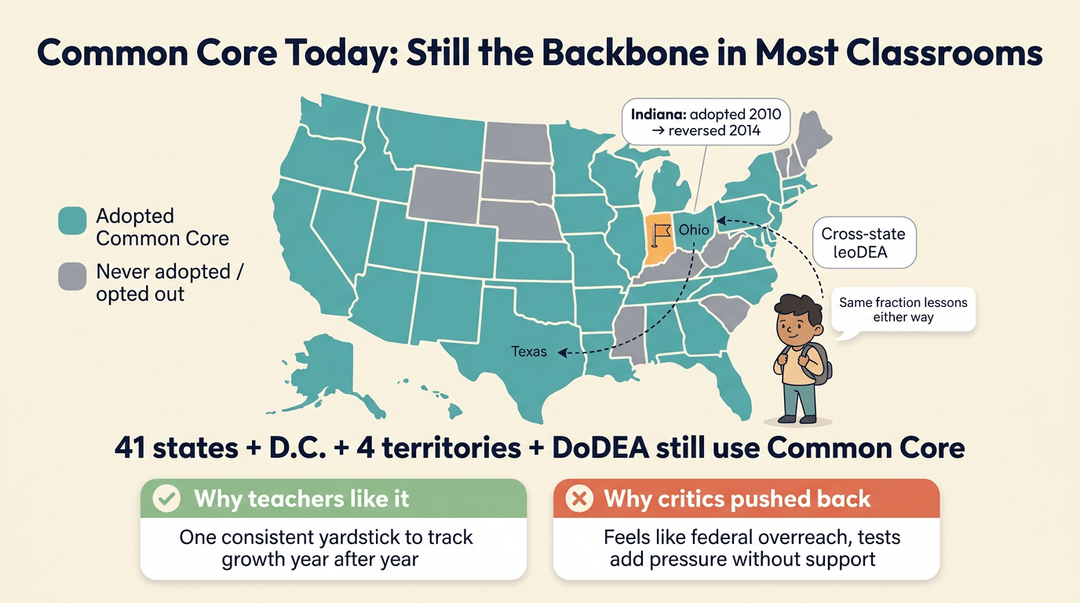
Yes, most states still do, though the map has shifted some since 2010.
The goal from the start was cross-state alignment: a transfer student moving from Ohio to Texas mid-year shouldn't fall behind just because the two states taught fractions in a different order.
Where the standards stuck, many teachers and parents have come to appreciate having a consistent yardstick, one that lets you track a student's growth from one year to the next instead of guessing.
Not everyone signed on, though. Critics argue the standards amount to federal overreach into local classrooms, and others say the tests attached to them pile on pressure without enough support for teachers. That's part of why a few states walked away.
According to a National Center for Education Statistics table tracking state adoption, Indiana adopted the standards on August 3, 2010, but reversed course on March 24, 2014.
Even so, most states held on.
Today, according to the Common Core State Standards Initiative, forty-one states, the District of Columbia, four U.S. territories, and the Department of Defense Education Activity have adopted the standards, keeping it at the core of instruction in most classrooms.
How the Standards Are Implemented and Supported
Adopting Common Core is only step one. What happens next, how it actually plays out in a classroom, is left largely to states and districts.
What states and districts control
States and districts decide how to fund and choose curriculum, select materials, and build the support systems teachers need, from coaching to professional development.
The standards spell out what students should learn, not how to teach it: a fifth-grade teacher in Ohio and one in Oregon can reach the same benchmark through very different lessons, as long as both are meeting the needs of every learner in the room.
Supporting English learners and students with special needs
The standards set benchmarks toward college and career readiness for all students, including English language learners and students with special needs.
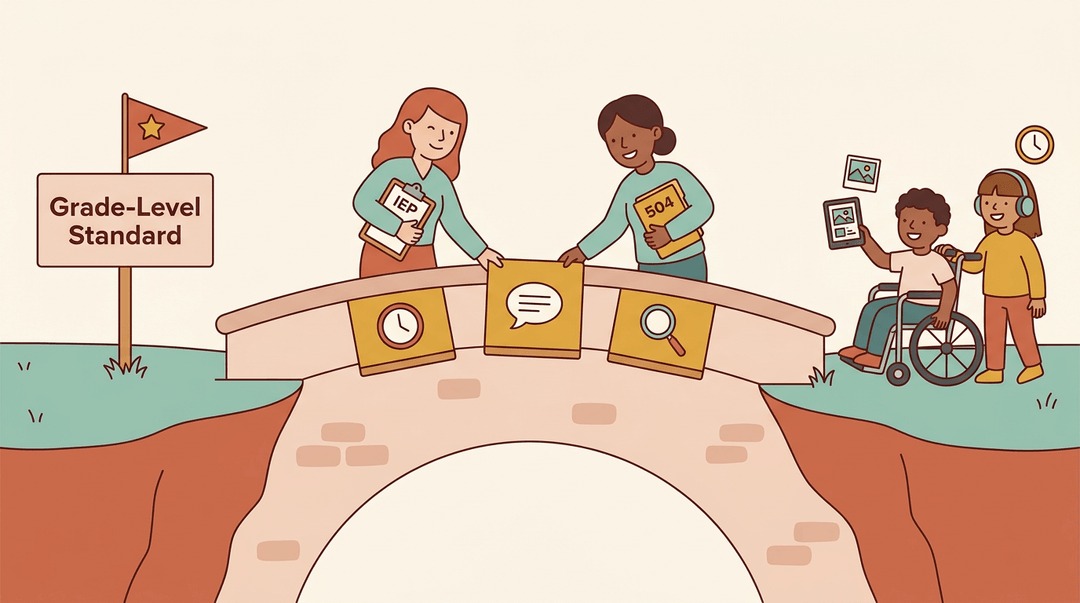
But the writers acknowledge real limitations: the standards don't spell out accommodations, so that work falls to IEP (Individualized Education Program) and 504 (Section 504 plan) teams.
Align a student's IEP goals directly to grade-level standards, and note where extended time, visual supports, or simplified language will bridge the gap, without lowering the expectation itself.
Tools and materials for teaching the standards
Teachers don't have to start from scratch.
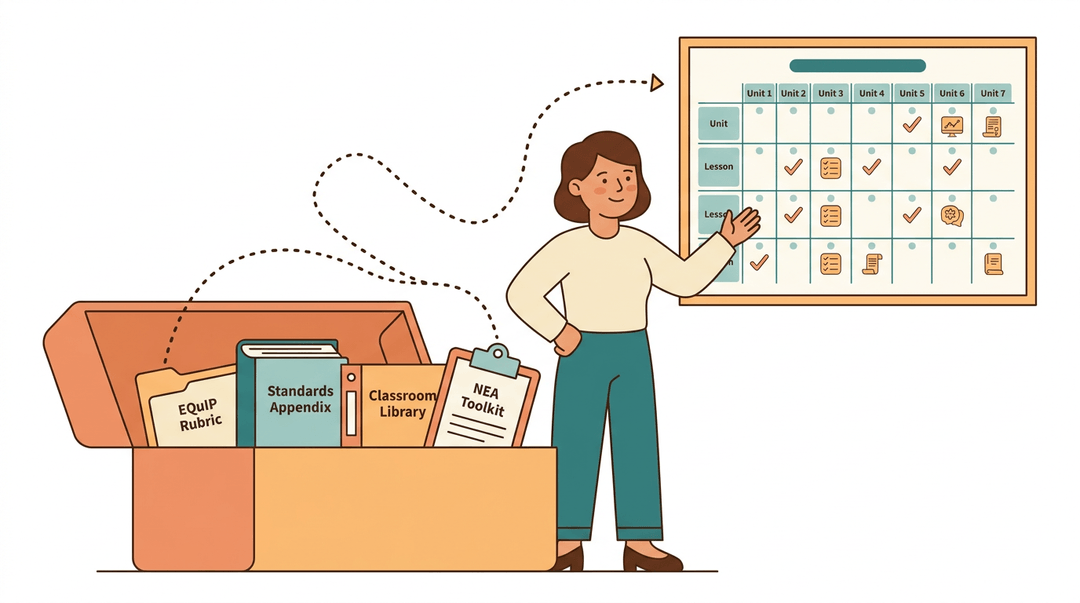
Alignment toolkit resources help you check whether a lesson actually matches a standard, and the EQuIP (Educators Evaluating the Quality of Instructional Products) rubric offers a structured way to judge material quality.
The standards' appendices lay out the research base and grade-level exemplars, and classroom materials libraries, along with the NEA's own toolkit, round out a practical starting library.
Common Core isn't a script to follow word for word. It's a shared set of goals, and the real teaching still happens in how you build the path to get there.
Once you've mapped the standards to your own lessons, the planning doesn't have to start from scratch every year. Ready to turn standards into a plan you'll actually use?
Check out our Curriculum & Standards feature to plan units, lessons, and standards across your whole school year.
References
- Table 2.17. State adoption of mathematics and English/Language Arts Common Core State Standards Initiative, by state: 2015 — nces.ed.gov
- Standards in Your State — thecorestandards.org
Frequently asked questions
What is the Common Core Standards Initiative?
The Common Core State Standards Initiative is referred to as a shared "instruction manual" that defines what students should know in math and English language arts, grade by grade. It is a set of academic standards developed by governors and chief school officers from 48 states with input from educators and content experts.
What is the purpose of the Common Core Standards?
The primary purpose of the Common Core Standards is to define clear, consistent learning goals and grade-level expectations for students to ensure college and career readiness. It aims to provide a consistent yardstick for student learning across different states, so students meet the same benchmarks regardless of location.
What are some Common Core standards?
Common Core standards cover English Language Arts/literacy and mathematics, with literacy expectations also integrated into history/social studies and science/technical subjects. An example for a fourth grader in ELA might ask them to explain how key details support a text's main idea, while a math example might require them to fluently add and subtract multi-digit whole numbers.
What are the 10 NCSS themes?
The 10 NCSS themes are: Culture; Time, Continuity, and Change; People, Places, and Environments; Individual Development and Identity; Individuals, Groups, and Institutions; Power, Authority, and Governance; Production, Distribution, and Consumption; Science, Technology, and Society; Global Connections; and Civic Ideals and Practices. These themes provide a framework for social studies education.
What are the Common Core writing standards?
Common Core writing standards emphasize evidence-based writing drawn from texts, pushing students to analyze rather than just summarize. The standards also focus on building knowledge through nonfiction and developing academic language, requiring students to back up claims with textual evidence.
Why are common core standards controversial?
Common Core standards are controversial primarily due to arguments against federal overreach into local classrooms and concerns about the pressure on teachers from associated tests. While some appreciate the consistent benchmarks, critics in a few states have led to reversals of adoption.
What are examples of content standards?
Content standards outline the specific knowledge and skills students are expected to acquire in a particular subject area. Examples include a fourth-grade English Language Arts standard requiring students to explain how key details support the main idea of a text, or a fourth-grade math standard asking students to fluently add and subtract multi-digit whole numbers.
What states no longer use Common Core?
Currently, most states still use Common Core standards. However, Indiana is noted as having adopted the standards and then reversed course. Generally, while some states have moved away or modified their standards, the majority continue to implement them.