What Is Universal Design for Learning and How Does It Work?

Jump to section
Think about the last time you tried to follow a recipe without the right equipment. The instructions were clear, the ingredients were there, but without that one pan or tool, the whole thing stalled.
You found a workaround, maybe, but it took longer and the result wasn't quite right. Now imagine that happening to a student every single day, not because they lack ability, but because the lesson was only built for one kind of learner.
Universal Design for Learning (UDL) is the framework that fixes that.
It's a research-backed approach to lesson design that removes barriers before they show up, so every student has a real shot at learning, not just the ones who happen to fit the default mold.
In this post, we'll cover what UDL actually means, the three core principles, the neuroscience behind it, and how to put it to work in your classroom starting now.
What Universal Design for Learning Actually Means
Most classrooms have students who learn in different ways, at different speeds, and with different needs.
Universal Design for Learning (UDL) is an educational framework built for exactly that reality: it asks you to design the curriculum so it works for every learner from the start, rather than retrofitting it for individuals later.
How UDL defines flexible learning
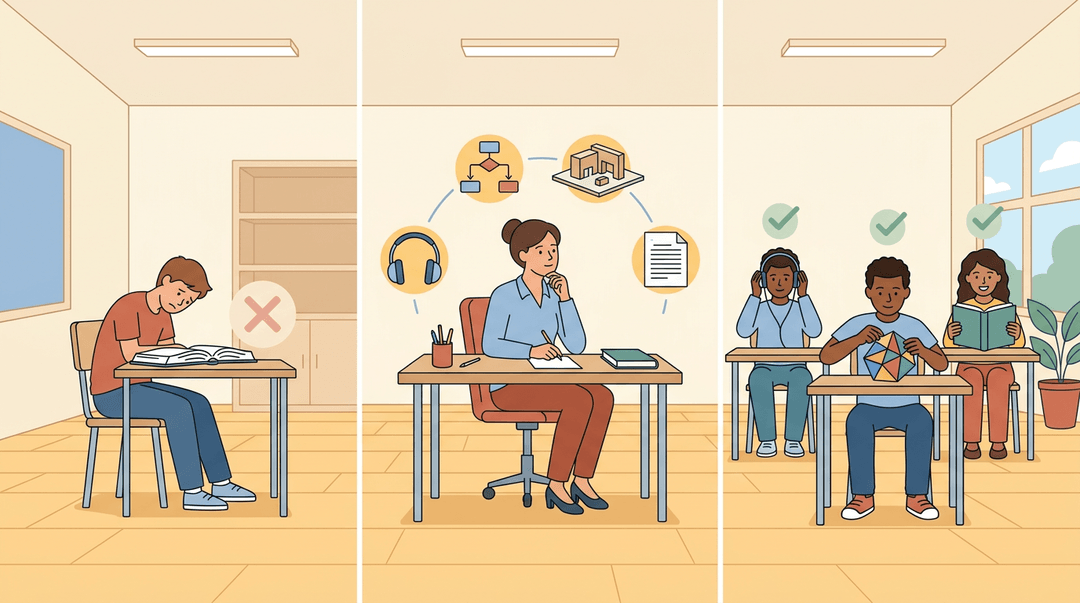
UDL isn't a single teaching strategy. It's a framework that builds flexibility into how students access materials, engage with content, and show what they know.
The goal isn't to lower expectations; it's to remove the barriers that stop learners from meeting them. One-size-fits-all rarely fits anyone, and UDL is built on that truth.
Where UDL came from
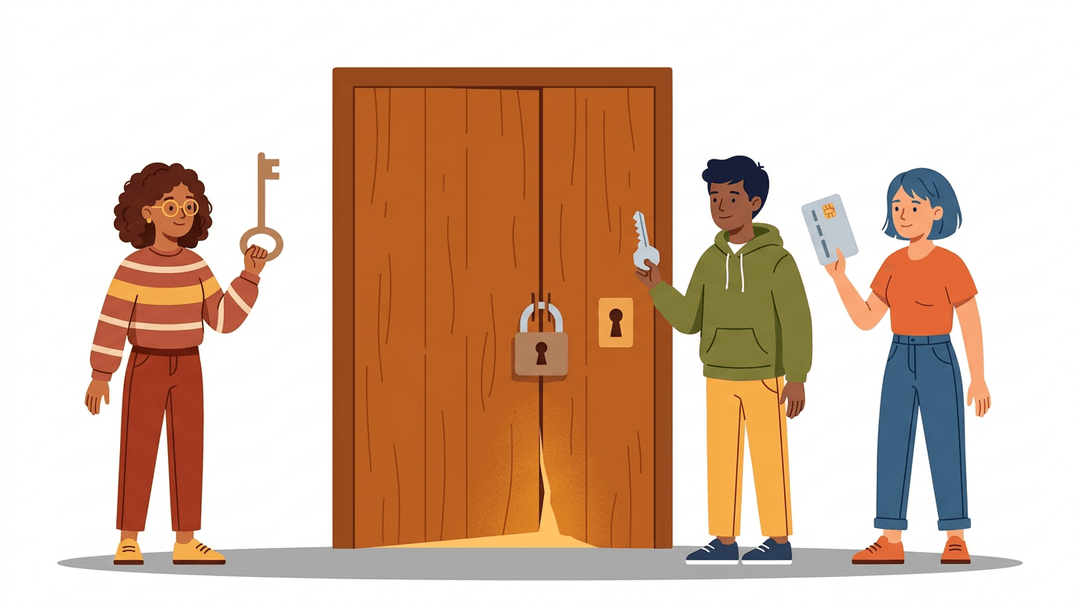
UDL grew out of the Universal Design movement in architecture. Architect Ronald Mace coined the term "Universal Design", advocating for products and built environments that are usable by everyone, regardless of age, ability, or background.
That same thinking crossed into education: if you design the space well enough, you don't need separate accommodations for each person.
Anne Meyer, David Rose, and their colleagues at CAST introduced UDL in the 1990s and early 2000s, translating that architectural logic into a framework for teaching and learning.
The real goal of UDL
UDL's end goal isn't just access. It's expert learners: students who are purposeful, resourceful, and strategic about their own learning.
When the framework works, learners develop agency, not just the ability to complete an assignment, but the confidence and skill to direct their own growth. That's equitable education in practice.
What Are the Three Principles of UDL with Examples?
UDL is built on three principles, each tied to a distinct brain network and answering a different question about how learning happens:
Multiple means of engagement
This principle addresses the why of learning. It aligns with the affective brain network, which drives motivation and emotion. To apply it, you recruit student interest, sustain effort, and build self-regulation.
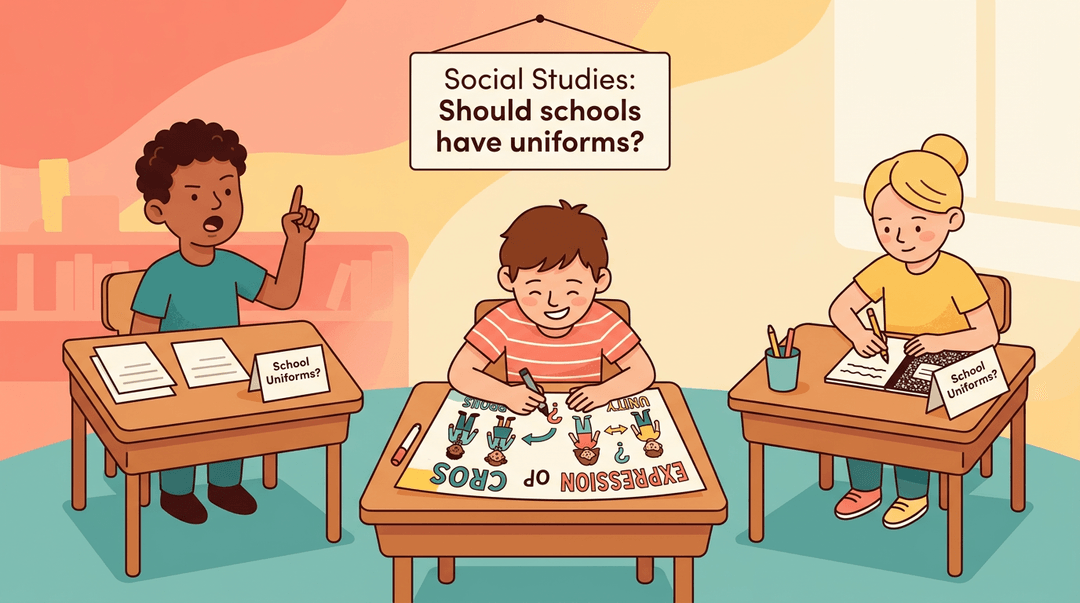
For example, a fifth-grade teacher might let students choose between a debate, a poster, or a written argument to explore a social studies topic. Same learning goal, but students connect to it differently.
Multiple means of representation
This principle addresses the what of learning. It aligns with the recognition brain network, which processes information and builds meaning. It means presenting content in multiple formats and supporting perception, comprehension, language, and symbols.
Think of a science teacher who introduces a new concept with a short video, a labeled diagram, and a read-aloud summary. Students who struggle with dense text still access the idea.
Multiple means of action and expression
This principle addresses the how of learning. It aligns with the strategic brain network, which plans and executes tasks.
It means offering varied ways to demonstrate knowledge, supporting physical action and communication, and building executive function skills like goal-setting and self-monitoring.
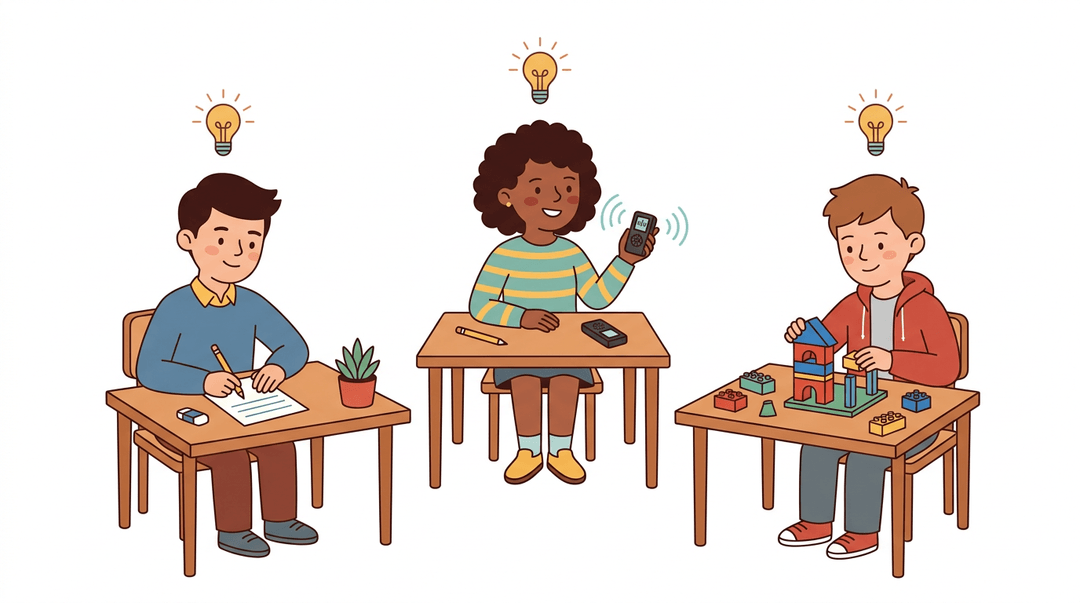
A student who finds writing difficult might record a voice memo or build a model instead of writing an essay, showing the same understanding through a different channel.
Together, these three principles form a practical lens. When you plan with all three in mind, more students can access the content, stay motivated, and show you what they actually know.
The Neuroscience Behind UDL
UDL isn't built on theory alone. It grows out of real neuroscience research into how different brains actually learn.
Three brain networks that shape learning
Rose and Meyer identified three networks that work together every time someone learns something new. Understanding them helps you see why the same lesson lands differently for different students.
- The affective network drives motivation and engagement: why learners care (or don't) about what's in front of them.
- The recognition network processes information: how learners take in and make sense of what they see, hear, and read.
- The strategic network guides action: how learners plan, organize, and express what they know.
Every student brings a different profile across these three networks. That's not a problem to fix; it's just human variability. UDL builds a classroom that accounts for it.
Research that supports UDL
The neuroscience work of Rose and Meyer has grown, in their own words, "into a new field called Universal Design for Learning which now influences educational policy and practice throughout the United States and beyond."
The UDL guidelines are grounded in cognitive science and are continuously updated as new research emerges. They're designed to benefit learners of all ages, not just students with identified needs.
When the framework is applied well, the research-backed guidelines help every learner in the room, from the student who struggles with reading to the one who finishes every task early.
How the UDL Guidelines Are Organized
The UDL framework is structured as a grid: three principles run vertically, and three horizontal rows (Access, Build, Internalize) show how deeply each principle can be applied.
Each principle breaks into guidelines, and each guideline breaks into checkpoints: concrete, classroom-ready suggestions you can map directly to lesson standards.
The grid isn't a prescription. Think of it as a flexible planning tool you consult, not a checklist you complete in full every day.
The checkpoints are especially useful as a standards-alignment audit: scan them when you're designing a unit to spot where your current approach leaves some learners behind.
Engagement guidelines at a glance
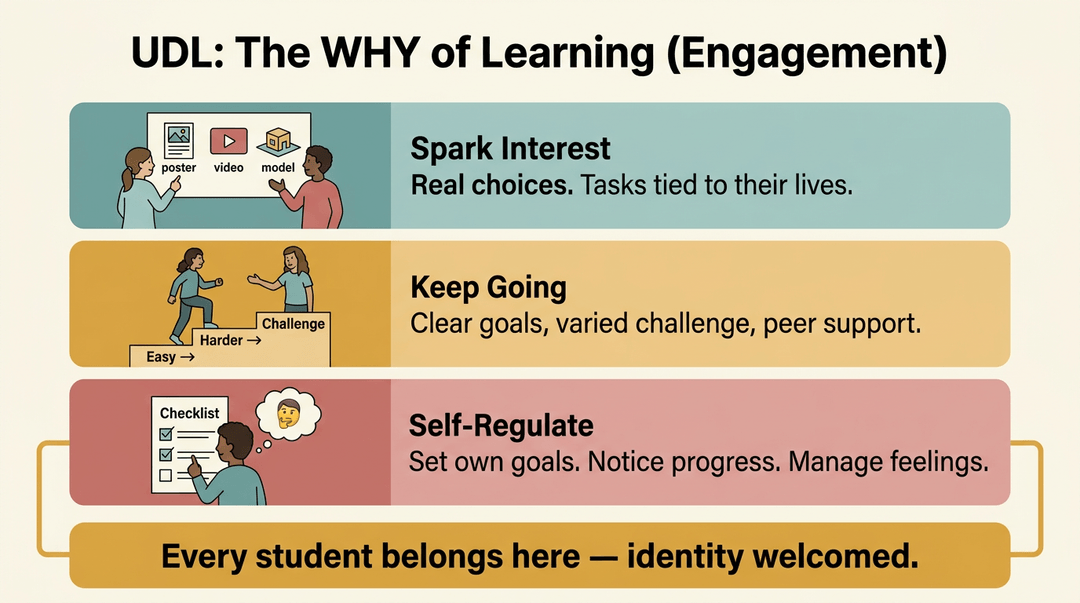
The Engagement principle covers the why of learning. Its checkpoints address:
- Recruiting interest: offering real choices, connecting tasks to students' lives and identities
- Sustaining effort and persistence: setting clear goals, varying the challenge level, building in peer support
- Self-regulation: helping students develop emotional capacity, set personal goals, and reflect on their own progress
Across all three, the aim is fostering belonging so every student feels the classroom is a place where they belong and their identity is welcomed.
Representation guidelines at a glance
Representation covers the what of learning. Its checkpoints address:
- Perception: offering flexible display options (font size, contrast, audio alternatives) so content is accessible to everyone
- Language and symbols: clarifying vocabulary, decoding symbols, and supporting different linguistic backgrounds
- Building comprehension: using multiple media to illustrate ideas and deliberately connecting new content to students' prior knowledge
Action and expression guidelines at a glance
Action and expression covers the how of learning. Its checkpoints address:
- Physical action and interaction: giving students varied ways to engage with materials, including assistive tools where needed
- Expression and communication: letting students show what they know through writing, speech, drawing, or other formats
- Executive function: scaffolding goal-setting, planning, and strategy development, then gradually releasing that support as fluency grows
Together, these three sets of guidelines give you a complete picture of the framework before you start applying it in class.
UDL and Accessibility
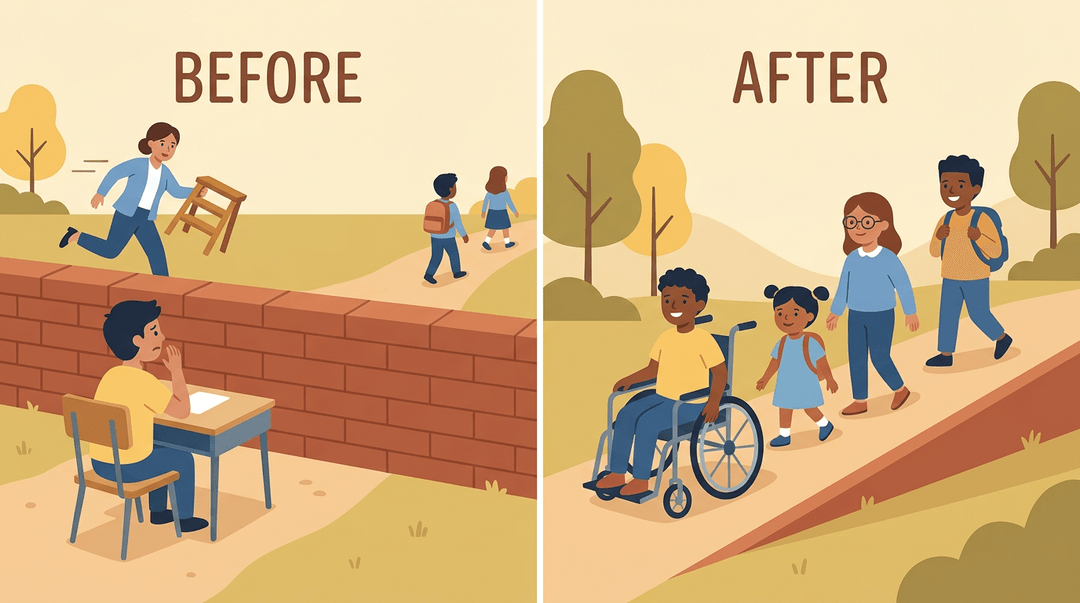
UDL and accessibility aren't the same thing, but they point in the same direction. Accessible design removes barriers proactively, so fewer students need individual fixes after the fact.
UDL does not replace accommodations
Accommodations and UDL have compatible goals: both aim to make learning reachable. The difference is when the barrier gets removed. Accommodations are reactive, added for a specific student after a need is identified.
UDL is proactive, baking flexibility into the lesson from the start. That shift reduces the stigma that comes with pull-outs and paperwork, and it benefits every learner, not just those with documented needs.
Everyday examples of accessible design
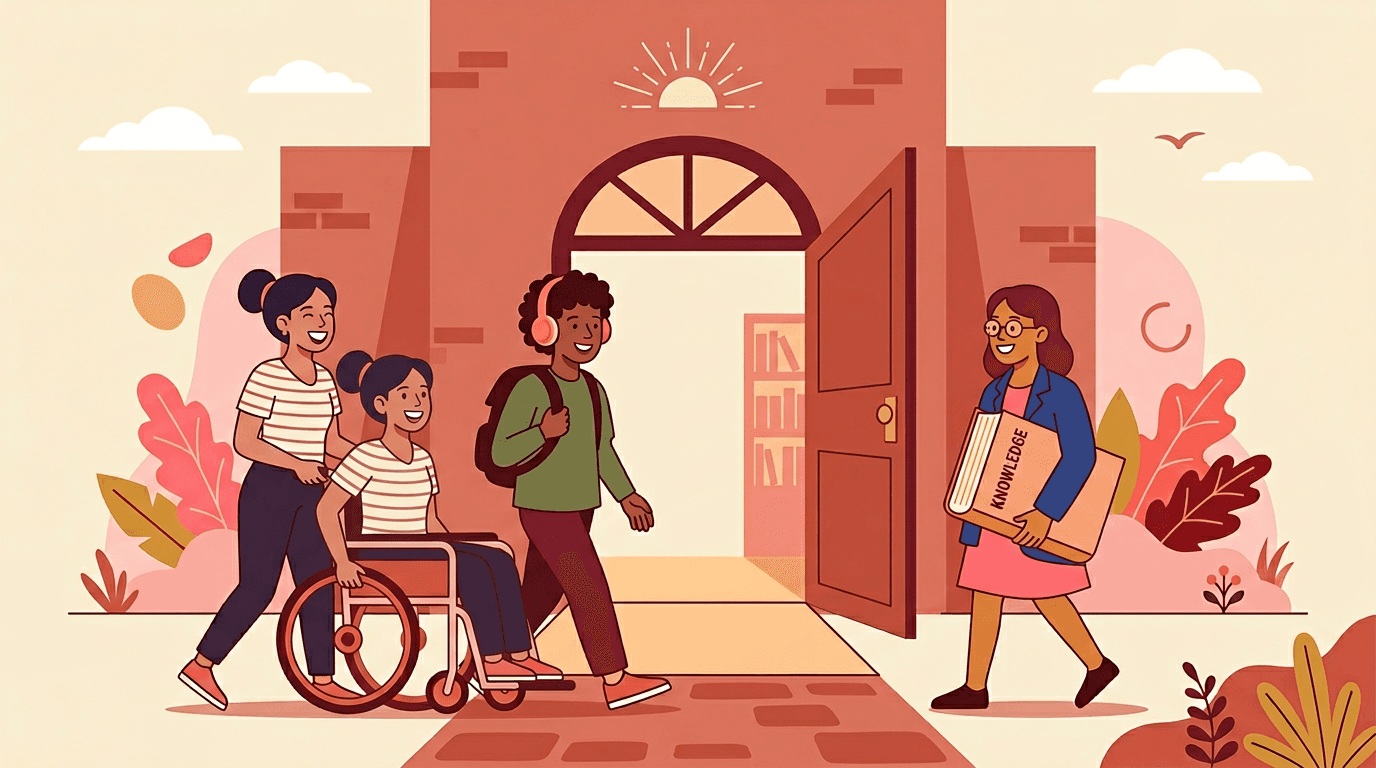
Consider how universal design already works outside the classroom. Automatic doors help wheelchair users, but also a teacher carrying a stack of books. Curb cuts were built for wheelchair access; cyclists and delivery workers use them too.
Closed captions were designed for d/Deaf viewers; millions more use them in a noisy gym or a quiet library. Ramps don't replace stairs: they add a path that works for everyone. UDL follows the same logic.
The Twitter (now X) caption feature is a clear digital parallel. When the platform added automatic alt text for images, it helped screen-reader users first, but sighted users in slow-connection areas benefited too.
Digital accessibility and UDL
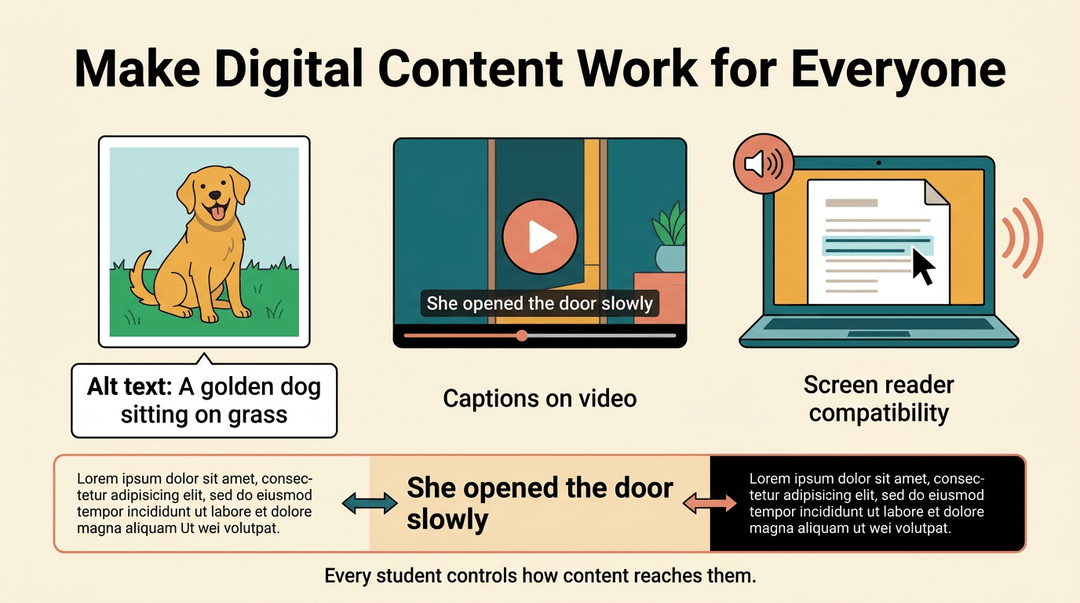
The Web Content Accessibility Guidelines (WCAG) perceivability principle maps directly onto UDL practice:
- provide text alternatives for non-text content
- add captions and transcripts to any video or audio
- make materials compatible with screen readers
Flexible digital display settings (adjustable font size, high contrast, dark mode) give every student control over how content reaches them. That's UDL in action.
Who Benefits from UDL
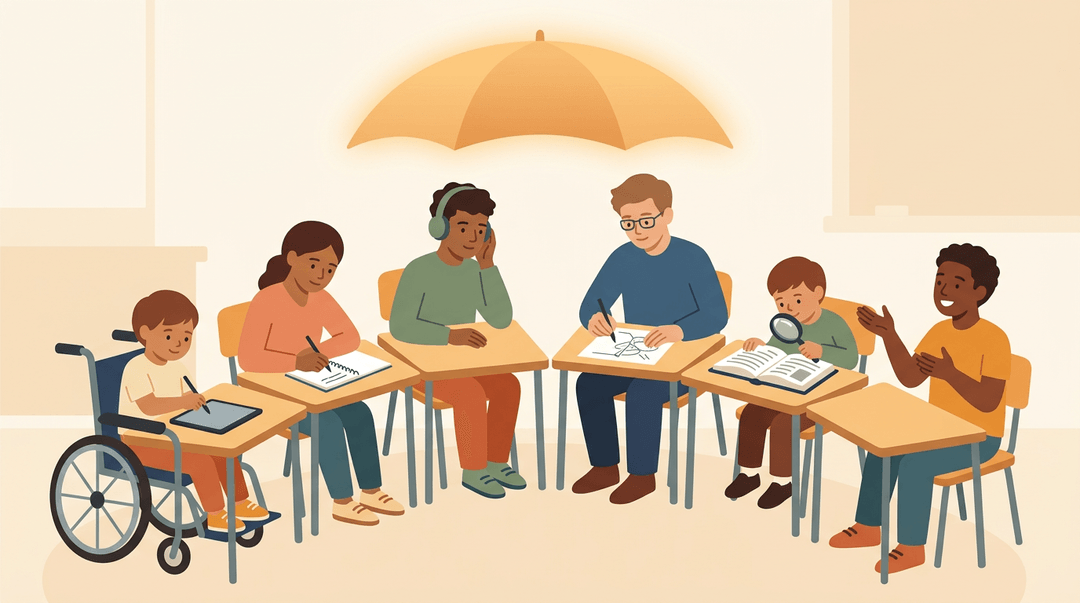
UDL isn't a support system reserved for a specific group of students. It's a design philosophy that removes barriers before they appear, which means almost every learner in your classroom stands to gain.
One quick distinction worth making here: UDL is proactive, while an Individualized Education Program (IEP) is reactive, a legally binding plan that addresses one student's documented needs after a disability is identified.
UDL doesn't replace IEPs; it creates a classroom environment where fewer individual workarounds are necessary in the first place.
How UDL supports students with disabilities
For students with learning or sensory disabilities, UDL reduces the barriers that are baked into traditional instruction.
Offering content in multiple formats, for example, means a student with dyslexia can access an audio version of a text without drawing attention to themselves.
That built-in flexibility also plays well with assistive technology, since materials designed for multiple means of access tend to be compatible from the start.
The result is broader participation in general education settings and less stigma around individual accommodations.
Benefits that extend to every learner
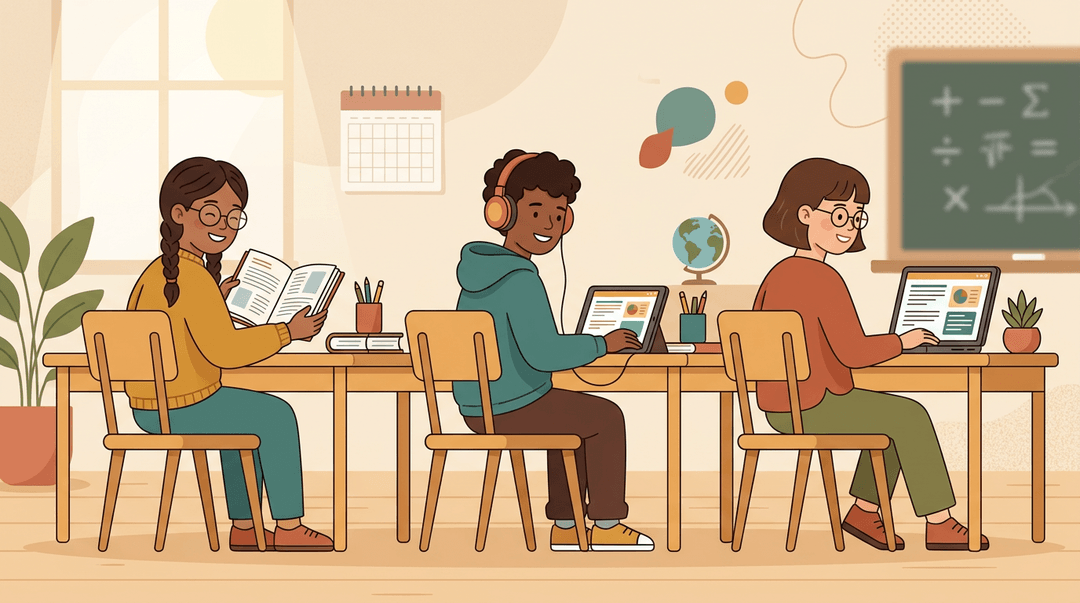
English language learners get more entry points into the content. Students who learn better through movement, discussion, or visual tools find their preferences honored rather than worked around.
Neurodiverse learners, students who might not qualify for formal support but still process information differently, are recognized and included. When a classroom is designed this way, outcomes tend to improve across the board.
UDL in higher education and the workplace
College campuses are serving increasingly diverse student populations, and UDL adoption at the postsecondary level is growing in response.
In the workplace, diversity, equity, and inclusion (DE&I) expectations are pushing organizations to apply the same thinking to workforce training. The framework scales.
Putting UDL into Practice
Knowing the principles is one thing. Getting them into your classroom is another. Here are practical ways UDL shows up in real teaching, and how to build toward it deliberately.
What are 5 examples of UDL in a classroom?
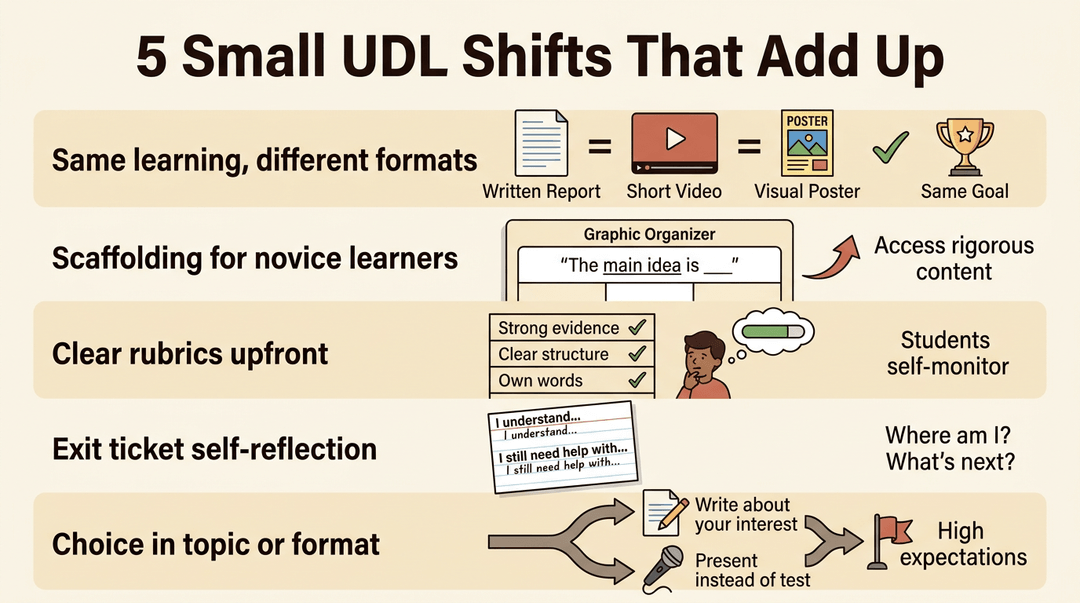
UDL doesn't require a complete overhaul. Small shifts add up:
- Multiple assignment formats: Let students demonstrate understanding through a written report, a short video, or a visual poster, each showing the same learning.
- Scaffolding for novice learners: Provide sentence starters, worked examples, or graphic organizers so students who need structure can access the same rigorous content.
- Clear rubrics: Share expectations upfront. When students know exactly what quality looks like, they can monitor their own progress.
- Formative self-reflection: Quick exit tickets or structured self-assessments help students recognize where they are and what they need next.
- Choice in topics or modalities: Letting a student write about a personally relevant topic, or present rather than test, sustains motivation without lowering the bar.
Planning lessons with UDL in mind
UDL works best when it's built in from the start, not added on after. A three-stage rhythm helps:
- Design proactively: Before you teach, identify the likely pinch points where students typically struggle, and plan multiple pathways through them.
- Implement and observe: Watch during the lesson. Note who disengages, who gets stuck, and where momentum stalls.
- Reflect and redesign: Use what you observed to refine the next version.
If you're new to UDL, try the Plus One Approach: pick one barrier you've noticed and add one flexible option to address it. Map these adjustments to your curriculum calendar so they compound over time.
Adapting UDL across online and hybrid courses
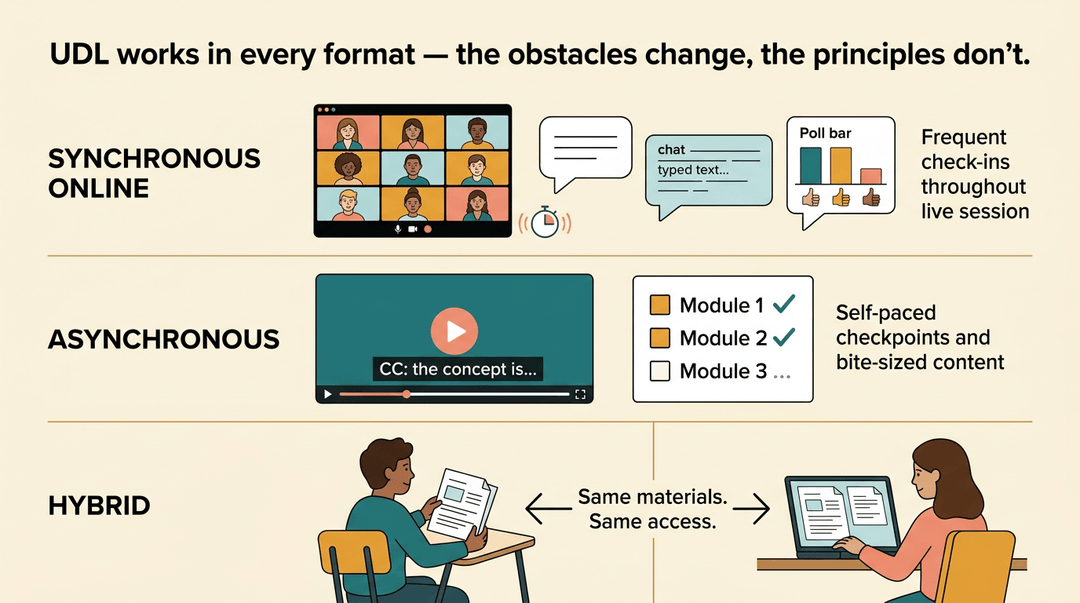
Format changes the obstacles but not the framework. In synchronous online sessions, build in frequent check-ins and offer multiple ways to respond (chat, polls, verbal).
Asynchronous courses need clearly chunked materials, captions on every video, and self-paced checkpoints. In hybrid settings, make sure in-room and remote students have equal access to the same materials and interactions.
Measuring how well UDL is working
Student feedback is your clearest signal: ask directly what's helping and what isn't. A UDL implementation rubric can help you assess how consistently you're integrating flexibility across representation, engagement, and action.
Track learner outcomes over time. When more students are meeting goals without needing individual accommodations, the design is doing its job.
UDL Lesson Planning Checklist for Teachers
Here's the framework as a working tool: a three-pass checklist you can run on any lesson, before you plan it, while you design it, and after you teach it. Print it and keep it next to your plan book.
Before you plan: audit the lesson for barriers
Confirm these three things before you open your lesson template:
- You've named the variability in this group. Jot it in plain words: "two emerging readers, one student with low vision, three fast finishers."
- The unit goal maps to a standard. Write the chain so you can see it: standard → unit goal → today's objective.
- You've marked what's fixed and what flexes. Circle the goal; star the materials, tasks, and timing you're willing to vary.
Key principle: the goal stays fixed; the path to it flexes. If you find yourself changing the standard, you're modifying, not designing.
While you design: build the flex into the plan
Work through these three moves in order, since each one builds on the last:
- Offer 2 to 3 formats for the content.
- Example set: a captioned video, a one-page reading, and an annotated diagram.
- Every format must carry the same core content, not a watered-down version.
- Give students choice in how they show learning.
- Same rubric, three products: a paragraph, a labeled sketch, or a recorded explanation.
- Add scaffolds for key vocabulary.
- Liftable format: erosion = land slowly wearing away (definition + photo + student sketch).
- Post the words before the lesson, not during it.
After you teach: close the loop
This pass takes five minutes and makes the next unit easier than this one was.
- Collect student feedback on access. Try an exit ticket: "Which option did you pick, and what was still hard to reach?"
- Adjust pacing for the next unit. If most students needed the scaffold longer, add a day; if few did, compress.
- Log what worked while it's fresh. Two lines is enough, as long as you write them down.
Example log entry: Captioned video beat the reading 18 to 6; keep both. Vocabulary cards cut re-explaining in half. Next unit: one extra day on the lab.
That log is the quiet engine of UDL: each unit you teach makes the next one start further ahead. When you're ready to plan beyond a single lesson, use EMStudio's Curriculum Planner to map UDL-aligned units to standards across the year, all in one place.
UDL in Federal and State Policy
UDL isn't just a classroom philosophy. It has formal recognition in federal law, and that recognition carries real weight for how schools plan, fund, and support inclusive instruction.
It also aligns closely with the mandates teachers already work within: IDEA (the Individuals with Disabilities Education Act) and Section 504 both center on equitable access, and UDL gives you a proactive framework for delivering exactly that.
How legislation recognizes UDL
CAST's overview of UDL in Public Policy shows that the Every Student Succeeds Act (ESSA) mentions UDL directly, requiring that assessments "be developed, to the extent practicable, using the principles of universal design for learning."
That's not a suggestion buried in an appendix. It's language in the law itself, and it signals that Congress sees UDL as a credible standard for accessible, high-quality assessment.
ESSA also encourages broader UDL adoption across instruction and professional learning, and federal funding streams tied to the law can support implementation at the district level.
For teachers in Texas, the state's special education support resources and implementation guides give schools a more concrete starting point: practical tools that translate federal intent into local action.
For you as a classroom teacher, this matters in two ways. First, it means your school or district may already have UDL-aligned resources and funding you can tap into.
Second, it connects the framework to legal obligations you're likely already navigating, making UDL less an "extra" and more a coherent approach to what the law already asks of you.
UDL isn't about doing more work. It's about doing smarter work once, so you're not constantly patching lessons for the students who need something different.
When you design with every learner in mind from the start, you spend less time reacting and more time teaching.
The framework gives you a plan. Your students bring the rest. And when the lesson fits the learner, rather than the other way around, learning actually happens.
Ready to build that kind of flexibility into your curriculum? Check out our Curriculum & Standards feature to see how structure and UDL can work together.
References
- Universal Design for Learning: Theory & Practice — cast.org (2024)
- What is Universal Design? — universaldesign.org
- Universal Design for Learning in Postsecondary Education: Foundations, New Directions, and Resources — ahead.ie
- UDL in Public Policy — cast.org
Frequently asked questions
What is the universal design approach to learning?
Universal Design for Learning (UDL) is a research-backed framework for lesson design that proactively removes learning barriers. Its goal is to make education accessible to all students from the outset, rather than requiring individual adjustments later. UDL helps diverse learners engage with content, access materials, and demonstrate their knowledge effectively.
What is the difference between UDL and IEP?
UDL builds flexibility into the curriculum from the start, proactively removing barriers for all students. In contrast, an Individualized Education Program (IEP) is a reactive, legally binding plan designed for a specific student with a documented disability. While both aim to make learning accessible, UDL lessens the need for individual accommodations by creating an inclusive learning environment for everyone.
What are the 3 UDL principles?
The three UDL principles are: multiple means of engagement (the "why" of learning), multiple means of representation (the "what" of learning), and multiple means of action and expression (the "how" of learning). Each principle addresses distinct brain networks involved in motivation, information processing, and task execution, respectively.
What are the four components of UDL?
The article does not explicitly list four components of UDL. However, it details the three core principles of UDL: engagement, representation, and action/expression, and how these principles are structured into guidelines and checkpoints for application.
What are the 4 components of the UDL curriculum?
The article does not explicitly list four components of the UDL curriculum. It describes the UDL framework as having three principles: multiple means of engagement, multiple means of representation, and multiple means of action and expression, which apply to how curriculum is designed to be flexible.
What are 5 examples of UDL in a classroom?
Five examples of UDL in a classroom include offering multiple assignment formats, providing scaffolding for new learners (like sentence starters), using clear rubrics, incorporating formative self-reflection, and giving students choice in topics or modalities. These strategies provide flexibility in how students engage, access, and demonstrate learning.
What do you mean by Universal Design for Learning?
Universal Design for Learning (UDL) means designing curriculum and lessons to be flexible and accessible for all learners from the very beginning. This approach aims to remove barriers proactively, ensuring every student has an equal opportunity to learn, rather than retrofitting lessons for individual needs after they arise. UDL cultivates expert learners who are resourceful and strategic.
Is UDL only for special education?
No, UDL is not only for special education; it is a design philosophy that benefits all learners. While it significantly supports students with disabilities by reducing barriers, its proactive approach also aids English language learners, neurodiverse students, and any student who benefits from varied ways to engage with content, access information, and show their knowledge.